
The allure of a hoverboard is undeniable, a sleek, self-balancing personal transporter that promises effortless gliding. Many envision using these devices for quick commutes, recreational fun, or simply navigating their homes with a futuristic flair. However, a common question arises for potential or current owners: can a hoverboard go on carpet? This seemingly simple query touches upon the practicalities of hoverboard usage, the mechanics of self-balancing technology, and the surface limitations of these devices. Understanding how hoverboards interact with different terrains is crucial for maximizing enjoyment, ensuring safety, and prolonging the life of your device.
While the smooth, hard surfaces of sidewalks and polished floors seem like ideal hoverboard territory, the reality of indoor living often involves carpets. Whether it’s a plush living room rug or a low-pile bedroom carpet, the question of carpet compatibility is a practical one for many users. The answer isn’t a straightforward yes or no, as it depends on a variety of factors, including the type of carpet, the hoverboard’s motor power, tire design, and the user’s weight and skill level. This article will explore the nuances of hoverboard performance on carpets, examining the challenges, potential risks, and best practices for those who wish to ride indoors.
Key Takeaways
-
- Hoverboards can operate on carpet, but with significant limitations and potential drawbacks.
- Carpet creates increased resistance, making it harder for hoverboard motors to maintain speed and balance.
- The type of carpet is crucial: low-pile, tightly woven carpets are more manageable than thick, plush, or shag carpets.
- Motor power is a key factor: higher-powered hoverboards are generally better equipped to handle carpet resistance.
- Tire type matters: larger, wider, treaded tires generally perform better on carpet, while air-filled tires may offer slightly better conformity on uneven pile.
- Riding on carpet can lead to faster battery drain, increased motor strain, and potential overheating.
- Safety is paramount: reduced maneuverability on carpet increases the risk of falls, sudden stops, and wheel snagging.
- It’s generally not recommended for extended or frequent use on carpeted surfaces.
- If you plan to ride indoors, the safest approach is to use a smooth, flat surface and avoid delicate floor finishes and high-pile carpets.
- For frequent indoor use, consider a mat or hard flooring transition area instead of relying on carpet.

Credit: gyroorboard.com
Understanding Hoverboard Mechanics And Surface Interaction
Hoverboards, also known as self-balancing scooters, rely on a sophisticated internal system to maintain stability. At their core are gyroscopic sensors and electric motors that constantly adjust the wheel speed to keep the rider upright. When a rider leans forward, the sensors detect the change in angle and signal the motors to propel the board forward.
Similarly, leaning backward causes the motors to move in reverse, and tilting the feet controls turning. This delicate balance is achieved through precise, rapid adjustments.
The efficiency of this system is heavily dependent on the surface it’s operating on. Smooth, consistent surfaces allow the sensors and motors to work optimally, requiring minimal effort to maintain balance and momentum. Hardwood floors, concrete, asphalt, and even smooth tile provide a predictable rolling resistance.
The wheels can spin freely, and the sensors receive clear, consistent data about the board’s orientation and movement. This allows the hoverboard to respond quickly and accurately to the rider’s commands.
When a hoverboard encounters carpet, this predictable environment is disrupted. Carpet fibers create a significantly higher rolling resistance. This means the wheels have to work much harder to move across the surface. For the hoverboard’s internal system, this increased resistance translates into a more challenging task for the motors.
They need to exert more torque to overcome the friction and maintain the desired speed. This extra effort can lead to several issues, including slower acceleration, difficulty in maintaining a steady speed, and a less responsive feel to steering and balancing commands.
Because hoverboards rely on precise balancing logic, any abrupt change in rolling resistance can make them feel jerky or hesitant, especially if the carpet thickness changes mid-ride.
The Role Of Sensors And Motors
The gyroscopic sensors are the brains of the hoverboard, constantly monitoring its tilt and orientation. On a smooth surface, these sensors receive relatively clean data. However, the unevenness and friction of carpet can introduce vibrations and inconsistencies. While modern sensors are quite robust, excessive jolting can potentially affect their accuracy, leading to minor hesitations or overcorrections in the balancing algorithm.
The electric motors are the muscles. They are designed to provide efficient power to the wheels. When faced with carpet, these motors are put under increased load. This is akin to trying to push a heavy object across a rough surface versus a smooth one. The motors have to draw more power from the battery to generate the necessary torque. Prolonged operation under such strain can lead to the motors heating up more than usual. While most hoverboards have thermal protection, sustained heavy use on carpet could push components closer to their operating limits and may trigger a protective shutdown on some models.
In practical terms, that means a hoverboard that feels fine on tile can slow down, beep, or cut power sooner on carpet if the motor controller detects overload or overheating.
Tire Design And Surface Grip
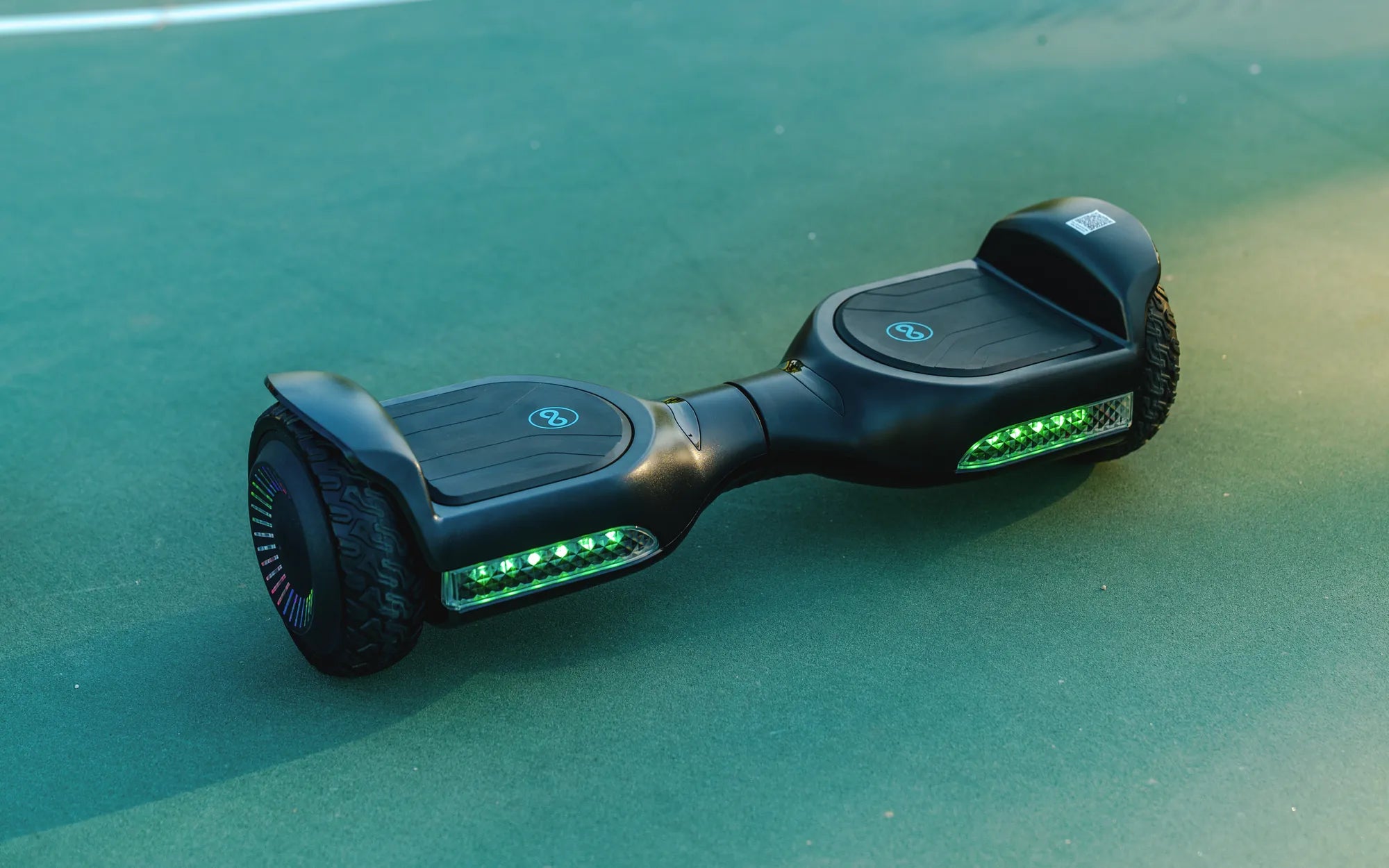
The type of tires on a hoverboard also plays a significant role in how it performs on carpet. Most hoverboards come with either solid rubber tires or air-filled pneumatic tires.
-
- Solid Tires: These are maintenance-free and resistant to punctures. However, they offer less shock absorption and can be less forgiving on uneven surfaces. On carpet, solid tires can sometimes sink slightly into thicker piles, increasing resistance even further. Their smooth surface may also struggle to get a consistent “grip” on the carpet fibers, leading to a feeling of slipping or delayed response.
- Air-Filled (Pneumatic) Tires: These tires offer better shock absorption and a more comfortable ride, similar to a bicycle tire. They can conform slightly to the surface, potentially offering a better grip on carpet than solid tires. The air cushion can help the tire “roll over” some of the carpet fibers rather than being dragged down. However, they are susceptible to punctures and require occasional inflation.
The diameter and width of the tires also matter. Larger, wider tires generally distribute weight more effectively and can sometimes perform better on varied surfaces. Treaded tires also tend to grip carpet fibers better than very smooth tires. However, even with optimal tire design, the fundamental issue of increased friction remains.
For shoppers comparing models, wheel size, tread pattern, motor wattage, and the manufacturer’s stated surface recommendations matter more than marketing claims about “all-surface” use.
Credit: gyroorboard.com
Factors Affecting Hoverboard Performance On Carpet
The ability of a hoverboard to navigate carpeted surfaces is not uniform. Several key factors dictate how well it performs, influencing everything from speed and maneuverability to the overall riding experience and potential for damage. Understanding these variables is crucial for setting realistic expectations and making informed decisions about where and how to ride.
Carpet Type And Pile Height
This is arguably the most critical factor. The nature of the carpet itself dictates the level of resistance the hoverboard will encounter.
-
- Low-Pile Carpets: Carpets with short, dense fibers, such as berber or cut-pile carpets found in many homes, offer the least resistance. While still more challenging than a hard floor, a hoverboard can often manage these surfaces with moderate success, especially if the carpet is tightly woven. The fibers are less likely to tangle with the wheels and the surface is more uniform.
- Medium-Pile Carpets: These carpets have longer fibers than low-pile options and can present a noticeable increase in resistance. The hoverboard will feel slower, and the motors will work harder.
- High-Pile and Shag Carpets: These are the most problematic. The long, loose fibers of shag or very thick, plush carpets create significant drag. The hoverboard’s wheels can easily sink into the pile, becoming entangled and making forward motion extremely difficult, if not impossible. Balancing becomes a major challenge, and the risk of getting stuck or falling is high.
- Carpet Density and Weave: Even within the same pile height, the density and weave of the carpet matter. A tightly woven, dense carpet will offer more consistent resistance than a loosely woven one where the wheels might sink unevenly.
Hoverboard Motor Power And Torque
The power of a hoverboard’s motors is a significant determinant of its carpet-handling capability. Hoverboards are typically equipped with dual motors, one for each wheel, with varying power ratings, often measured in watts (W).
-
- Lower-Powered Hoverboards (e.g., 250W – 350W per motor): These are generally designed for smoother surfaces. On carpet, their motors may struggle to generate enough torque to overcome the increased resistance. This can result in sluggish acceleration, difficulty maintaining speed, and a tendency to stall or struggle on even slightly thicker carpets.
- Higher-Powered Hoverboards (e.g., 400W – 500W+ per motor): Hoverboards with more powerful motors are better equipped to handle the demands of carpeted surfaces. They can generate more torque, allowing them to push through the resistance more effectively. While still not ideal, these models will offer a more capable performance on low-to-medium pile carpets compared to their less powerful counterparts. The maximum power output during acceleration is particularly important here.
Rider’s Weight
The rider’s weight directly impacts the load placed on the hoverboard’s motors and wheels. Heavier riders will naturally increase the downward force, causing the hoverboard to sink more into the carpet fibers. This exacerbates the resistance issue. A hoverboard that might perform adequately for a lighter rider on a particular carpet could struggle significantly with a heavier rider on the same surface.
Most hoverboards have a specified weight limit, and exceeding it will drastically reduce performance on any surface, but especially on challenging ones like carpet.
For best results, stay well within the manufacturer’s stated minimum and maximum rider range if the model lists one.
Battery Charge Level
A hoverboard’s performance can fluctuate based on its battery charge. When the battery is nearly depleted, the motors may receive less power, making it even harder for them to overcome carpet resistance. Conversely, a fully charged battery provides optimal power output, giving the hoverboard its best chance to perform.
However, even with a full charge, the inherent limitations of the surface will still apply.
Battery performance also tends to drop as cells age, so an older hoverboard may struggle on carpet sooner than a new one even when fully charged.
User Skill And Balance
While the hoverboard’s technology is crucial, the rider’s skill plays a role, especially on challenging terrain. An experienced rider might be able to make micro-adjustments to their body weight and posture to help the hoverboard maintain balance and momentum on carpet.
They might anticipate the increased resistance and lean slightly differently. However, even the most skilled rider cannot entirely negate the physics of increased friction. For beginners, attempting to ride on carpet is strongly discouraged due to the increased difficulty in maintaining balance and the higher risk of falls.

Credit: gyroorboard.com
Performance Differences: Carpet Vs. Hard Surfaces
The contrast between riding a hoverboard on carpet and on a hard surface is stark and immediately noticeable. It affects not just the physical sensation but also the device’s efficiency and the rider’s safety. Understanding these differences can help manage expectations and guide users toward the most suitable riding environments.
Speed And Acceleration
On smooth, hard surfaces like concrete or asphalt, hoverboards typically achieve their advertised top speeds with relative ease. Acceleration is quick and responsive, allowing for rapid changes in velocity. The motors work efficiently, delivering power directly to the wheels without significant loss due to friction.
On carpet, however, both speed and acceleration are significantly hampered. The increased rolling resistance acts as a constant brake. Even with powerful motors, the hoverboard will feel sluggish. Acceleration will be noticeably slower, and reaching the maximum potential speed becomes difficult, if not impossible, especially on anything other than the lowest pile carpets.
The hoverboard might feel like it’s constantly “pulling” against something, requiring more effort from the motors just to maintain a slow crawl.
Maneuverability And Responsiveness
The precision of steering and turning is another area where carpet performance differs. On hard surfaces, the wheels can pivot and rotate smoothly, allowing for sharp turns and quick directional changes. The hoverboard responds almost instantaneously to subtle shifts in foot pressure.
Carpet introduces a layer of unpredictability. The wheels may not pivot as freely due to the fibers gripping them. This can make turning feel less precise and more gradual. The increased resistance can also lead to a slight delay in responsiveness.
A quick turn command might result in a wider, slower arc than expected. This reduced maneuverability is a significant safety concern, as it can make it harder to avoid obstacles or correct balance issues.
Battery Life And Efficiency
Riding on carpet is considerably less energy-efficient than riding on hard surfaces. Because the motors must work harder to overcome the greater friction, they draw more power from the battery. This means that the hoverboard’s range will be significantly reduced when ridden primarily on carpet. What might offer several miles of travel on pavement could provide substantially less on a carpeted floor.
Furthermore, the increased workload on the motors can lead to them generating more heat. While hoverboards are designed with some thermal management, prolonged, strenuous use on carpet could potentially contribute to overheating, especially in warmer environments or if the device is already stressed.
This can reduce the lifespan of the motor components over time.
Noise Levels
Hoverboards are generally quiet machines, with the primary sound being the hum of the electric motors and the faint whirring of the wheels. On carpet, the noise profile can change. The motors might produce a more strained or louder humming sound as they work harder.
Additionally, the wheels interacting with the carpet fibers can create a rustling or dragging sound that is absent on smooth surfaces.
Risk Of Damage
While not a direct performance metric, the potential for damage is a critical consideration. The increased strain on the motors and the potential for wheels to get tangled in carpet fibers can increase the risk of component wear or failure over the long term.
Getting stuck in thick carpet could also lead to sudden stops or jerky movements, potentially causing the rider to fall and damage the hoverboard or themselves.
Here’s a table summarizing the key performance differences:
| Feature | Hard Surfaces (Concrete, Tile, etc.) | Carpeted Surfaces (Low-Medium Pile) | Carpeted Surfaces (High-Pile/Shag) |
|---|---|---|---|
| Speed & Acceleration | High, responsive | Significantly reduced, sluggish | Extremely limited, difficult to move |
| Maneuverability | Precise, quick turns | Reduced, slower, less precise | Very poor, difficult to steer |
| Battery Efficiency | Optimal, longer range | Reduced, shorter range | Severely reduced, minimal range |
| Motor Strain | Minimal | Moderate to high | Very high, potential for overheating |
| Rider Safety | Generally safe with proper precautions | Increased risk of falls due to reduced responsiveness | High risk of falls and getting stuck |
| Wear & Tear | Standard | Increased potential for motor strain | Significant potential for damage and strain |
Potential Risks And Safety Concerns Of Riding On Carpet
While the idea of cruising around your house on a hoverboard might be appealing, riding on carpet introduces a unique set of risks that potential users must consider. The physics of increased friction and reduced responsiveness significantly elevate the potential for accidents and damage.
Prioritizing safety means understanding these hazards before attempting to ride on carpeted areas.
Increased Risk Of Falls
The most immediate and significant concern is the heightened likelihood of falling. As discussed, carpet creates more resistance, making the hoverboard less responsive to the rider’s commands. This means that subtle shifts in weight that would normally correct balance on a hard surface might not have the same immediate effect on carpet.
-
- Delayed Reactions: If the hoverboard suddenly encounters a patch of thicker carpet or a stray fiber snags a wheel, the rider might experience an unexpected jolt or loss of momentum. The hoverboard’s system might struggle to compensate quickly enough, leading to instability.
- Difficulty Recovering Balance: The reduced maneuverability makes it harder for riders to correct their balance if they start to wobble. Quick turns or adjustments needed to regain equilibrium are less effective on carpet.
- Tripping Hazards: Carpet fibers themselves can pose a tripping hazard if the wheels get caught. This sudden stop can easily throw the rider off balance.
These factors combine to make falls more probable, especially for inexperienced riders. The potential for injury ranges from minor scrapes and bruises to more serious sprains or fractures, depending on the height and circumstances of the fall.
Strain On Hoverboard Components
Riding on carpet places a considerably higher load on the hoverboard’s motors, battery, and drivetrain.
-
- Motor Overheating: The motors have to work much harder to generate the torque needed to move across the carpet. This increased exertion generates more heat. While most hoverboards have built-in thermal protection that will shut down the device if it overheats, repeated or prolonged operation under high strain can still contribute to premature wear and tear on the motor components. In extreme cases, it could lead to motor failure.
- Battery Drain: As previously noted, the increased effort required means the battery drains faster. This isn’t strictly a safety risk, but it significantly impacts usability and can leave a rider stranded sooner than expected.
- Wheel and Bearing Stress: The wheels and the bearings within them are subjected to greater stress and friction. Fibers can get embedded in the wheels or bearings, potentially causing damage or reducing their lifespan.
Getting Stuck Or Tangled
Thicker pile carpets, especially shag or plush varieties, pose a significant risk of the hoverboard becoming physically stuck. The wheels can become entangled in the long fibers, making it impossible to move forward. This can lead to:
-
- Sudden Stops: If the wheels become completely immobilized, the hoverboard will stop abruptly. If the rider is moving forward, this sudden deceleration can throw them off balance and cause a fall.
- Difficulty Disengaging: Once stuck, it can be difficult to free the hoverboard without manually untangling the fibers. This can be frustrating and time-consuming.
- Potential Damage: Forcing a stuck hoverboard can potentially damage the wheels, motors, or even the internal components if excessive force is applied.
Reduced Visibility Of Obstacles
Indoors, especially on carpets, it can be harder to see potential obstacles that might be hidden within the carpet pile or obscured by furniture. Small objects, rug edges, or cable cords can become significant hazards if the hoverboard’s reduced maneuverability makes it difficult to avoid them.
Be especially careful around rug edges, thresholds, and cords, since those are common places for sudden wheel catches.
The Importance Of User Weight Limits
It’s crucial to remember that hoverboards have strict weight limits. Exceeding these limits significantly compromises performance and safety on any surface, but the effects are amplified on carpet. A heavier rider will cause the hoverboard to sink deeper into the carpet, increasing resistance to a point where even powerful motors may struggle, leading to a higher risk of falls and potential damage to the device.
Always adhere to the manufacturer’s recommended weight range.
Best Practices For Riding Hoverboards On Carpet
While riding hoverboards on carpet is generally not recommended for optimal performance and safety, there may be instances where users need or want to do so, perhaps for short distances within a home. If you choose to ride on carpet, adopting specific best practices can help mitigate the risks and improve the experience.
Choose Your Carpet Wisely
The type of carpet is paramount. If you must ride indoors on carpet, opt for the lowest-pile, most tightly woven options available.
-
- Ideal: Very low-pile, dense carpets (like some office or Berber styles).
- Tolerable: Standard low-to-medium pile carpets.
- Avoid: Plush, shag, thick rugs, or carpets with long, loose fibers.
- Clear the Path: Ensure the carpeted area is free of any debris, cords, or uneven edges that could snag the wheels.
Opt For Higher-Powered Models
If you anticipate needing to ride on carpet occasionally, investing in a hoverboard with more powerful motors (higher wattage) is advisable. These models have a better chance of overcoming the increased resistance. Look for specifications indicating robust motors, often found in models designed for slightly more demanding use.
Maintain A Slow, Steady Pace
Resist the urge to accelerate quickly or make sudden turns. Ride at a slow, controlled speed. This allows the hoverboard’s balancing system more time to react to the surface and gives you better control. Focus on smooth, deliberate movements.
Be Prepared For Reduced Responsiveness
Understand that the hoverboard will not feel as nimble or responsive as it does on a hard surface. Anticipate that turns will be wider and take longer. Adjust your riding style to be more gradual and less aggressive.
Keep Rides Short
Avoid prolonged use on carpet. Short trips across a room are less likely to cause significant motor strain or battery depletion compared to trying to traverse multiple carpeted areas. Think of it as a short-distance maneuver rather than extended riding.
Check Hoverboard Temperature
Periodically check if the hoverboard’s motors or casing feel excessively hot. If the device becomes noticeably warm, it’s a sign the motors are under significant strain. Stop riding on the carpet and allow the hoverboard to cool down. Consider switching to a hard surface if possible.
Practice Balance And Control
If you are new to hoverboards, it is strongly recommended to master basic balancing and control on a hard, smooth surface before even considering carpet. Once proficient, practice on the lowest-pile carpet available in short, controlled bursts.
Consider Tire Type
While not always an option for existing owners, if purchasing a new hoverboard with carpet use in mind, consider models with air-filled tires. They may offer a slightly better ride by conforming to the surface, but this is highly dependent on the specific carpet type. Models with larger wheels and some tread are generally better suited than very small, smooth-tread designs.
If the hoverboard has an app, look for ride modes that cap acceleration for beginners before attempting carpet use.
Example Scenario: Navigating A Living Room
Imagine you need to move your hoverboard from one side of your living room to the other, where a low-pile area rug covers most of the floor.
-
- Assess the Rug: Confirm it’s a low-pile, tightly woven rug with no loose edges or visible debris.
- Power On: Ensure your hoverboard is fully charged and powered on.
- Mount Carefully: Mount the hoverboard slowly and deliberately on the edge of the rug or transition from a hard floor.
- Ride Slowly: Lean forward gently and proceed at a walking pace. Keep your movements smooth.
- Steer Gradually: If you need to turn, apply pressure to the footpads gradually to initiate a wider, slower turn.
Frequently Asked Questions About Hoverboards And Carpet
Can I ride my hoverboard on any type of carpet?
No, it is not recommended to ride your hoverboard on all types of carpet. Thick, plush, or shag carpets create too much resistance and can cause the hoverboard to get stuck or perform poorly. Low-pile, tightly woven carpets are the most manageable, but even then, performance will be reduced compared to hard surfaces.
Will riding on carpet damage my hoverboard?
Riding on carpet can potentially cause increased wear and tear on your hoverboard’s motors and battery due to the higher strain. Prolonged or frequent use on carpet, especially thicker types, could lead to overheating or premature component failure. It’s best to limit carpet use to short distances on low-pile surfaces.
Does tire type affect hoverboard performance on carpet?
Yes, tire type can make a difference. Air-filled (pneumatic) tires may offer slightly better performance on carpet as they can conform to the surface and provide a bit more cushioning. Larger, wider tires with some tread are generally better than small, smooth tires for navigating carpet fibers.
How does carpet affect hoverboard battery life?
Carpet significantly reduces hoverboard battery life. Because the motors have to work much harder to overcome the increased resistance of the carpet fibers, they consume more power. This means you will get a shorter range on carpet compared to riding on a hard surface.
Is it safe to ride a hoverboard on carpet?
Riding on carpet is generally less safe than riding on hard surfaces. The increased resistance leads to reduced responsiveness, making it harder to maintain balance and control. This increases the risk of falls, especially for beginners. It’s crucial to be aware of these risks and take extra precautions if riding on carpet.
For the safest indoor use, avoid charging or storing the hoverboard on carpet or bedding, and keep it away from anything that can trap heat.