What is a Longboard: Ultimate Guide for Beginners
What Is A Longboard
If you’ve ever seen someone gliding smoothly down a hill, weaving through cones, or cruising along a beach path on a large skateboard, you were probably looking at a longboard. While it looks similar to a regular skateboard, a longboard is designed for a different experience. It offers more stability, a smoother ride, and many ways to enjoy the road, whether you want to travel, dance, race, or simply relax. Understanding what a longboard is—and what makes it special—can open up a whole new world of fun and movement.
The Basics: What Defines A Longboard
A longboard is a type of skateboard, but as its name suggests, it is usually longer and wider than a standard skateboard. Most longboards measure from 33 to over 59 inches in length, compared to skateboards, which are typically around 28 to 33 inches. This extra length isn’t just for style—it gives the rider more stability, a smoother ride, and easier control, especially at higher speeds.
Longboards also have larger, softer wheels than skateboards. These wheels are often made from softer urethane, which helps absorb bumps and cracks in the pavement. The trucks (the metal parts that hold the wheels to the board) are wider and mounted differently, allowing for deeper turns and more carving ability.
Key Differences: Longboard Vs. Skateboard
Understanding the main differences helps you choose the right board for your needs. Here’s a comparison:
| Feature | Longboard | Skateboard |
|---|---|---|
| Length | 33–59+ inches | 28–33 inches |
| Deck Shape | Varied (flat, pintail, drop-through) | Usually popsicle-shaped, curved ends |
| Wheel Size | Large (60–75 mm), soft | Small (50–54 mm), hard |
| Trucks | Wider, looser, reverse kingpin | Narrower, tighter, traditional kingpin |
| Use | Cruising, downhill, carving, dancing | Tricks, street skating, skateparks |
Two insights people often miss: First, longboards are much more forgiving for beginners because of their size and wheel softness. Second, longboards are usually not meant for technical tricks like kickflips or ollies; they shine in speed, distance, and style.

Credit: retrospec.com
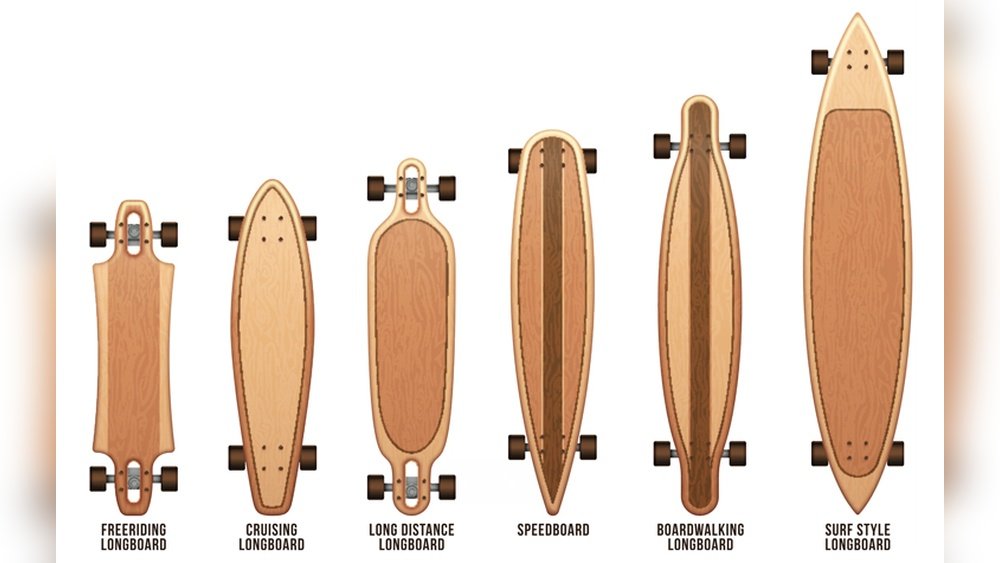
Types Of Longboards
Longboards come in many shapes and styles, each built for a specific purpose. Here are some of the most common types:
1. Cruiser Longboards
These are designed for easy travel on streets and sidewalks. They have a flexible deck and large, soft wheels for comfort.
2. Downhill Longboards
Built for speed, these boards are stiff and stable. Their shapes help riders stay in control at fast speeds, often over 40 mph.
3. Freeride Longboards
Used for sliding and tricks at moderate speeds, these boards offer a balance between control and playfulness.
4. Freestyle/dancing Longboards
These are longer and often have flat sections for footwork and tricks. Riders perform spins, steps, and even jumps while moving.
5. Carving Longboards
Made for deep, surf-like turns, these boards have flexible decks and responsive trucks.
6. Commuter/electric Longboards
Some longboards are now powered by electric motors, making them a fast and eco-friendly way to travel.
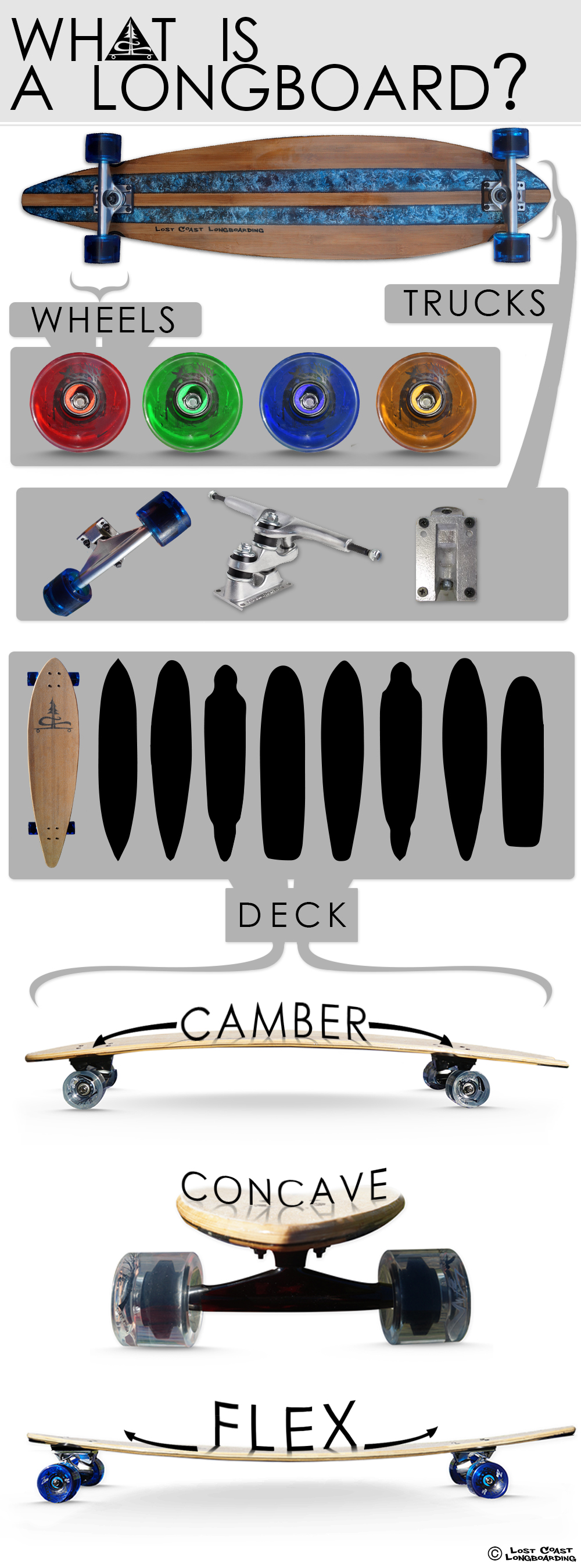
Anatomy Of A Longboard
Each part of a longboard plays a key role in how it feels and rides.
Deck
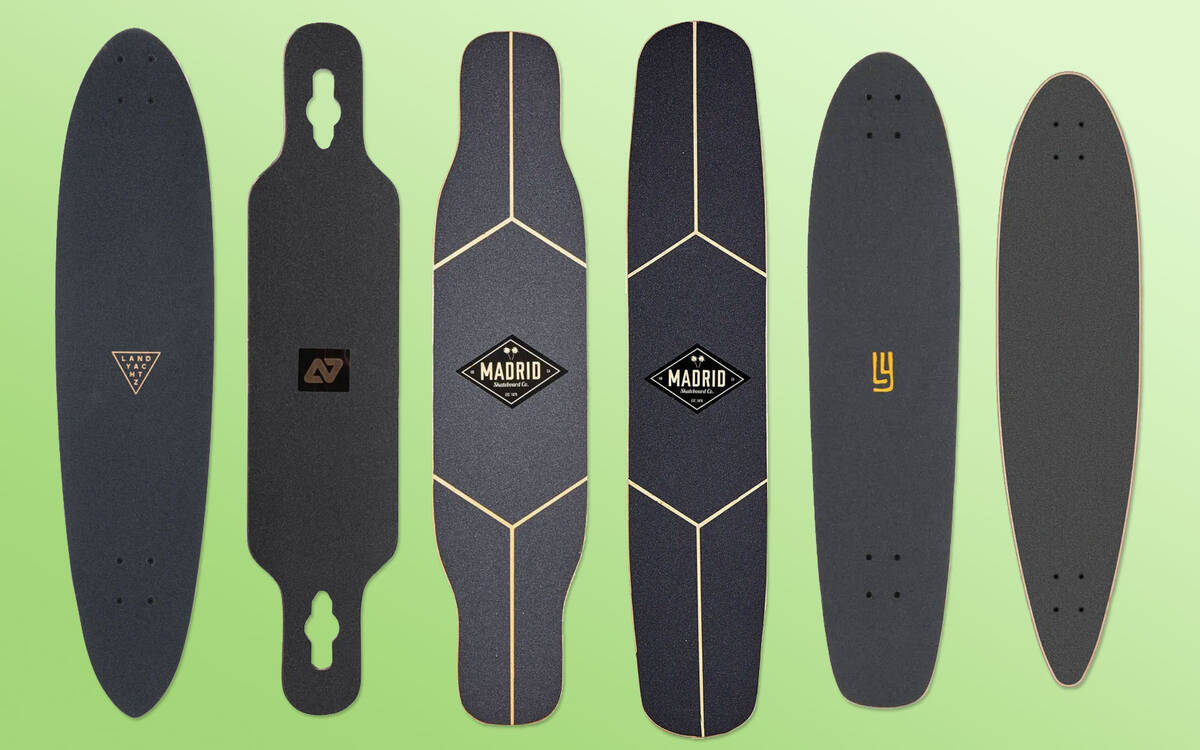
The deck is the main platform you stand on. Longboard decks are usually made from multiple layers of maple, bamboo, or fiberglass, which gives them strength and flexibility. Deck shapes vary, with pintail, drop-through, drop-down, and double kick being popular options.
- Pintail: Shaped like a surfboard, great for cruising.
- Drop-through: Trucks are mounted through the deck, lowering the center of gravity for stability.
- Drop-down: The deck drops below the trucks, keeping you close to the ground for control.
- Double kick: Has an upward curve on both ends for tricks.
Trucks
Trucks are the metal “axles” that hold the wheels to the deck. Longboard trucks are wider (usually 150–180 mm) and use a reverse kingpin design, which allows for smoother, deeper turns.
Wheels
Longboard wheels are larger and softer (usually 78A–87A on the durometer scale) than skateboard wheels. This makes them grip the road well and roll over cracks and pebbles without stopping suddenly.
Bearings
Inside each wheel are bearings—small metal rings that allow the wheels to spin. Good bearings help your board roll smoothly and quickly.
Grip Tape
Most longboards have a rough grip tape surface on top, which keeps your feet from slipping. Some boards use clear grip tape to show off the wood.
Here’s a quick look at common longboard deck shapes:
| Deck Shape | Best For | Stability |
|---|---|---|
| Pintail | Cruising, carving | Medium |
| Drop-through | Downhill, commuting | High |
| Drop-down | Downhill, freeride | Very High |
| Double kick | Freestyle, tricks | Low–Medium |
Why Choose A Longboard?
People pick longboards for many reasons, not just for looks. Here’s why they’re popular:
- Stability: The longer, wider deck makes balancing easier, especially for beginners.
- Comfort: Softer wheels and flexible decks make for a smoother ride, even on rough streets.
- Speed: Longboards are designed to roll further with each push and handle high speeds safely.
- Versatility: You can use a longboard for commuting, exercise, fun, or even as a way to meet friends.
- Health Benefits: Longboarding is a great cardio exercise. Riding can burn around 300–400 calories per hour, depending on speed and effort.
One detail many miss: Longboards can handle hills and rough roads much better than standard skateboards, which often struggle with cracks or rocks.
How To Ride A Longboard
Learning to ride a longboard is easier than many people think. Here’s a step-by-step guide for beginners:
- Find Your Stance
- Most people are either “regular” (left foot forward) or “goofy” (right foot forward). Try both to see what feels natural.
- Balance and Push
- Place your front foot across the deck, near the front trucks.
- Use your back foot to push off the ground, then place it behind your front foot.
- Turning
- Lean gently in the direction you want to go. The trucks will help the board turn smoothly.
- Stopping
- The easiest way to stop is to step off and run, or use your back foot to drag gently on the ground (“footbrake”).
- Slowing Down on Hills
- Beginners should practice “carving” (turning back and forth in an S-shape) to slow down.
- Advanced riders use “slides” to reduce speed quickly, but this takes practice.
Common Beginner Mistakes
- Standing too stiffly: Relax your knees for better control.
- Looking down: Always look ahead, not at your feet.
- Trying hills too soon: Start on flat ground to build confidence.
Choosing Your First Longboard
Selecting the right longboard depends on your goals, body size, and where you plan to ride. Here’s what to consider:
Length And Width
- Shorter boards (33–38 inches): Easier to carry, better for quick turns.
- Medium boards (38–42 inches): Good all-around choice for most riders.
- Longer boards (42+ inches): Great for dancing, stable at high speeds.
Deck Flex
- Stiff decks: Offer more control at high speeds (downhill).
- Flexible decks: Absorb bumps, ideal for cruising and carving.
Wheel Size And Hardness
- Larger wheels (70–75 mm): Roll over cracks, smoother ride.
- Softer wheels (78A–83A): More grip, comfortable on rough surfaces.
Price Range
Longboards can cost from $60 to $300+. Higher-priced boards usually use better materials and have smoother rides, but many affordable options are great for beginners.
Here’s a pricing overview:
| Price Range | Quality Level | Recommended For |
|---|---|---|
| $60–$120 | Entry-level | Beginners, casual riders |
| $120–$200 | Mid-range | Regular riders, commuters |
| $200+ | High-end | Enthusiasts, downhill racers |
Common Buying Mistakes
- Choosing a board that’s too short: This makes balancing harder for new riders.
- Ignoring wheel softness: Hard wheels will make the ride rough and less safe.
- Forgetting about weight: Heavier riders may need stiffer decks and stronger trucks.
Longboarding Safety Tips
Longboarding can be safe if you take the right steps:
- Always wear a helmet. Most serious injuries happen without one.
- Use knee and elbow pads if you’re learning or riding hills.
- Check your board before each ride for loose parts.
- Learn to fall safely: Practice rolling instead of landing on your hands.
- Stay visible: Use lights or bright clothes if you ride at night.
A non-obvious tip: Gloves with slide pucks are helpful for downhill or sliding, letting you control speed and protect your hands.
Credit: www.thelostlongboarder.com
The Culture And Community Of Longboarding
Longboarding is more than just a sport—it’s a community. You’ll find groups in almost every city, organizing group rides, races, or dance sessions. Many longboarders enjoy building or customizing their boards, making each one unique.
The sport has roots in surfing. In the 1950s and 60s, surfers in California wanted a way to “surf” when the waves were flat, so they added wheels to wooden boards. Over time, the design evolved, and now longboarding is a global hobby.
If you want to learn more or join a group, many cities have longboarding clubs, and websites like Wikipedia offer detailed history and resources.
Frequently Asked Questions
What Is The Main Purpose Of A Longboard?
A longboard is mainly used for cruising, transportation, downhill racing, carving, and freestyle riding. Unlike regular skateboards, it’s not meant for tricks in skateparks but rather for smooth, stable rides over longer distances or rougher roads.
Can Beginners Learn To Ride A Longboard Easily?
Yes, longboards are ideal for beginners. The longer and wider deck, combined with softer wheels, makes balancing easier and the ride smoother. Most new riders find it less intimidating than a skateboard.
How Fast Can You Go On A Longboard?
Speeds vary. On flat ground, most people cruise at 8–15 mph. Downhill racers can reach 40–60 mph with the right equipment and skill, but these speeds require experience and safety gear.
Are Longboards Good For Commuting?
Absolutely. Many people use longboards for commuting because they roll smoothly over cracks and bumps, cover ground quickly, and are easy to carry. Electric longboards make commuting even faster.
How Do I Maintain My Longboard?
Keep your board clean and dry. Check trucks, wheels, and bearings regularly. Replace worn grip tape and rotate wheels if they wear unevenly. Oil bearings every few months for a smoother ride.
Longboarding is more than just transportation—it’s a way to move, exercise, and connect with others. Whether you want a relaxing cruise or a thrilling downhill run, a longboard can take you there. With the right board and a little practice, you’ll soon discover why so many people love this unique sport.
Credit: www.skatepro.com