Sizing Hockey Elbow Pads
The thrill of hockey, with its fast-paced action and strategic plays, is undeniable. But this excitement comes with inherent risks, and protecting yourself from impact and falls is paramount. Among the most crucial pieces of protective gear are elbow pads, designed to safeguard the vulnerable joints that are often the first to make contact with the ice or boards. Choosing the right size hockey elbow pads is not merely about comfort; it’s about ensuring optimal protection, unrestricted movement, and ultimately, your safety and performance on the ice.
Ill-fitting elbow pads can be a significant hindrance. Too large, and they might slip, exposing sensitive areas or causing chafing. Too small, and they can restrict your range of motion, making it difficult to perform essential hockey maneuvers like stickhandling, shooting, or even just skating effectively.
This guide will break down the complexities of sizing hockey elbow pads, offering clear, actionable advice to help players of all levels find the perfect fit. We’ll explore the anatomy of an elbow pad, the different measurement methods, and considerations for various player types, ensuring you can confidently select gear that offers both superior protection and uncompromised agility.
Key Takeaways
- Accurate Measurement is Crucial: Sizing hockey elbow pads relies on precise measurements of your arm length, typically from the middle of your bicep to the wrist.
- Pad Anatomy Matters: Understand the different components of an elbow pad, cap, forearm guard, bicep pad, and straps, and how they contribute to fit and protection.
- Fit Over Brand: While brands offer quality, the correct fit is paramount for safety and performance, regardless of the manufacturer.
- Consider Player Level and Style: Junior players, adults, and players with specific needs (e.g., goalies) may require different padding levels and fit characteristics.
- Try Before You Buy (If Possible): The best way to confirm a proper fit is to wear the pads and simulate hockey movements.
- Check for Coverage and Restriction: Ensure the pads cover the elbow joint fully and do not impede your natural arm movement.
Credit: newtohockey.com
Understanding Hockey Elbow Pad Anatomy
Before diving into sizing, it’s essential to understand the different parts of a hockey elbow pad and how they work together to provide protection. Each component plays a role in ensuring a secure and effective fit.
The Cap
This is the most visible and often the most heavily padded section. The cap is designed to absorb and dissipate the impact of direct blows to the elbow. Its shape and size are critical for coverage. A well-designed cap should fully encompass the elbow joint without being so large that it feels bulky or obstructs movement. Many modern caps are anatomically molded to better fit the natural curve of the elbow.
The Forearm Guard
Extending from the cap down towards the wrist, the forearm guard protects the front and sides of the forearm. This section is vital for blocking shots and falls. The length and width of the forearm guard should complement the cap, providing continuous protection without leaving gaps. It should extend far enough to cover a significant portion of the forearm but not so far that it interferes with your glove or wrist.
The Bicep Pad
Above the cap, the bicep pad offers protection to the upper arm. While often less heavily padded than the cap, it’s crucial for guarding against slashes and collisions. The bicep pad’s length and how it integrates with the cap influence the overall coverage and comfort of the pad.
Strapping System
Most elbow pads utilize straps, typically elastic or Velcro, to secure the pad to the arm. These straps are critical for maintaining the pad’s position during play. There are usually two or three straps: one around the forearm, one around the elbow joint itself (often integrated into the cap), and sometimes one around the bicep. The adjustability and quality of these straps significantly impact the overall fit and how well the pad stays in place.
The Importance Of Proper Sizing
Wearing correctly sized elbow pads is fundamental for several reasons, impacting everything from protection to performance.
Optimal Protection
The primary function of elbow pads is to protect you from injury. If pads are too small, they might not cover the entire elbow joint, leaving vulnerable areas exposed to direct impact or abrasions. Conversely, if they are too large, they can shift during play, leading to the same problem of inadequate coverage at critical moments. A proper fit ensures that the protective padding is precisely where it needs to be to absorb impacts effectively.
Unrestricted Movement
Hockey requires a wide range of motion. Players need to be able to reach, twist, and extend their arms freely for stickhandling, shooting, passing, and skating. Elbow pads that are too tight or bulky can restrict your range of motion, making these essential movements awkward or even impossible. This restriction can negatively impact your game, making you less effective and potentially leading to frustration.
Comfort And Endurance
While not directly related to safety, comfort plays a significant role in a player’s ability to perform. Elbow pads that are too tight, chafe, or constantly need adjusting are a distraction. Comfortable, well-fitting pads allow players to focus on the game without being bothered by their equipment, contributing to better endurance and overall performance throughout a game or practice.
Preventing Skin Irritation And Chafing
Improperly fitting pads, especially those that are too large and shift around, can cause skin irritation and chafing. The constant rubbing of the pad against the skin can lead to redness, soreness, and even open wounds, which can be painful and distracting. A snug, secure fit minimizes unnecessary movement and friction.

Credit: www.youtube.com
How To Measure For Hockey Elbow Pads
Accurate measurement is the cornerstone of selecting the right size elbow pads. This process typically involves measuring your arm from a specific point to another.
The Standard Measurement Technique
The most common method for sizing hockey elbow pads involves measuring the length of your arm from the middle of your bicep down to your wrist.
- Locate the Mid-Bicep: Find the midpoint of your bicep muscle. This is typically halfway between your shoulder and your elbow.
- Extend Your Arm: Straighten your arm fully.
- Measure to the Wrist: Using a flexible tape measure, measure the distance from the midpoint of your bicep to the base of your wrist, where your hand begins.
- Record the Measurement: Note down this measurement in inches. This number will be your primary reference point.
Understanding Sizing Charts
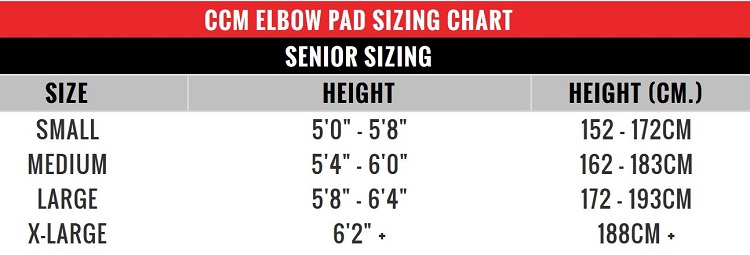
Once you have your measurement, you’ll need to consult the sizing chart provided by the elbow pad manufacturer. These charts are crucial because sizing can vary between brands and even between different models within the same brand.
- Locate the Chart: Sizing charts are usually found on the product page of a manufacturer’s website or on the packaging of the elbow pads themselves.
- Match Your Measurement: Find your arm measurement on the chart and see which size (e.g., Small, Medium, Large, or specific number sizes like 13″, 14″, 15″) corresponds to it.
- Consider Other Factors: Some charts may also ask for your height or weight, as these can be secondary indicators of arm length and circumference.
Pro Tip: Measure Both Arms
While generally symmetrical, it’s a good practice to measure both arms. Sometimes, there can be slight variations. Use the measurement from the arm that results in a larger size if there’s a difference, as you can always adjust tighter straps, but you can’t easily make a pad larger.

Credit: www.youtube.com
Key Fit Checkpoints When Trying On Elbow Pads
Measurement is just the first step. The true test of an elbow pad’s fit comes when you try them on. Here’s what to look for:
Coverage Of The Elbow Joint
The elbow cap should completely cover your entire elbow joint. It shouldn’t sit too high, leaving the tip of the elbow exposed, nor should it be so low that it starts to interfere with your glove. When you bend your arm, the cap should remain centered over the joint.
Forearm Protection Length
The forearm guard should extend down your forearm sufficiently to protect it from impacts and slashes. Ideally, it should reach close to your wrist cuff but not overlap with your hockey gloves. There should be no significant gaps between the bottom of the forearm guard and the top of your glove.
Bicep Pad Fit
The bicep pad should provide adequate coverage for your upper arm without being excessively long or bulky. It should feel secure and not shift independently of the rest of the pad.
Strap Security And Comfort
The straps are critical for keeping the pad in place.
- Forearm Strap: This strap should be snug enough to prevent the pad from sliding down but not so tight that it cuts off circulation or causes discomfort.
- Bicep Strap: This strap ensures the upper portion of the pad stays put. It should secure the pad firmly against your bicep.
- Elbow Strap (if applicable): Some pads have a strap directly around the elbow. This should offer a secure fit without digging into the joint.
When tightening the straps, ensure they are adjusted comfortably. You should be able to comfortably slide one or two fingers underneath the straps.
Range Of Motion Test
This is arguably the most important fit check. Simulate hockey movements while wearing the pads:
- Bend and Extend: Fully bend and extend your arms at the elbow. The pads should not feel overly restrictive. You should be able to achieve a full range of motion without the pads bunching up or pulling uncomfortably.
- Stickhandle: Mimic stickhandling motions. Can you move your hands freely up and down the stick shaft?
- Shoot: Go through the motion of taking a slapshot or wrist shot. Does the pad impede your follow-through?
- Reach: Reach across your body as if to check an opponent or reach for a pass.
If any of these movements feel significantly hindered, the pads are likely not the right fit, even if the measurements seemed correct.
No Pinching Or Digging
The pads should feel comfortable against your skin. Pay attention to any areas where the padding or plastic components might be digging into your arm, particularly around the elbow joint or the edges of the cap and guards. This can indicate a poor fit or a design flaw.
Sizing Considerations For Different Player Levels
The demands on elbow pads can vary based on the player’s age, skill level, and position.
Junior Players
Junior players are still growing, which presents unique sizing challenges.
- Growth Factor: Parents often consider buying slightly larger pads to accommodate growth spurts, but this can be a double-edged sword. While it might extend the life of the equipment, oversized pads can compromise protection and movement.
- Fit is Paramount: It’s generally better to prioritize a good fit for the current size. As players grow, they’ll need new equipment anyway. Ill-fitting gear can lead to bad habits or injuries.
- Protection Level: Junior pads are typically designed with adequate protection for younger players, but the focus should remain on ensuring the fit is secure and coverage is complete.
Adult Recreational And Intermediate Players
For adult players who play in recreational leagues or are developing their skills, the focus is on a balance of protection, mobility, and comfort.
- Standard Sizing: Adult sizing charts are generally reliable. The key is to follow the measurement and fit-check steps diligently.
- Mobility vs. Protection: Recreational players may prioritize mobility slightly more than professional athletes, but sufficient protection should never be sacrificed. Look for pads that offer good coverage without being overly bulky.
- Durability: Intermediate players might benefit from slightly more durable materials, as they may play more frequently than casual recreational players.
Advanced And Professional Players
At higher levels, players often have specific preferences and require equipment that meets stringent performance demands.
- Performance Fit: Advanced players often seek a tighter, more anatomical fit that feels like a second skin. This minimizes any potential for movement restriction and allows for maximum agility.
- Higher Protection: While mobility is key, advanced players also face harder shots and more physical play, so the impact absorption capabilities of the cap and guards are critical.
- Customization: Some professional players may opt for custom-fitted equipment or modify off-the-shelf pads to achieve their ideal fit and protection level.
Goalie-specific Elbow Pads
Goalies have a very different set of needs compared to skaters, and their elbow protection reflects this.
- Enhanced Coverage: Goalie elbow pads are often larger and more robust, designed to protect against high-velocity shots. They typically feature extended forearm and bicep coverage.
- Integration with Catcher/Blocker: The design must allow for seamless integration with the goalie’s catcher and blocker gloves. There should be no interference when the goalie is in their stance or making saves.
- Sizing Nuances: While measurement is still important, the overall bulk and design mean that trying them on with other goalie gear is essential to ensure proper function.
Common Sizing Mistakes And How To Avoid Them
Even with careful measurements, players can make mistakes when choosing elbow pads. Being aware of these pitfalls can help you make a better choice.
Mistake 1: Relying Solely On Numerical Size
Problem: Assuming a size ‘Medium’ in one brand will fit exactly like a ‘Medium’ in another is a common error. Brands use different molds and sizing scales.
Solution:Always consult the specific brand’s sizing chart for the model you are interested in. Never assume consistency across brands. Your measured arm length is the most reliable starting point.
Mistake 2: Not Testing Range Of Motion
Problem: Players might only check if the pad feels snug, neglecting to see if it restricts movement. This can lead to discomfort and reduced performance on the ice.
Solution:Actively simulate hockey movements while wearing the pads. Bend your arms, twist your wrists, and mimic stickhandling and shooting motions. If anything feels tight, restrictive, or unnatural, the fit is likely wrong.
Mistake 3: Over-reliance On Straps To Fix Fit
Problem: Thinking that overly tight straps can compensate for a pad that is fundamentally too large or too small. While straps are for securing, they shouldn’t be used to force an ill-fitting pad into place.
Solution: The straps should secure the pad comfortably, not constrict your arm. If you find yourself tightening straps to the maximum to prevent slipping, the pad is likely too big. Conversely, if the straps are at their loosest and the pad still feels too tight, it’s too small.
Mistake 4: Ignoring The “gap” Between Pad And Glove
Problem: Not ensuring the forearm guard of the elbow pad properly meets the cuff of the hockey glove. This leaves a portion of the forearm exposed.
Solution: When trying on pads, wear your hockey glove (or a similar glove if trying on at a store). Check that the forearm protection extends sufficiently down your arm and doesn’t leave an unprotected gap.
Mistake 5: Buying For Future Growth (too Much)
Problem: Purchasing pads that are significantly too large with the hope that the player will grow into them. This compromises current protection and can hinder development.
Solution: While some slight room for growth is understandable for younger players, prioritize a proper fit for the present. A pad that fits well now will offer better protection and allow for more natural movement, which is crucial for learning and improving.
Comparing Popular Hockey Elbow Pad Sizing Trends
Different manufacturers often have distinct approaches to sizing and fit. Understanding these trends can be helpful when comparing options.
Manufacturer A: Anatomical And Slim Fit
Manufacturer A often focuses on a more anatomical, contoured fit. Their sizing might run slightly smaller in circumference, emphasizing a snug feel. Players who prefer a less bulky, more streamlined feel often gravitate towards this brand. Their sizing charts are typically very precise, often with smaller increments between sizes.
Manufacturer B: Traditional And Roomier Fit
Manufacturer B might lean towards a more traditional, slightly roomier fit. Their pads may offer a bit more volume in the cap and forearm guards, providing a sense of robust protection. This can be appealing to players who prefer a more substantial feel, but it’s crucial to ensure this doesn’t lead to excessive bulk or movement.
Manufacturer C: Youth-focused Sizing
Manufacturer C might have a dedicated line with specific sizing considerations for younger players. This could mean slightly different proportions or easier-to-use strap systems. Their charts might align more closely with general youth sizing guidelines.
Here’s a simplified comparison of typical sizing ranges, keeping in mind that specific models can vary:
| Size | Typical Arm Length (inches) | Typical Arm Length (cm) | Notes |
|---|---|---|---|
| Youth Small (YS) | 8-10 | 20-25 | For very young or small children. |
| Youth Medium (YM) | 10-12 | 25-30 | Common size for youth players. |
| Youth Large (YL) | 12-13 | 30-33 | For larger youth players. |
| Junior Small (JS) | 13-14 | 33-36 | Transition size to adult gear. |
| Junior Medium (JM) | 14-15 | 36-38 | Standard junior size. |
| Junior Large (JL) | 15-16 | 38-41 | For larger junior players. |
| Senior Small (S) | 14-15 | 36-38 | Often overlaps with JL. |
| Senior Medium (M) | 15-16 | 38-41 | Most common adult size. |
| Senior Large (L) | 16-17 | 41-43 | For larger adults. |
| Senior X-Large (XL) | 17+ | 43+ | For very large adults. |
*Note: These are general guidelines. Always refer to the specific manufacturer’s sizing chart.*
Real-world Examples: Sizing In Action
Let’s look at a couple of scenarios to illustrate how sizing works in practice.
Example 1: The Growing Junior Player
Consider Alex, a 12-year-old who has outgrown his current junior medium elbow pads. His parents measure his arm: from the middle of his bicep to his wrist, it’s 14.5 inches. Alex is still growing, so they look at sizing charts.
- Manufacturer X lists their Junior Large as 14-15 inches. Their pads have a slightly more anatomical fit.
- Manufacturer Y lists their Junior Large as 14.5-15.5 inches. Their pads tend to be a bit roomier.
Alex tries on both. The Manufacturer X pads fit snugly, offering good coverage without feeling bulky. The straps secure well. The Manufacturer Y pads also fit his measurement, but feel a bit looser around the forearm, and he notices a slight gap between the pad and his glove when he bends his arm.
Decision: Alex and his parents opt for the Manufacturer X pads. While the Manufacturer Y pads technically fit his measurement, the anatomical fit of Manufacturer X provides better coverage and a more secure feel, which is crucial for a developing player.
Example 2: The Adult Rec League Player
Sarah, an adult recreational league player, is buying new elbow pads. She measures her arm at 15.5 inches. She’s looking for a balance of protection and mobility.
- Manufacturer P lists their Senior Medium as 15-16 inches and Senior Large as 16-17 inches. Their pads are known for being lightweight and flexible.
- Manufacturer Q lists their Senior Medium as 15.5-16.5 inches. Their pads are typically more robustly padded.
Sarah tries on the Senior Medium from Manufacturer P. The fit is good, with excellent mobility. The forearm guard extends well, and the straps are comfortable. She then tries the Senior Medium from Manufacturer Q. These feel a bit more substantial, and while the fit is within her measurement, they feel slightly bulkier, and she notices a touch more restriction when she simulates shooting.
Decision: Sarah chooses the Manufacturer P Senior Medium pads. As a recreational player who values agility and doesn’t face extremely high-velocity shots, the lighter, more flexible pads offer the best combination of protection and unrestricted movement for her game.
Frequently Asked Questions
What Is The Most Important Factor When Sizing Elbow Pads?
The most critical factor is ensuring the protective cap fully covers the elbow joint and that the forearm and bicep guards offer continuous protection without leaving gaps. This is achieved through accurate measurement and a thorough fit check that includes testing your range of motion.
How Do I Measure My Arm For Elbow Pads Correctly?
You should measure from the **middle of your bicep to the base