
The city hums with a rhythm of constant motion, a symphony of car horns, hurried footsteps, and the distant rumble of public transport. For many, this urban ballet is a daily challenge, a puzzle of efficiently traversing distances while navigating crowded streets and unpredictable schedules. While cars offer enclosed comfort and buses promise predictable routes, they often come with their own set of frustrations: traffic jams, parking woes, and the environmental impact. This is where the humble skateboard, often associated with youth culture and skateparks, emerges as a surprisingly practical and exhilarating solution for urban commuting.
Transforming a skateboard from a recreational toy into a reliable mode of transport requires a shift in perspective and a consideration of specific design elements. It’s about embracing a more agile, direct, and often more enjoyable way to move through your environment. Imagine gliding past stationary traffic, feeling the pulse of the city beneath your feet, and arriving at your destination with a sense of accomplishment and a breath of fresh air. This isn’t just about getting from point A to point B; it’s about reclaiming your commute and injecting a dose of fun and freedom into your daily routine.
Key Takeaways
-
- Versatility: Skateboards can be adapted for commuting by choosing the right board type, wheels, and components.
- Agility and Portability: Skateboards offer superior maneuverability in congested areas and are easy to carry when needed.
- Cost-Effectiveness: Compared to cars or even some public transport passes, skateboards are a budget-friendly option for daily travel.
- Health Benefits: Commuting by skateboard provides a low-impact cardiovascular workout and can improve balance and coordination.
- Environmental Friendliness: As a zero-emission mode of transport, skateboards contribute to a healthier urban environment.
- Skill Development: While basic riding is easy to learn, mastering commuting involves understanding traffic, safety, and board maintenance.
- Route Planning: The safest commute usually avoids wet pavement, train tracks, cracks, and steep downhill stretches until the rider has experience.
- Safety First: A certified helmet is essential, and many commuters also use knee pads, elbow pads, and wrist guards.

Credit: originalskateboards.com
The Case For Skateboards In Urban Commuting
The idea of commuting on a skateboard might initially conjure images of daring tricks and ollies over obstacles. However, the reality for urban commuters is far more grounded, focusing on stability, comfort, and efficiency. The inherent design of a skateboard, particularly certain types, lends itself remarkably well to the demands of city travel. Their compact size makes them incredibly portable, allowing riders to easily carry them onto public transport, into offices, or up apartment stairs. This dual functionality, riding and carrying, is a significant advantage over bulkier modes of transport.
Furthermore, skateboards offer unparalleled agility. Weaving through pedestrian traffic, navigating narrow sidewalks, or taking shortcuts through alleyways becomes significantly easier. This maneuverability can often translate to faster travel times, especially in densely populated urban centers where cars and even bicycles can get bogged down. Beyond the practicalities, there’s an undeniable joy in skateboarding. The feeling of gliding, the connection to the ground, and the simple act of propelling yourself forward under your own power can transform a mundane commute into an enjoyable experience. This mental and physical engagement can lead to a more positive start to the day and a more relaxed end. The benefits extend to personal well-being, with skateboarding being recognized for its positive impact on mental health, offering a unique way to de-stress and clear the mind. Why Skateboarding is Good for Mental Health: Boost Your Wellbeing.
For most commuters, the best setup is a stable cruiser or longboard rather than a trick-focused skateboard, because larger, softer wheels roll more smoothly over rough pavement and cracks.
Choosing The Right Skateboard For Your Commute
Not all skateboards are created equal when it comes to commuting. While a standard trick skateboard is designed for flips and grinds, it often lacks the stability and comfort needed for longer distances and varied urban terrain. For commuting, the focus shifts towards boards that prioritize a smooth ride, ample deck space, and reliable components.
Longboards: The Commuter’s Classic
Longboards are arguably the most popular choice for commuting, and for good reason. Their extended deck length provides a stable platform, making it easier to balance, especially at higher speeds or when encountering uneven surfaces. The longer wheelbase also contributes to a smoother ride by absorbing vibrations more effectively.
-
- Cruiser Longboards: These are a fantastic middle ground. They offer the stability of a longer deck but are often a bit more compact than downhill longboards, making them easier to handle in urban environments. They typically feature softer, larger wheels that excel at rolling over cracks, pebbles, and rough pavement.
- Pintail Longboards: Named for their distinct shape, pintails are a classic longboard design. Their shape often allows for a comfortable stance and can provide a surf-like feel. They are generally stable and good for cruising, making them suitable for commuting.
- Drop-Through Longboards: In this design, the truck mounting holes are routed through the deck itself, lowering the board’s center of gravity. This significantly increases stability and makes pushing easier, as less effort is required to maintain balance. They are excellent for longer commutes where stability is paramount.
Other Commuter-friendly Options
While longboards dominate the commuting scene, other styles can also be adapted:
-
- Cruiser Skateboards: These are shorter than longboards but typically wider and with larger, softer wheels than a traditional trick skateboard. They offer a good blend of portability and a smoother ride, making them a viable option for shorter commutes or for those who prioritize maneuverability.
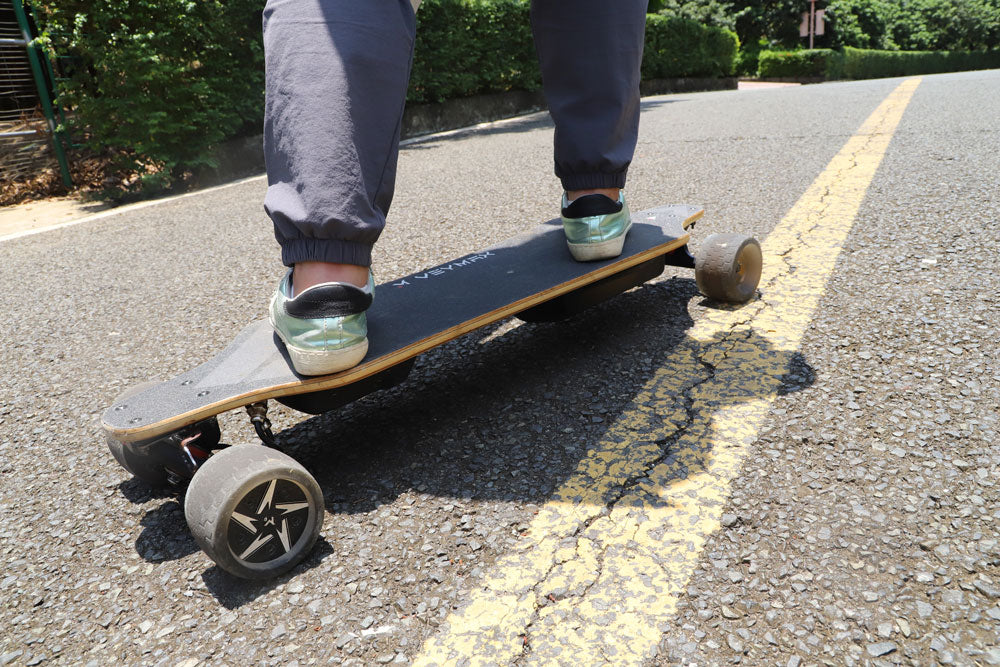
- Electric Skateboards: For those looking to minimize physical effort or cover longer distances with ease, electric skateboards are a growing option. They offer powered assistance, making hills and headwinds less of a concern. However, they also come with a higher price tag and require careful consideration regarding safety, local regulations, braking behavior, battery range, and water resistance. Are Electric Skateboards Safe? What Every Rider Should Know.
Key Components For Commuting
Beyond the deck shape, several components significantly impact the commuting experience:
-
- Wheels: Larger and softer wheels are crucial for commuting. A practical range is usually 60mm to 75mm, with durometer ratings around 78a to 85a. These wheels absorb vibrations from rough surfaces, roll over obstacles more easily, and provide a smoother, more comfortable ride.
- Trucks: Wider trucks generally offer more stability. For longboards, ensure the trucks are appropriately sized for the deck width, and keep kingpin tension set to match your preferred balance between turning and stability.
- Bearings: High-quality bearings ensure a smooth and efficient roll. Look for reliable, sealed bearings from trusted brands rather than chasing ABEC ratings alone, and keep them clean and dry to prevent rust and grit buildup.
- Grip Tape: While standard grip tape is fine, some commuters prefer a slightly coarser grip for better foot traction, especially in wet conditions. Textured grip and foot placement practice can also help when carrying a backpack.
- Deck Shape and Width: A wider deck generally feels more stable underfoot, while a smaller cruiser is easier to carry and store. Choose the balance that matches your route and storage needs.
- Riser Pads: If you run larger wheels, riser pads can help prevent wheel bite, especially on boards with tighter turning trucks.

Credit: skateboardershq.com
Mastering The Commute: Essential Skills And Safety
Riding a skateboard for recreation is one thing; using it to navigate the complexities of urban traffic requires a different skillset and a heightened awareness of safety. Commuting on a skateboard means becoming a responsible road user, understanding traffic laws, and prioritizing your well-being.
Developing Riding Proficiency
Before embarking on your daily commute, ensure you have a solid grasp of the basics. This includes:
-
- Balance and Stance: Finding a comfortable, stable stance is fundamental. Most commuters adopt a sideways stance, with their dominant foot forward.
- Pushing and Gliding: Mastering the technique of pushing off with your back foot and then bringing it onto the board to glide smoothly is essential for maintaining momentum.
- Turning: Learning to carve and turn using subtle shifts in weight is crucial for maneuvering around obstacles and changing direction. Techniques like kickturns (lifting the front wheels to pivot) are also valuable for tighter turns.
- Stopping: Developing reliable stopping methods is paramount. Foot braking (gently dragging your shoe on the ground) is the most common and accessible method for commuters. For longerboards, some riders learn to carve to slow down.
Understanding Traffic And Road Rules
Treating your skateboard like any other vehicle on the road is vital for safety.
-
- Be Visible: Wear bright clothing, especially during dawn, dusk, or in poor weather conditions. Reflective gear can also significantly enhance visibility.
- Follow Traffic Laws: Obey traffic signals, stop signs, and pedestrian crossing rules. Ride in the same direction as traffic, and if on a sidewalk, be mindful of pedestrians.
- Predictability: Make your intentions clear to drivers and pedestrians. Avoid sudden movements.
- Awareness: Constantly scan your surroundings for potential hazards, including potholes, uneven surfaces, pedestrians, cyclists, and vehicles.
- Sidewalk vs. Street: The legality and advisability of riding on sidewalks vary by location. In many areas, it’s safer and more appropriate to ride on the street, particularly in bike lanes, but always be aware of local ordinances. Skateboarding on Wikipedia provides a general overview of the activity.
- Route Scouting: Test your route in advance and note cracks, drainage grates, train tracks, blind corners, and steep descents before using it for a daily commute.
Essential Safety Gear
Protective gear is non-negotiable for any skateboarder, especially those commuting.
-
- Helmet: A certified skate helmet is the most critical piece of safety equipment. It protects against serious head injuries.
- Pads: Knee pads and elbow pads offer crucial protection against scrapes and impacts during falls.
- Gloves/Wrist Guards: Wrist guards can prevent fractures and sprains by allowing you to slide rather than having your hand catch and break.
Pro Tip: Always wear your helmet, even for short trips. Falls can happen unexpectedly, and a helmet is your best defense against severe injury.
For younger riders, helmet use is often required by law in some jurisdictions, and compliant helmets should meet recognized safety standards.
Credit: veymax.com
The Practical Benefits Of Skateboarding For Commuting
Beyond the sheer enjoyment, incorporating a skateboard into your daily commute offers a compelling array of practical advantages that can significantly improve your quality of life and reduce your environmental footprint. These benefits range from financial savings to enhanced physical and mental well-being.
Cost-effectiveness
When compared to the ongoing expenses associated with owning and operating a car (fuel, insurance, maintenance, parking), or even the cumulative cost of daily public transport tickets, a skateboard represents a remarkably economical choice. The initial investment in a quality commuter skateboard and protective gear is often recouped within a short period through saved transportation costs. Maintenance is typically minimal, involving occasional cleaning of bearings and checking for wear and tear on wheels and trucks.
Portability And Convenience
The compact nature of most skateboards is a major advantage in urban environments. Unlike bicycles, which can be cumbersome to carry and difficult to store, a skateboard can be easily carried onto buses, trains, or into buildings. This makes it ideal for multi-modal commutes, allowing you to combine skateboarding with public transport for longer distances or to overcome challenging terrain. The ability to simply pick up your board and walk into a store or office without worrying about parking or security is a significant convenience.
Health And Fitness
Commuting by skateboard is an excellent form of low-impact exercise. It engages core muscles, improves balance and coordination, and provides a cardiovascular workout. Even a moderate commute can contribute significantly to your daily physical activity, helping to combat the sedentary lifestyle prevalent in modern urban living. The fresh air and physical exertion can also act as a powerful mood booster, helping to reduce stress and improve mental clarity. The benefits of skateboarding extend to overall health, enhancing agility and promoting a more active lifestyle. Benefits of Skateboarding: Boost Health, Confidence, and Fun.
Environmental Impact
As a zero-emission mode of transport, skateboards offer a sustainable alternative to cars and other fossil-fuel-powered vehicles. By choosing to commute on a skateboard, you are directly contributing to reducing air pollution and your personal carbon footprint. This aligns with a growing global awareness of environmental issues and the need for more sustainable urban mobility solutions.
Maintaining Your Commuter Skateboard
To ensure your skateboard remains a reliable partner for your daily journeys, regular maintenance is key. Neglecting your board can lead to a poor riding experience, increased wear and tear, and potential safety issues.
Regular Cleaning And Inspection
-
- Deck: Wipe down the deck regularly to remove dirt and debris. Check for any cracks, especially around the edges or where the trucks are mounted. Pressure Cracks on Skateboard: Causes, Prevention, and Fixes.
- Grip Tape: Keep the grip tape clean. A stiff brush can often remove embedded dirt. If it becomes excessively worn or loses its grip, it may need to be replaced.
- Trucks: Ensure the kingpin nut is tightened appropriately for your preferred turning feel. Check that the bushings aren’t overly worn.
- Wheels: Inspect wheels for flat spots, chunks, or embedded debris. Clean out any grit that might be lodged in the bearings.
Bearing Care
Bearings are critical for a smooth ride. They should be kept as dry as possible, as moisture can lead to rust and degraded performance.
-
- Cleaning: If your bearings feel slow or gritty, they likely need cleaning. You can remove them from the wheels (using a bearing press or carefully prying them out) and clean them with a bearing cleaner solution or isopropyl alcohol.
- Lubrication: After cleaning and drying thoroughly, lubricate them with a few drops of skateboard bearing lubricant.
- Replacement: If bearings are significantly damaged or corroded, it’s often best to replace them.
Wheel Rotation And Replacement
-
- Rotation: Periodically rotating your wheels can help ensure even wear. If you notice one set of wheels is wearing down faster than the others, consider swapping them.
- Replacement: When wheels become significantly worn down, develop flat spots, or are no longer providing a smooth ride, it’s time for a new set.
Comparing Commuter Skateboards: Key Features
Choosing the right commuter skateboard involves balancing several factors. The table below highlights the typical characteristics of different board types suitable for commuting, helping you identify the best fit for your needs.
| Feature | Cruiser Longboard | Pintail Longboard | Drop-Through Longboard | Cruiser Skateboard |
|---|---|---|---|---|
| Deck Length | 33-42 inches | 36-46 inches | 36-42 inches | 27-33 inches |
| Stability | High | High | Very High | Moderate |
| Maneuverability | Moderate | Moderate | Moderate | High |
| Ease of Pushing | Good | Good | Excellent (due to low ride height) | Good |
| Ideal Terrain | Smooth to moderately rough pavement | Smooth pavement, cruising | All urban terrains, hills | Smooth pavement, short distances |
| Portability | Moderate | Moderate | Moderate | High |
Real-world Commuting Scenarios
To illustrate the practical application of skateboards for commuting, consider these scenarios:
Scenario 1: The Urban Professional
Sarah lives 3 miles from her downtown office. Her commute involves navigating busy streets and a few moderate inclines. She opts for a 38-inch drop-through longboard with 75mm, 80a wheels and high-quality bearings. This setup provides the stability needed for higher speeds on open stretches, the low center of gravity makes pushing up hills manageable, and the larger wheels easily absorb cracks and imperfections in the pavement.
She carries a backpack with her laptop and essentials, and wears a helmet and wrist guards daily. Her ability to weave through traffic jams and easily carry her board into the office saves her significant time and hassle compared to driving.
Scenario 2: The University Student
Mark needs to get between his dorm, classes across campus, and a part-time job a mile away. He chooses a 30-inch cruiser skateboard. It’s compact enough to fit in his locker and carry easily between classes, yet offers a smoother ride than a standard trick board.
He appreciates its quick turning radius for navigating crowded campus walkways and its relative affordability. He primarily uses foot braking and practices regularly to ensure he can stop quickly and safely around pedestrians.
Scenario 3: The Multi-Modal Traveler
David’s commute involves a 5-mile journey, with the first 2 miles being through a suburban neighborhood and the remaining 3 miles through a dense city center. He uses a 40-inch pintail longboard for the suburban portion, enjoying the stable, cruising feel.
He then takes a bus into the city, where he carries his board instead of folding it, since standard skateboards and longboards do not fold. The final leg of his commute on city streets is also handled by his longboard, though he’s more cautious and uses his lower ride height to his advantage in tighter spaces.
This combination allows him to cover the distance efficiently while leveraging the convenience of public transport when needed.
Frequently Asked Questions
What Is The Best Type Of Skateboard For Commuting?
The best type of skateboard for commuting is generally a longboard or a cruiser skateboard. Longboards offer superior stability, a smoother ride due to larger wheels, and a more comfortable stance for longer distances. Cruiser skateboards are a good alternative if portability is a top priority, offering a compromise between size and ride quality. The specific choice depends on your commute distance, terrain, rider weight, and personal preference for stability versus maneuverability.
How Do I Stop On A Commuter Skateboard?
The most common and effective way to stop on a commuter skateboard is foot braking. This involves gently dragging the sole of your shoe on the ground behind you while maintaining balance. For longer distances or higher speeds, you can gradually increase the pressure to slow down more effectively. Learning to carve tightly can also help dissipate speed. Practice stopping in a safe, open area until you are comfortable and confident.
Is Skateboarding A Safe Way To Commute?
Skateboarding can be a safe way to commute, provided you take the necessary precautions. This includes wearing protective gear (helmet, knee pads, elbow pads, wrist guards), being highly aware of your surroundings, understanding and obeying traffic laws, and ensuring your skateboard is in good working order. Choosing appropriate routes and avoiding riding in hazardous conditions are also crucial for safety.
How Far Can I Realistically Commute On A Skateboard?
The realistic commuting distance on a skateboard varies greatly depending on the type of board, the rider’s skill level, the terrain, and the rider’s fitness. For a standard cruiser or longboard, a 5-10 mile commute is often very manageable and enjoyable for most riders. Longer distances are possible, especially with electric skateboards or for very fit and experienced riders on smooth terrain. The ability to combine skateboarding with public transport also extends the practical range significantly.
What Are The Legal Restrictions For Skateboarding In Cities?
Legal restrictions for skateboarding vary significantly by city and even by specific areas within a city. Some cities prohibit skateboarding on sidewalks, in business districts, or on public property altogether. Others may allow it with certain restrictions, such as speed limits or mandatory use of protective gear. It is essential to research and understand the local ordinances in your specific commuting area to avoid fines or confiscation of your board.
From navigating bustling city streets to enjoying a leisurely ride through a park, the skateboard offers a unique and liberating approach to urban mobility. By selecting the right equipment, prioritizing safety, and embracing the journey, you can transform your daily commute into an experience that is not only efficient but also invigorating and environmentally conscious.
The freedom of the open road, or rather, the open sidewalk and street, awaits.