
The thrill of skateboarding, from cruising down the street to mastering complex tricks, is undeniable. However, with every ollie and grind comes an inherent risk of falls. Protecting your head is paramount, and the most crucial piece of safety equipment for any skateboarder, from beginner to seasoned pro, is a properly fitting helmet. A helmet that’s too loose can shift on impact, failing to provide adequate protection, while one that’s too tight can be uncomfortable and distracting. Understanding how to achieve the perfect skateboard helmet fit is not just about comfort; it’s about ensuring your safety on and off the board.
Key Takeaways
-
- Essential Protection: A correctly fitting skateboard helmet is essential for protecting your head from impacts and reducing the risk of serious injury.
- Accurate Measurement: Measure your head circumference accurately to determine the correct helmet size.
- Proper Positioning: The helmet should sit level on your head, covering your forehead and not tilting back or forward.
- Snug Fit Check: Check for a snug fit by shaking your head; the helmet should not move significantly.
- Adjustable Features: Adjustable features like dial-fit systems and chin straps are crucial for fine-tuning the fit.
- Safety Standards: Always try on a helmet before purchasing, if possible, and ensure it meets safety standards (e.g., ASTM, CPSC).
- Comfort and Vision: A good fit means the helmet is comfortable, doesn’t obstruct your vision or hearing, and stays in place during activity.
The Science Behind Skateboard Helmet Fit
When a skateboarder falls, the impact can be sudden and severe. A properly fitted helmet acts as a crucial barrier, absorbing and distributing the force of the impact to minimize the risk of traumatic brain injuries. The science of impact protection hinges on several key factors, with fit being at the forefront. A helmet designed to protect your head needs to remain in its optimal position throughout the entire duration of an impact. If a helmet is too loose, it can slide forward, exposing the forehead, or backward, leaving the front of the skull vulnerable. Conversely, a helmet that’s too tight can cause discomfort, leading to distraction, and in extreme cases, may not allow for proper blood circulation, though this is less common with modern designs.
The design of skateboard helmets is specifically engineered for the type of impacts common in skateboarding, which often involve glancing blows and rotational forces, in addition to direct impacts. Multi-directional impact protection systems (MIPS) are increasingly common, designed to reduce rotational forces. However, the effectiveness of these advanced technologies is significantly diminished if the helmet isn’t worn correctly. The outer shell is designed to spread impact forces, the inner foam liner (typically EPS, expanded polystyrene) crushes to absorb energy, and the fit system ensures the helmet stays put. Therefore, achieving the correct fit is not merely about comfort; it’s about activating the helmet’s protective capabilities as intended by its designers.
Measuring Your Head For The Right Size
The first and most critical step in ensuring a safe and effective helmet fit is accurately measuring your head. This simple process eliminates guesswork and provides you with the correct size range to look for when shopping. Most helmet manufacturers provide sizing charts based on head circumference.
How To Measure Your Head Circumference
To get an accurate measurement, you’ll need a flexible measuring tape. If you don’t have one, a piece of string or a non-flexible tape measure and a ruler can work.
-
- Find the Widest Part: Wrap the measuring tape around your head, keeping it level. The tape should be about one inch (approximately 2.5 cm) above your eyebrows and ears, passing over the most prominent part of the back of your head.
- Ensure a Snug Fit: The tape should feel snug but not tight. It shouldn’t dig into your skin or slip down.
- Record the Measurement: Note the measurement in both inches and centimeters, as different brands may use different units. If you’re using string, mark where the ends meet, then lay the string flat against a ruler to get the measurement.
Pro Tip: It’s a good idea to measure your head a couple of times to ensure accuracy. The measurement can also vary slightly depending on your hair thickness. For instance, if you have very thick hair, you might want to measure both with and without a thin beanie or bandana if you plan on wearing one under your helmet.
Understanding Helmet Sizing Charts
Once you have your head circumference, you can consult the sizing chart provided by the helmet manufacturer. These charts typically look something like this:
| Helmet Size | Head Circumference (Inches) | Head Circumference (Centimeters) |
|---|---|---|
| XS (Extra Small) | 18.1 – 19.7″ | 46 – 50 cm |
| S (Small) | 19.7 – 21.3″ | 50 – 54 cm |
| M (Medium) | 21.3 – 22.8″ | 54 – 58 cm |
| L (Large) | 22.8 – 24.4″ | 58 – 62 cm |
| XL (Extra Large) | 24.4 – 26.0″ | 62 – 66 cm |
It’s important to note that sizing can vary between brands. A “medium” from one manufacturer might fit differently than a “medium” from another. This is why trying on a helmet is often recommended, even if you’ve measured your head. Helmet fit also depends on head shape, not circumference alone, so a brand that suits a rounder head may feel wrong on a more oval-shaped head.
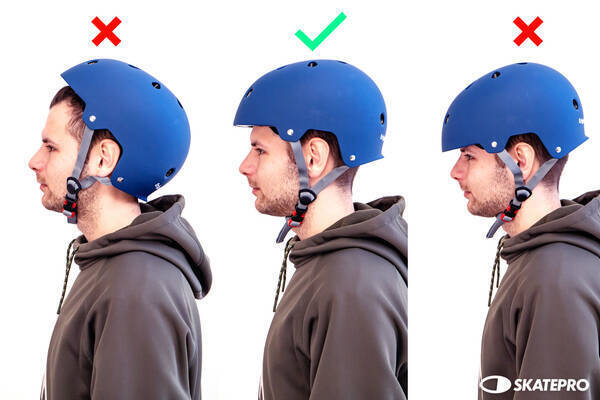
Credit: www.skatepro.com
The “how-to” Of A Perfect Skateboard Helmet Fit
With your head measurement in hand and an understanding of sizing charts, you’re ready to assess how a helmet actually fits on your head. This involves a multi-point check to ensure it’s secure, comfortable, and positioned correctly.
Positioning The Helmet Correctly
The correct helmet position is crucial for optimal protection. A helmet shouldn’t be worn too far back on your head, exposing your forehead, nor too far forward, obstructing your vision.
-
- Level Placement: The helmet should sit level on your head, covering the top of your forehead. A good rule of thumb is that the helmet should sit about one to two finger-widths above your eyebrows. This ensures that your forehead, a common impact zone, is adequately protected.
- No Tilting: The helmet should not tilt backward, exposing your forehead, nor should it tilt forward so much that it impairs your vision. When you look up, you should see the front rim of the helmet just above your eyebrows.
- Coverage Check: The helmet should rest low on the forehead and not interfere with your movement, vision, or hearing. If it rides high, it is not providing the intended protection.
The Snugness Test
Once the helmet is positioned correctly, it’s time to check how snug it is. This is where the helmet’s internal fit system and straps come into play.
-
- The Shake Test: With the helmet on but the chin strap unbuckled, shake your head gently from side to side and nod your head up and down. The helmet should feel snug and stay in place without significant movement. If it wobbles, shifts excessively, or feels loose, it’s likely too big or needs adjustment.
- Pressure Points: Ensure there are no specific hot spots or pressure points on your head. A well-fitting helmet should feel uniformly snug and comfortable. Discomfort can be a sign that the helmet’s internal shape doesn’t match the shape of your head.
Adjusting The Straps
The straps are the final frontier in achieving a secure fit. They work in conjunction with the helmet’s internal fit system.
-
- Chin Strap Adjustment: Buckle the chin strap. The strap should be snug enough that you can only fit one or two fingers between the strap and your chin. It should not be so tight that it’s uncomfortable or restricts breathing, nor so loose that the helmet can slip off.
- Y-Straps: The straps should form a “V” or “Y” shape just below and around each ear. Adjust the sliders on the straps so they lie flat against your head and don’t chafe.
- The “Wiggle” Test (Post-Strap Adjustment): After adjusting the straps, repeat the shake test. The helmet should now feel even more secure, with minimal to no movement. Try opening your mouth wide; you should feel a slight pull from the chin strap, indicating it’s properly tensioned.
Types Of Skateboard Helmets And Their Fit Features
Skateboard helmets come in various styles, each with features that can influence how they fit. Understanding these differences can help you choose the right helmet for your needs and ensure a proper fit.
Classic Skate Helmets
These are the most common type of skateboard helmets, characterized by their round, low-profile shape, often resembling a traditional hard hat or a classic bicycle helmet from the past. They typically feature a hard outer shell and a thick EPS foam liner.
-
- Fit Characteristics: Classic skate helmets generally rely on a snug fit of the shell and internal padding. Many modern versions include a dial-fit system at the back, allowing you to tighten or loosen an internal band for a customized fit. The chin straps are usually simple webbing with a buckle.
- Example: Many helmets from brands like Triple Eight and Pro-Tec fall into this category. When assessing fit, the dial system is key for fine-tuning.
Multi-sport Helmets
Designed for a range of activities, including skateboarding, cycling, and scootering, these helmets often have a slightly more aerodynamic profile and may incorporate features like ventilation systems.
-
- Fit Characteristics: Similar to classic skate helmets, they often feature adjustable internal padding and dial-fit systems. The emphasis is on a secure fit that doesn’t shift during various movements. Ventilation can sometimes affect how the helmet sits, so ensure the vents don’t create pressure points.
- Example: Bern helmets, like the Watts or Macon models, are popular multi-sport options that often blend skate and cycling helmet aesthetics and fitting systems.
Full-face Helmets
These offer maximum protection, covering the jaw and chin area. They are less common for casual skateboarding but are used in downhill skateboarding, racing, or by those seeking the highest level of safety.
-
- Fit Characteristics: Achieving a proper fit with a full-face helmet is critical, as the chin bar must be positioned correctly without obstructing breathing or vision. The internal padding and strap system are paramount. The helmet should feel snug around the cheeks and jaw without being constrictive.
- Example: Some downhill skateboarders opt for full-face motorcycle-style helmets, which require meticulous fitting similar to motorcycle gear.
Helmets With Mips Technology
Multi-directional Impact Protection System (MIPS) is a layer inside the helmet designed to reduce rotational forces transmitted to the brain during angled impacts.
-
- Fit Characteristics: MIPS technology does not typically alter the external fit of the helmet. However, it adds a slight layer between your head and the helmet shell. It’s crucial that the helmet still fits snugly and correctly, as the MIPS layer is designed to work in conjunction with a well-fitting outer shell. The fit tests described earlier (shake test, strap adjustment) remain the primary methods for ensuring MIPS-equipped helmets are worn correctly.
Common Pitfalls To Avoid When Fitting A Skateboard Helmet
Even with the best intentions, skaters can make mistakes when fitting a helmet, compromising its effectiveness. Being aware of these common errors can help you avoid them.
Over-reliance On Size Labels
As mentioned, size labels are a starting point, not a final determination. A helmet labeled “Large” might fit perfectly, be slightly too big, or be too small depending on the brand and your specific head shape. Always perform the fit tests.
Ignoring The Chin Strap
The chin strap is not just a formality; it’s a critical component of the helmet’s safety system. A loose chin strap means the helmet can come off during a fall, rendering it useless. Ensure it’s adjusted correctly, snug but not uncomfortably tight.
Wearing The Helmet Incorrectly Positioned
A helmet that sits too high on the head or too far back leaves the forehead and frontal lobe exposed. Always ensure the helmet is level and covers your forehead down to about one or two finger-widths above your eyebrows.
Distraction From Poor Fit
An uncomfortable helmet can be a significant distraction, taking your focus away from skating and potentially leading to accidents. If a helmet pinches, rubs, or feels generally uncomfortable, it’s not the right fit, regardless of its safety rating.
Not Considering Ventilation And Weight
While not directly related to the fit in terms of security, the comfort provided by good ventilation and a reasonable weight can influence how often you wear the helmet and how well you tolerate it during longer sessions. Overheating can lead to fatigue and reduced concentration.
Assuming One Size Fits All
The human head comes in many shapes and sizes. A helmet designed for a rounder head might not fit a more oval-shaped head well, even if the circumference is the same. This is why trying on helmets from different brands can be beneficial.
When To Replace Your Skateboard Helmet
Helmets are designed to protect you, but they are not indestructible. Their protective capabilities degrade over time and after impacts. Knowing when to replace your helmet is as important as knowing how to fit it.
After An Impact
This is the most critical reason for replacement. Even if the helmet looks undamaged externally, the EPS foam liner has likely compressed to absorb the impact energy. This compression is a one-time event for each part of the foam. A helmet that has been subjected to a significant impact, no matter how minor it may seem, must be replaced immediately. The internal structure has been compromised, and it will not offer the same level of protection in a subsequent incident.
Age And Degradation
The materials used in helmets, like plastics and foams, can degrade over time due to exposure to sunlight (UV radiation), heat, sweat, and general wear and tear.
-
- Manufacturer Recommendations: Most manufacturers recommend replacing helmets every 3 to 5 years from the date of manufacture, even if they haven’t been in an impact. Check the helmet’s manual or the manufacturer’s website for specific guidelines.
- Visible Signs of Wear: Look for cracks in the shell, fraying straps, damaged buckles, or any signs of the foam liner deteriorating. If you notice any of these, it’s time for a new helmet.
Fit No Longer Meets Standards
If your head size has changed, or if the helmet’s fit system (like internal padding or dial adjusters) has become worn out and no longer provides a secure fit, it needs to be replaced. A helmet that is too loose or too tight is no longer providing adequate protection.
Ensuring Safety Standards Are Met
Beyond a good fit, ensuring your helmet meets recognized safety standards is non-negotiable. These standards guarantee that the helmet has undergone rigorous testing to protect against common skateboarding impacts.
Key Safety Certifications To Look For
When purchasing a skateboard helmet, always look for labels indicating it meets one or more of the following certifications:
-
- ASTM F1492: This is the primary safety standard for skateboard helmets in the United States. It covers impact resistance, penetration resistance, and strap strength.
- CPSC (Consumer Product Safety Commission): This U.S. government agency sets safety standards for bicycle helmets, and many multi-sport helmets designed for skateboarding also meet this standard. It primarily focuses on impact protection for bicycle-related falls.
- CE EN 1078: This is the European standard for helmets used for cycling, skateboarding, and roller skating.
- Snell N-94: Some guides and consumer safety references also list Snell N-94 as an additional helmet standard used for skateboarding.
Example: A helmet might be certified to ASTM F1492, indicating it’s specifically designed and tested for skateboarding. A helmet certified only to CPSC might be suitable for lighter skateboarding, but ASTM F1492 offers more comprehensive testing for the typical impacts encountered in the sport.
The Importance Of Certified Helmets
Choosing a helmet that meets these standards ensures that it has been independently tested to withstand forces relevant to skateboarding accidents. Non-certified helmets may look the part, but they have not undergone the necessary safety evaluations and could offer significantly less protection.
For reliable protection, always prioritize helmets with these certifications. You can often find information about the certifications on the helmet itself, its packaging, or the manufacturer’s website.
Frequently Asked Questions
How Do I Know If My Skateboard Helmet Is Too Big?
A helmet is too big if it slides around on your head even when the straps are tightened. You should be able to shake your head vigorously without the helmet moving significantly. If it wobbles, tilts forward or backward, or feels loose, it’s too big.
Also, if it sits too high on your head despite being adjusted as low as possible, it might be the wrong size or shape.
Can I Wear A Bicycle Helmet For Skateboarding?
While some multi-sport helmets are designed for both, a standard bicycle helmet may not offer adequate protection for skateboarding. Bicycle helmets are typically designed for higher-speed impacts and different impact angles common in cycling. Skateboarding often involves impacts to the sides and back of the head, and may require a helmet with more coverage and durability, such as one certified to ASTM F1492.
Always check the helmet’s certification to ensure it’s appropriate for skateboarding.
How Often Should I Replace My Skateboard Helmet?
You should replace your skateboard helmet immediately after any significant impact, even if there’s no visible damage. Beyond impacts, it’s generally recommended to replace your helmet every 3 to 5 years from the date of manufacture due to material degradation from environmental factors like UV light and heat. Always check the manufacturer’s specific recommendations.
Does The Mips Layer Affect How A Helmet Fits?
The MIPS layer is an internal component designed to reduce rotational forces. It typically adds a small amount of space between your head and the helmet shell. While it doesn’t fundamentally change the external fitting process, you should still ensure the helmet fits snugly and securely according to the standard fit checks.
The MIPS layer is designed to work within a properly fitted helmet.
Is It Okay For A Skateboard Helmet To Be A Little Loose If The Straps Are Tight?
No, it is not okay. The helmet shell and its internal padding are designed to absorb impact when they are in direct contact with your head and positioned correctly. If the helmet is too loose, it can shift during an impact, exposing parts of your head that the helmet is meant to protect. The straps are there to keep the helmet in place, but the fit of the helmet shell itself is the primary factor in its protective capability. A snug fit without the straps is the first step, with the straps then fine-tuning that secure placement.
Achieving the right skateboard helmet fit is a straightforward yet critical process. By accurately measuring your head, understanding sizing charts, performing the necessary fit tests, and ensuring your helmet meets safety standards, you significantly enhance your protection on the board.
Remember that a helmet is your most important piece of safety gear, and its effectiveness is directly tied to how well it fits. Don’t compromise on your safety; invest the time to find and maintain a helmet that fits perfectly.
This attention to detail ensures you can focus on the joy and progression of skateboarding, knowing your head is well-protected.