
The world of rolling sports offers a thrilling way to travel, exercise, and express oneself. Whether you’re a seasoned skater or just beginning to explore, the choice of equipment can significantly impact your experience. Two of the most popular types of skates are inline skates and quad skates, often referred to as roller skates.
While both offer the joy of gliding on wheels, they differ fundamentally in their design, which in turn affects their performance, particularly speed. Understanding these differences is key to choosing the right skates for your needs and appreciating the nuances of each style. The question of whether inline skates are faster than quad skates is a common one, and the answer, while generally yes, is nuanced. It depends on a variety of factors including the skate’s design, the terrain, the skater’s skill, and the intended purpose. Inline skates, with their wheels arranged in a single line, are engineered for efficiency and speed, making them the preferred choice for disciplines like speed skating and aggressive inline skating. Quad skates, with their two-by-two wheel configuration, offer superior stability and maneuverability, making them ideal for recreational skating, roller derby, and artistic skating. This article will delve into the core differences between these two types of skates, examining the design elements that contribute to their speed, exploring the physics involved, and discussing the various disciplines where each excels.
Key Takeaways
-
- Inline skates are generally faster than quad skates due to their wheel configuration, which allows for a longer stride and less friction.
- The wheel layout is the primary differentiator: Inline skates have wheels in a single line, while quad skates have two in front and two in back.
- Inline skates offer greater stability at high speeds but can be less maneuverable at low speeds compared to quads.
- Quad skates excel in stability for turns and stops, making them better for recreational skating and artistic disciplines.
- Factors influencing speed include wheel size and hardness, bearing quality, skater’s technique, and terrain.
- Specific skating disciplines often dictate the preferred skate type: Inline for speed skating and aggressive, quad for roller derby and artistic skating.
Understanding The Design: Inline Vs. Quad Skates
The fundamental difference between inline skates and quad skates lies in their wheel configuration. This seemingly simple distinction has profound implications for how the skates perform, particularly concerning speed, stability, and maneuverability.
Inline Skates: The Linear Advantage
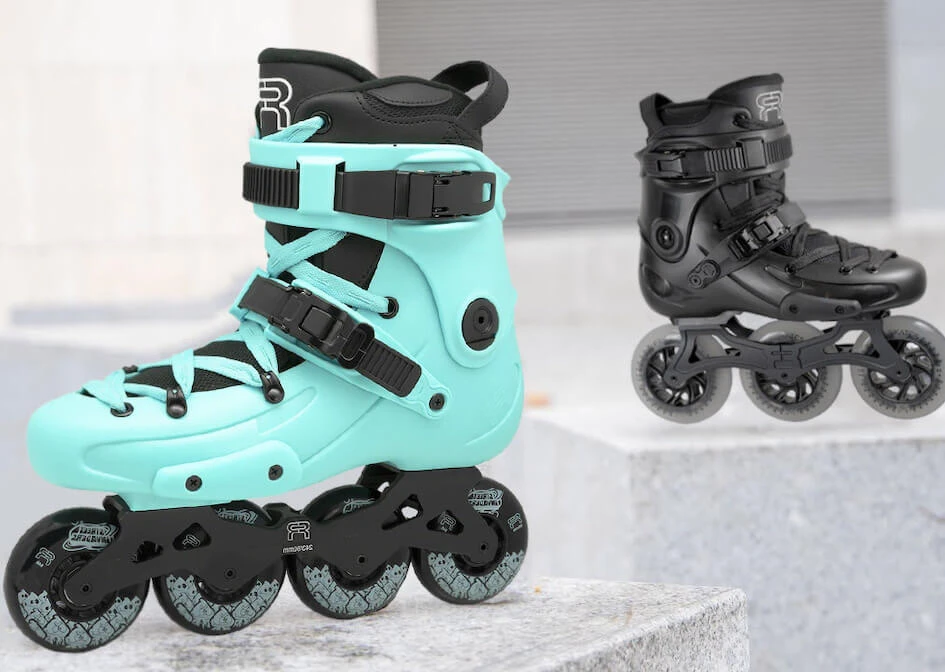
Inline skates, often called “rollerblades” after a popular early brand, feature wheels arranged in a single, straight line from front to back. This design is crucial for their speed capabilities.
-
- Wheel Arrangement: The linear arrangement allows the skater to achieve a longer, more powerful stride. Each push-off propels the skater forward in a direct line, minimizing resistance.
- Contact Patch: With wheels in a line, the total contact patch with the ground at any given moment is smaller than that of quad skates. This reduced contact area can lead to less rolling resistance, further contributing to speed.
- Turning Mechanism: In inline skates, turning is primarily achieved by leaning the skate and using a toe brake for stopping, or by angling the entire boot and frame. This requires a different kind of balance and technique compared to quad skates.
- Speed Focus: The design of inline skates inherently favors forward momentum and efficiency, making them the go-to choice for speed skating, marathon skating, and aggressive inline skating where high speeds are essential.
Quad Skates: The Stable Foundation
Quad skates, the traditional roller skates, have a unique “quad” arrangement of wheels: two wheels in the front and two wheels in the back, forming a rectangular base.
-
- Wheel Arrangement: This wider stance provides a significantly larger base of support, leading to greater inherent stability, especially at lower speeds and for standing still.
- Turning Mechanism: Quad skates offer exceptional maneuverability at slower speeds. Turning is achieved by leaning and shifting weight, using the truck and pivot system under the plate that connects the boot to the wheels. The kingpin angle in the trucks is critical to this pivoting action.
- Stability and Control: The broader footprint makes quad skates more stable for beginners and for activities requiring precise footwork and quick stops, such as artistic skating or dancing on skates.
- Friction and Resistance: While the wider stance offers stability, it can also introduce more rolling resistance compared to inline skates, especially on smooth surfaces. However, the ability to “rock” the skates allows for agile turns.
The Physics Of Speed: Why Inline Skates Tend To Be Faster
The speed differential between inline and quad skates can be largely explained by the principles of physics, particularly concerning friction, leverage, and stride mechanics.
Rolling Resistance And Friction
Rolling resistance is the force resisting motion when an object rolls along a surface. It’s influenced by the deformation of the wheel and the surface, as well as the friction within the wheel’s bearings.
-
- Inline Skates: The single line of wheels in an inline skate minimizes the total contact area with the ground at any given moment. This reduced contact patch generally leads to lower rolling resistance, allowing the skater to maintain momentum more efficiently. The ability to use larger wheels on inline skates also contributes to overcoming surface imperfections and maintaining speed.
- Quad Skates: The four-wheel footprint of quad skates creates a larger contact area. While this enhances stability, it can also increase rolling resistance. The way the wheels are mounted can also influence this; some quad skates have a “rocker” setup where the wheels are not all at the same height, which can improve turning but may slightly reduce straight-line speed.
Stride Length And Power Transfer
The way a skater generates forward momentum is critical to speed. The design of the skate plays a direct role in the efficiency of this process.
-
- Inline Skates: The linear arrangement of wheels allows skaters to achieve a longer, more powerful stride. Each leg can extend further back, enabling a more effective push-off. This “long stride” translates directly into higher velocities, especially in disciplines like speed skating where every fraction of a second counts. The boot and frame are typically designed to transfer power directly from the leg to the wheels with minimal energy loss.
- Quad Skates: The quad skate’s design, with its wider wheel base, encourages a different stride. While capable of speed, the stride is often shorter and more focused on agility rather than pure linear velocity. The truck system, while allowing for turns, can sometimes absorb some of the power generated during a push-off, making it slightly less efficient for maximum straight-line speed compared to a well-designed inline skate.
Wheel Size And Bearing Quality
Beyond the fundamental design, several other factors contribute to the overall speed of any skate, whether inline or quad.
-
- Wheel Diameter: Larger wheels generally roll faster and overcome obstacles more easily. Inline skates often feature larger wheels (e.g., 80mm to 125mm) compared to typical quad skate wheels (e.g., 57mm to 65mm). This size difference is a significant factor in inline skates’ ability to achieve higher top speeds. In quad skating, some outdoor and derby setups use slightly larger wheels than artistic or rink setups, but they still rarely match inline speed hardware.
- Wheel Hardness (Durometer): Softer wheels offer more grip but wear down faster and can be slower due to increased deformation. Harder wheels are more durable and roll faster, especially on smooth surfaces. Both inline and quad skates can be fitted with various hardnesses depending on the intended use. Outdoor wheels are usually softer for grip and vibration absorption, while indoor wheels are usually harder for lower rolling resistance on smooth floors.
- Bearings: The bearings inside the wheels are critical for reducing friction. Higher quality bearings, often rated by ABEC standards, allow wheels to spin more freely and for longer, directly contributing to speed. Bearing condition matters as much as rating, so clean, properly lubricated bearings often outperform neglected premium ones.
Credit: www.inmoveskates.com
Comparing Speed Performance In Different Disciplines
The question of which skate is faster isn’t absolute; it depends heavily on the context and the specific skating discipline. While inline skates generally hold the edge in pure linear speed, quad skates have their own speed advantages in specific scenarios.
Speed Skating And Marathon Skating
In disciplines where covering long distances at maximum velocity is the goal, inline skates are unequivocally faster.
-
- Inline Speed Skates: These skates are specifically designed for speed. They feature very large wheels (often 100mm, 110mm, or even 125mm in diameter), long frames for stability, and lightweight boots. The aerodynamic posture adopted by speed skaters on inline skates further enhances their efficiency. World records in marathon skating are set on inline skates, demonstrating their superior speed capabilities over long distances.
- Quad Skates in Speed: While quad skates were historically used for speed skating before the advent of inline skates, they are now largely outcompeted in pure speed events. Their design is less optimized for sustained high-velocity linear motion.
Aggressive Inline Skating Vs. Roller Derby
These disciplines highlight the different strengths of each skate type.
-
- Aggressive Inline Skating: This sport involves performing tricks, jumps, and grinds in urban environments or skate parks. While not purely about top speed, aggressive inline skates are built for speed and agility within the context of performing tricks. They have smaller, harder wheels for durability and maneuverability, and a robust frame. The speed achieved allows skaters to gain momentum for jumps and gaps.
- Roller Derby: This is a full-contact sport played on quad skates. While speed is essential for players to maneuver around the track and for the jammer to score points, the emphasis is also on stability, agility, and the ability to make quick, sharp turns and stops. The quad skate’s design provides the necessary control and stability for the dynamic, often chaotic, nature of roller derby bouts. Skaters can achieve significant speeds, but the maneuverability of quad skates is paramount.
Recreational Skating And Artistic Skating
For casual cruising and performance-based activities, the choice is less about pure speed and more about the overall experience.
-
- Recreational Inline Skating: Many recreational inline skates are designed for comfort and stability while still offering a good degree of speed for cruising paths or trails. They often have a balance of wheel size and hardness suitable for general use.
- Recreational Quad Skating: Quad skates are often favored for recreational skating due to their ease of learning and stability. They are perfect for casual cruising in parks, on boardwalks, or at indoor rinks. The ability to stop easily and maintain balance makes them more approachable for beginners.
- Artistic Skating: This discipline, which includes figure skating on roller skates, demands exceptional control, precise footwork, and the ability to execute spins and jumps. Quad skates are the standard for artistic skating because their unique truck system allows for intricate movements and spins that are difficult or impossible on inline skates. Speed is a factor, but it’s secondary to control and artistry.

Credit: rollbackworld.com
Factors Beyond Design: What Else Affects Speed?
While the fundamental design of inline and quad skates plays the most significant role in their speed potential, several other factors can influence how fast a skater can go.
Skater’s Technique And Fitness
The most advanced skate in the world won’t make a slow skater fast. A skater’s technique, strength, and cardiovascular fitness are paramount.
-
- Inline Skates: Mastering the crossover technique, efficient pushing, and proper posture are crucial for maximizing speed on inline skates. Skaters need to develop the muscle groups used for powerful strides and maintain good balance.
- Quad Skates: For quad skates, technique involves effective weight transfer for turning, using the trucks to pivot, and developing a strong, stable push. Fitness is still vital for endurance and power.
Terrain And Surface Conditions
The surface on which you skate has a massive impact on speed.
-
- Smooth Pavement: On perfectly smooth surfaces, inline skates, with their lower rolling resistance, will generally outperform quad skates.
- Rough Surfaces: On slightly rougher surfaces, larger wheels (often found on inline skates) can help maintain speed by rolling over imperfections more easily. However, very rough surfaces can slow down both types of skates significantly.
- Inclines and Declines: Uphill skating requires power and efficiency, where inline skates may have an advantage due to their stride. Downhill skating requires excellent braking and control, where the stability of quad skates might be preferred by some, although inline skates are also used for downhill.
Maintenance And Setup
Properly maintained skates will always perform better.
-
- Bearings: Clean, well-lubricated bearings are essential for speed. Dirty or corroded bearings create significant friction, drastically reducing speed. Regular cleaning and maintenance are key.
- Wheels: The condition of the wheels also matters. Worn, chipped, or unevenly worn wheels can negatively impact speed and ride quality. Ensuring wheels are properly aligned and rotated can help maintain performance.
- Trucks (Quad Skates): The tightness of the trucks on quad skates can be adjusted. Looser trucks allow for easier turning but can reduce stability at high speeds. Tighter trucks offer more stability but make turning harder. Finding the right balance is crucial for performance.
A Look At Real-world Performance Data
While precise, standardized speed tests comparing inline and quad skates across all disciplines are rare, anecdotal evidence and the performance in competitive sports provide strong indicators.
Competitive Discipline Speeds
-
- Inline Speed Skating: Elite inline speed skaters can reach speeds exceeding 35-40 miles per hour (56-64 km/h) on flat courses. Marathon skaters maintain average speeds of around 20-25 mph (32-40 km/h) for extended periods.
- Quad Speed Skating (Historical/Niche): While less common now, historical records and niche quad speed skating events show speeds that are generally lower than modern inline speed skating, often in the range of 25-30 mph (40-48 km/h) for elite performers.
- Roller Derby: Speeds in roller derby are highly variable due to the stop-and-start nature of the game and defensive play. However, jammers can reach bursts of speed estimated to be around 15-20 mph (24-32 km/h) when clear of the pack.
Data Table: Key Speed-related Features
Here’s a comparison of features that influence speed between typical inline and quad skates:
| Feature | Typical Inline Skate | Typical Quad Skate |
|---|---|---|
| Wheel Configuration | Single line (front to back) | Two front, two back (rectangular) |
| Typical Wheel Diameter | 80mm – 125mm+ | 57mm – 65mm |
| Stride Potential | Longer, more linear | Shorter, more agile |
| Rolling Resistance (General) | Lower | Higher |
| Stability (at speed) | High (with practice) | Moderate (depends on truck tightness) |
| Maneuverability (low speed) | Moderate | High |
| Primary Use Cases for Speed | Speed skating, marathon, commuting | Roller derby (bursts), recreational cruising |
Case Study: The Evolution Of Speed Skating
The shift from quad skates to inline skates in competitive speed skating in the late 20th century is a testament to the inline design’s speed advantage. Before inline skates gained popularity, quad skates were used for speed events. However, as inline skate technology developed, particularly with larger wheels and stiffer boots, it became clear that they offered a superior platform for achieving higher speeds and greater efficiency over long distances.
This led to inline skates becoming the dominant choice for speed skating and marathon racing, with competitive records clearly showing the speed gains.
Choosing The Right Skates For Your Needs
Ultimately, the “faster” skate is the one that best suits your intended activity and skill level. Understanding the core differences can help you make an informed decision.
For Maximum Speed And Distance
If your primary goal is to achieve the highest possible speeds, especially over longer distances, inline skates are the clear choice.
-
- Disciplines: Speed skating, marathon skating, long-distance commuting, fitness skating.
- Key Features to Look For: Large wheels (100mm+), long frames, stiff and supportive boots, high-quality bearings. If you are comparing brands, prioritize frame stiffness, wheel quality, boot fit, and serviceable parts over marketing claims or bearing labels alone.
For Stability, Agility, And Artistic Expression
If you prioritize stability, intricate footwork, quick turns, and a lower learning curve, quad skates are likely a better fit.
-
- Disciplines: Recreational skating, roller derby, artistic skating, roller dancing, jam skating.
- Key Features to Look For: Comfortable boots, appropriate wheel hardness for the surface (softer for outdoor, harder for indoor rinks), adjustable trucks, reliable toe stops, and a properly fitted plate. For derby or fast outdoor skating, look for supportive boots and plates with durable cushions and kingpins that can be tuned for your weight and turning preference.
For Beginners
For individuals just starting out, the decision often comes down to personal preference and what feels more comfortable.
-
- Quad Skates: Many find quad skates easier to learn on due to their inherent stability. The wider stance provides a more forgiving platform for balance.
- Inline Skates: While they can have a steeper initial learning curve, many beginners find inline skates manageable, especially with features like a heel brake. The key is to start slow and focus on balance and basic pushing techniques.
- Safety tip: Beginner skaters should wear a helmet, wrist guards, elbow pads, and knee pads, practice on smooth paved surfaces away from traffic, and learn safe stopping before building speed. Avoid hills, rough pavement, water, sand, gravel, and crowded areas until basic control is automatic.
Frequently Asked Questions
What Is The Typical Top Speed Difference Between Inline And Quad Skates?
While precise figures vary greatly depending on the skater, the specific skate model, and the conditions, elite inline speed skaters can achieve sustained speeds significantly higher than elite quad skaters in competitive environments. Inline skaters in speed events can reach well over 35 mph (56 km/h), whereas quad skaters in roller derby might achieve bursts of 15-20 mph (24-32 km/h).
For recreational purposes, the perceived speed difference might be less pronounced, with inline skates generally feeling faster for cruising.
Can Quad Skates Be Made Faster?
Yes, quad skates can be optimized for speed. This involves using harder wheels suited to the skating surface, high-quality bearings, ensuring proper maintenance, and adjusting the truck tightness for a balance between stability and agility. However, due to their fundamental wheel configuration, they are unlikely to match the top-end linear speed potential of specialized inline speed skates.
Does Wheel Size Matter More Than Wheel Hardness For Speed?
Both wheel size and hardness are critical for speed, but they influence it in different ways. Larger wheels generally roll faster and maintain momentum better, especially over imperfect surfaces. Harder wheels reduce rolling resistance on smooth surfaces and are more durable, contributing to sustained speed. For maximum speed, a combination of appropriately large wheels for the skate type, the right hardness for the surface, and high-quality bearings is ideal.
Are Inline Skates Harder To Learn Than Quad Skates?
Generally, quad skates are considered easier for beginners to learn due to their wider, more stable base. They offer a more forgiving platform for balancing. Inline skates can have a steeper initial learning curve, particularly regarding balance and the mechanics of pushing off. However, with practice and proper technique, many beginners find inline skates manageable and enjoyable.
Which Type Of Skate Is Better For Commuting?
For commuting, especially over longer distances on relatively smooth surfaces, inline skates are generally preferred. Their design is more efficient for covering ground quickly and maintaining a consistent speed. However, if your commute involves frequent stops, sharp turns, or very rough terrain, the stability and maneuverability of quad skates might be more suitable, though less common for this purpose.
The debate between inline skates and quad skates is less about which is definitively “better” and more about which is better suited for a particular purpose. Inline skates, with their linear wheel arrangement and often larger wheels, are engineered for efficiency and excel in achieving higher linear speeds, making them the dominant choice for speed skating, marathon skating, and fast commuting.
Quad skates, with their stable, four-wheel footprint, offer superior maneuverability and stability, making them ideal for recreational skating, artistic disciplines, and the dynamic demands of roller derby. Both types of skates offer unique advantages, and the choice ultimately depends on the skater’s goals, preferred style of skating, and the environment in which they will be used.
Exploring the benefits of skateboarding, for instance, can highlight how different wheeled sports cater to diverse needs and preferences, much like the distinction between inline and quad skates.