
The skateboard deck is the heart of any skateboard. It’s the platform upon which riders perform tricks, cruise through streets, and express their unique style. But the humble wooden plank has undergone a dramatic transformation since its inception. From simple, crude beginnings to the highly engineered, diverse shapes available today, the evolution of the skateboard deck is a fascinating journey reflecting innovation, changing riding styles, and the enduring spirit of skateboarding culture.
Understanding this evolution provides crucial context for appreciating modern decks and their capabilities.
Key Takeaways
-
-
- Early Decks (1950s-1960s): Primitive, often homemade boards with roller skate wheels, prioritizing basic transportation over tricks.
-
-
-
- The Rise of Urethane (1970s): Introduction of urethane wheels revolutionized grip and performance, leading to the development of wider, concave decks designed for carving and early freestyle.
-
-
-
- The Freestyle and Vert Era (1980s): Decks became narrower and more symmetrical, featuring distinct nose and tail kicks to facilitate aerial maneuvers and tricks.
-
-
-
- The Street Skating Revolution (1990s): Wider decks with pronounced concaves and shorter wheelbases dominated, optimized for flip tricks and park riding.
-
-
-
- Modern Innovations (2000s-Present): Advanced materials, varied shapes, and specialized designs cater to every discipline, from street and park to vert and downhill.
-
-
-
- Material Science: From basic wood to reinforced composites, deck materials have evolved for strength, lightness, and flex.
-
-
-
- Shape and Concave: Deck shapes, widths, lengths, and concaves have been refined to enhance control, pop, and stability for specific skating styles.
-
From Sidewalk Surfing To Trick Platforms: The Genesis Of The Skateboard Deck
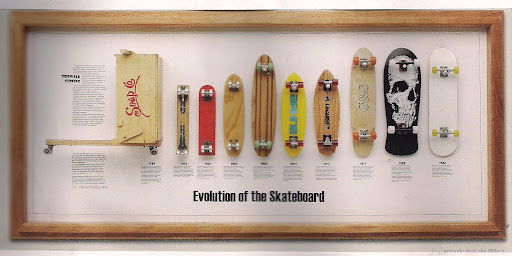
The earliest skateboards, emerging in the 1950s, were far from the sophisticated pieces of equipment we see today. Often referred to as “sidewalk surfers,” these rudimentary boards were born out of a desire to mimic surfing on land. Their construction was basic: a simple wooden plank, sometimes a modified crate or a repurposed plank of wood, to which roller skate wheels were attached. The focus was purely on cruising and transportation, not on performing complex maneuvers. These decks were typically flat, wide, and lacked any significant shaping. Their performance was limited by the solid steel or clay wheels, which offered little grip and a jarring ride.
The lack of specialized design meant that early skateboarding was a relatively uncontrolled experience. Riders would push with one foot and glide, much like on a scooter, but with significantly less stability. The decks were heavy and cumbersome, making any attempt at agility difficult.
There was no concept of a “nose” or “tail” as we know them; the boards were often symmetrical or had one end slightly more rounded than the other. The primary goal was simply to move from point A to point B with a sensation akin to surfing.
This era laid the groundwork, however, proving the concept of a wheeled board for personal transport and recreation, sparking the imagination of a generation.
Early Materials And Construction
The materials used in the infancy of skateboarding were dictated by what was readily available. Solid wood planks were the norm, often sourced from lumber yards or even salvaged materials. There was no complex lamination process; these were single pieces of wood, sometimes reinforced with metal plates where the trucks were attached. The weight of these early decks was considerable, contributing to their sluggish performance. Durability was also a major concern, as these simple wooden boards were prone to breaking under stress, especially with the rough terrain of sidewalks and streets. The focus was on simplicity and accessibility rather than engineering for performance.
Credit: blog.driftingthru.com
The Urethane Revolution And The Dawn Of Performance
The skateboarding landscape changed irrevocably in the early 1970s with the introduction of urethane wheels. Frank Nasworthy’s Cadillac Wheels, made from polyurethane, offered vastly superior grip, smoothness, and durability compared to the old steel or clay wheels. This innovation immediately impacted deck design. With better grip, skaters could lean harder into turns, leading to the development of wider decks with a slight concave (a subtle inward curve across the width of the deck). This concave shape provided more foot leverage and control, allowing riders to carve more effectively.
This period also saw the emergence of specialized skateboard companies, moving away from purely homemade boards. Decks began to be manufactured with more consideration for shape and function. They were generally wider than their predecessors, offering a stable platform for carving and the burgeoning freestyle scene.
The nose and tail were starting to take on more defined shapes, though they were still relatively flat and less pronounced than what would come later. The focus shifted from mere transportation to a more dynamic form of recreation, with skaters exploring new ways to maneuver and express themselves on these improved boards.
This era truly marked the transition from a hobby to a sport with evolving technical demands.
The Impact Of Urethane On Deck Shape
The enhanced grip provided by urethane wheels allowed skaters to push the limits of what was possible. The ability to lean more aggressively meant that decks needed to accommodate this by offering better foot placement and control.
-
-
- Wider Decks: Increased width provided a more stable platform for carving and allowed for better foot positioning during turns.
-
-
-
- Early Concave: The introduction of a subtle concave offered riders more leverage and a more locked-in feel, crucial for controlling the board at higher speeds and during sharper turns.
-
-
-
- Defined Nose and Tail: While not as pronounced as modern decks, the nose and tail began to develop more distinct shapes, hinting at future developments for trick execution.
-
The 1980s: Freestyle, Vert, And The Rise Of The Kicktail
The 1980s were a pivotal decade for skateboarding, characterized by the rise of professional skateboarding and the emergence of distinct disciplines like freestyle and vert (vertical) skating. This era saw significant refinement in deck design, driven by the demands of aerial maneuvers and technical tricks. Decks became narrower, making them lighter and easier to flip and manipulate in the air. The most significant development was the pronounced kicktail and, increasingly, a defined kicknose. These upward curves at the ends of the deck were essential for performing tricks.
The kicktail allowed skaters to lift the front wheels off the ground with a flick of the back foot, enabling them to hop, manual, and perform flip tricks like the ollie, the fundamental trick that opened up a universe of possibilities.
The kicknose, while less utilized initially than the tail, provided a platform for nose manuals and other tricks. Vert skating, performed on half-pipes and bowls, demanded stable yet agile boards capable of launching skaters high into the air and allowing for precise control upon landing.
Freestyle skateboarding, with its emphasis on technical flatground tricks, also benefited from the improved maneuverability offered by these sleeker, kicktail-equipped decks. This decade cemented the skateboard deck as a tool for athletic expression and technical mastery.
Key Deck Features Of The 1980s
-
-
- Narrower Width: Typically ranging from 8 to 9 inches, these decks were lighter and easier to flick for aerial tricks.
-
-
-
- Pronounced Kicktail: Essential for ollies, manuals, and a variety of flip tricks.
-
-
-
- Defined Kicknose: Facilitated nose manuals and other nose-based maneuvers.
-
-
-
- Flatter Concave: Compared to modern decks, the concave was often less aggressive, prioritizing maneuverability and a more direct feel of the board.
-
-
-
- Symmetrical or Near-Symmetrical Shape: Many decks were designed with a similar nose and tail, reflecting the balanced nature of tricks performed during this era.
-
The 1990s: Street Skating Dominance And Deck Specialization
The 1990s witnessed the explosion of street skating as the dominant force in skateboarding. This shift brought about another significant evolution in skateboard deck design. Decks became wider again, often in the 9.5 to 10-inch range, providing a larger and more stable platform for the technical flip tricks that defined street skating. The concave deepened significantly, offering riders a more secure and locked-in feel, which is crucial for controlling complex flip tricks and landing cleanly.
The wheelbase also became a key consideration. Shorter wheelbases (the distance between the truck mounting bolts) made decks more responsive and easier to flick for quick flip tricks, while longer wheelbases offered more stability for speed and landing. The shape of the deck became more distinct, with a clear emphasis on the nose and tail kicks, optimized for popping and flipping. Companies began to experiment with different wood plies and construction methods to create decks that were both strong enough to withstand the constant abuse of street skating (grinding ledges, hitting stairs) and light enough for aerial maneuvers. This era solidified the modern “popsicle stick” shape that many associate with skateboards today, a design honed for the specific demands of street and park riding. You can learn more about choosing the right deck in our guide on how to choose a skateboard deck.
Deck Design For Street Skating In The 90s
-
-
- Increased Width: Typically 9.5-10 inches, providing a stable platform for flip tricks.
-
-
-
- Deep Concave: Enhanced foot grip and control for technical maneuvers.
-
-
-
- Shorter Wheelbase: Increased responsiveness and pop for flip tricks.
-
-
-
- Defined Nose and Tail Kicks: Optimized for ollies and flip tricks.
-
-
-
- Durable Construction: Emphasis on strong wood laminations to withstand impacts.
-
Modern Deck Evolution: Materials, Shapes, And Specialization
The 21st century has seen an unprecedented level of innovation in skateboard deck design, driven by advancements in material science, a deeper understanding of physics, and the diversification of skateboarding disciplines. While the classic popsicle shape remains popular for street and park skating, decks have become highly specialized to cater to every niche.
Advanced Materials And Construction
The quest for stronger, lighter, and more responsive decks has led to the exploration of materials beyond traditional maple ply.
-
-
- Carbon Fiber and Composites: Many high-end decks now incorporate carbon fiber layers or other composite materials. These additions significantly increase strength and stiffness without adding much weight. This can translate to a more responsive feel and a longer-lasting deck, especially for heavier riders or those who are particularly hard on their equipment.
-
-
-
- Reinforced Woods: Some manufacturers use specific types of wood or employ advanced lamination techniques, such as epoxy resins instead of traditional glues, to enhance durability and pop.
-
-
-
- Metal Inserts: Trucks are sometimes mounted with metal inserts or specialized hardware to prevent the bolts from stripping the wood over time, a common issue with frequent disassembly and reassembly.
-
Diversification Of Shapes And Sizes
Modern decks come in an astonishing array of shapes and sizes, each designed for a specific purpose.
-
-
- Street/Park Decks: These generally adhere to the popsicle shape, with widths ranging from 7.5 to 8.75 inches. They feature moderate concaves and well-defined nose and tail kicks for flip tricks and versatility. Brands like Element and Santa Cruz are known for their quality street decks. For instance, you might be interested in an honest review of Element Skateboards or Santa Cruz Skateboards.
-
-
-
- Cruisers: Shorter and often wider than street decks, cruisers prioritize stability and a smooth ride for getting around. They may feature a more pronounced kicktail for occasional tricks but are primarily designed for commuting.
-
-
-
- Longboards: While a distinct category, longboards have evolved significantly. They come in various shapes (pintail, drop-through, symmetrical) and lengths, optimized for downhill racing, freeriding, and carving. Their construction often involves multiple wood plies, sometimes reinforced with fiberglass or bamboo for flex and strength. The history of longboarding shows a parallel evolution to standard skateboards.
-
-
-
- Old School/Retro Decks: Inspired by the shapes of the 1980s and early 1990s, these decks are often wider with directional shapes, rounded noses, and sometimes a flatter concave, catering to skaters who prefer a nostalgic feel or specific styles of skating.
-
Concave Variations
The concave of a skateboard deck is no longer a one-size-fits-all feature. Manufacturers offer a range of concave profiles:
-
-
- Mellow Concave: Offers a flatter feel, providing more stability and a less aggressive lock-in for the feet. Good for beginners or those who prefer a more traditional feel.
-
-
-
- Medium Concave: A balanced option, offering good foot grip and control for most types of skating.
-
-
-
- Steep/Deep Concave: Provides the most aggressive lock-in, ideal for technical street skaters who rely on precise foot placement for flip tricks.
-
This level of specialization ensures that every skater can find a deck that perfectly matches their riding style, preferences, and the terrain they intend to conquer.
Deck Dimensions: Width, Length, And Wheelbase Explained
The physical dimensions of a skateboard deck are critical factors influencing its performance and how it feels underfoot. Understanding these measurements is essential for choosing a deck that suits your size, skill level, and skating discipline.
Deck Width
Deck width is arguably the most significant dimension influencing how a board feels. It’s measured at its widest point, typically across the middle of the deck.
-
-
- Narrow Decks (7.5″ – 8.0″): Lighter and easier to flip, these are favored by younger skaters, smaller riders, or those who prioritize quick flip tricks and technical maneuvers.
-
-
-
- Medium Decks (8.0″ – 8.5″): The most common range, offering a good balance of stability and maneuverability for street, park, and general skating. This is often a good starting point for adult beginners.
-
-
-
- Wide Decks (8.5″ and up): Provide a larger, more stable platform. Favored by larger riders, transition skaters (vert, bowls), or those who prefer a more planted feel. They offer more room for foot placement and can be more forgiving on landings.
-
Deck Length
Deck length refers to the overall measurement from nose to tail. While less critical than width for most street and park skaters, it plays a role in the board’s feel and stability.
-
-
- Shorter Decks: Can feel more nimble and easier to maneuver, often paired with narrower widths.
-
-
-
- Longer Decks: Offer more stability, especially at higher speeds, and can provide more foot space. This is more relevant for cruisers and longboards.
-
Wheelbase
The wheelbase is the distance between the inner truck mounting holes. This measurement has a significant impact on the board’s turning radius and stability.
-
-
- Shorter Wheelbase: Results in a tighter turning radius, making the board more responsive and quicker to turn. This is ideal for technical street skating where quick adjustments are needed.
-
-
-
- Longer Wheelbase: Provides increased stability, especially at speed, and a wider turning radius. This is beneficial for transition skating, cruising, and downhill riding.
-
Choosing the right dimensions often involves a combination of personal preference, body size, and the type of skateboarding you primarily engage in. For example, a taller rider looking to skate bowls might opt for a wider and longer deck with a longer wheelbase for stability.
Conversely, a smaller skater focused on flip tricks might prefer a narrower deck with a shorter wheelbase for agility.
The Art And Science Of Deck Graphics
Beyond the functional evolution, skateboard decks have also served as a vibrant canvas for artistic expression. Deck graphics are an integral part of skateboarding culture, reflecting trends, artistic movements, and the identity of the brands and skaters associated with them. From simple logos in the early days to elaborate, often controversial, artwork today, graphics have played a crucial role in the aesthetic appeal and cultural significance of skateboard decks.
Early Graphics
In the early days, graphics were often minimal. Brands might feature a simple logo or a basic graphic printed or stenciled onto the deck. The focus was on the functionality of the board, and aesthetics took a backseat.
The Rise Of Iconic Art
As skateboarding gained popularity and companies began to establish themselves, deck graphics became more sophisticated. Artists, illustrators, and designers started creating unique artwork for decks. This era saw the emergence of iconic imagery that became synonymous with skateboarding culture. Brands like Powell-Peralta, with their legendary “Bones Brigade” graphics, and Vision Street Wear, with their bold designs, set the standard for artistic expression on decks.
Contemporary Trends
Today, deck graphics are incredibly diverse. They range from minimalist designs and abstract patterns to intricate illustrations, photography, and collaborations with renowned artists from various fields. Some decks feature recurring themes or characters that become part of a brand’s identity. Others are limited-edition releases, often sought after by collectors. The graphics not only personalize a skateboard but also serve as a form of wearable art, reflecting the rider’s personality and affiliations within the broader skateboarding culture. The choice of graphics can be as personal as the choice of deck shape or size, adding another layer of individuality to the skateboarding experience.
Frequently Asked Questions
What Are The Main Differences Between Street Decks And Cruiser Decks?
Street decks are typically designed for performing tricks, featuring symmetrical shapes with pronounced nose and tail kicks, and a medium to deep concave for control. Cruiser decks, on the other hand, are built for transportation and carving. They are often shorter, sometimes wider, and may have a more rounded shape with a pronounced kicktail for maneuverability, prioritizing a smooth ride over technical trick capability.
How Does Deck Width Affect Skateboarding?
Deck width is crucial for stability and foot placement. Wider decks offer more stability and a larger surface area for your feet, which is beneficial for heavier riders, transition skating (bowls, ramps), and landing tricks. Narrower decks are lighter and easier to flip, making them ideal for younger skaters, smaller individuals, or those focused on technical flip tricks.
What Is Concave, And Why Is It Important For Skateboard Decks?
Concave refers to the inward curvature across the width of the skateboard deck. It’s important because it provides riders with more leverage and a better “lock-in” feel for their feet. Different levels of concave (mellow, medium, steep) offer varying degrees of foot grip and control, influencing how easily a rider can perform flip tricks and maneuver the board.
How Do Materials Like Carbon Fiber Impact Skateboard Decks?
Incorporating materials like carbon fiber or other composites into skateboard decks enhances their strength and stiffness without significantly increasing weight. This results in a more responsive board that can maintain its “pop” (the ability to spring off the tail) for longer and withstand more abuse from heavy riding, making them a popular choice for advanced skaters and those seeking maximum durability.
Is It Better To Have A Shorter Or Longer Wheelbase On A Skateboard?
The wheelbase affects turning radius and stability. A shorter wheelbase (distance between truck mounting holes) results in a tighter turning radius, making the board more responsive and agile, which is excellent for technical street skating. A longer wheelbase provides increased stability, especially at higher speeds, and a wider turning radius, making it more suitable for cruising, downhill, and transition skating.
The journey of the skateboard deck from a simple plank of wood to a highly engineered piece of equipment is a testament to the ingenuity and passion of skaters and manufacturers alike. Each stage of its evolution has been driven by the desire to push the boundaries of what’s possible on four wheels.
Whether you’re a beginner learning your first ollie or a seasoned pro carving down a mountain, the deck beneath your feet is a product of decades of innovation, designed to enhance your ride and fuel your passion for skateboarding. The continuous refinement of materials, shapes, and construction ensures that the skateboard deck will continue to evolve alongside the sport itself.