
Choosing the right skateboard is a pivotal moment for any rider, whether you’re a seasoned pro or just starting your journey. The world of skateboarding offers a diverse range of boards, each designed with a specific purpose and riding style in mind. Among the most common categories are the skateboard, the cruiser, and the longboard. While they might look similar at first glance, their differences in shape, size, components, and intended use are significant. Understanding these distinctions is crucial for selecting the board that best suits your needs, preventing frustration, and maximizing your enjoyment on four wheels.
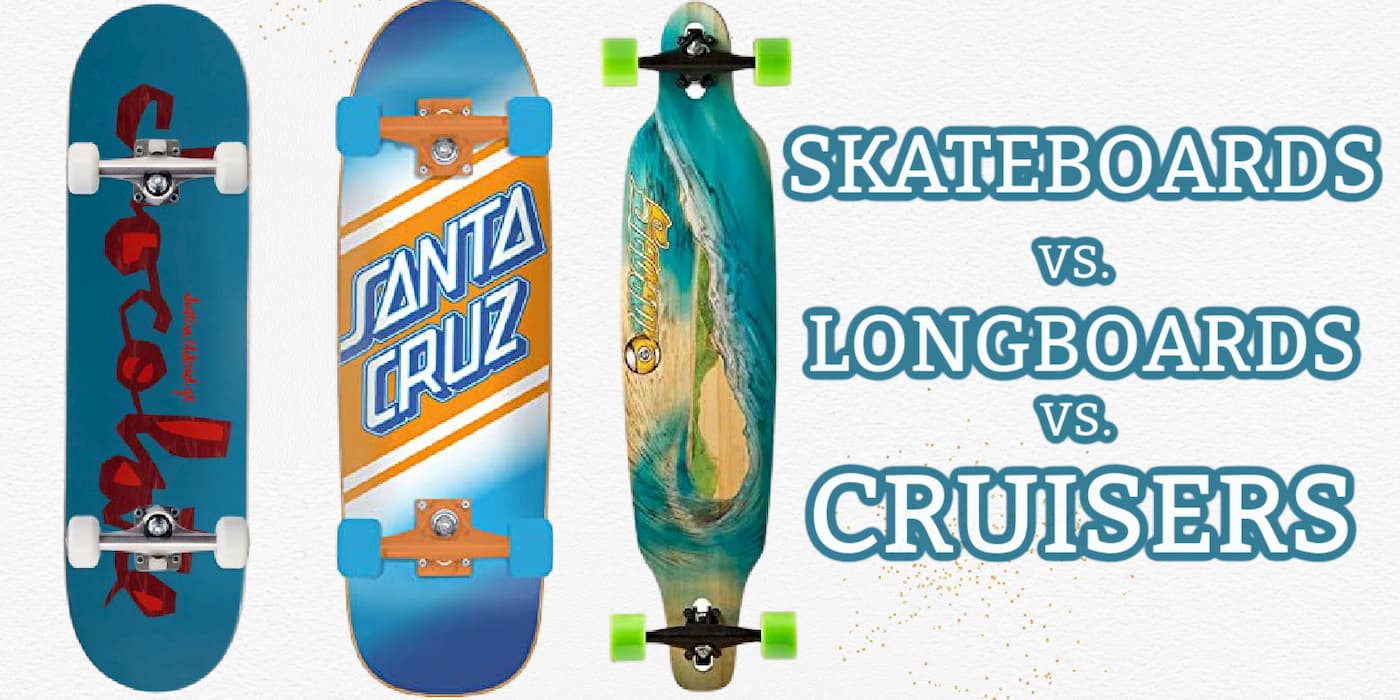
Imagine wanting to cruise to a coffee shop, bomb down a hill, or learn your first ollie. The board that excels at one of these activities might be entirely unsuitable for another. A traditional skateboard, often called a “trick board” or “street deck,” is built for agile maneuvers and tricks in skateparks and on urban obstacles.
A cruiser, on the other hand, is designed for smooth, effortless transportation, often featuring a more compact and portable shape. Then there’s the longboard, a larger, more stable platform perfect for carving smooth lines, downhill racing, or simply enjoying a relaxed ride.
This article will break down the core characteristics of each, explore their components, and help you determine which type of board is your ideal match.
Key Takeaways
- Skateboards (Street Decks): Primarily designed for tricks and park riding, featuring a symmetrical, concave deck, smaller, harder wheels, and a shorter wheelbase for agility.
- Cruisers: Built for transportation and commuting, offering a more portable and comfortable ride with softer, larger wheels for smoother rolling over rough surfaces and often a kicktail for maneuverability.
- Longboards: Optimized for speed, stability, and carving, characterized by their significantly longer and wider decks, larger wheels, and often more flexible constructions, ideal for downhill, cruising, and dancing.
- Deck Shape & Size: Skateboards are typically 7.5-8.5 inches wide and 31-33 inches long. Cruisers are often narrower and shorter, sometimes with unique shapes. Longboards are considerably longer (35-60+ inches) and wider.
- Wheels: Skateboards use small, hard wheels (99a-101a durometer) for tricks. Cruisers and longboards use larger, softer wheels (78a-90a durometer) for a smoother, faster ride over varied terrain.
- Trucks: While all boards use trucks, their width and height are adjusted to match the deck size and intended use. Longboards often have wider trucks for stability, while skateboards have narrower trucks for better control during tricks.
- Purpose: Skateboards are for street and park tricks. Cruisers are for getting from A to B. Longboards are for speed, carving, and long-distance cruising.
Credit: www.boardoftheworld.com
The Anatomy Of Each Board Type
To truly understand the differences, we need to dissect the fundamental components of each board type. While all skateboards share the basic elements of a deck, trucks, wheels, and bearings, the specifications and design of these parts vary dramatically between skateboards, cruisers, and longboards, catering to their distinct purposes.
Deck Design And Dimensions
The deck is the heart of any skateboard, and its shape, size, and construction are the primary differentiators.
- Skateboard (Street Deck): Traditional skateboards are symmetrical or nearly symmetrical, with a distinct concave (the upward curve along the sides) that helps with foot grip and board control during tricks. They typically feature a nose and tail, both of which often have a slight upward kick. This design allows for flips, pops, and grinds.
- Width: Generally ranges from 7.5 to 8.5 inches. Wider decks offer more stability, while narrower decks are lighter and easier to flip for advanced tricks.
- Length: Typically 31 to 33 inches. The wheelbase (distance between the truck mounting holes) is usually around 13.5 to 14.5 inches, contributing to agility.
- Concave: Medium to steep, providing leverage for flip tricks.
- Material: Almost exclusively made of 7-ply maple wood, known for its durability and pop.
- Cruiser: Cruisers often deviate from the symmetrical shape, sometimes featuring a directional shape with a more pronounced kicktail and a less pronounced or absent nose. The concave is usually mellower than on a street skateboard, prioritizing comfort for standing.
- Width: Can range from 7 to 9 inches, often mirroring skateboard widths but sometimes wider for stability.
- Length: Typically 27 to 33 inches, making them more compact and portable than longboards.
- Wheelbase: Shorter than longboards, allowing for tighter turns.
- Shape: Many cruisers have a classic “old school” shape or a modern “mini-cruiser” design. Some incorporate a kicktail for manual tricks and quick pivots.
- Longboard: Longboards are defined by their significantly larger size. They come in a vast array of shapes, from pintails designed for cruising to symmetrical twin-tip boards for freeride and downhill.
- Width: Generally 8.5 to 10 inches or wider.
- Length: Ranges from 35 inches (mini-longboards) to over 60 inches for dancing boards.
- Wheelbase: Much longer than skateboards and cruisers, ranging from 20 to over 30 inches, which provides immense stability at speed and during carving.
- Concave: Varies greatly. Some have deep concave for foot lock-in (downhill), while others are relatively flat for dancing.
- Flex: Longboards can be stiff or flexible. Stiffer decks are better for downhill and racing, while flexible decks offer a more surf-like feel for cruising and carving.
Wheels: The Ride’s Character
The wheels are critical in determining how a board performs. Their size, hardness (durometer), and shape dictate grip, speed, and the ability to roll over obstacles.
- Skateboard (Street Deck): Designed for smooth surfaces like skateparks and smooth concrete.
- Diameter: Small, typically 50mm to 56mm. Smaller wheels are lighter, accelerate faster, and make flip tricks easier.
- Durometer (Hardness): Hard, usually 99a to 101a. Hard wheels are faster on smooth surfaces, slide easily for grinds and powerslides, but offer little grip and transmit vibrations from rough terrain.
- Cruiser: Built for versatility and comfort in urban environments.
- Diameter: Larger than skateboard wheels, typically 58mm to 65mm. Larger wheels maintain momentum better and roll over cracks, pebbles, and rough pavement more easily.
- Durometer (Hardness): Softer, usually 78a to 90a. Softer wheels provide significantly more grip, absorb vibrations for a smoother ride, and are more forgiving on imperfect surfaces.
- Longboard: Optimized for speed, grip, and smooth rolling over distances.
- Diameter: Generally the largest, ranging from 65mm to over 80mm. The larger size contributes to higher top speeds and the ability to roll over almost anything.
- Durometer (Hardness): Soft, typically 78a to 85a. This ensures maximum grip for carving and stability at speed, along with a plush ride. Some downhill longboards might use slightly harder wheels for controlled slides.
Trucks: Steering And Stability
Trucks connect the wheels to the deck and are responsible for steering. Their width and height are crucial for matching the board’s intended use.
- Skateboard (Street Deck):
- Width: The axle width typically matches the deck width, usually 7.5 to 8.5 inches. Narrower trucks offer more responsive turning for tricks.
- Height: Usually mid-height, balancing stability with the ability to grind ledges and rails without wheel bite (when the wheels touch the deck during turns).
- Cruiser:
- Width: Often similar to skateboard trucks, but can be slightly wider to match wider decks.
- Height: Can vary, but mid-height trucks are common. Some mini-cruisers might have narrower trucks. The focus is on agile turning for navigating sidewalks and obstacles.
- Longboard:
- Width: Generally wider than skateboard trucks, often 150mm to 200mm (or more), to provide stability for longer decks and higher speeds.
- Height: Can be low, mid, or high. Reverse Kingpin (RKP) trucks are common on longboards, offering a more stable and carvy ride than traditional Kingpin (TKP) trucks found on skateboards. Low or mid-height trucks are preferred for stability.
Bearings And Grip Tape
While shared components, their role and common specifications differ.
- Bearings: All boards use bearings to allow wheels to spin. They are rated by the ABEC scale (1, 3, 5, 7, 9), with higher numbers indicating tighter tolerances and potentially higher speeds. However, for skateboarding, durability and resistance to dirt are often more important than ABEC ratings. Most street skaters and cruisers use ABEC 5 or 7 bearings, while longboarders might opt for similarly rated bearings, sometimes with built-in spacers for ease of assembly and longevity.
- Grip Tape: This sandpaper-like material applied to the top of the deck provides traction.
- Skateboard: Typically uses standard coarse grip tape for maximum foot grip during complex maneuvers.
- Cruiser: Often uses a similar grip tape, but some might opt for a slightly less aggressive texture for comfort during longer rides.
- Longboard: Can vary. Some use standard grip tape, while others might have less aggressive grip tape or even grip dots for a more comfortable feel, especially on boards designed for dancing or long-distance cruising.

Credit: goldcoastlongboards.com.au
Performance Characteristics And Use Cases
The distinct components of each board type translate directly into how they perform and where they excel. Understanding these performance differences is key to matching a board to your intended activities.
Skateboards: Agility For Tricks And Street Skating
Skateboards are engineered for dynamic movement and aerial maneuvers. Their design prioritizes responsiveness and the ability to execute technical tricks.
- Primary Use: Street skating (ollies, grinds, manuals on urban obstacles) and park skating (ramps, bowls, half-pipes). They are also used for learning basic skateboarding skills.
- Agility and Responsiveness: The shorter wheelbase, narrower trucks, and lighter weight make skateboards highly agile. They can be quickly flicked, rotated, and maneuvered. This is essential for landing tricks.
- Pop and Control: The concave deck and stiff maple construction provide the “pop” needed to get the board off the ground for ollies and other tricks. The grip tape ensures the rider’s feet stay planted.
- Limitations: Skateboards are not ideal for transportation. Their hard, small wheels make for a bumpy, uncomfortable ride on rough surfaces, and they don’t maintain speed well over varied terrain. They are also less stable at higher speeds.
- Learning Curve: While essential for trick skating, beginners might find the initial ride less stable and comfortable compared to a cruiser or longboard. However, they are the fundamental tool for learning basic skateboarding skills like pushing and turning. For those aiming to learn tricks, starting with a skateboard is recommended. You can find guides on easy skateboard tricks for beginners to get started.
Cruisers: Effortless Commuting And Portability
Cruisers are the workhorses for getting around town. They blend the portability of a skateboard with a more comfortable and efficient ride for transportation.
- Primary Use: Commuting, cruising around neighborhoods, running errands, and as a fun, agile mode of transport.
- Smooth and Comfortable Ride: The larger, softer wheels are the star here. They glide over cracks, pebbles, and rough asphalt, providing a much smoother and more enjoyable ride than a traditional skateboard. This makes them ideal for longer periods of riding without discomfort.
- Maneuverability: Despite their comfort, most cruisers retain good maneuverability. The kicktail on many models allows for quick pivots, manual tricks, and hopping over small obstacles. Their smaller size also makes them easy to carry onto public transport or store.
- Portability: Cruisers are often compact, especially “mini-cruisers,” making them easy to stash in a backpack or carry by hand. This portability is a major advantage for urban riders.
- Limitations: Cruisers are not designed for technical tricks. While some have kicktails, they lack the pop and balanced design of a street skateboard for aerial maneuvers. They are also less stable than longboards at very high speeds.
Longboards: Speed, Stability, And Carving
Longboards are built for a different experience altogether, emphasizing speed, stability, and fluid movement.
- Primary Use: Downhill racing, freeride (controlled sliding), carving (making deep, flowing turns), commuting, and dancing (performing footwork and tricks on the board).
- Stability at Speed: The long wheelbase and wider stance provide exceptional stability, making them ideal for riding at higher speeds. This is crucial for downhill and freeride disciplines.
- Carving and Pumping: The combination of wider trucks, larger wheels, and longer decks allows for deep, surf-like carves. Riders can often “pump” the board to generate speed without pushing, creating a fluid, rhythmic ride.
- Smooth Ride: Similar to cruisers, longboards utilize large, soft wheels that excel at rolling over rough terrain and providing a comfortable ride over long distances.
- Versatility in Shapes: The wide variety of longboard shapes means there’s a board for almost any purpose. Pintails are classic cruisers, drop-through decks offer lower ride height and stability, and symmetrical decks are preferred for freeride and downhill.
- Limitations: Longboards are not suitable for traditional street tricks. Their size and weight make them cumbersome for flips and grinds. They are also less portable than skateboards or cruisers.

Credit: goldcoastlongboards.com.au
Choosing Your Board: A Practical Guide
With the fundamental differences laid out, the next step is to apply this knowledge to your personal needs and preferences. Consider your primary goals, the terrain you’ll be riding on, and your experience level.
What Do You Want To Do?
This is the most critical question. Your intended use will heavily influence the type of board you should choose.
- For Tricks (Ollies, Grinds, Flips) and Skatepark Riding: A traditional skateboard (street deck) is your only real option. Its design is purpose-built for these activities. Learning to ride a skateboard is often the first step for many, and resources like how to learn skateboarding as an adult can be invaluable.
- For Getting Around Town (Commuting, Errands): A cruiser is ideal. It offers a comfortable, smooth ride over varied urban surfaces and is portable enough for daily use.
- For Speed, Long Rides, and Carving: A longboard excels. Whether you want to bomb hills, cruise scenic routes, or develop a fluid carving style, a longboard provides the stability and performance needed.
- For a Mix of Transportation and Light Tricks: Some riders might find a skateboard with slightly larger, softer wheels (around 54mm, 95a durometer) can offer a compromise, but it won’t be as comfortable as a cruiser or as capable as a proper street deck. Similarly, a cruiser with a pronounced kicktail can be used for very basic tricks.
Terrain Considerations
The surfaces you’ll be riding on play a significant role in wheel choice, which is a major differentiator.
- Smooth Concrete/Skateparks: Skateboards with hard, small wheels are perfect here. They offer speed and slide capability.
- Rough Pavement, Sidewalks, Cracked Streets: Cruisers and longboards with larger, softer wheels are essential. They absorb vibrations and roll over obstacles, making the ride smooth and enjoyable.
- Hills (Steep or Gradual): Longboards are designed for downhill stability and speed control. Cruisers can handle moderate hills, but might feel less stable at higher speeds. Skateboards are generally not recommended for significant hill riding due to their instability.
- Indoor/Outdoor: If you plan to ride indoors (e.g., skateparks), a skateboard is best. For outdoor commuting, cruisers and longboards shine.
Rider Experience Level
- Absolute Beginners: For those entirely new to skateboarding and unsure of their goals, a cruiser often offers the most forgiving and enjoyable entry point. The stability and comfort make learning to push, balance, and steer less intimidating. However, if the goal is to eventually do tricks, starting on a basic skateboard is also viable, though it may require more patience. Guides like how to teach a kid to skateboard also offer foundational advice applicable to adults.
- Intermediate Riders: By this stage, you likely know your preferred style. If you’re progressing in tricks, you’ll want a skateboard. If you’re looking for a more comfortable commute or to explore carving, a cruiser or longboard will be the choice.
- Advanced Riders: Advanced riders will typically own multiple types of boards for different disciplines. For example, a street skater will have a dedicated skateboard, while a downhill enthusiast will have a specialized longboard.
Component Comparison Table
To visualize the key differences, consider this table:
| Feature | Skateboard (Street Deck) | Cruiser | Longboard |
|---|---|---|---|
| Primary Use | Tricks, Street Skating, Park Skating | Commuting, Cruising, Transportation | Downhill, Freeride, Carving, Dancing, Cruising |
| Deck Length | 31-33 inches | 27-33 inches | 35-60+ inches |
| Deck Width | 7.5-8.5 inches | 7-9 inches | 8.5-10+ inches |
| Deck Shape | Symmetrical, Concave, Kicktail (Nose/Tail) | Often directional, Kicktail, Milder Concave | Various (Pintail, Twin-tip, Drop-through), Varies |
| Wheel Diameter | 50-56 mm | 58-65 mm | 65-80+ mm |
| Wheel Durometer | 99a-101a (Hard) | 78a-90a (Soft) | 78a-85a (Soft) |
| Truck Width | 7.5-8.5 inches | 7.5-9 inches | 150-200+ mm |
| Truck Type | Traditional Kingpin (TKP) | Traditional Kingpin (TKP) | Reverse Kingpin (RKP) common, TKP also used |
| Stability | Low (at speed) | Medium | High (at speed) |
| Agility | High (for tricks) | High (for quick turns) | Medium (for carving) |
| Portability | High | Very High | Low |
| Ride Comfort | Low (on rough surfaces) | High | Very High |
Can You Do Tricks On A Cruiser Or Longboard?
This is a common question for beginners trying to make a single board serve multiple purposes.
- Cruisers: Many cruisers feature a kicktail, which allows for basic maneuverability and even some simple tricks like manuals or pivots. You might be able to do a basic ollie with practice, but the softer, larger wheels can make flipping the board and landing consistently more challenging than on a street skateboard. They are not designed for grinds or complex flip tricks.
- Longboards: Traditional longboards, especially pintails, are not suited for tricks at all. However, some freeride longboards with symmetrical shapes and pronounced concave are designed to allow for slides and some advanced freestyle maneuvers. Longboard dancing boards are specifically designed for footwork and tricks performed on the board while rolling, but these are distinct from traditional skateboarding tricks.
Example Scenario: The Urban Explorer
Sarah, a college student who wants a fun way to get to classes across a sprawling campus. The campus has smooth sidewalks, some cracked pavement, and occasional small hills. She’s not interested in tricks but wants something comfortable and easy to carry.
For Sarah, a cruiser would likely make the most sense. The larger, softer wheels would make the cracked sections of pavement more comfortable, while the shorter deck would remain convenient to carry between classes. A longboard could also handle the terrain well, but its larger size might be unnecessary for her daily routine.
Now imagine a different rider who spends weekends at a skatepark practicing ollies, kickflips, and grinds. That rider would benefit from a traditional skateboard because its shorter wheelbase, harder wheels, concave, and symmetrical shape are designed around those movements.
Someone who enjoys riding down hills, making long sweeping turns, or covering several miles on a board has a different set of requirements. In that situation, the stability and wheel size of a longboard become much more important.
Skateboard Vs Cruiser Vs Longboard For Commuting
All three boards can technically be used for transportation, but they provide very different commuting experiences.
A traditional skateboard is compact and easy to carry, but its small, hard wheels can make rough sidewalks uncomfortable. It works particularly well when the route has smooth pavement and you want the option to practice tricks along the way.
A cruiser is often a practical middle ground. It remains relatively compact while providing larger, softer wheels that handle cracks and uneven pavement more comfortably. The kicktail on many cruisers also makes navigating curbs, corners, and small obstacles easier.
A longboard can be extremely comfortable for longer commutes because of its stability and smooth rolling characteristics. The tradeoff is portability. Carrying a 40-inch or larger board through buildings, buses, or crowded areas can be inconvenient.
Which Board Is Easier To Carry?
Portability is easy to overlook until you actually have to carry your board for part of the day.
A traditional skateboard is generally the easiest option to carry because of its compact dimensions and relatively low weight. A cruiser can be just as convenient, especially in a mini-cruiser format.
Longboards are considerably more awkward to carry. Their longer decks take up more space and can become inconvenient in classrooms, stores, public transportation, or other crowded environments.
If you frequently alternate between riding and walking, board size should therefore be part of your decision rather than an afterthought.
How Wheel Size Changes The Riding Experience
Wheel size has a noticeable effect on how each board feels.
Smaller skateboard wheels respond quickly and keep the board relatively light, which is useful for technical tricks. They also make the board feel closer to the ground.
Cruiser wheels are larger, helping them maintain momentum and roll over small cracks and debris. This makes them more forgiving on ordinary streets.
Longboard wheels are usually larger still. Combined with their softer construction, they provide a smooth ride and maintain speed effectively over longer distances.
There is no universally ideal wheel size. The useful size depends on the surface, speed, riding style, and type of board.
Skateboard Vs Cruiser Vs Longboard: Which One Fits Your Riding Style?
Think about what you expect to do during a normal riding session.
If most of your time will be spent practicing tricks, skating ramps, grinding obstacles, or learning technical movements, a skateboard is the natural match.
If you mainly want to move around your neighborhood, commute short distances, or enjoy relaxed rides without carrying a large board, a cruiser offers a comfortable combination of portability and smoothness.
If your idea of a good session involves carving, downhill riding, long-distance cruising, or maintaining speed over extended rides, a longboard provides the characteristics needed for that style.
Your environment matters just as much as your preferred activity. A rider on smooth skatepark concrete has different requirements from someone traveling over cracked city sidewalks.
Frequently Asked Questions
Is a cruiser easier to ride than a skateboard?
A cruiser can feel easier for many beginners because its larger, softer wheels provide a smoother ride over common pavement and its setup is generally comfortable for transportation. However, learning balance and turning still requires practice regardless of the board.
Can I use a longboard for everyday commuting?
Yes. Longboards can work very well for commuting, particularly when the route includes rough pavement or longer stretches of riding. Their main disadvantage for everyday transportation is their larger size, which can make carrying and storing them less convenient.
Can I turn a skateboard into a cruiser?
A skateboard can be configured for more comfortable cruising by using larger, softer wheels and an appropriate truck setup. However, the resulting setup will still have the dimensions and characteristics of the original skateboard deck, so it may not feel exactly like a purpose-built cruiser.
Are longboards faster than skateboards?
A longboard can maintain speed effectively because of its larger wheels, longer wheelbase, and stable design. Actual speed depends on the rider, terrain, wheel setup, bearings, deck design, and riding conditions, so board type alone does not determine how fast someone will travel.
Which board should I choose if I want to learn tricks later?
If learning traditional skateboard tricks is an important long-term goal, starting with a standard skateboard makes sense because its shape and components are designed specifically for that type of riding. A cruiser can teach basic balance and riding skills, but its setup is not optimized for advanced tricks.
Is a cruiser better than a longboard for short trips?
For short trips where portability matters, a cruiser can be more convenient because it is generally smaller and easier to carry. A longboard may still be preferable if the route is rough or you place a higher priority on stability and smooth rolling.
Final Thoughts
Skateboards, cruisers, and longboards may all have four wheels and a deck, but they are built around different riding experiences.
A skateboard emphasizes agility, tricks, and precise control. A cruiser focuses on comfortable transportation and easy maneuverability. A longboard puts more emphasis on stability, smooth rolling, carving, and speed.
The right choice starts with your actual routine. Think about where you will ride, how far you will travel, whether you want to learn tricks, how often you will need to carry the board, and what kind of pavement you encounter most often.
Once those factors are clear, the differences between the three become much easier to understand. Instead of choosing based only on appearance, you can select a board whose size, wheels, trucks, and overall design fit the way you actually want to ride.