Popsicle Skateboard Deck
The Popsicle skateboard deck has become the undisputed standard in modern skateboarding. Its symmetrical shape, with a distinct nose and tail of similar size and curvature, offers a versatile platform for every style of skating, from technical street tricks to smooth transitions at the skatepark. This design wasn’t born overnight; it evolved from earlier, more varied board shapes to meet the demands of a sport that was constantly pushing boundaries. Today, understanding the nuances of a popsicle deck, its dimensions, construction, and how it interacts with your skating style, is crucial for any skater looking to optimize their performance and enjoyment.
This guide will break down everything you need to know about popsicle skateboard decks. We’ll explore their history, the key components that make up a deck, how to choose the right size and shape for your needs, the materials used in their construction, and essential maintenance tips.
Whether you’re a seasoned pro or just stepping onto a board for the first time, this comprehensive look at the popsicle deck will equip you with the knowledge to make informed decisions and elevate your skateboarding experience.
Key Takeaways
- The popsicle skateboard deck is the dominant, symmetrical shape in modern skateboarding, featuring a similar-sized nose and tail.
- Deck dimensions, including width and length, are critical and should be chosen based on shoe size, height, and skating style.
- Deck construction typically involves 7-ply North American maple, but other materials and technologies exist for added strength or unique flex.
- Understanding concave, nose, and tail shape is essential for board control and trick execution.
- Proper deck maintenance can extend its lifespan and maintain performance.
- Choosing the right deck is a personal process, influenced by individual preferences and skating discipline.
Credit: www.surfertoday.com
The Evolution And Dominance Of The Popsicle Deck
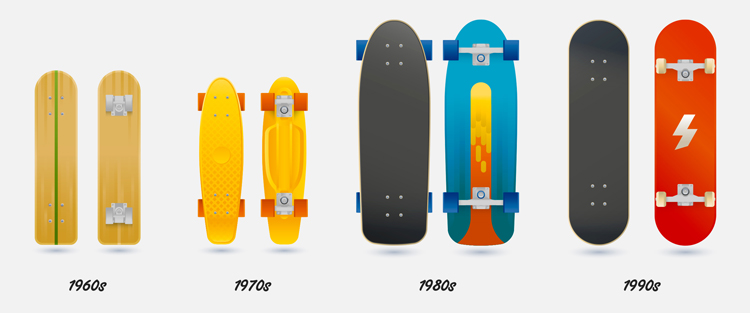
The journey to the modern popsicle skateboard deck is a fascinating narrative of innovation driven by the sport itself. Early skateboards in the 1950s and 60s were often simple planks, sometimes with rounded ends, resembling surfboards in miniature. As skateboarding progressed into the 1970s, designers began experimenting with various shapes.
Some boards became wider, others narrower, and many featured distinct, often asymmetrical, nose and tail designs, catering to the emerging disciplines like freestyle and downhill.
The late 1970s and early 1980s saw the rise of the “kicktail,” a curved upward angle at the back of the board that revolutionized ollies and aerial maneuvers. This was a significant step towards the popsicle shape. However, it was the mid-1980s that truly solidified the popsicle deck’s dominance.
Skaters and manufacturers realized that a symmetrical design, with both the nose and tail upturned and of similar proportions, offered unparalleled versatility. This allowed for easier switch-stance skating (skating in your non-dominant stance) and made tricks that involved flipping the board in either direction more accessible.
Brands like Powell-Peralta and Vision were instrumental in popularizing this design, and by the 1990s, the popsicle deck was the de facto standard for street and park skateboarding. Its adaptability made it suitable for the increasingly technical tricks being invented, and it has remained largely unchanged in its fundamental form ever since.
From Plank To Popsicle: A Timeline
- 1950s-1960s: Basic boards, often flat, resembling small planks or surfboards. Limited maneuverability.
- 1970s: Experimentation with shapes, including wider decks and early kicktails. Emergence of freestyle and downhill disciplines with specialized boards.
- Early 1980s: The kicktail becomes more pronounced, enabling aerial tricks. Boards start to resemble the modern shape more closely.
- Mid-1980s: The symmetrical “popsicle” shape gains traction due to its versatility for street and transition skating.
- 1990s-Present: The popsicle deck becomes the industry standard. Minor variations in concave, width, and length emerge, but the core symmetrical design remains.
Anatomy Of A Skateboard Deck
A skateboard deck, while seemingly simple, is a precisely engineered piece of equipment. Several key components contribute to its feel, performance, and durability. Understanding these parts is fundamental to selecting the right deck and appreciating its design.
Deck Dimensions: Width And Length
The width of a skateboard deck is arguably the most crucial dimension, directly impacting stability and control. Deck widths typically range from 7.5 inches to 9.0 inches or more. A wider deck offers more foot space, providing greater stability, which is beneficial for landing tricks and cruising. Conversely, a narrower deck is lighter and easier to flip, making it ideal for technical street skating and flip tricks.
Length usually correlates with width, though there can be variations. Standard decks are generally between 31 and 33 inches long. Longer decks offer more stability at higher speeds and a larger standing platform, while shorter decks can feel more responsive for quick maneuvers.
Nose, Tail, And Concave
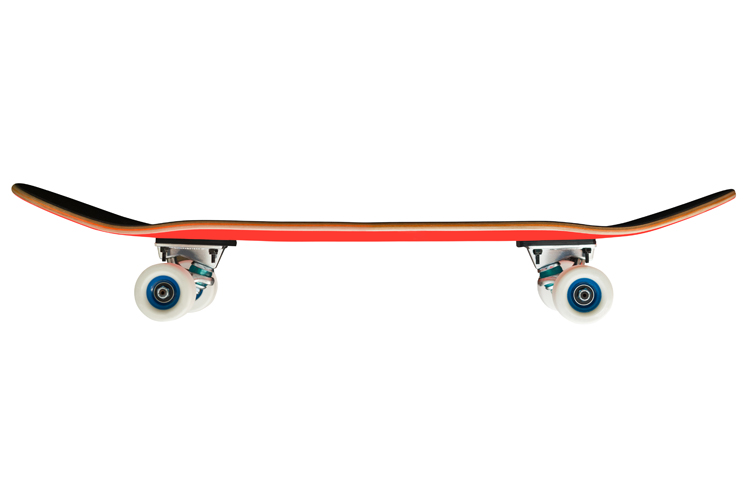
The nose is the front of the board, and the tail is the back. In a popsicle deck, these are designed to be of similar size and curvature, facilitating tricks performed in either direction. The upturned angle of the nose and tail (the “kick”) is essential for popping the board into the air for ollies and other flip tricks. The angle and length of the nose and tail can vary slightly between models, affecting the pop and responsiveness.
Concave refers to the side-to-side curvature of the deck. It’s not just for aesthetics; concave significantly enhances board control. It provides pockets for your feet to grip, allowing for more precise foot placement during flips and turns. Common concave types include:
- Mellow Concave: Offers a flatter feel, good for beginners or those who prefer a more stable platform.
- Medium Concave: A good balance of foot grip and comfort, suitable for most skating styles.
- Deep Concave: Provides maximum foot lock-in, ideal for technical skaters who need precise control during flip tricks.
Wheelbase And Truck Mounts
The wheelbase is the distance between the inner mounting holes for the trucks. A shorter wheelbase makes the board more responsive and quicker to turn, often preferred for street skating. A longer wheelbase increases stability, making it better for cruising, downhill, or larger skaters.
The truck mounts are the pre-drilled holes on the underside of the deck where the skateboard trucks are attached. Standard truck mounting patterns are consistent across most manufacturers, ensuring compatibility.

Credit: www.surfertoday.com
Choosing The Right Popsicle Deck Size And Shape
Selecting the correct popsicle deck size is paramount for a comfortable and effective skateboarding experience. It’s not a one-size-fits-all situation; the ideal deck size depends on several personal factors.
Sizing By Shoe Size And Height
A common guideline for choosing deck width is based on shoe size and height. While not an absolute rule, it provides a solid starting point.
- Smaller Skaters / Shoe Size (US Men’s 5-8): Typically benefit from decks 7.5 to 8.0 inches wide.
- Average Skaters / Shoe Size (US Men’s 8-11): Often find decks between 8.0 and 8.25 inches ideal.
- Taller or Larger Skaters / Shoe Size (US Men’s 11+): May prefer decks 8.25 inches and wider for more stability and foot room.
Height also plays a role. Taller individuals might find longer decks more comfortable for standing, while shorter individuals might prefer a more compact board.
Deck Width Vs. Skating Style
Your preferred skateboarding discipline heavily influences the ideal deck width:
- Street Skating & Technical Flip Tricks: Narrower decks (7.5″ – 8.0″) are generally preferred. They are lighter, easier to flip, and more responsive for quick maneuvers and intricate tricks.
- Park & Transition Skating (Bowls, Ramps): Medium to wider decks (8.0″ – 8.5″) offer more stability for riding transitions, carving, and landing airs. A wider platform provides a more secure base.
- Cruising & All-Around Skating: A balanced width (around 8.0″ – 8.25″) can work well. Some skaters opt for wider decks for added stability and comfort when simply rolling around.
Deck Shape Variations
While the popsicle shape is symmetrical, subtle variations exist that can impact feel:
- Nose and Tail Shape: Some noses and tails are slightly more pointed, while others are rounder. This can affect the feel of your foot placement and the responsiveness of pop.
- Concave Depth: As mentioned, the depth of the concave can range from mellow to deep, significantly altering how your feet feel locked onto the board. Deeper concaves are often favored by advanced skaters for flip trick control.
- Wheelbase Options: Some brands offer decks with multiple wheelbase options, allowing you to fine-tune the turning radius and stability.
Pro Tip: When in doubt, start with a medium-sized deck (around 8.0″ to 8.25″ wide) with a medium concave. This is a versatile setup that works well for most beginners and many intermediate skaters exploring different styles. You can always adjust your preference as you gain more experience.
Credit: www.surfertoday.com
Construction And Materials: What Makes A Deck Strong?
The durability and performance of a skateboard deck are largely determined by its construction and the materials used. The vast majority of popsicle decks are made from wood, but the type and layering significantly impact the final product.
The Power Of Maple: 7-ply Construction
The gold standard for skateboard decks is North American Maple (often sourced from the Great Lakes region). This hardwood is known for its strength, stiffness, and pop. Most popsicle decks are constructed from seven plies (layers) of maple veneer, cross-grained for maximum strength.
The manufacturing process involves:
- Veneer Preparation: Thin sheets of maple are cut and treated.
- Glue Application: A strong, water-resistant glue is applied between each ply.
- Pressing: The stacked plies are placed into a mold under immense hydraulic pressure. This forms the concave and kicks of the deck.
- Cutting & Shaping: The pressed blank is cut into the desired deck shape.
- Drilling: Holes for truck mounting are precisely drilled.
- Sanding & Finishing: The edges are smoothed, and graphics are applied.
This 7-ply maple construction provides an excellent balance of strength, weight, and responsiveness (pop).
Advanced Construction Techniques And Materials
While 7-ply maple remains dominant, manufacturers employ various techniques and materials to enhance deck performance and longevity:
- Reinforced Plies: Some decks incorporate stronger materials like carbon fiber or composite sheets between the maple plies. This can increase stiffness, reduce weight, and extend the deck’s pop life.
- Resin-7 Technology: Certain brands use a special epoxy resin instead of traditional wood glue. This can lead to a stronger, lighter deck with a longer-lasting pop because the resin bonds the wood more effectively and is less susceptible to moisture.
- Stain Colors and Graphics: While primarily aesthetic, the stains and clear coats used can offer a minor degree of protection against moisture. The graphics themselves are typically applied using screen printing or heat transfers.
Deck Maintenance For Longevity
Proper care can significantly extend the life of your popsicle deck and maintain its performance.
- Keep it Dry: Wood and water are not friends. Avoid skating in the rain or on wet surfaces. If your deck gets wet, dry it thoroughly with a towel and let it air dry away from direct heat.
- Avoid Excessive Heat: Don’t leave your board in a hot car or direct sunlight for extended periods, as this can weaken the glue and warp the wood.
- Check for Damage: Regularly inspect your deck for cracks, especially around the nose and tail (often called pressure cracks). These can compromise the deck’s integrity.
- Clean Grip Tape: Dirty grip tape loses its grip. You can clean it with a stiff brush and sometimes a grip tape cleaner solution.
- Protect the Edges: When grinding or sliding on ledges, consider using deck guards or learning to slide cleanly to minimize chipping and damage to the edges.
Understanding Deck Concave Depth And Its Impact
The concave of a skateboard deck is a critical design element that profoundly influences how a skater interacts with their board. It’s the curvature across the width of the deck, from rail to rail, and it plays a vital role in board control, foot placement, and the execution of tricks.
While seemingly subtle, the degree of concave can dramatically change the feel of a ride.
Mellow Concave: Stability And Comfort
Decks with a mellow concave feature a very slight curvature. This results in a flatter standing surface, offering a broad and stable platform for your feet. For skaters who prioritize comfort, stability, and a less restrictive feel, mellow concave is often preferred. Beginners might find it easier to get used to as it feels less “grippy” and allows for more foot movement. It’s also a popular choice for cruising and longboarding-style setups where stability is key. The reduced “lock-in” means it requires more active footwork to keep the board under control during complex maneuvers.
Medium Concave: The All-rounder
The medium concave strikes a balance between the flatness of mellow and the pronounced grip of deep concave. This is the most common type found on popsicle decks and is favored by a wide range of skaters, from beginners to advanced riders. It offers enough foot lock-in to provide good control during flip tricks and turns without feeling overly restrictive. This versatility makes it an excellent choice for skaters who engage in various disciplines, including street, park, and general cruising. The subtle channels created by the concave help guide your feet into the optimal position for ollies and board manipulation.
Deep Concave: Precision And Control
Decks with a deep concave feature a pronounced, almost V-shaped curvature across the width. This design creates significant pockets that “lock” your feet into place, providing exceptional board feel and control. Skaters who perform a high volume of technical flip tricks often gravitate towards deep concave. The deep channels help guide the board during flick attempts and provide a secure platform for landing. While offering superior control for tricks, deep concave can feel less comfortable for casual cruising and might require more precise foot placement. It can also make standing on the board feel slightly less stable for those unaccustomed to it.
Comparison of Concave Types:
| Concave Type | Standing Surface | Foot Lock-in | Control for Flip Tricks | Comfort for Cruising | Typical User |
|---|---|---|---|---|---|
| **Mellow** | Flatter | Minimal | Lower | High | Beginners, Cruisers, Longboarders |
| **Medium** | Balanced | Moderate | Good | Moderate | All-around skaters, Street, Park |
| **Deep** | Narrower | Maximum | Excellent | Lower | Technical Street skaters, Advanced riders |
Graphics, Aesthetics, And Personal Expression
While the functional aspects of a popsicle deck are paramount, the graphics and overall aesthetic play a significant role in a skater’s choice. Skateboards are not just sports equipment; they are also canvases for self-expression and extensions of personal style.
The Art Of Skate Deck Graphics
Skateboard graphics have evolved from simple logos and patterns to intricate, often artistic designs. Brands invest heavily in collaborating with artists, illustrators, and designers to create visually appealing decks. These graphics can range from bold typography and abstract patterns to detailed illustrations, pop culture references, and photorealistic imagery.
The choice of graphic is deeply personal. Some skaters prefer minimalist designs or plain wood finishes, while others seek out decks that make a bold statement. The graphics can reflect a skater’s interests, personality, or even their mood. For many, the deck graphic is the first thing they notice and a major factor in their purchase decision.
Impact On Deck Choice And Brand Loyalty
The visual appeal of a deck can significantly influence brand loyalty. Skaters often develop an affinity for brands whose graphics resonate with them. This aesthetic connection can be as strong as the functional performance of the deck itself. Brands that consistently deliver compelling artwork often cultivate a dedicated following.
Furthermore, limited edition graphics or collaborations with popular artists can create a sense of urgency and exclusivity, driving demand and collector interest. This artistic dimension adds another layer to the culture and community surrounding skateboarding.
Maintaining Your Deck’s Appearance
While performance is key, preserving the look of your deck can also be important to skaters.
- Clear Coat Protection: Some skaters apply an additional layer of clear coat spray to protect the graphics from wear and tear, especially if they plan to use the deck for grinding or heavy street skating.
- Grip Tape Art: Some creative skaters even cut designs into their grip tape or use colored grip tape to complement or contrast with the deck’s graphics.
Ultimately, the graphics on a popsicle deck are a personal choice that adds to the overall experience of riding. They transform a functional piece of equipment into a unique statement of identity.
Common Problems And How To Address Them
Even the best-built popsicle decks can encounter issues. Understanding common problems and knowing how to address them can help skaters maintain their boards and prevent premature replacement.
Pressure Cracks And Delamination
Pressure cracks are small fissures that appear on the top or bottom of the deck, often near the edges or where the concave is most pronounced. They are typically caused by the stress of landing tricks, especially repeated impacts. While minor pressure cracks might not immediately affect performance, they can weaken the deck. If they become significant or start to spread, they can lead to delamination, where the plies of wood begin to separate.
- Prevention: Landing tricks cleanly, distributing impact evenly, and avoiding over-stressing the board can help. Riding a deck that is appropriately sized for your weight and style also reduces strain.
- Fixes: For very minor surface cracks, some skaters use super glue applied sparingly to the fissure to prevent it from spreading. Significant delamination usually means the deck needs replacement.
Chipped Edges And Nose/tail Wear
The edges of a skateboard deck, particularly the nose and tail, are prone to chipping and wear from contact with curbs, ledges, and rough surfaces. This is a natural consequence of street skating and grinding.
- Prevention: Learning proper sliding techniques can minimize edge damage. Using deck guards (plastic or metal strips that attach to the nose and tail) can offer significant protection, though they add a small amount of weight and can affect the feel.
- Fixes: Minor chips can sometimes be smoothed with sandpaper. For significant wear, especially on the nose and tail, there isn’t much that can be done to restore the original shape and strength. This wear is often seen as a badge of honor by many skaters.
Warping And Weakening
Over time, and especially if exposed to moisture or extreme temperatures, a deck can lose its stiffness and even warp. A warped deck will feel unresponsive, make ollies harder, and can lead to an uncomfortable ride. A deck that has lost its “pop” feels heavy and dead underfoot.
- Prevention: Keeping the deck dry and away from heat sources is crucial. Riding a deck within its intended purpose (e.g., not using a street deck for heavy downhill) also prevents undue stress.
- Lifespan: The lifespan of a skateboard deck varies greatly depending on the skater’s intensity, weight, and style, but typically ranges from a few weeks to several months for heavy use.
Frequently Asked Questions
What Is The Difference Between A Popsicle Deck And Other Skateboard Shapes?
The primary difference lies in symmetry. A popsicle deck is symmetrical, with a nose and tail of similar size and curvature. Other shapes, like old-school boards, can be asymmetrical, wider, shorter, or have distinct nose and tail shapes designed for specific purposes like cruising or downhill.
The popsicle’s symmetry makes it highly versatile for modern street and park skating, allowing for easy switch-stance riding and consistent performance in both directions.
How Often Should I Replace My Popsicle Skateboard Deck?
This depends heavily on how much you skate and your style. For aggressive street skaters who perform many flip tricks and grinds, a deck might only last a few weeks to a couple of months before it becomes significantly worn or develops pressure cracks.
For more casual skaters, a deck could last six months to a year or even longer. Signs it’s time for a new deck include a loss of pop, significant cracks or delamination, or noticeable warping.
Can I Use A Popsicle Deck For Cruising?
Yes, you absolutely can use a popsicle deck for cruising. While dedicated cruiser boards often have softer wheels and wider trucks for stability, a popsicle deck can serve this purpose well, especially if you choose a slightly wider deck with a comfortable concave. Many skaters use their everyday street/park decks for cruising. If you find yourself primarily cruising, you might eventually consider a board specifically designed for it, but a popsicle is a perfectly viable option. For more on this, check out How to Choose a Skateboard Deck: Expert Tips for Perfect Fit.
What Does “pop” Mean In Relation To A Skateboard Deck?
“Pop” refers to the responsiveness and energy a skateboard deck has when you snap the tail off the ground to perform an ollie. A deck with good pop snaps up quickly and with authority, making it easier to get the board into the air.
Over time, repeated impacts and stress can cause the