
Teaching your child to skateboard can be an incredibly rewarding experience, fostering confidence, balance, and a love for outdoor activity. It’s a journey that requires patience, encouragement, and a structured approach, ensuring safety is always the top priority. While the image of a child effortlessly gliding on a skateboard might seem distant, breaking down the process into manageable steps makes it achievable for even the most hesitant beginner.
This guide will walk you through everything you need to know, from selecting the right gear to mastering fundamental techniques, empowering you to confidently guide your child on their skateboarding adventure.
Key Takeaways
-
- Safety First: Always prioritize protective gear, including helmets, knee pads, elbow pads, and wrist guards.
-
- Right Equipment: Choose a beginner-friendly skateboard that is appropriately sized and in good condition.
-
- Building Confidence: Start on a flat, safe surface and focus on basic balance and pushing techniques.
-
- Gradual Progression: Introduce turning and stopping gradually, celebrating small victories along the way.
-
- Patience and Encouragement: Maintain a positive attitude and provide consistent support, understanding that learning takes time.
-
- Skatepark Etiquette: Teach basic rules of the skatepark to ensure a safe and respectful environment for everyone.

Credit: www.youtube.com
The Foundation: Safety Gear And Board Selection
Before your child even steps onto a skateboard, the most crucial first step is ensuring they have the right safety gear and a suitable skateboard. This foundation sets the stage for a positive and safe learning experience. Without proper protection, the fear of falling can be a significant barrier to progress. Similarly, an ill-fitting or poorly maintained board can make learning unnecessarily difficult and even dangerous.
Essential Protective Gear
Safety is non-negotiable. A fall can happen at any moment, especially when learning. Equipping your child with the right protective gear can significantly reduce the risk of serious injury and boost their confidence to try new things.
-
- Helmet: This is the most critical piece of equipment. Ensure the helmet fits snugly and is certified for skateboarding. It should sit level on the head, covering the forehead, and the chin strap should be securely fastened. Look for helmets with good ventilation to keep them comfortable.
-
- Knee Pads: Knees are often the first to hit the ground. Good quality knee pads can prevent scrapes, bruises, and more serious injuries. They should fit well and not slip down during use.
-
- Elbow Pads: Similar to knee pads, elbow pads protect against impact and abrasions. They are essential for protecting the joints, which are vulnerable during falls.
-
- Wrist Guards: Many falls involve instinctively putting hands out to break a fall. Wrist guards help prevent sprains and fractures by supporting the wrist. Some have plastic splints on both the top and bottom to limit movement.
-
- Footwear: While not strictly “gear,” appropriate shoes are vital. Closed-toe, flat-soled shoes (like skate shoes) provide the best grip and protection. Avoid sandals, open-toed shoes, or anything with a heel.
Choosing The Right Skateboard
The type of skateboard you choose for a beginner makes a significant difference. A board that is too large, too small, too heavy, or too light can hinder progress. For children, it’s often best to start with a complete skateboard that is designed for beginners.
-
- Size Matters: Skateboard decks come in various widths. For children, a deck width of 7.0 to 7.5 inches is generally suitable. The length should also be proportionate to their height and shoe size. A shorter wheelbase can make it easier to turn.
-
- Deck Material and Construction: Most beginner boards are made from durable maple wood. Look for a deck with a good concave (the curve from edge to edge) which helps with foot placement and control.
-
- Trucks: These are the metal T-shaped parts that attach the wheels to the deck. For beginners, slightly looser trucks can make turning easier. Ensure they are properly aligned and not bent.
-
- Wheels: Softer, larger wheels (around 54-58mm diameter with a durometer rating of 80a-90a) are better for beginners as they provide a smoother ride on rougher surfaces and offer more grip.
-
- Bearings: Bearings determine how smoothly the wheels spin. ABEC-rated bearings (e.g., ABEC-3 or ABEC-5) are common and suitable for beginners. Higher ratings don’t necessarily mean better for skateboarding; durability and smoothness are key.
Pro Tip: Consider purchasing a complete skateboard from a reputable brand known for quality. Brands like Element, Santa Cruz, or Plan B often offer good quality beginner setups. You can explore options in a Skateboard Manufacturers Guide for more insight into quality boards.
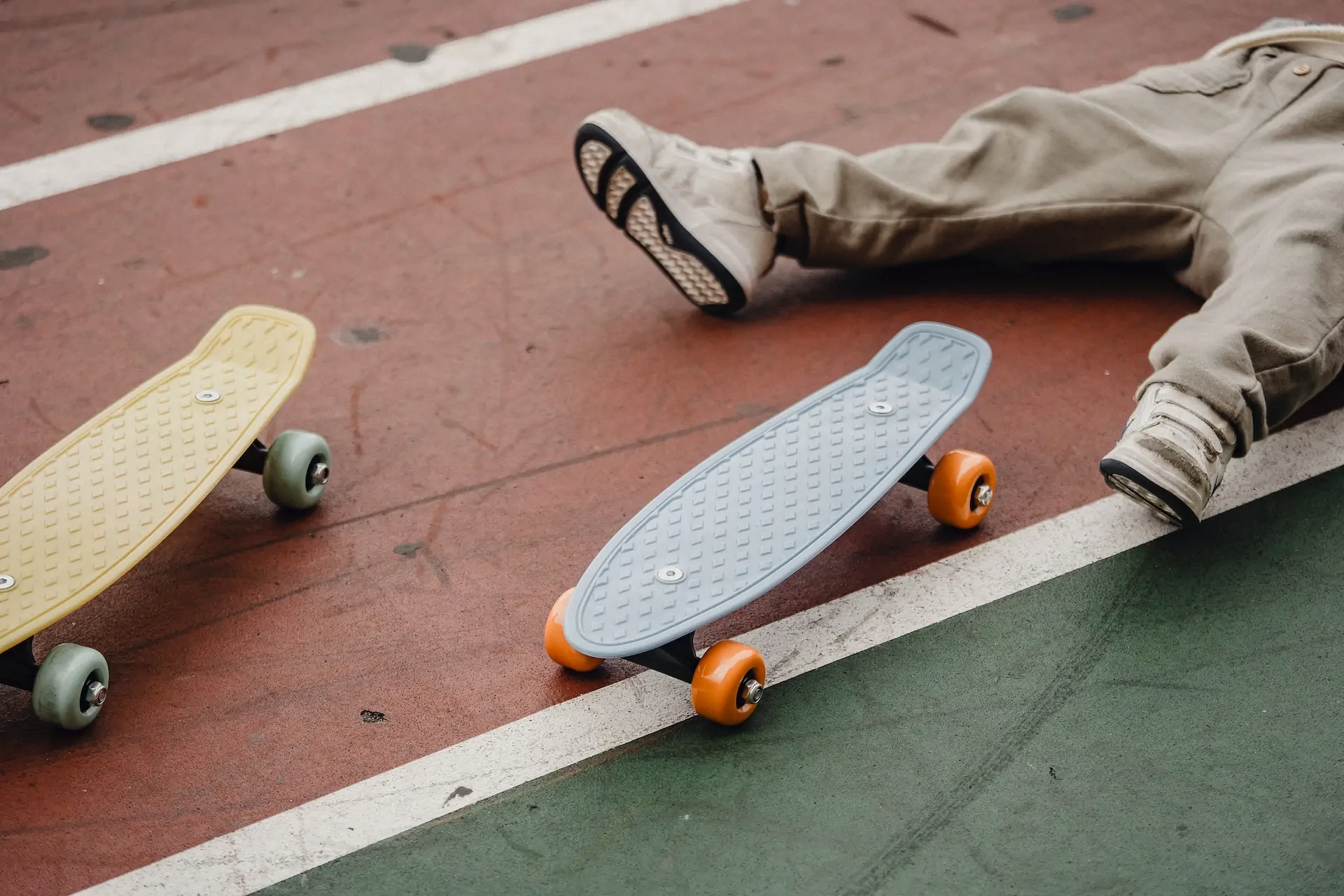
Credit: www.thetoyshop.com
Mastering The Basics: Balance And Pushing
Once you have the right gear, it’s time to introduce your child to the skateboard itself. The initial focus should be on getting comfortable with the board and learning to balance and push. This stage is all about building confidence and a feel for the equipment.
Finding A Safe Learning Environment
The location where your child learns is as important as the gear.
-
- Flat, Smooth Surfaces: Start on a large, flat, smooth, and open area. A smooth concrete or asphalt surface is ideal. Avoid grassy areas, gravel, or uneven pavement.
-
- Low Traffic: Choose a spot with minimal foot traffic and no vehicle traffic. Empty parking lots (on weekends), quiet parks, or even a smooth driveway can work well.
-
- Gentle Inclines (Later): Once basic pushing and balancing are mastered, a very gentle, short incline can help with learning to maintain momentum, but this should be introduced cautiously.
Getting Comfortable On The Board
Before even thinking about moving, your child needs to feel secure standing on the skateboard.
-
- Placement: Have your child place the skateboard on a soft surface like carpet or grass to prevent it from rolling. This allows them to get a feel for standing on the board without the fear of it moving.
-
- Stance: Encourage a comfortable stance. The regular stance (left foot forward) or goofy stance (right foot forward) is usually determined by which foot feels natural to step forward with. Have them try both. Their feet should be shoulder-width apart, roughly over the bolts that hold the trucks to the deck.
-
- Weight Distribution: Teach them to keep their knees bent and their weight centered over the board. Looking down at their feet can cause them to lose balance; encourage them to look forward.
The Art Of Pushing
Pushing is how a skateboarder generates momentum. It requires coordinating one foot on the board and the other foot to push off the ground.
-
- Foot Placement: Have your child place their front foot (the foot that stays on the board) on the front bolts, angled slightly forward.
-
- The Push: The back foot is used to push off the ground. They should take a few short, controlled pushes, keeping their front foot steady.
-
- Bringing the Foot Up: After pushing, they need to bring their back foot onto the tail of the board. This is often the trickiest part for beginners. Initially, they might just lift their foot slightly and then place it back down.
-
- Rhythm and Repetition: Encourage them to find a rhythm. Start with one push, then two, gradually increasing the number of pushes as they feel more stable. The goal is to push, lift the back foot, and then place it back on the board without losing balance.
Example: Imagine learning to ride a bike. You start by just sitting on it and getting a feel for the seat and handlebars. Similarly, with skateboarding, the initial phase is about acclimatizing to the board’s feel and learning to stand without wobbling excessively.
Developing Balance And Control
Once your child can push off and bring their feet onto the board with some stability, the next step is to refine their balance and introduce basic control. This involves learning to steer and stop effectively.
Maintaining Balance While Rolling
-
- Bent Knees: Reiterate the importance of keeping knees bent. This acts as a shock absorber and lowers their center of gravity, making them more stable.
-
- Looking Ahead: Encourage them to look where they are going, not down at their feet or the board. This helps with balance and anticipation.
-
- Arm Movements: Arms can be used for balance. They can extend them slightly to the sides, like a tightrope walker, to help maintain equilibrium.
Introduction To Turning (carving)
Turning on a skateboard is achieved by applying pressure to the edges of the deck, a technique known as carving.
-
- Leaning: Have your child practice leaning gently in the direction they want to turn. For a left turn, they would lean slightly onto their toes (leaning the board towards them). For a right turn, they would lean slightly onto their heels (leaning the board away from them).
-
- Foot Pressure: Explain that subtle shifts in foot pressure on the board initiate the turn. They don’t need to make big movements.
-
- Gentle Sweeping Turns: Start by practicing wide, sweeping turns on a flat surface. They should try to make smooth, gradual curves rather than sharp angles.
-
- Practice Both Directions: Ensure they practice turning in both directions to develop equal control.
Learning To Stop
There are several ways to stop on a skateboard, and it’s important to teach a few methods for different situations.
-
- Foot Braking (Drag Brake): This is the most common and intuitive method for beginners.
-
- As they are rolling, have them lift their back foot off the board.
-
- Lightly drag the sole of their back shoe on the ground behind them.
-
- Increase the pressure gradually to slow down and eventually stop.
-
- Pro Tip: Advise them to start with a light drag and increase pressure slowly. Dragging too hard too soon can cause them to lose balance or even trip.
-
- Tail Drag (for advanced beginners): This involves lifting the front of the board and dragging the tail. It’s a more abrupt stop but can be useful. However, it can wear down the tail of the board quickly and is best taught after foot braking is mastered.
-
- Falling Safely: It’s inevitable that they will fall. Teach them to try and roll out of a fall if possible, rather than stiffening up and landing awkwardly. This is where the protective gear is crucial.

Credit: www.surfertoday.com
Introducing Basic Tricks And Transitions
Once your child is comfortable balancing, pushing, turning, and stopping, you can begin introducing some simple skateboard tricks. These are designed to be achievable and build on their existing skills, further boosting their confidence and enjoyment.
The Ollie: The Gateway Trick
The ollie is the foundation for most skateboarding tricks. It’s the action of jumping with the skateboard attached to your feet. Teaching the ollie can be challenging, so break it down into stages.
-
- Practice the Pop: Have your child stand on the board with their back foot on the tail. Encourage them to stomp down hard on the tail of the board, making it “pop” off the ground. They should practice this motion repeatedly until they can reliably pop the tail.
-
- The Slide: As the tail pops, the front of the board will rise. The next step is to slide their front foot up the board towards the nose. This motion levels out the board in the air.
-
- Timing is Key: The pop and the slide need to happen in quick succession. Initially, they might just get a little hop.
-
- Practice Without Jumping: Sometimes, practicing the pop and slide motion without trying to jump can help them understand the board’s movement.
-
- Gradual Height: Encourage them to focus on getting the board off the ground and level, rather than aiming for height immediately. Height will come with practice.
In my experience, teaching the ollie often requires breaking it down into even smaller steps, focusing on the pop, then the slide, and then combining them. Patience is paramount here.
Riding Ramps And Inclines
Once they are comfortable on flat ground, introducing gentle ramps or inclines can open up new possibilities.
-
- Gentle Slopes: Start with very shallow, smooth slopes. A gentle slope in a skatepark or a smooth, wide driveway incline is ideal.
-
- Riding Up and Down: Have them practice riding up the gentle slope and then coming back down. This helps them understand how gravity affects their speed and how to control it.
-
- Small Transitions: If you have access to small, mellow quarter pipes or banks, these are excellent for learning to ride transitions. They can learn to rock back and forth, gaining momentum from the curve of the ramp.
-
- Safety on Ramps: Ensure they understand that ramps require more control and speed management. Always start small and supervised.
Other Beginner-friendly Tricks
There are several other easy tricks that can build on their skills:
-
- Manual: This is balancing on the back wheels. It’s similar to a wheelie on a bike. Have them practice lifting the front wheels slightly by leaning back and using their arms for balance.
-
- Nose Manual: Balancing on the front wheels. This is generally harder than a regular manual and can be introduced later.
-
- Tic-Tacs: Small, quick turns made by pivoting the board using your feet without rolling. This is great for improving board control in tight spaces.
-
- Shuvit (Pop Shuvit): A trick where the board spins 180 degrees under your feet. A basic shuvit involves scooping the tail with your back foot to make the board spin. A pop shuvit adds a small ollie.
You can find detailed guides for these tricks on resources covering Easy Skateboard Tricks for Beginners.
Skatepark Etiquette And Advanced Learning
As your child’s skills progress, they might become interested in visiting a skatepark. Skateparks offer a dedicated space with features like ramps, rails, and bowls, but they also come with an unwritten set of rules and etiquette that are important to follow for safety and respect.
Understanding Skatepark Rules
-
- Right of Way: Generally, skaters already riding a feature have the right of way. This means waiting your turn and not dropping in on someone who is in the middle of a run.
-
- One Direction: In bowls and on ramps, skaters usually travel in one consistent direction to avoid collisions. Observe how others are riding before joining in.
-
- No Blocking: Don’t stand or sit in the middle of a run or a pathway where skaters are actively moving.
-
- Respect Others: Be mindful of other skaters, especially beginners. Avoid aggressive behavior or language.
-
- Clean Up: Take all your trash with you and be respectful of the park facilities.
-
- Supervision: For younger children, continuous supervision is essential at a skatepark.
When To Introduce New Challenges
-
- Listen to Your Child: Pay attention to their enthusiasm and their comfort level. Pushing them too hard can lead to frustration and fear.
-
- Progress Gradually: Don’t rush into complex tricks or advanced skatepark features. Master the basics thoroughly.
-
- Seek Guidance: If possible, find experienced skaters who can offer tips or even informal lessons. Watching other skaters can also be a great learning tool.
-
- Skateboarding’s Benefits: Remember that skateboarding offers numerous benefits beyond tricks, including improved physical fitness, mental resilience, and social interaction. You can explore these Benefits of Skateboarding to understand its broader impact.
Comparison Table: Beginner vs. Intermediate Skateboard Setup
| Feature | Beginner Setup | Intermediate Setup |
|---|---|---|
| Deck Width | 7.0″ – 7.5″ | 7.75″ – 8.25″ |
| Deck Concave | Mellow to Medium | Medium to Steep |
| Wheels | Softer (80a-90a), Larger (54-58mm) | Harder (95a-101a), Smaller (50-54mm) |
| Trucks | Slightly looser for easier turning | Standard tightness, adjustable for preference |
| Bearings | ABEC-3 or ABEC-5 (durable) | ABEC-5 or ABEC-7 (smoother, faster) |
| Purpose | Balance, basic riding, learning fundamentals | Tricks, park riding, street skating, higher speeds |
This table highlights how equipment can be tailored as a skater progresses. For instance, a beginner might benefit from the stability and smoother ride of softer, larger wheels, while an intermediate skater looking to perform tricks might prefer harder, smaller wheels for better pop and speed on smooth surfaces.
The Role Of The Parent/guardian
Your role as a parent or guardian is pivotal in your child’s skateboarding journey. It’s not just about teaching them how to push and turn; it’s about fostering a positive attitude towards learning, perseverance, and safety.
Encouragement And Patience
-
- Celebrate Small Wins: Acknowledge every step of progress, no matter how small. Landing a single push smoothly, staying balanced for a few seconds longer, or making a wobbly turn are all victories.
-
- Positive Reinforcement: Use praise and encouragement generously. Avoid criticism, especially in the early stages. Focus on effort rather than just outcome.
-
- Understand Frustration: Learning to skateboard is challenging. There will be moments of frustration for both the child and you. Take breaks when needed and approach setbacks with a calm, supportive demeanor.
-
- Avoid Comparisons: Don’t compare your child’s progress to others. Every individual learns at their own pace.
Leading By Example
-
- Show Enthusiasm: If you have an interest in skateboarding, show it! Even if you’re not a skater yourself, demonstrating enthusiasm for their new hobby can be motivating.
-
- Learn Together: If you’re new to skateboarding, consider learning alongside your child. It can be a fun bonding activity, and you can share the learning curve. There are resources available for How to Learn Skateboarding As an Adult.
-
- Safety First Mentality: Consistently model safe practices by wearing your own protective gear (if participating) and emphasizing the importance of safety to your child.
Creating A Supportive Environment
-
- Provide Resources: Ensure they have access to appropriate gear, a safe place to practice, and perhaps even local skate camps or lessons if available.
-
- Manage Expectations: Understand that skateboarding is a skill that takes a lot of practice and time to develop. There will be plateaus and moments of regression.
-
- Focus on Fun: Ultimately, skateboarding should be enjoyable. If it starts feeling like a chore, it’s important to reassess and ensure the fun aspect remains paramount. Exploring Why Skateboarding is Good for Mental Health can remind you of the positive psychological impacts.
Case Study: The Miller Family’s Skateboarding Journey
The Miller family decided to introduce their 8-year-old daughter, Lily, to skateboarding. Initially, Lily was hesitant, intimidated by the board and the idea of falling. Her parents, Mark and Sarah, focused on making the experience positive. They bought a well-fitting, colorful board and a full set of protective gear.
They started in their backyard on the grass, then moved to the smooth driveway. Mark, who had never skated before, learned to push and balance alongside Lily, making it a shared activity. They celebrated her first successful push and her first wobbly turn.
When Lily fell, they calmly helped her up, checked her gear, and encouraged her to try again. Within a few months, Lily was confidently cruising around their neighborhood and even attempting small ollies. The key to their success was patience, consistent encouragement, and making safety and fun the absolute priorities.
Frequently Asked Questions
What Is The Best Age To Start Skateboarding?
There’s no single “best” age, as children develop at different rates. Many children show interest between ages 5 and 7. However, the most important factor is the child’s own interest and readiness, along with their ability to understand and follow safety instructions.
Some children might be ready earlier, while others might prefer to wait until they are older.
How Long Does It Take To Learn To Skateboard?
Learning to skateboard is a continuous process, and the timeline varies greatly depending on the individual. Basic balance and pushing can often be learned within a few sessions. Mastering turning, stopping, and simple tricks like the ollie can take weeks or months of consistent practice.
Advanced skateboarding takes years of dedication.
Are Skateparks Dangerous For Beginners?
Skateparks can be intimidating and potentially dangerous for beginners if not approached correctly. The risks are significantly reduced by wearing full protective gear, starting on smaller, mellower features, observing how others use the park, and understanding skatepark etiquette. It’s crucial for beginners to start with adult supervision and gradually build their confidence and skill set.