
The concept of a “hoverboard without wheels” might sound like something out of science fiction, conjuring images of personal flight and futuristic transportation. However, the devices commonly referred to as hoverboards today are a far cry from true levitation. These two-wheeled, self-balancing personal transporters, while not defying gravity, utilize sophisticated technology to provide a unique and engaging riding experience.
Understanding how these devices work involves delving into the interplay of sensors, motors, and intelligent control systems that allow them to respond to the rider’s subtle movements. The magic behind these wheeled wonders lies in their ability to sense and react to the rider’s center of gravity. Unlike traditional skateboards or scooters, which require constant physical input to maintain balance and direction, these self-balancing scooters do the heavy lifting for you. They achieve this through a combination of advanced electronics and mechanical engineering, creating a system that feels intuitive and responsive. This article will break down the core components and principles that enable these wheeled “hoverboards” to function, offering a clear picture of the technology that makes them move.
Key Takeaways
-
- Self-balancing technology is the core of how these devices work, using gyroscopes and accelerometers to detect tilt and orientation.
- Electric motors power the wheels, responding to commands from the control board to move forward, backward, or turn.
- Pressure-sensitive pads allow riders to control direction and speed by shifting their weight and applying pressure.
- A central motherboard (control board) acts as the “brain,” processing sensor data and sending instructions to the motors.
- The rider’s center of gravity is the primary input for controlling movement and maintaining balance.
- These devices are not true hoverboards but rather self-balancing electric scooters.
- Look for UL 2272 compliance and avoid recalled, secondhand, or uncertified units when buying a hoverboard.
- Charge only with the supplied charger, stay present while charging, and never leave the device plugged in overnight.
- Check weight limits, terrain suitability, battery range, and water resistance before purchasing.
Credit: hackaday.com
The Core Principles: Gyroscopes And Accelerometers
At the heart of any self-balancing scooter lies its ability to understand its own orientation and movement in space. This is achieved through a sophisticated array of sensors, primarily gyroscopes and accelerometers. These components work in tandem to provide the device’s central control unit with real-time data about its tilt and acceleration.
Gyroscopic Sensors
Gyroscopes are devices that measure or maintain orientation and angular velocity. In a self-balancing scooter, they are crucial for detecting any tilt or lean. Imagine a spinning top; it resists changes in its orientation due to angular momentum. While modern gyroscopic sensors in these devices are typically solid-state (often using MEMS, Micro-Electro-Mechanical Systems technology), the principle remains: they can detect rotation around an axis.
When a rider leans forward, the gyroscope detects this change in angle relative to gravity. Similarly, leaning backward is registered. The gyroscope’s output is a signal that indicates the rate and direction of the tilt. This information is fundamental for the system to know when it’s about to fall and what corrective action is needed.
Accelerometer Sensors
Accelerometers, on the other hand, measure linear acceleration, which is the rate of change of velocity. In the context of a hoverboard, accelerometers help detect gravitational forces and any additional acceleration the device experiences. When the device is stationary, accelerometers can detect the direction of gravity, helping to establish a baseline “upright” position.
More importantly, accelerometers can detect when the device is accelerating or decelerating, or when it’s being tilted. If a rider leans forward, not only does the gyroscope detect the tilt, but the accelerometers can also sense the resulting linear acceleration that would occur if the device didn’t compensate.
By combining data from both gyroscopes and accelerometers, the control system gets a comprehensive picture of the device’s motion and orientation, allowing for precise balance adjustments. This dual-sensor approach provides redundancy and accuracy, ensuring the device can react quickly to maintain stability.
Credit: gyroorboard.com
The Brains Of The Operation: The Control Board
All the data from the gyroscopes and accelerometers would be useless without a central processing unit to interpret it and translate it into action. This is the role of the control board, often referred to as the motherboard or main circuit board. This compact but powerful component is the “brain” of the hoverboard.
Sensor Fusion And Processing
The control board receives raw data streams from the gyroscopic and accelerometer sensors. This data is often noisy and requires sophisticated algorithms to filter and interpret. The process of combining data from multiple sensors to achieve a more accurate and reliable understanding of the device’s state is known as sensor fusion. The control board’s processor runs algorithms that fuse the gyroscope and accelerometer data to determine the precise tilt angle and rate of change.
Decision Making And Motor Control
Once the control board has an accurate understanding of the hoverboard’s orientation, it makes critical decisions. If the sensors indicate a forward tilt (meaning the rider is leaning forward), the control board calculates the necessary motor response to move the wheels forward, counteracting the lean and maintaining balance.
Conversely, a backward lean triggers a command for the wheels to move backward.
The control board also manages the speed of the motors. The degree of tilt often dictates the speed; a more aggressive lean results in faster movement. This is where the intuitive feel of the hoverboard comes from, the system is constantly adjusting motor speed and direction based on the rider’s subtle shifts in weight and posture.
The processing on the control board happens at an incredibly high frequency, typically hundreds of times per second, which is why the balance corrections feel so instantaneous and smooth.

Credit: www.usatoday.com
The Power Behind The Movement: Electric Motors And Batteries
While sensors and control boards provide the intelligence, it’s the electric motors and battery pack that provide the raw power to move the hoverboard. These components are essential for translating the control board’s commands into physical motion.
Hub Motors
Most hoverboards utilize hub motors, which are electric motors integrated directly into the wheels. This design is space-efficient and eliminates the need for complex drivetrain components like chains or belts, which are common in other electric vehicles. Each wheel typically has its own independent hub motor.
When the control board decides to move forward, it sends a signal to the motor in each wheel, instructing it to spin in the forward direction. The speed of the spin is dictated by the control board’s calculations based on sensor input.
For turning, the control board can vary the speed of each wheel independently. For example, to turn left, the right wheel might spin slightly faster than the left wheel, or the left wheel might even spin in reverse briefly, causing the hoverboard to pivot.
Battery Technology
The power source for these motors is a rechargeable lithium-ion battery pack. These batteries are chosen for their high energy density (meaning they can store a lot of energy in a small, lightweight package) and their ability to deliver consistent power. The battery pack is typically housed within the body of the hoverboard, often situated between the two footpads.
The capacity of the battery pack, measured in Watt-hours (Wh) or milliampere-hours (mAh), determines the hoverboard’s range, how far it can travel on a single charge. Charging is typically done via a port on the hoverboard, connecting to a standard electrical outlet with a provided charger.
The lifespan and performance of the battery are critical factors in the overall usability and longevity of the hoverboard. Safety features, such as battery management systems (BMS), are integrated to prevent overcharging, over-discharging, and overheating, which are crucial for the safe operation of lithium-ion batteries.
Rider Interaction: The Footpads And Control Mechanisms
The rider’s input is the final, crucial element in the hoverboard’s operation. While the internal technology handles the balancing act, the rider directs the movement. This interaction is primarily managed through the pressure-sensitive footpads.
Pressure And Tilt Sensing
Each footpad on a hoverboard is typically divided into two independent sections, with pressure sensors located underneath. When a rider places their feet on the pads, these sensors detect the distribution of weight and pressure.
-
- Forward Movement: To move forward, the rider leans forward slightly and applies gentle pressure on the front halves of both footpads. The sensors detect this combined lean and pressure, signaling the control board to engage the motors to move the wheels forward.
- Backward Movement: Similarly, leaning backward and applying pressure to the rear halves of the footpads initiates backward movement.
- Turning: To turn, the rider applies differential pressure. For instance, to turn right, the rider might press down more on the front of the right footpad and the back of the left footpad, or simply apply more forward pressure on the right side. The control board interprets these asymmetric inputs to adjust the speed of the individual wheel motors, causing the hoverboard to pivot or turn.
- Stopping: To stop, the rider simply returns to a neutral, balanced stance, reducing pressure on the footpads. This signals the control board to disengage the motors or apply a slight braking force.
This system creates an intuitive control scheme where the rider’s body naturally guides the device. It requires a learning curve, but once mastered, it feels very natural and responsive. In my experience, mastering the subtle weight shifts is key to smooth control.
The Learning Curve
The initial experience of riding a hoverboard can be challenging for newcomers. The sensitivity of the sensors means that even slight, unintentional shifts in weight can cause the device to react. This is why beginners often experience jerky movements or instability.
However, with practice, riders learn to engage their core muscles and make micro-adjustments with their feet and ankles to maintain a stable and controlled ride. Many manufacturers offer different riding modes, such as beginner or advanced, which can adjust the sensitivity of the sensors and the responsiveness of the motors to make the learning process easier.
Putting It All Together: A Seamless Ride
The seemingly effortless glide of a hoverboard is the result of a complex, high-speed feedback loop involving all the components discussed. It’s a constant dance between the rider’s intent and the machine’s reaction.
-
- Rider Input: The rider leans forward and applies pressure to the footpads.
- Sensor Detection: The pressure sensors in the footpads register the rider’s input, and the gyroscopes and accelerometers detect the resulting tilt.
- Control Board Processing: The control board receives this data, fuses it, and calculates the precise motor commands needed to counteract the lean and move the hoverboard in the intended direction at the appropriate speed.
- Motor Activation: The control board sends signals to the hub motors in each wheel.
- Movement and Re-balancing: The motors spin the wheels, propelling the hoverboard forward. As the hoverboard moves forward, it counteracts the rider’s initial forward lean, effectively keeping the rider upright.
- Continuous Feedback: This process repeats continuously, hundreds of times per second, with the system constantly monitoring the rider’s position and making micro-adjustments to maintain balance and follow the rider’s commands.
This intricate system allows the hoverboard to feel like an extension of the rider’s body. The speed of the feedback loop is critical; if there were any significant delay, the rider would lose balance. The sophisticated algorithms running on the control board are optimized to minimize this latency, creating a smooth and responsive experience.
Beyond The Basics: Additional Features And Technologies
While the core functionality of a hoverboard relies on sensors, control boards, motors, and batteries, many modern devices incorporate additional features to enhance the user experience, safety, and connectivity.
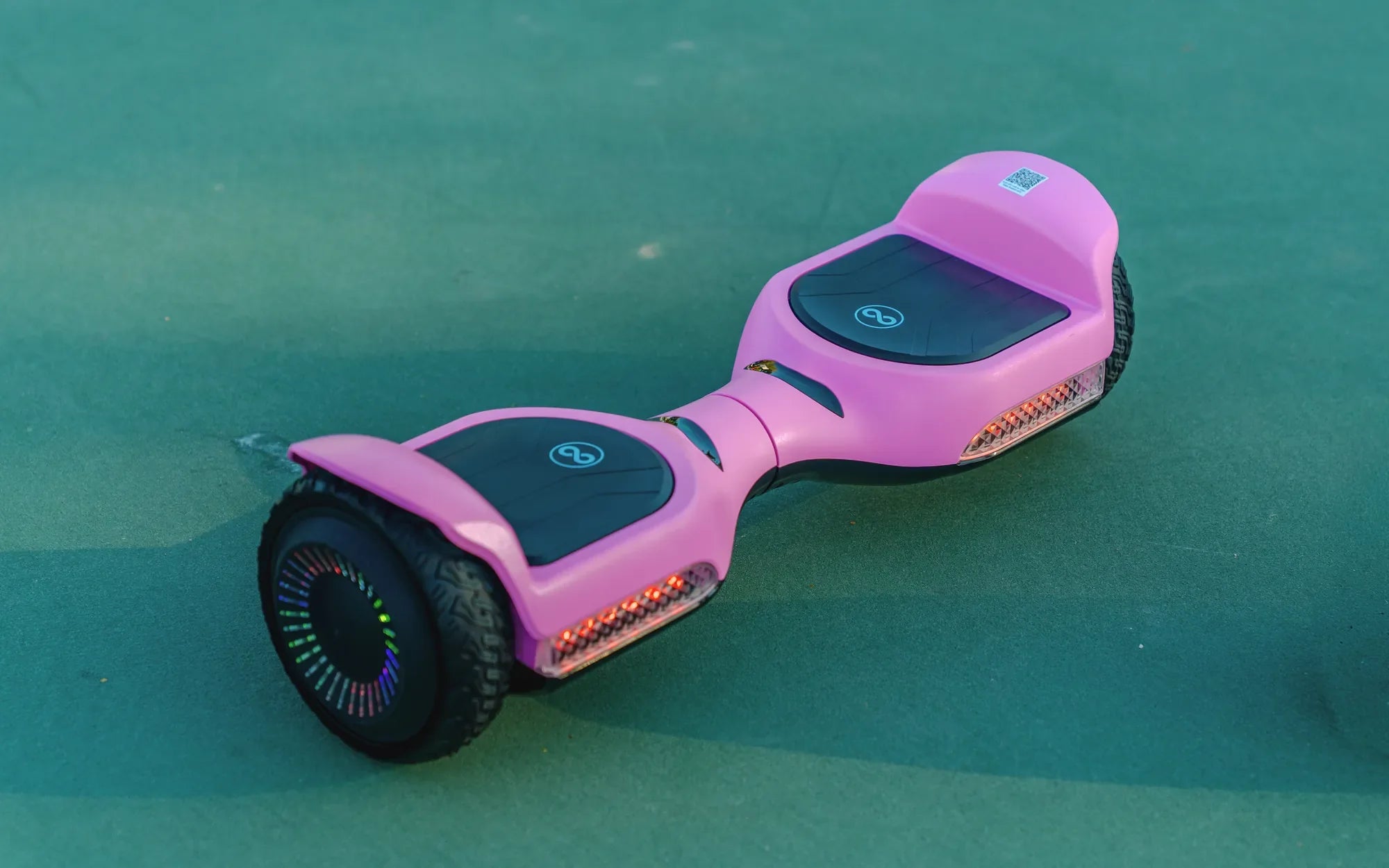
LED Lighting
Most hoverboards feature LED lights, often on the front, rear, and sometimes around the wheel wells. These lights serve multiple purposes:
-
- Visibility: They improve the rider’s visibility to others, especially in low-light conditions, contributing to safety.
- Aesthetics: They add a visually appealing element, particularly popular with younger riders.
- Status Indicators: Some lights can also function as status indicators, signaling battery level or operational mode.
Bluetooth Connectivity And Speakers
A growing number of hoverboards come equipped with Bluetooth connectivity. This allows riders to pair their smartphones with the hoverboard. Once connected, several functionalities can be accessed:
-
- Music Playback: Many models include built-in speakers, allowing riders to play music from their connected device.
- App Control: Companion mobile apps can offer features like speed control, battery monitoring, diagnostic information, and sometimes even GPS tracking or customizable riding modes. This enhances the customization and user engagement with the device.
Battery Management Systems (BMS)
As mentioned earlier, Battery Management Systems (BMS) are crucial for the safe and efficient operation of the lithium-ion battery. A good BMS protects the battery from:
-
- Overcharging: Prevents damage and potential hazards from overfilling the battery.
- Over-discharging: Stops the battery from draining too low, which can permanently damage it.
- Overheating: Monitors temperature and can shut down the system if it gets too hot.
- Short Circuits: Protects against electrical faults.
The presence and quality of the BMS significantly impact the safety and lifespan of the hoverboard. Reputable manufacturers prioritize robust BMS solutions. For more information on battery safety in personal electric vehicles, resources like those from the Consumer Product Safety Commission (CPSC) offer valuable insights.
Safety Considerations And Best Practices
Despite their advanced technology, hoverboards are personal mobility devices that require responsible use. Understanding potential risks and adhering to safety guidelines is paramount.
Importance Of Protective Gear
Wearing appropriate protective gear is non-negotiable when riding a hoverboard. This includes:
-
- Helmet: A certified helmet is essential to protect against head injuries in case of falls.
- Wrist Guards: These protect against fractures and abrasions when bracing for a fall.
- Elbow and Knee Pads: Further protection against scrapes and impacts.
The benefits of skateboarding and similar activities often extend to mental well-being, but safety must always come first. As highlighted in articles discussing why skateboarding is good for mental health, enjoying these activities responsibly maximizes the positive outcomes.
Riding Environment And Regulations
Choosing a safe riding environment is crucial. Beginners should practice in open, flat areas free from obstacles, pedestrians, and vehicular traffic. As riders gain confidence, they can explore other locations, but it’s important to be aware of local regulations regarding the use of such devices.
Some areas may prohibit hoverboard use on sidewalks, roads, or in public parks. Always check local ordinances before riding.
Maintenance And Care
Proper maintenance ensures the longevity and safe operation of the hoverboard. This includes:
-
- Regular Charging: Following the manufacturer’s charging instructions.
- Tire Checks: Ensuring tires are properly inflated (if applicable) and free from damage.
- Cleaning: Keeping the device clean, especially the sensors and charging port.
- Software Updates: If the hoverboard supports app connectivity, keeping the firmware updated can provide performance improvements and security patches.
Comparison: Hoverboards Vs. Other Personal Electric Vehicles
To fully appreciate how hoverboards work, it’s useful to compare them to other popular personal electric vehicles (PEVs). Each offers a distinct riding experience and technological approach.
| Feature | Hoverboard (Self-Balancing Scooter) | Electric Scooter (e-Scooter) | Electric Skateboard | Electric Unicycle (EUC) |
|---|---|---|---|---|
| Propulsion | Dual independent wheel motors | Single motor, often rear | Single or dual motors | Single wheel motor |
| Control | Body lean, foot pressure | Handlebar throttle & brake | Body lean, remote | Body lean, foot pressure |
| Balance | Self-balancing technology | Rider maintains balance | Rider maintains balance | Self-balancing technology |
| Portability | High (compact, no handlebars) | Medium (foldable) | High (compact) | High (compact) |
| Learning Curve | Moderate to high | Low | Moderate | Very high |
| Terrain | Smooth, flat surfaces | Pavement, light gravel | Smooth surfaces | Varied, incl. rougher |
| Primary Use | Recreation, short commutes | Commuting, recreation | Recreation, sport | Commuting, recreation |
As you can see, the hoverboard occupies a unique niche. It’s the only PEV in this list that relies entirely on self-balancing technology and rider lean for control, without the aid of handlebars or a remote for primary steering. This fundamental difference in control mechanism is what makes hoverboards distinct. For instance, when choosing a skateboard deck, understanding the physics and design is key, much like understanding the technology behind hoverboards. You can learn more about this in guides like How to Choose a Skateboard Deck.
The Future Of Hoverboard Technology
While the basic principles of hoverboard operation have remained consistent since their popularization, manufacturers are continuously innovating. Future developments may include:
-
- Improved Battery Life and Charging: Faster charging times and longer-lasting batteries will increase usability.
- Enhanced Sensor Accuracy and Responsiveness: More precise sensors could lead to even more intuitive control and stability.
- Advanced AI Integration: Artificial intelligence could potentially be used for predictive balancing, adaptive riding modes, and even obstacle avoidance.
- Newer Motor Technologies: More efficient and powerful motors could lead to better performance and range.
- Integration with Smart City Infrastructure: As urban mobility evolves, hoverboards might become more integrated with smart city systems for navigation and safety.
The evolution of these devices is a testament to the rapid advancements in sensor technology, battery power, and micro-processing.
Frequently Asked Questions
What Makes A Hoverboard “self-balancing”?
A hoverboard is self-balancing due to the integrated use of gyroscopic sensors and accelerometers. These sensors constantly monitor the device’s tilt and orientation. A central control board processes this data and sends real-time commands to the electric motors in the wheels. These motors adjust their speed and direction to counteract any lean, effectively keeping the platform level and stable for the rider.
How Do I Control The Direction Of A Hoverboard?
Direction is controlled through a combination of body lean and differential pressure applied to the footpads. Leaning forward makes the hoverboard move forward, and leaning backward makes it move backward. To turn, you apply uneven pressure on the footpads, for example, pressing down more on the front of one pad and the back of the other, or applying more forward pressure on one side than the other. The control board interprets these inputs to spin the wheels at different speeds, causing the hoverboard to turn.
Are Hoverboards Safe To Ride?
Hoverboards can be safe when used responsibly and with proper precautions. The primary risks involve falls due to loss of balance or collisions. It is crucial to always wear protective gear, including a helmet, wrist guards, and knee pads. Riding in safe, open areas away from traffic and obstacles is also essential. Manufacturers are continuously improving safety features, but rider awareness and adherence to safety guidelines are paramount. For more on safety, see Are Electric Skateboards Safe? What Every Rider Should Know, as many safety principles overlap.
When buying a hoverboard, the most important checks are certification, battery safety, and fit for the rider. Look for UL 2272 compliance, confirm the unit is not recalled, and avoid uncertified third-party or secondhand sellers.
What Is The Typical Range Of A Hoverboard On A Single Charge?
The range of a hoverboard varies significantly depending on the model, battery capacity, rider’s weight, terrain, and riding style. However, most standard hoverboards can travel between 6 to 12 miles (10 to 20 kilometers) on a full charge. Higher-end models with larger batteries may offer even greater range. Always check the manufacturer’s specifications for the specific model you are interested in.
Can Hoverboards Be Used In Wet Conditions Or On Rough Terrain?
Generally, hoverboards are not designed for use in wet conditions (rain, puddles) or on rough terrain (gravel, grass, dirt). Most models have limited water resistance, and exposure to moisture can damage the internal electronics, motors, and battery. Rough terrain can also be challenging for the small wheels and self-balancing system, leading to instability and potential falls. They perform best on smooth, paved surfaces.
Before buying, check the rider weight rating, wheel size, maximum speed, charging time, and whether the board is rated for indoor, sidewalk, or light outdoor use.
The technology behind hoverboards, while not enabling true levitation, represents a fascinating application of modern electronics and engineering. By precisely sensing the rider’s balance and translating subtle shifts into motor commands, these self-balancing scooters offer a unique and enjoyable mode of personal transportation and recreation.
Understanding the interplay of gyroscopes, accelerometers, control boards, and electric motors provides insight into how these wheeled devices achieve their seemingly magical ability to stay upright and respond to our every move.
For safety, charge only with the included charger, let the board cool before charging, and stop using it immediately if it becomes unusually hot, damaged, or emits odor/smoke.