
Skateboarding is a dynamic and exhilarating activity that demands a blend of skill, courage, and the right attire. For girls stepping onto the board, whether they’re just starting out or looking to refine their technique, understanding what to wear is fundamental. It’s not just about looking the part; it’s about ensuring comfort, safety, and freedom of movement. The right clothing can significantly impact your confidence and performance, allowing you to focus on mastering tricks and enjoying the ride.
Choosing your skateboarding wardrobe involves a thoughtful consideration of several key elements: durability, flexibility, protection, and personal style. Many beginners often overlook the importance of proper attire, leading to discomfort or even hindering their progress. This guide aims to demystify the process, providing a comprehensive look at what makes an effective and stylish skateboarding outfit for girls, ensuring you’re well-equipped for every ollie, grind, and kickflip.
Key Takeaways
-
- Prioritize Comfort and Mobility: Opt for clothing that allows a full range of motion without being too baggy or restrictive.
- Durability is Key: Skateboarding is rough on clothes; choose sturdy fabrics like denim, canvas, and reinforced synthetics.
- Layering is Your Friend: Adapt to changing weather conditions and provide extra protection with strategic layering.
- Footwear is Crucial: Skate shoes offer the best grip, board feel, and ankle support.
- Safety Gear is Non-Negotiable: Helmets, knee pads, elbow pads, and wrist guards are essential, especially for beginners.
- Personal Style Matters: Express yourself through your clothing choices while keeping functionality in mind.
The Foundation: T-shirts And Tops
The right top can be the cornerstone of your skateboarding outfit, offering comfort and a canvas for personal expression. When selecting t-shirts and other tops, the primary considerations are material, fit, and breathability.
Material Matters: Cotton Vs. Synthetics
Cotton is a popular choice for its softness and breathability, making it comfortable for casual wear and warm weather. However, 100% cotton t-shirts can become heavy and uncomfortable when wet with sweat and offer little in the way of durability against abrasions. Blends that incorporate polyester or other synthetic fibers can offer improved moisture-wicking properties and faster drying times, which is beneficial during intense skate sessions.
For more active skating, consider tops made from performance fabrics. These materials are designed to wick sweat away from your skin, keeping you cooler and drier. They also tend to be more durable and resistant to tearing than standard cotton.
Fit For Function: Loose Vs. Fitted
The debate between loose and fitted tops is ongoing in skateboarding. Loose-fitting t-shirts or hoodies offer a classic skate aesthetic and can provide a greater sense of freedom of movement. They also offer a bit more coverage, which can be helpful if you’re concerned about scrapes. However, excessively baggy clothing can get caught on your board or obstacles, posing a safety risk.
Fitted tops, on the other hand, offer better board feel and reduce the risk of snagging. They can also be more aerodynamic. If you choose a fitted style, ensure it’s made from a stretchy material to allow for the necessary flexibility. Many skaters opt for a middle ground: tops that are not skin-tight but also not overwhelmingly baggy, offering a balance of comfort, style, and safety.
Layering For Versatility
Layering is a smart strategy for any skater, allowing you to adapt to different weather conditions and add an extra element of protection.
-
- Base Layer: A moisture-wicking t-shirt or tank top is ideal for managing sweat.
- Mid Layer: A long-sleeved shirt, flannel, or a light hoodie can provide warmth and a bit of padding.
- Outer Layer: A durable jacket or a heavier hoodie offers protection from the elements and impacts.
This approach ensures you can stay comfortable whether you’re skating on a cool morning or a warm afternoon.
Credit: styledmood.com
Bottoms Up: Pants, Shorts, And Skirts
The lower half of your skateboarding attire is critical for protection and mobility. Your choice of pants, shorts, or even skirts will directly impact your comfort and how well you can perform tricks.
Durable Denim And Canvas Pants
Jeans are a staple in skateboarding fashion for a reason: they are incredibly durable. Look for jeans made from sturdy denim, ideally with a bit of stretch for added flexibility. Canvas pants, often referred to as work pants or chinos, are another excellent option, offering similar durability to denim but sometimes with a lighter feel. Brands that specialize in skate apparel often offer pants with reinforced stitching in high-wear areas, such as the knees and crotch, which significantly extends their lifespan.
When choosing jeans or canvas pants, consider the fit. Straight-leg or relaxed-fit styles are generally preferred over skinny jeans, as they allow for better movement and ventilation. Avoid excessively baggy pants that could catch on your board.
Functional Shorts
For warmer weather or skaters who prefer to go without long pants, skate shorts are a practical choice. These are typically made from durable, quick-drying materials like nylon or polyester blends, often with a slightly longer inseam than casual shorts to offer more leg coverage. Look for shorts with reinforced seams and a comfortable waistband. Cargo shorts can be a good option, providing extra pockets for keys or small items.
The Skirt Option: Style And Practicality
While less common, skirts can be worn for skateboarding, especially by those who prioritize a unique style. If you opt for a skirt, choose a shorter, A-line, or skater-style skirt made from a durable fabric. It’s highly recommended to wear athletic shorts or compression shorts underneath for protection and to prevent accidental exposure during tricks. This combination offers a blend of feminine style and functional coverage.
Footwear: The Skater’s Most Important Tool
Your shoes are arguably the most critical piece of gear for skateboarding. Skate shoes are specifically designed to withstand the rigors of the sport, offering superior grip, board feel, and protection.
What Makes A Good Skate Shoe?
-
- Grip: The outsole of a skate shoe is made from a high-friction rubber compound that provides excellent grip on the skateboard’s grip tape. Look for a flat, durable sole with a well-defined tread pattern.
- Board Feel: This refers to how well you can feel the skateboard under your feet. Skate shoes are designed to be relatively flat and flexible, allowing for precise control and feedback from the board.
- Durability: Skateboarding is hard on shoes. Look for shoes with reinforced stitching, suede or leather uppers, and often a rubber toe cap or vulc-wrap construction to prevent blowouts from flicking the board.
- Cushioning: While board feel is important, adequate cushioning is also necessary to absorb impact from landings. Many skate shoes feature padded insoles or specialized cushioning systems.
- Ankle Support: Some skaters prefer high-top shoes for increased ankle support and protection, especially when learning or attempting more advanced tricks. Low-top shoes offer more flexibility and a lighter feel.
For safety and control, avoid sandals, Crocs, or any open footwear, and choose closed-toe shoes with flat, slip-resistant soles.
Brands And Styles To Consider
Popular skate shoe brands like Vans, Nike SB, Adidas Skateboarding, and éS are known for their durable and functional designs. Within these brands, you’ll find various styles, from classic vulcanized sneakers to more technologically advanced cupsole shoes. Consider trying on different pairs to find what feels best for your foot shape and skating style.
Protection: Safety Gear For Every Skater
Safety gear is not just for beginners; it’s an essential part of skateboarding for everyone. Investing in good quality protective gear can prevent serious injuries and boost your confidence, allowing you to push your limits more safely.
The Essential Helmet
A skate-specific helmet is the single most important piece of safety equipment. Unlike bike helmets, skate helmets are designed to protect against multiple impacts and offer coverage for the back of the head. Ensure your helmet meets safety standards (e.g., ASTM, CPSC) and fits snugly. A poorly fitting helmet can be ineffective and even dangerous. To match the strongest safety guidance, the helmet should be a multi-impact skate helmet, sit level on the head, and be buckled securely.
Knee Pads, Elbow Pads, And Wrist Guards
-
- Knee Pads: Crucial for protecting your knees during falls. Look for pads with a hard outer shell and comfortable padding that stays in place.
- Elbow Pads: Similar to knee pads, these protect your elbows from impact and abrasions.
- Wrist Guards: Essential for preventing sprains and fractures, as skaters often instinctively put their hands out to break falls. Good wrist guards will immobilize the wrist to some extent while allowing for a decent grip on the board.
High-quality gear should fit securely without restricting movement.
Optional Gear: Shin Guards And Padded Shorts
For those seeking extra protection, shin guards can be beneficial, especially when learning grinds or street skating. Padded shorts offer protection to the hips and tailbone, which can be invaluable for beginners or anyone prone to falling on their backside.
Socks And Accessories: The Finishing Touches
While often overlooked, socks and other accessories play a role in both comfort and style for female skaters.
The Importance Of Good Socks
Good socks can prevent blisters, wick away sweat, and provide a bit of extra cushioning inside your skate shoes. Look for crew socks or athletic socks made from moisture-wicking materials like merino wool or synthetic blends. Avoid thick cotton socks that can become damp and uncomfortable. Many skate brands offer socks with reinforced heels and toes, designed for durability.
Bags And Backpacks
When you’re heading to the skatepark or out for a street session, you’ll need something to carry your gear. A skate backpack is designed with straps to hold your board, making it easy to transport. Other features to look for include multiple compartments for water bottles, tools, and personal items.
Headwear: Beanies And Caps
Beanies and caps are popular accessories in skateboarding culture, adding a stylistic element to your outfit. They can also provide warmth in cooler weather or keep the sun out of your eyes. Choose materials that are breathable and comfortable. Sunglasses or clear glasses can help keep debris out of your eyes during outdoor skating.
Putting It All Together: Outfit Examples
Creating a functional and stylish skateboarding outfit involves combining these elements. Here are a few examples tailored to different scenarios:
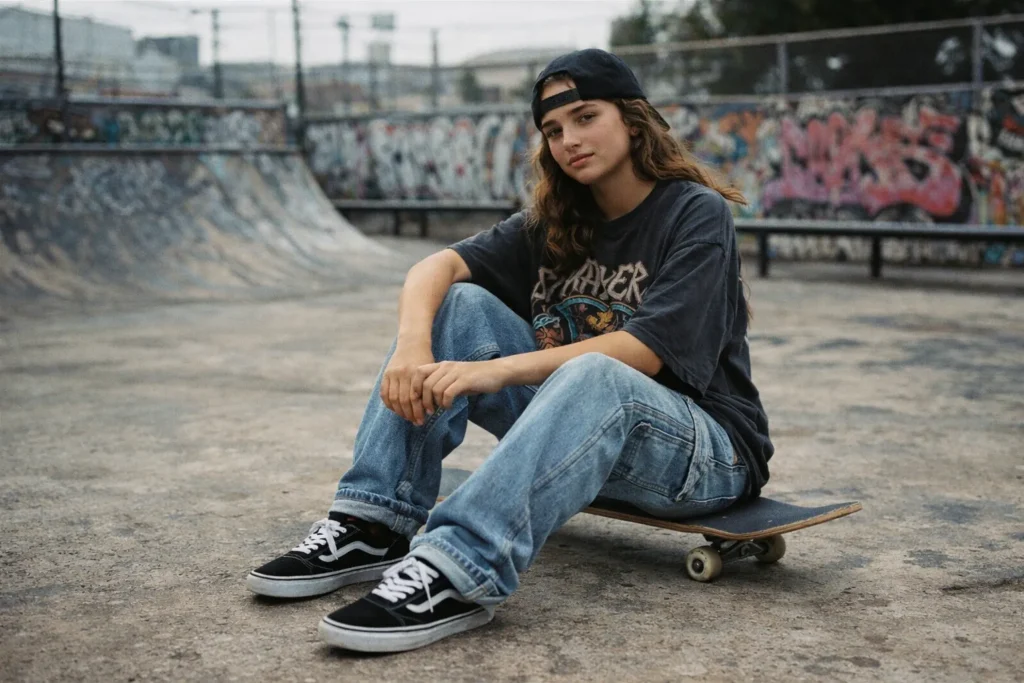
Example 1: The Classic Street Session
-
- Top: A comfortable, slightly loose-fitting graphic t-shirt made from a cotton-poly blend.
- Bottoms: Durable, straight-leg jeans with a bit of stretch.
- Footwear: Classic low-top skate shoes with good grip and board feel.
- Protection: Helmet, wrist guards, and knee pads.
- Accessories: A beanie or baseball cap.
This outfit is practical for street skating, offering durability and freedom of movement while maintaining a timeless skate aesthetic.
Example 2: Park Skating In Warmer Weather
-
- Top: A moisture-wicking athletic tank top or t-shirt.
- Bottoms: Relaxed-fit canvas shorts with an inseam hitting just above the knee.
- Footwear: Breathable skate shoes with excellent grip.
- Protection: Helmet, knee pads, and elbow pads.
- Accessories: A small backpack to carry water and essentials.
This combination prioritizes staying cool and comfortable while providing adequate protection for park skating, where falls can be frequent.
Example 3: Learning New Tricks Indoors Or Cooler Weather
-
- Top: A long-sleeved performance shirt.
- Mid-Layer: A comfortable hoodie or a flannel shirt.
- Bottoms: Stretchy skate pants or reinforced jeans.
- Footwear: Skate shoes offering good cushioning and ankle support (potentially high-tops).
- Protection: Full protective gear is highly recommended: helmet, knee pads, elbow pads, and wrist guards. Padded shorts are also a good idea.
This layered approach offers warmth, extra padding from the hoodie or flannel, and maximum protection for when you’re focused on landing new, challenging tricks.
Considering Durability And Maintenance
Skateboarding is inherently tough on clothing. Understanding which materials hold up best and how to care for your gear can save you money and keep you looking good.
Fabric Choices For Longevity
As mentioned, denim, canvas, and heavy-duty synthetic blends are your best bet for durable bottoms. Look for reinforced stitching, particularly in areas like the crotch, knees, and seams, which are prone to tearing. For tops, thicker cotton blends or performance fabrics will generally last longer than thin, easily snagged materials.
When it comes to shoes, prioritize those made with suede, leather, or robust synthetic materials. Vulcanized construction tends to be more durable than glued (cupsole) construction for many skaters, though both have their pros and cons. Shoes with rubber toe caps or reinforced ollie patches are specifically designed to withstand the abrasion from board contact.
Caring For Your Skate Gear
-
- Washing Clothes: For jeans and canvas pants, follow the care label. Washing them inside out can help preserve color and reduce wear on the outer surface. For performance wear, use cold water and avoid fabric softeners, which can degrade the moisture-wicking properties.
- Cleaning Shoes: Spot clean skate shoes with a damp cloth and mild soap. For stubborn dirt, a soft brush can be effective. Avoid machine washing or submerging them in water, as this can damage the adhesives and materials. Allow them to air dry naturally, away from direct heat.
- Maintaining Protective Gear: Wipe down pads and helmets with a damp cloth after use, especially if they’ve become sweaty. Ensure they are completely dry before storing to prevent odor and mildew. Check straps and buckles regularly for wear and tear.
Style And Personal Expression
While functionality and safety are paramount, your skateboarding attire is also a form of self-expression. Skateboarding culture has always embraced individuality, and your clothing is a way to showcase your personality.
Embracing Skate Culture Trends
Skateboarding fashion often draws inspiration from streetwear, hip-hop, and punk subcultures. Trends come and go, but certain elements remain consistent: comfortable fits, durable materials, and a focus on practicality. Whether you prefer a minimalist look or a more vibrant, graphic-heavy style, there are countless ways to express yourself.
Finding Your Unique Style
Don’t be afraid to experiment. Mix and match different pieces to create an outfit that feels authentic to you. Consider incorporating elements you love, whether it’s specific colors, brands, or graphic designs. Remember, the most important aspect is feeling confident and comfortable in what you’re wearing.
Your style should complement your skating, not hinder it.
Frequently Asked Questions
What Is The Most Important Piece Of Protective Gear For A Girl Learning To Skateboard?
The most critical piece of protective gear is a skate-specific helmet. Falls are inevitable when learning to skateboard, and head injuries can be severe. Always wear a helmet that fits properly and meets safety standards. While other gear like knee pads and wrist guards are highly recommended, a helmet offers the most vital protection for your brain.
Are Baggy Clothes Okay For Skateboarding?
While a certain degree of looseness is acceptable and common in skate fashion, excessively baggy clothing can be a safety hazard. It can get caught on the skateboard, your feet, or obstacles, leading to falls or accidents. It’s best to opt for a fit that allows for a full range of motion without being so loose that it poses a risk. Many skaters choose relaxed-fit or straight-leg styles that offer comfort and mobility without being overly baggy.
How Often Should I Replace My Skate Shoes?
The lifespan of skate shoes varies greatly depending on the frequency and intensity of your skating, as well as the quality of the shoes. For regular skaters, shoes might last anywhere from a few weeks to a few months. Signs that it’s time for new shoes include significant wear on the sole, blowouts in the upper material, or a lack of grip. Continuing to skate in worn-out shoes can negatively impact your board feel and control.
Can I Wear Leggings Or Yoga Pants To Skateboard?
While leggings and yoga pants offer excellent flexibility, they are generally not recommended for serious skateboarding. They offer very little protection against abrasions if you fall. Most falls in skateboarding involve scraping your skin, and thin leggings will offer minimal defense. If you choose to wear them, it’s highly advisable to wear sturdy padded shorts underneath for protection.
What’s The Difference Between Skate Shoes And Regular Sneakers?
Skate shoes are specifically engineered for skateboarding. They feature durable rubber outsoles designed for maximum grip on grip tape, reinforced stitching and materials (like suede or leather) to withstand abrasion, and a design that prioritizes board feel and impact absorption from landings. Regular sneakers often have less durable soles, less grip, and lack the specific reinforcements needed for the demands of skateboarding, making them wear out quickly and offer less protection.
Ultimately, the best skateboarding attire for girls is a combination of protective gear, comfortable and durable clothing, and footwear that enhances performance and safety. Finding this balance allows you to fully immerse yourself in the joy and challenge of skateboarding, with confidence in your gear and your ability to express yourself on and off the board.
Whether you’re drawn to the rebellious spirit of street skating or the focused precision of park riding, dressing appropriately is the first step towards a safer, more enjoyable, and ultimately more fulfilling skateboarding journey.