The rhythmic glide of wheels beneath your feet, the wind in your hair, and a full-body workout without the monotony of a treadmill, the allure of wheeled fitness is undeniable. But when embarking on this journey, a common question arises: roller skates vs. rollerblades for exercise? Both offer fantastic cardiovascular benefits, muscle engagement, and a healthy dose of fun, yet they differ significantly in design, stability, maneuverability, and the type of workout they provide. Understanding these distinctions is crucial for choosing the right pair to meet your fitness goals and personal preferences.
This comprehensive guide will break down the core differences between traditional roller skates (often called quad skates) and inline skates (commonly known as rollerblades), exploring their impact on exercise, skill development, and overall enjoyment. Whether you’re a complete beginner or looking to switch up your routine, we’ll equip you with the knowledge to make an informed decision and get rolling towards a fitter you.
Key Takeaways
- Quad Skates (Roller Skates): Offer superior stability and are easier for beginners to learn balance on due to their wider wheel base. They excel at dance skating, artistic skating, and cruising, providing a good lower body and core workout.
- Inline Skates (Rollerblades): Provide greater speed and maneuverability, making them ideal for fitness skating, speed skating, and aggressive inline. They offer a more intense cardiovascular workout and greater calf and thigh muscle engagement due to their design.
- Beginner Friendliness: Quad skates generally have a lower learning curve for initial balance. Inline skates require more core strength and practice to master.
- Workout Intensity: Inline skates typically allow for higher speeds and more demanding workouts, leading to greater calorie burn and cardiovascular challenge. Quad skates offer a solid workout, particularly for endurance and stability.
- Skill Development: Quad skates are suited for spins, turns, and intricate footwork. Inline skates are better for speed, agility, and jumping.
- Terrain Suitability: Both can be used on smooth, paved surfaces. Inline skates are often preferred for longer distances and varied terrains if equipped with appropriate wheels.
- Injury Risk: Initial balance challenges can pose a risk for beginners on both types. Inline skates, due to higher speeds, may present a greater risk of falls if not used with proper protective gear.

Credit: www.snowfeetstore.com
Understanding The Design: Quad Skates Vs. Inline Skates
The fundamental difference between roller skates and rollerblades lies in their wheel configuration. This seemingly simple distinction has profound implications for how they feel, perform, and what kind of exercise they offer.
Quad Skates (roller Skates)
Traditional roller skates, often referred to as quad skates, feature four wheels arranged in two parallel pairs. This “quad” setup creates a wider base of support, inherently offering more stability. The front truck (the metal plate that holds the wheels) typically includes a toe stop, which aids in starting, stopping, and performing certain maneuvers. The rear wheels are mounted on a separate truck.
- Stability: The wider stance makes quad skates feel more grounded and less prone to tipping sideways, which is a significant advantage for beginners still finding their balance.
- Maneuverability: While less agile for sharp, quick turns at speed compared to inline skates, quad skates excel at controlled pivots, spins, and intricate footwork. Their turning radius is often wider.
- Exercise Focus: The stability of quad skates lends itself well to endurance skating, rhythmic movement, and dance skating. While they engage the core and lower body, the workout can be less intensely cardiovascular than with inline skates unless deliberately pushed to higher speeds or longer distances.
Inline Skates (rollerblades)
Inline skates, colloquially known as rollerblades, feature wheels arranged in a single line, one after another, along a rigid frame. This design mimics the motion of skiing or ice skating, allowing for greater speed and a more natural stride. Most inline skates have a brake pad (usually a rubber block) attached to the heel of one skate, though some advanced models may rely solely on specialized braking techniques.
- Speed and Agility: The inline configuration allows for a longer push-off and a more efficient stride, leading to higher speeds and greater agility for quick direction changes.
- Stability: Inline skates are less inherently stable than quad skates due to their narrower wheel base. This can make them feel wobbly for absolute beginners, requiring more core engagement and practice to maintain balance.
- Exercise Focus: The design of inline skates is highly conducive to cardiovascular exercise. The ability to achieve and maintain higher speeds, coupled with the longer strides, engages leg muscles more intensely and elevates the heart rate effectively. They are excellent for fitness skating, distance skating, and cross-training.
The Workout Breakdown: Cardiovascular And Muscular Benefits
Both types of skates offer a fantastic way to get your heart pumping and muscles working, but the emphasis and intensity can differ.
Cardiovascular Gains
For pure cardiovascular conditioning, inline skates often have an edge. The ability to achieve higher speeds and cover more ground with each stride translates to a more demanding aerobic workout. A study published in the Journal of Exercise Physiology Online found that inline skating can be as effective as running for improving cardiovascular fitness, with comparable oxygen consumption levels at similar perceived exertion rates. The longer, gliding motion engages the heart and lungs efficiently.
Quad skates, while capable of providing a good cardio workout, typically require more deliberate effort to reach the same intensity as inline skating. The workout often feels more focused on rhythm and control, but pushing for speed on quads can still significantly elevate your heart rate. Think of it as the difference between a brisk walk and a sprint, both are exercise, but the sprint is more intense.
Muscular Engagement
Both roller skates and rollerblades are excellent for toning the lower body.
- Glutes and Hamstrings: The pushing and gliding motion in both types of skating heavily engages the gluteal muscles and hamstrings. Inline skating, with its longer strides, can provide a more pronounced workout for these areas.
- Quadriceps: Your quads are constantly working to stabilize your body and control your movements on both skates.
- Calves: The repetitive flexion and extension of the ankle during skating provides an excellent workout for the calf muscles. Inline skating, with its emphasis on ankle articulation for propulsion, can particularly target these muscles.
- Core: Maintaining balance on any type of skates is a significant core workout. Your abdominal muscles and lower back work overtime to keep you upright and stable, especially when navigating uneven surfaces or performing turns.
- Upper Body: While primarily a lower-body activity, your arms and shoulders engage for balance and propulsion, particularly during longer strides or when trying to generate more speed.
Pro Tip: For an even more intense workout, consider incorporating hills into your route. Descending requires significant quad and calf engagement for control, while ascending provides a powerful cardiovascular challenge.

Credit: www.youtube.com
Ease Of Learning And Skill Development
The learning curve for roller skates and rollerblades is a significant factor for many considering their fitness options.
Getting Started With Quad Skates
The stability of quad skates makes them generally easier for absolute beginners to get their initial balance. The wider wheel base provides a more forgiving platform, reducing the likelihood of sudden, uncontrolled falls due to tipping. Learning to stand, glide, and make gentle turns is often quicker on quads.
- Beginner Advantages:
- Easier to find balance.
- Toe stops provide a familiar braking mechanism.
- Less reliance on advanced core strength for initial stability.
- Skill Progression: Once basic balance is achieved, beginners can progress to simple turns, stopping techniques, and eventually more complex movements like crossovers and pivots. Quad skates are ideal for styles like roller dance, artistic skating, and leisurely park skating.
Getting Started With Inline Skates
Inline skates present a steeper initial learning curve. The narrow wheel base means that balance is more precarious, and a strong, engaged core is essential from the outset. Beginners often spend their first few sessions simply learning to stand without wobbling and to push off effectively.
- Beginner Challenges:
- Requires more core strength and practice for balance.
- Stopping can be more challenging initially (heel brake takes practice).
- Higher risk of falling due to instability if not careful.
- Skill Progression: After mastering balance and basic stopping, inline skaters can move on to developing speed, longer strides, efficient turning, and eventually advanced techniques like aggressive inline skating (jumps, grinds) or speed skating. For those focused purely on fitness and distance, mastering the glide and efficient propulsion is key.
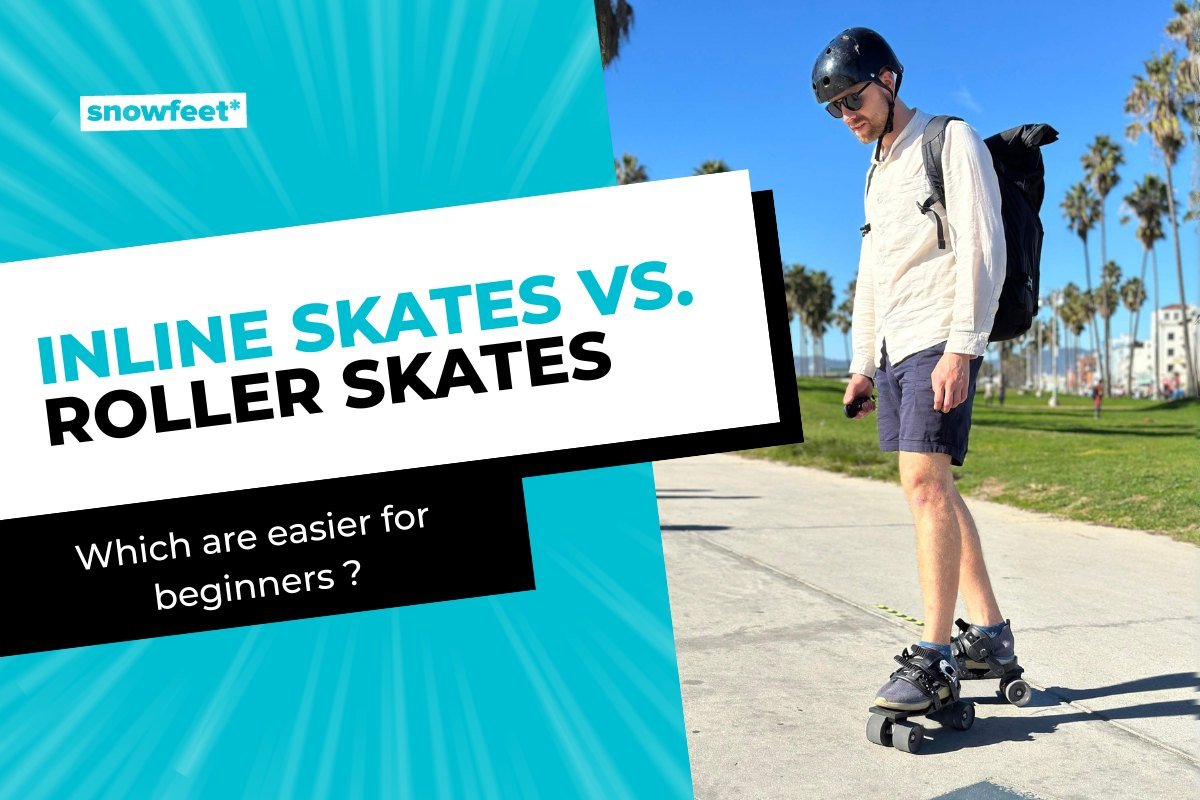
Credit: www.snowfeetstore.com
Choosing The Right Skate For Your Fitness Goals
Your primary fitness objectives should heavily influence your choice between roller skates and rollerblades.
For Maximum Cardio And Calorie Burn
If your main goal is to maximize cardiovascular health and burn a significant number of calories, inline skates are often the superior choice. Their design facilitates higher speeds and longer, more efficient strides, leading to a more intense aerobic workout. Many fitness enthusiasts use inline skates for long-distance skating sessions, similar to running or cycling, to build endurance and improve heart health. The ability to maintain a consistent, high pace means you can easily track your progress and push your limits.
For Stability And Leisurely Fitness
If you prioritize a more relaxed pace, enjoy rhythmic movement, or are concerned about initial balance, quad skates can be an excellent option. They are perfect for cruising around parks, enjoying scenic paths, or engaging in activities like roller dancing. While the cardio workout might be less intense than high-speed inline skating, consistent use of quad skates still provides significant health benefits, including improved leg strength, core stability, and endurance. They are also a fantastic choice for those who might also be interested in ice skating, as the balance principles are more closely aligned.
For Overall Muscle Toning
Both types of skates offer a comprehensive workout for the lower body and core. However, the dynamic nature and potential for higher speeds with inline skates can lead to more significant muscle engagement, particularly in the calves and hamstrings, due to the extended push-off. Quad skates, with their emphasis on stability and intricate footwork, can also provide a robust toning workout, especially if you incorporate more complex dance moves or power skating techniques.
Terrain And Environment Considerations
Where you plan to skate will also play a role in your decision.
Smooth Paved Surfaces
Both roller skates and rollerblades perform best on smooth, flat, paved surfaces like bike paths, roller rinks, or smooth sidewalks. This is where you’ll get the most efficient glide and the most enjoyable experience.
Rougher Or Varied Terrain
Inline skates tend to handle slightly rougher surfaces better than quad skates, especially if they are equipped with larger, softer wheels (often found on fitness or off-road inline skates). The single line of wheels can sometimes roll over small cracks or pebbles more easily than the four wheels of a quad skate, which might get caught. However, it’s crucial to remember that neither type is truly designed for off-road use unless specifically built for it. Aggressive inline skates, for example, are built for durability but not necessarily for smooth rolling over gravel.
Indoor Vs. Outdoor Skating
- Indoor Rinks: Traditional roller rinks are often designed for quad skates, offering a smooth surface ideal for dancing, figure skating, and general recreation. However, many indoor rinks also welcome inline skaters.
- Outdoor Paths: For longer outdoor excursions, inline skates are generally preferred due to their speed and efficiency. However, quad skates can be very enjoyable for leisurely cruises on smooth park paths or boardwalks.
Safety First: Essential Gear And Precautions
Regardless of whether you choose roller skates or rollerblades, safety should always be your top priority. Falls are a natural part of learning and skating, and proper protective gear can significantly mitigate the risk of injury.
Protective Gear Essentials
- Helmet: A certified helmet is non-negotiable. Protect your head from impacts, especially during falls.
- Wrist Guards: Your wrists are often the first to hit the ground when you fall. Wrist guards are crucial for preventing fractures and sprains.
- Elbow Pads: Protect your elbows from scrapes and impacts.
- Knee Pads: Essential for protecting your knees, which are vulnerable during falls. Learning to fall correctly often involves using your knee pads.
Skating Techniques And Awareness
- Learn to Fall: Practice falling safely by rolling onto your pads rather than trying to catch yourself with your hands or arms.
- Braking: Master your chosen braking method before attempting speed or challenging terrain. For inline skates, practice the heel brake. For quad skates, learn the toe stop or other methods like T-stops.
- Awareness: Be aware of your surroundings. Watch out for pedestrians, cyclists, uneven surfaces, cracks, and debris.
- Visibility: If skating in low light conditions, wear bright or reflective clothing to ensure you are visible to others.
Comparison Table: Roller Skates Vs. Rollerblades For Exercise
To help summarize the key differences, consider this comparison table:
| Feature | Roller Skates (Quad Skates) | Rollerblades (Inline Skates) |
|---|---|---|
| Wheel Configuration | Four wheels in two parallel pairs (wide base) | Four or more wheels in a single line (narrow base) |
| Initial Stability | High | Moderate to Low |
| Learning Curve (Beginner) | Easier | Steeper |
| Max Speed Potential | Moderate | High |
| Cardiovascular Workout Intensity | Moderate to High (requires effort for intensity) | High (inherently allows for higher intensity) |
| Calorie Burn Potential | Moderate to High | High |
| Muscular Engagement | Good for lower body and core, emphasis on stability | Excellent for lower body (calves, quads, hamstrings) and core, dynamic engagement |
| Maneuverability (Quick Turns) | Moderate | High |
| Best For | Leisurely cruising, roller dance, artistic skating, stability focus | Fitness skating, speed skating, distance skating, agility focus |
| Terrain Handling (Slightly Rough) | Less effective | More effective (with appropriate wheels) |
| Braking | Toe stop (standard) | Heel brake (standard), foot braking (advanced) |
Real-world Examples And Use Cases
To further illustrate the practical differences, let’s look at how different individuals might use each type of skate for exercise.
Case Study 1: Sarah, The Fitness Enthusiast
Sarah is looking for a new way to boost her cardiovascular fitness and burn calories. She enjoys being outdoors and wants an activity that engages her legs and core. After considering her options, she opts for inline skates. She finds the initial learning curve challenging but commits to practicing in a local park. Within a few weeks, she’s comfortable gliding and pushing off, and she starts incorporating longer routes along dedicated bike paths. She finds that she can maintain a consistent pace for 45-60 minutes, feeling a significant workout in her calves and quads, and her heart rate stays in her target zone. She also appreciates the speed she can achieve, making her workouts feel more dynamic and less monotonous than her previous treadmill routine.
Case Study 2: Mark, The Casual Cruiser
Mark wants a fun, low-impact way to stay active and enjoy the outdoors without intense strain. He’s never skated before and is a bit apprehensive about falling. He chooses quad skates because of their reputation for stability. He starts by practicing in his driveway and a quiet cul-de-sac. He quickly gets the hang of standing and gliding. He enjoys taking his skates to a local smooth, paved trail on weekend mornings, enjoying the scenery and gentle breeze. While he’s not aiming for speed, he finds that skating for an hour leaves him feeling pleasantly tired, with a good sense of leg muscle engagement and improved balance. He also finds the artistic possibilities of quad skates intriguing and might explore roller dance in the future.
Frequently Asked Questions
What Type Of Skate Is Better For Weight Loss?
Both roller skates and rollerblades can contribute significantly to weight loss as they are excellent calorie-burning activities. However, inline skates generally allow for higher speeds and more intense, sustained cardiovascular workouts, which can lead to a greater calorie expenditure in a given amount of time. If your primary goal is rapid calorie burn, inline skates might offer an advantage. Consistency and duration of your skating sessions are key factors for weight loss, regardless of the skate type.
Are Rollerblades Harder To Learn Than Roller Skates?
Yes, rollerblades typically have a steeper learning curve than roller skates. This is primarily due to the wheel configuration. Roller skates have a wider base of support, making them inherently more stable and easier for beginners to find their balance. Rollerblades, with their wheels in a single line, require more core strength and practice to master initial stability and prevent wobbling or falling.
Can I Get A Full-body Workout On Roller Skates Or Rollerblades?
While the primary focus for both roller skates and rollerblades is on the lower body (calves, quads, hamstrings, glutes) and core muscles (for balance), they do offer a degree of upper body engagement. Your arms and shoulders are used for balance and propulsion, especially when trying to generate speed or navigate turns. For a more comprehensive full-body workout, consider incorporating other activities alongside skating, or focusing on skating techniques that demand more upper body involvement.
Which Skate Is Better For My Joints?
Both roller skates and rollerblades are considered low-impact exercises, meaning they are gentler on your joints (knees, hips, ankles) compared to high-impact activities like running. The gliding motion distributes your weight and absorbs shock, reducing stress on your joints. The choice between the two for joint health is less about the type of skate and more about proper technique, smooth surfaces, and wearing protective gear to prevent falls, which can lead to joint injuries.
How Fast Can You Go On Roller Skates Vs. Rollerblades?
Rollerblades generally allow for significantly higher speeds than roller skates. The inline configuration enables a more powerful and efficient stride, similar to cross-country skiing or ice skating, facilitating faster movement and longer glides. While experienced quad skaters can achieve respectable speeds, especially on smooth surfaces or downhill, inline skates are the preferred choice for those interested in speed skating or covering long distances quickly.
The choice between roller skates and rollerblades for exercise boils down to your personal preferences, fitness goals, and comfort level with learning new skills. Both offer a fantastic, low-impact way to improve cardiovascular health, build muscle strength, and enjoy the outdoors.
If you’re seeking high-intensity cardio and speed, inline skates are likely your best bet. If you prioritize stability, a gentler introduction, or enjoy rhythmic movement, quad skates will serve you well. Whichever you choose, remember to prioritize safety, wear protective gear, and most importantly, have fun on your fitness journey.