
Choosing the right wheel size for inline skates is a fundamental decision that significantly impacts your skating experience. It’s not just about aesthetics; the diameter and width of your wheels dictate speed, maneuverability, stability, and even the type of skating you can comfortably engage in. Whether you’re a beginner lacing up for the first time, an experienced skater looking to optimize performance, or a parent trying to equip a child, understanding the nuances of wheel sizing is crucial. This guide will break down everything you need to know to make an informed choice, ensuring your skates feel like an extension of yourself, not a hindrance.
From the nimble agility required for urban exploration to the raw speed needed for marathon skating, the perfect wheel size is a key component of skate setup. We’ll explore how different wheel dimensions cater to various skating styles, what factors to consider beyond just the numbers, and how to ensure compatibility with your existing skate boots. Get ready to roll with confidence as we explore the world of inline skate wheels.
Key Takeaways
-
- Wheel Diameter: The primary factor determining speed and maneuverability. Larger wheels offer more speed but less agility, while smaller wheels provide greater control but are slower.
- Wheel Hardness (Durometer): Affects grip and vibration absorption. Softer wheels (lower numbers) offer better grip and comfort on rough surfaces, while harder wheels (higher numbers) are faster and more durable on smooth surfaces.
- Beginner Wheels: Typically 76mm-84mm for better stability and control.
- Fitness/Speed Wheels: Often 90mm-125mm for higher speeds and efficiency.
- Urban/Freestyle Wheels: Usually 80mm-84mm for a balance of agility and speed.
- Children’s Wheels: Typically 60mm-72mm for safety and ease of control.
- Compatibility Check: Always verify the maximum wheel size your skate frame can accommodate and confirm your setup uses a 3-wheel or 4-wheel configuration.
Understanding Inline Skate Wheel Dimensions
The most critical aspects of an inline skate wheel are its diameter and width. These two measurements, often expressed in millimeters (mm), are the primary determinants of how your skates will perform.
Wheel Diameter: The Speed Vs. Agility Trade-off
The diameter of an inline skate wheel refers to its size from edge to edge. This is the most significant factor influencing your skating experience.
-
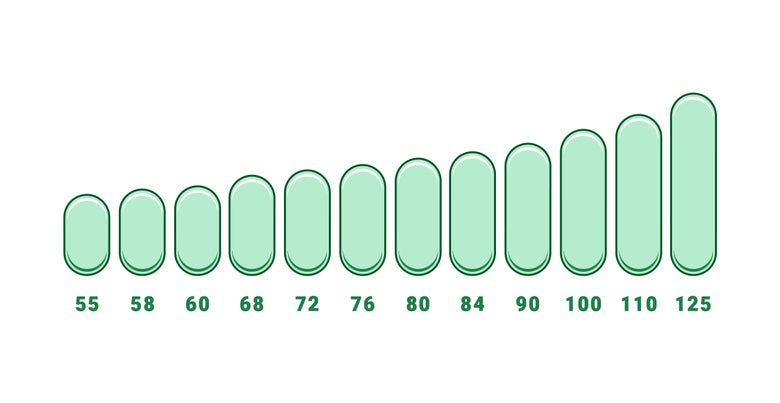
- Smaller Wheels (Under 80mm): These wheels offer excellent agility and control. They are easier to start and stop with, making them ideal for beginners, children, or skaters who prioritize quick turns and precise movements, such as in slalom or urban skating. Because they have less mass and less surface area rolling on the ground, they accelerate quickly but don’t maintain speed as well as larger wheels. They also absorb less shock, meaning you’ll feel imperfections in the skating surface more acutely.
- Medium Wheels (80mm – 84mm): This is a popular range, striking a good balance between speed and maneuverability. Many fitness skates and recreational skates come with wheels in this size. They offer a decent roll speed without sacrificing too much agility, making them versatile for various skating styles, including general fitness skating and urban commuting.
- Larger Wheels (85mm – 100mm): These wheels provide a smoother ride and higher top speeds. The larger diameter means each rotation covers more ground, and the increased mass helps maintain momentum. This makes them excellent for fitness skating, marathon skating, and covering long distances. However, they are less maneuverable, require more effort to accelerate, and can be more challenging for beginners to control. They also raise your center of gravity, which can make balance feel less forgiving.
- Extra-Large Wheels (110mm – 125mm): Primarily found on speed skates and high-performance fitness skates, these wheels are designed for maximum speed and efficiency. They glide over surfaces with minimal effort, making them perfect for racing and long-distance skating where maintaining speed is paramount. The trade-off is significantly reduced agility; these skates are not suited for tight turns or quick stops, and they are best for skaters with enough experience to handle the higher ride height.
Example: A skater using 125mm wheels on a smooth, flat path will likely achieve a much higher top speed with less effort than someone using 80mm wheels on the same path. Conversely, navigating a crowded skate park or performing intricate slalom maneuvers would be significantly easier with 80mm wheels.
Wheel Width: Stability And Contact Patch
While diameter is more commonly discussed, wheel width also plays a role. Most inline skate wheels fall within a standard width range, typically between 24mm and 25mm.
-
- Narrower Wheels (around 24mm): These wheels have a smaller contact patch with the ground. This can reduce friction, potentially leading to slightly higher speeds on very smooth surfaces. They also contribute to a more agile feel.
- Wider Wheels (around 25mm or more): A wider wheel offers a larger contact patch, providing enhanced stability and grip. This can be beneficial for skaters who are still developing their balance or for those skating on slightly less predictable surfaces. Some specialized skates, like certain types of aggressive skates, might feature wider wheels for increased stability during tricks.
For most recreational and fitness skaters, the standard 24mm width is perfectly adequate. Differences in width become more pronounced in specialized skating disciplines.
Wheel Profile: The Shape Of The Edge
The profile of a wheel refers to the shape of its outer edge. This subtle difference can influence how the wheel interacts with the ground.
-
- Round Profile: These wheels have a consistently curved edge. They offer the most agility and are excellent for quick turns and transitions. They can feel slightly less stable at very high speeds.
- Semi-Profile (or Elliptical): This profile is a compromise between round and flat. It offers a good balance of agility and stability, making it a popular choice for fitness skating.
- Flat Profile: Less common on standard inline skates, a flat profile offers the largest contact patch and maximum stability and grip. This is more typical of roller derby or some quad skate setups where stability is key.
The majority of inline skate wheels you’ll encounter will have a round or semi-profile, designed for the dynamic movements of inline skating.

Credit: www.youtube.com
Wheel Hardness (durometer): Grip Vs. Durability
Beyond size, the hardness of an inline skate wheel is a critical factor. This is measured using the Shore A durometer scale, typically ranging from 72A to 101A. The higher the number, the harder the wheel.
-
- Softer Wheels (72A – 78A): These wheels offer superior grip and shock absorption. They conform better to uneven surfaces, providing a smoother, more comfortable ride and better traction. However, they wear down faster, especially on rough pavement, and are slower due to increased friction. These are ideal for outdoor skating on less-than-perfect surfaces, or for skaters who prioritize comfort and control over speed.
- Medium-Hard Wheels (80A – 85A): This is a common range for recreational and fitness skates. They offer a good balance of grip, durability, and speed. They provide adequate shock absorption for most general skating conditions and will last a reasonable amount of time.
- Harder Wheels (86A – 101A): These wheels are very durable and offer the highest speeds due to reduced friction. They are excellent for smooth surfaces like skate parks, roller rinks, or polished concrete. The downside is they offer less grip and transmit more vibration, making for a bumpier ride on rough terrain. They are favored by speed skaters and those skating on very smooth surfaces.
Pro Tip: If you primarily skate outdoors on bumpy sidewalks or cracked pavement, opt for wheels with a lower durometer (e.g., 78A-82A). If you skate on smooth indoor rinks or well-maintained outdoor paths, harder wheels (85A+) will give you more speed and last longer.
How Durometer Affects Your Ride
-
- Grip: Softer wheels dig into the surface more, providing better traction. This is crucial for stopping, turning, and maintaining control, especially in wet conditions or on uneven surfaces.
- Durability: Harder wheels resist abrasion better. They will last significantly longer, especially when used on rough surfaces that would quickly wear down softer wheels.
- Speed: Less friction means more speed. Harder wheels roll faster on smooth surfaces.
- Comfort: Softer wheels absorb vibrations from the ground, leading to a more comfortable ride. Harder wheels transmit these vibrations directly to your feet.
Credit: www.inlinewarehouse.com
Choosing Wheels Based On Skating Style
The “best” wheel size is entirely dependent on how and where you intend to skate. Here’s a breakdown by common skating disciplines:
For Beginners And Recreational Skating
For those just starting out or using skates for casual fun, the primary goal is stability and ease of control.
-
- Recommended Diameter: 76mm to 80mm. These smaller to medium diameters are easier to manage. They require less force to push off and are simpler to stop and turn with.
- Recommended Hardness: 80A to 85A. This range offers a good compromise between comfort, grip, and durability for general use on various surfaces.
- Consideration: Many beginner skates come with 70mm or 72mm wheels, which are even easier to control but may feel slow as the skater progresses. Upgrading to 80mm wheels can be a great first step for improvement.
For Fitness And Cross-training
Skaters focused on cardiovascular exercise, covering distances, and building endurance need wheels that facilitate speed and efficiency.
-
- Recommended Diameter: 84mm to 100mm. Larger wheels maintain momentum better and cover more ground per push, reducing fatigue over long distances.
- Recommended Hardness: 84A to 86A. This hardness provides a good balance for speed on most paved surfaces while offering enough durability for regular use. Some may prefer slightly softer (82A-84A) for added comfort on less-than-perfect paths.
- Consideration: Ensure your skate frame can accommodate larger wheels. Most fitness skates are designed for this, but it’s essential to check specifications. Many skaters also prefer 3-wheel setups in this category because they can increase speed while keeping the frame compact.
For Urban And Commuting Skating
Urban skaters need a blend of speed, agility, and durability to navigate city streets, which can be unpredictable.
-
- Recommended Diameter: 80mm to 90mm. This range offers a good compromise. 80mm wheels provide excellent maneuverability for dodging obstacles, while 90mm wheels offer better speed for longer stretches. Many urban skaters opt for 84mm as a sweet spot.
- Recommended Hardness: 84A to 86A. This hardness is durable enough for asphalt and provides decent grip. Some might lean towards slightly softer (82A-84A) for better shock absorption on rougher city surfaces.
- Consideration: Larger wheels can be a disadvantage in stop-and-go city traffic. If your commute involves many tight turns or frequent stopping, stick to the lower end of this diameter range.
For Speed Skating
This discipline is all about maximizing velocity.
-
- Recommended Diameter: 100mm, 110mm, or 125mm. The largest wheels available are used here to achieve the highest possible speeds and maintain momentum with minimal effort.
- Recommended Hardness: 86A to 90A. Harder wheels are essential for speed, minimizing friction on smooth tracks and rinks. Durability is less of a concern as the surfaces are typically very smooth.
- Consideration: Speed skates are specialized and often have longer frames to accommodate these large wheels, affecting stability and maneuverability. They are not suitable for general use.
For Aggressive And Freestyle Skating
Aggressive skating involves performing tricks, jumps, and grinds, requiring durability, stability, and control. Freestyle skating (like slalom) demands extreme agility.
-
- Aggressive Skating:
- Recommended Diameter: Typically 55mm to 60mm. These small, often wider wheels provide a low center of gravity for stability during tricks and grinds. Many aggressive skates use a “rockered” setup where the middle wheels are smaller than the outer ones, enhancing maneuverability.
- Recommended Hardness: 90A to 98A. Very hard wheels are needed to withstand the impact of jumps and the abrasion from grinds.
- Aggressive Skating:
-
- Freestyle Slalom Skating:
- Recommended Diameter: 72mm to 80mm. Small, highly maneuverable wheels are key for weaving through cones.
- Recommended Hardness: 85A to 90A. A balance of grip for quick turns and hardness for responsiveness is needed.
- Freestyle Slalom Skating:
For Children’s Skates
Safety and ease of use are paramount for young skaters.
-
- Recommended Diameter: 60mm to 72mm. These small wheels offer the least amount of speed and the most control, making them ideal for children learning to skate.
- Recommended Hardness: 80A to 85A. This provides a comfortable ride and sufficient grip for beginners.
Compatibility: Ensuring Your Wheels Fit
It’s not enough to choose the right size; the wheels must also be compatible with your skate frames and bearings.
Frame Limitations: The Max Wheel Size
Every inline skate frame is designed to accommodate a maximum wheel diameter. This is often stamped on the frame itself or can be found in the skate’s specifications.
-
- Why it matters: Attempting to fit wheels larger than the frame’s maximum capacity can lead to the wheels rubbing against the boot or frame, causing damage, instability, and potentially accidents. It can also affect the skate’s geometry and how it rolls.
- How to check: Look for markings on the frame (e.g., “Max 84mm”). If you can’t find it, consult the manufacturer’s website or manual for your specific skate model. You can also measure the distance from the center of the axle hole to the top of the frame channel where the wheel sits; this gives you an idea of the maximum radius.
Bearings And Spacers
Inline skate wheels require bearings to allow them to spin freely around the axle. Most inline skate wheels use 608 bearings, which are standard.
-
- Bearings: These are typically purchased separately or come pre-installed in wheels. They are rated by the ABEC scale (Annular Bearing Engineering Committee), which indicates precision, but for inline skating, the quality of materials and lubrication is often more important than the ABEC rating.
- Spacers: These are small metal cylinders that sit between two bearings inside the wheel. They ensure the bearings are correctly aligned and prevent the wheel from being overtightened against the frame’s axle. Most frames require spacers; some integrated frames have them built-in. When buying new wheels, ensure you have the correct spacers for your setup. If your old spacers are damaged or lost, you’ll need replacements.
UFS Vs. Non-UFS Frames
-
- UFS (Universal Frame System): This is a standard mounting system primarily found on aggressive skates. UFS frames allow for easy removal and replacement without affecting the boot’s structure. If you have UFS skates, you’ll need to ensure your wheels are compatible with this system, though wheel size itself is generally not restricted by UFS, but rather by the frame’s design.
- Non-UFS: Most fitness, recreational, and speed skates use non-UFS mounting systems, where the frame is directly attached to the boot. Wheel size compatibility is the main consideration here.
Data And Statistics: What The Numbers Say
While anecdotal evidence abounds, understanding some general trends and data can further inform your decision.
| Wheel Size (Diameter) | Primary Use Case | Speed Potential | Maneuverability | Stability | Terrain Suitability |
|---|---|---|---|---|---|
| 60mm – 72mm | Children’s Skates, Some Aggressive | Low | High | Medium | Smooth, controlled surfaces |
| 76mm – 80mm | Beginner, Recreational, Urban | Medium | High | Medium | Varied, good for learning |
| 84mm – 90mm | Fitness, Urban, Cross-Training | High | Medium | Medium | Paved surfaces, paths |
| 90mm – 100mm | Advanced Fitness, Marathon | Very High | Low | Medium | Smooth, long distances |
| 110mm – 125mm | Speed Skating | Extremely High | Very Low | Medium | Smooth tracks, races |
Source: Compiled industry knowledge and general skating principles.
Real-world Impact: A Comparative Example
Consider two skaters, Alex and Ben, both using 84mm, 85A wheels. Alex skates on smooth, dedicated bike paths, while Ben skates on cracked, uneven sidewalks.
-
- Alex’s Experience: Alex finds his skates roll smoothly and quickly. He can maintain a good pace with moderate effort, enjoying the efficiency of his wheels on the well-maintained surface. He feels minimal vibration.
- Ben’s Experience: Ben finds his skates are constantly vibrating, and he feels every bump and crack. While he can still achieve decent speed on smoother sections, he has to work harder to maintain momentum and feels less stable. He notices his wheels are wearing down faster than he expected.
This highlights how terrain significantly influences the perceived performance of the same wheel size and hardness. Ben might benefit from switching to softer wheels (e.g., 80A) to improve comfort and grip, even if it slightly reduces his top speed.
Maintenance And Longevity Of Your Wheels
Inline skate wheels don’t last forever. Understanding how to maintain them can extend their life and ensure consistent performance.
Rotation For Even Wear
Wheels wear down unevenly due to the forces applied during skating (pushing, stopping, turning).
-
- How to Rotate: Regularly swap wheels between skates and positions within the skate. A common rotation pattern is to move the front wheels to the back of the opposite skate, and the back wheels to the front of the same skate. This helps ensure all wheels wear down at a similar rate.
- Frequency: Rotate your wheels every 5-10 skating sessions, or whenever you notice significant unevenness.
Cleaning Bearings
Dirty or gritty bearings will slow you down and can eventually seize up.
-
- Cleaning Process: Carefully remove the bearings from the wheels (you may need a bearing puller tool). Soak them in a degreaser (like isopropyl alcohol or specialized bearing cleaner), agitate them, and then dry them thoroughly.
- Lubrication: After cleaning and drying, lubricate the bearings with a light skate lubricant. Avoid over-lubricating, as this can attract dirt.
- When to Replace: If bearings are rusted, damaged, or cannot be cleaned effectively, it’s time to replace them.
Replacing Worn Wheels
You’ll know it’s time to replace your wheels when:
-
- They become significantly smaller than the other wheels on your skates.
- They develop flat spots or chunks missing from the urethane.
- The wear line on the side of the wheel reaches the core.
When replacing wheels, it’s best to replace all eight at once to ensure consistent performance and wear. You can buy wheels in sets of four or eight.
Frequently Asked Questions
What Is The Difference Between 80mm And 84mm Wheels?
The main difference is speed and maneuverability. 80mm wheels offer better agility and quicker acceleration, while 84mm wheels provide a smoother ride, higher top speeds, and better momentum retention. Both sizes are suitable for different skating styles.
How Do I Know If My Skates Can Fit Larger Wheels?
Check the maximum wheel size specified on your skate’s frame or in the manufacturer’s manual. Using wheels larger than the recommended size can cause rubbing against the boot or frame, reducing safety and performance.
Can I Mix Wheel Sizes On My Skates?
Yes, but it is generally not recommended for regular skating. Different wheel sizes can affect balance, stability, and turning. Most skaters should use identical wheel sizes, except for specialized setups designed for specific skating styles.
Which Wheel Size Is Better For Beginners?
80mm wheels are generally easier for beginners to control because of their smaller size and better maneuverability. They provide a comfortable starting point for learning balance and basic skating techniques.
How Often Should Inline Skate Wheels Be Replaced?
Wheel replacement depends on usage, skating surfaces, and wear. Regularly inspect wheels for uneven wear, cracks, and reduced grip. Replace damaged or excessively worn wheels to maintain stability and riding safety.