
Girl Skateboards has carved a significant niche in the skateboarding industry, renowned for its distinctive graphics, commitment to quality, and roster of influential professional skateboarders. For enthusiasts and newcomers alike, understanding the materials and construction behind their decks is crucial for making informed purchasing decisions and appreciating the craftsmanship involved.
The choice of wood is paramount, directly influencing a skateboard’s durability, pop, weight, and overall feel. This article will explore the specific types of wood that Girl Skateboards typically utilizes in their deck manufacturing, examining the properties of these woods and why they are favored. We’ll look into the construction techniques Girl employs, the sourcing of their materials, and what makes their decks stand out in a competitive market. By the end, you’ll have a comprehensive understanding of what goes into a Girl Skateboard deck, from the forest to the skatepark.
Key Takeaways
-
- Primary Wood: Girl Skateboards predominantly uses North American maple, commonly described by retailers as Canadian maple, for their decks due to its strength, flexibility, and consistent quality.
- Construction: Decks are typically made from seven plies of maple veneer, pressed together with strong adhesives.
- Veneer Quality: The selection and orientation of maple veneers are critical for deck performance and longevity.
- Manufacturing Process: Girl Skateboards is known for traditional 7-ply North American maple construction, with model-specific shapes and concaves rather than exotic wood cores.
- Sustainability: Specific supply-chain details are not publicly emphasized, so claims about responsible sourcing should be framed cautiously unless explicitly stated by the brand.
- Deck Characteristics: The wood choice directly impacts pop, flex, durability, and weight, influencing how the board rides and handles tricks.
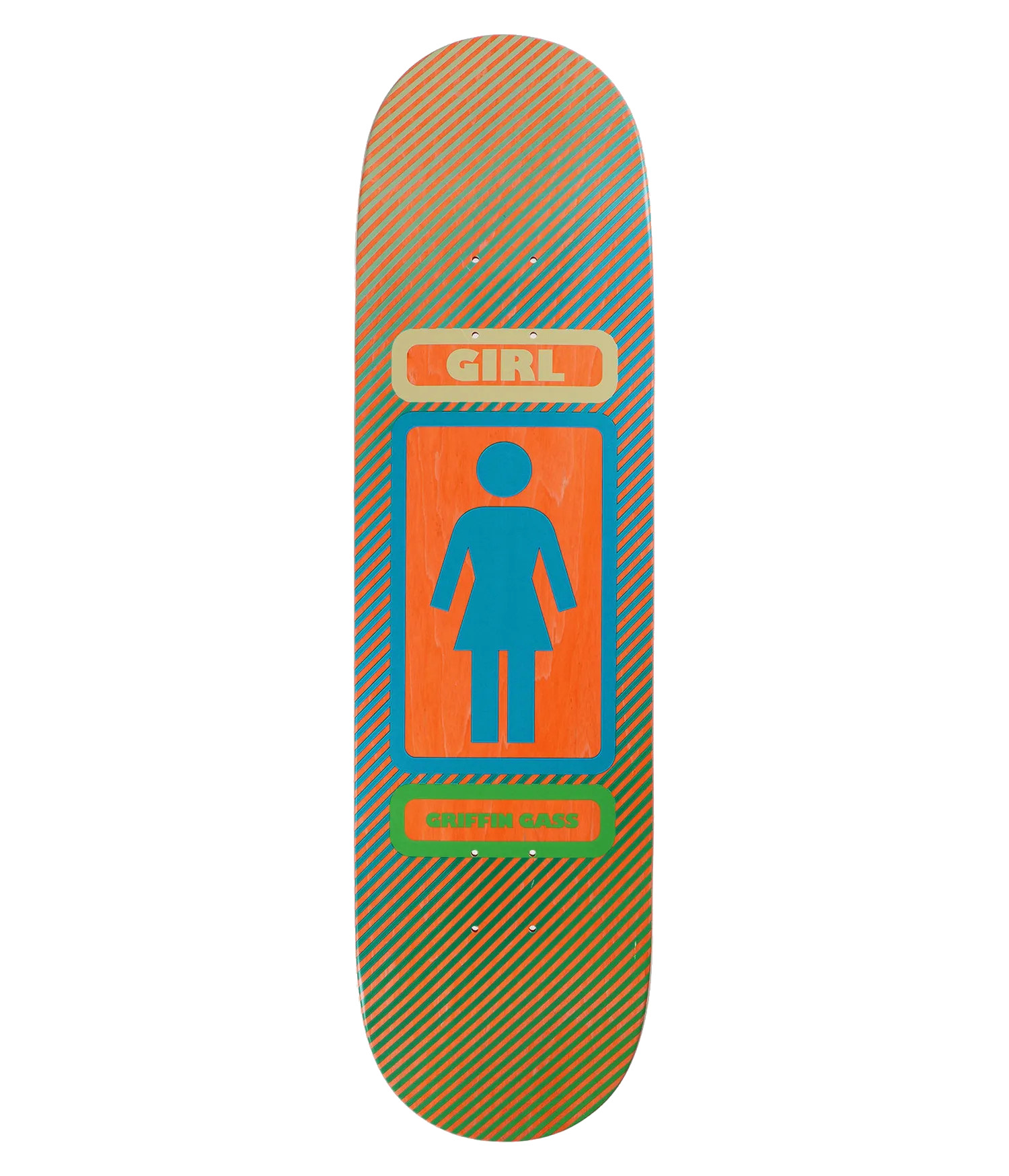
Credit: www.atbshop.co.uk
The Foundation: Understanding Skateboard Deck Wood
The core of any skateboard deck is its construction, and the type of wood used is the most significant factor determining its performance and lifespan. Skateboard decks are not made from a single piece of wood but rather from multiple layers, or plies, of thinly sliced wood veneer, laminated together under heat and pressure.
This layered construction provides strength and helps the board resist snapping under stress.
The Reign Of Maple: Why It Dominates
When discussing skateboard decks, one type of wood consistently emerges as the industry standard: maple. Specifically, hard rock maple (Acer saccharum), often sourced from North America, is the gold standard. Its prevalence is not accidental; maple offers a unique combination of properties that are highly desirable for skateboarding.
-
- Strength and Durability: Hard rock maple possesses exceptional strength, meaning it can withstand significant force without breaking. This is crucial for absorbing the impact of landings, ollies, and general wear and tear. Its dense grain structure contributes to its overall toughness, making it resistant to chipping and splintering.
- Flexibility and Pop: While strong, maple also has a degree of natural flex. This flexibility is vital for providing “pop”, the explosive lift a skateboard gets when flicked off the ground. A good pop allows skaters to perform tricks like ollies and kickflips more effectively. The way the maple plies are laid up and pressed also influences this characteristic.
- Consistency: Maple used for skateboard decks is valued because it can be sourced and graded for fairly uniform performance. Manufacturers can depend on the material’s properties from one batch to the next.
- Weight: Compared to some other hardwoods, maple offers a good balance of strength and weight. A deck that is too heavy can be difficult to maneuver, while one that is too light might lack the necessary durability. Maple strikes an effective compromise.
Beyond Maple: Other Woods In Skateboarding
While maple is king, other wood types have been used historically or for niche applications. However, for mainstream, high-performance street and park decks like those produced by Girl Skateboards, maple remains the standard.
-
- Birch: Sometimes used in lower-cost decks, birch is generally less durable than premium maple for pro-level skate decks.
- Bamboo: Increasingly popular for its sustainability and unique flex properties, bamboo is often used in longboards or hybrid decks. It offers a different feel, often described as more “carvy” and responsive, but may not provide the same crisp pop and rigid strength required for technical street skating.
- Poplar: A lighter and softer hardwood, poplar can be used, but it generally lacks the strength and resilience needed for demanding skateboarding.
For Girl Skateboards, the commitment to North American maple is a testament to their focus on delivering professional-grade equipment that can withstand the rigors of modern skateboarding.

Credit: lbskate.com
The Girl Skateboards Construction Blueprint
Girl Skateboards, like most reputable skateboard manufacturers, adheres to a tried-and-true construction method that maximizes the potential of their chosen wood. The standard for professional-grade decks is a seven-ply construction, and Girl Skateboards is no exception. This method involves carefully layering seven thin sheets of maple veneer.
The Seven-ply Standard
The seven-ply construction is the industry benchmark for a reason. Each ply serves a specific purpose in the overall integrity and performance of the deck.
-
- Veneer Selection: The quality of the individual maple veneers is paramount. Manufacturers select veneers free from significant knots, cracks, or imperfections that could compromise the deck’s strength.
- Grain Orientation: The plies are not simply stacked randomly. They are oriented with alternating grain directions to improve structural integrity and reduce the chance of the deck splitting along a single grain line.
- Adhesives: High-strength, water-resistant glues are used to bond the plies together. These adhesives are crucial for maintaining the deck’s shape and preventing delamination (where the plies start to separate) under stress and moisture exposure.
- Pressing and Shaping: The stacked and glued veneers are placed into a mold that dictates the deck’s concave (the curvature across the width), nose and tail kicks (the upward curves at the ends), and overall shape. This mold is then subjected to heat and pressure, permanently bonding the plies and giving the deck its final form.
- Finishing: After pressing, the decks are cut to their final shape, drilled for truck mounting holes, sanded smooth, and then graphics are applied.
Innovations And Proprietary Techniques
While the seven-ply maple construction is standard, manufacturers like Girl Skateboards may employ proprietary techniques or incorporate additional elements to enhance their decks.
-
- Reinforcement: Some decks from other brands use carbon fiber or fiberglass reinforcements, but Girl’s mainstream pro decks are most commonly described by retailers as traditional 7-ply North American maple.
- Concave Variations: Girl Skateboards offers various concave shapes across their different product lines and team models. These variations cater to different skating styles and preferences, affecting how the board feels underfoot and how easily it can be manipulated for tricks.
The meticulous attention to the seven-ply maple blueprint ensures that every Girl Skateboard deck provides the performance, durability, and feel that skaters expect from a top-tier brand.
Sourcing And Sustainability: The Ethics Of Wood Choice
The wood used in skateboards, particularly the high-grade maple required for professional decks, comes from forests. This naturally raises questions about sourcing and sustainability. Specific details about Girl Skateboards’ supply chain are not consistently published, so claims about certifications or responsible sourcing should be made only when documented.
The Importance Of Maple
As previously discussed, maple is the preferred wood for its superior properties. For skateboard decks, the important point is the wood’s suitability for repeated impact rather than any special or exclusive species claim.
Industry Trends Towards Sustainability
The skateboarding industry, like many others, is increasingly aware of environmental impact. While hard rock maple is not an endangered species, sustainable forestry management is still important. This involves practices such as:
-
- Selective Logging: Harvesting mature trees while allowing younger ones to grow.
- Reforestation: Planting new trees to replace those harvested.
- Minimizing Waste: Utilizing as much of the harvested wood as possible.
Many manufacturers are exploring ways to reduce their environmental footprint. This can include:
-
- Using eco-friendly adhesives: Opting for glues with lower volatile organic compound (VOC) emissions.
- Recycled materials: Incorporating recycled content where feasible, though this is less common for the structural core of a deck.
- Supporting sustainable forestry certifications: Partnering with suppliers who adhere to recognized environmental standards, if the brand chooses to disclose that information.
While Girl Skateboards may not heavily publicize their sustainability initiatives, their continued reliance on traditional maple suggests a focus on proven performance. For skaters interested in eco-conscious options, looking for brands that explicitly state their use of sustainably harvested wood or alternative materials like bamboo might be a priority. However, for the performance characteristics sought by most Girl Skateboards riders, maple remains the benchmark.
What Makes Girl Skateboards Decks Unique?
Girl Skateboards is more than just a manufacturer; it’s a brand deeply embedded in skate culture. Their decks are recognizable not only for their quality but also for their iconic graphics, team-driven designs, and the overall ethos they represent. When you pick up a Girl Skateboard deck, you’re getting a product that embodies years of experience and a deep understanding of what skaters need and want.
The Art And Graphics: A Visual Identity
One of the most distinguishing features of Girl Skateboards is their artistic direction. They collaborate with artists and use in-house design to create visually striking graphics. The graphics are printed using high-quality methods, ensuring they are vibrant and durable, though like all graphics, they will eventually wear down with use.
Team-driven Design And Innovation
Girl Skateboards is home to some of the most influential skaters in the world. The development of new deck shapes, sizes, and concaves is often influenced by the feedback and preferences of their professional team. This team-driven approach ensures that the decks are not just aesthetically pleasing but also functionally optimized for high-level skateboarding.
Quality Control And Consistency
Operating under the DLX Distribution umbrella, which also includes brands like Chocolate Skateboards and Real Skateboards, Girl benefits from shared manufacturing expertise and quality control processes. This helps maintain a high standard across the line. While specific factory locations are not always disclosed, the publicly listed construction on retailer pages is traditional 7-ply North American maple.
Deck Sizing And Shape Variations
Girl Skateboards offers a range of sizes and shapes to accommodate different skaters and preferences. Deck width is a primary consideration, typically ranging from around 7.5 inches to 8.75 inches or wider for larger sizes.
-
- Smaller widths (7.5″ – 8.0″): Generally preferred by younger skaters, smaller riders, or those who prioritize quick flip tricks and lighter boards.
- Medium widths (8.0″ – 8.25″): A very popular range that offers a good balance for street skating, park skating, and general all-around use.
- Wider widths (8.25″ and up): Favored by transition skaters, larger riders, or those who want more stability and a larger platform for their feet.
Beyond width, wheelbase, nose, tail, and concave all vary, affecting turning radius, stability, and trick feel. For example, current Girl pro models commonly list wheelbase measurements around 13.75″ to 14″, with nose and tail lengths varying by shape and model.
Comparing Girl Skateboard Decks To Competitors
In the competitive landscape of skateboard manufacturing, Girl Skateboards stands out, but how do they stack up against other major brands? Understanding the nuances of their construction and material choices in comparison to peers can help skaters make informed decisions.
Brands like Element, Santa Cruz, and Powell-Peralta are also giants in the industry, each with their own strengths.
Material And Construction Parity
For the most part, the core construction of professional-grade decks from top brands like Girl, Element, and Santa Cruz is similar. They all predominantly use seven plies of maple. The differences often lie in:
-
- Specific Veneer Selection: While all use maple, subtle differences in density, grade, and sourcing can exist.
- Adhesives and Pressing Techniques: Manufacturers may use slightly different glue formulations or pressing methods that affect the deck’s final pop and durability.
- Concave and Shape Profiles: Each brand, and often individual team models within a brand, will offer distinct concave shapes, nose/tail kicks, and wheelbases. This is a major differentiator influencing ride feel.
Graphics And Brand Ethos
This is where brands often diverge significantly. Girl Skateboards is celebrated for its art-forward graphics and its connection to a specific era of skate culture, often associated with a refined, artistic, and sometimes quirky aesthetic.
-
- Girl Skateboards: Known for artistic collaborations and iconic logos.
- Element Skateboards: Often focuses on nature-inspired graphics and environmental themes.
- Santa Cruz Skateboards: Has a long history with bold, classic graphics, including the iconic “Screaming Hand.”
- Powell-Peralta: Famous for its legendary graphics like the “Ripper” and “Skull & Sword,” deeply rooted in skate history.
Price Point And Value
Professional-grade decks from these major brands typically fall within a similar price range, reflecting the quality of materials and manufacturing. A typical price for a new deck from Girl, Element, Santa Cruz, or Powell-Peralta might range from $55 to $70 USD, depending on the retailer and any special releases.
The “value” is then determined by individual preference for graphics, shape, and brand loyalty.
Here’s a simplified comparison:
| Feature | Girl Skateboards | Element Skateboards | Santa Cruz Skateboards | Powell-Peralta |
|---|---|---|---|---|
| Primary Wood | North American Maple | North American Maple | North American Maple | North American Maple |
| Construction | 7-Ply Maple | 7-Ply Maple | 7-Ply Maple | 7-Ply Maple |
| Graphic Style | Artistic, diverse, sometimes quirky | Nature-inspired, accessible, environmental | Classic, bold, iconic | Legendary, aggressive, historical |
| Typical Price Range (USD) | $55 – $70 | $55 – $70 | $55 – $70 | $55 – $70 |
| Reputation | Core skate brand, strong art focus, pro team | Widely recognized, accessible, quality | Heritage brand, iconic graphics, durable | Pioneering brand, legendary graphics, strong heritage |
Ultimately, the choice between Girl Skateboards and its competitors often comes down to personal aesthetic preference, the specific shape and concave offered that best suits a skater’s style, and brand affiliation. The fundamental construction using North American maple ensures a baseline level of quality across the board.
Maintaining Your Girl Skateboard Deck
Understanding the wood and construction is only half the battle; proper maintenance will ensure your Girl Skateboard deck lasts as long as possible, preserving its pop, strength, and integrity. Even the best North American maple can be damaged by neglect or improper care.
Protecting Against Moisture
Moisture is the enemy of laminated wood products like skateboard decks. Water can seep between the plies, weakening the adhesive and leading to delamination.
-
- Avoid Puddles and Wet Conditions: Try not to skate in the rain or through large puddles. If your board gets wet, dry it off immediately with a towel.
- Proper Storage: Store your skateboard in a dry place, away from extreme humidity or direct sunlight.
- Water-Resistant Glue: While modern adhesives are quite resilient, they are not entirely waterproof. Prolonged exposure to water will eventually compromise the bond.
Dealing With Wear And Tear
Skateboarding is inherently rough on equipment. Normal wear and tear are inevitable, but understanding them can help you manage expectations and identify potential issues.
-
- Pressure Cracks: These are hairline cracks that appear on the deck, usually near the edges or where the concave is sharpest, often from repeated impacts or landing awkwardly.
- Chipped Edges: The edges of the deck can chip from grinding curbs or hitting obstacles. This is mostly cosmetic but can sometimes lead to splintering if left unaddressed.
- Graphic Wear: The graphics will inevitably wear off, especially on the nose and tail from flicking for tricks and on the bottom from grinds. This is a normal part of use and doesn’t affect rideability.
When To Replace Your Deck
Even with the best care, a skateboard deck has a finite lifespan. Several signs indicate it’s time for a replacement:
-
- Loss of Pop: The most common sign is a noticeable decrease in the board’s “pop.”
- Soft Spots: If the deck feels unusually soft or flexible in certain areas, especially under the feet, it may be compromised and at risk of breaking.
- Visible Delamination: If you see the plies starting to separate, especially along the edges or from the top sheet, the deck’s structural integrity is severely weakened.
- Cracks or Breaks: Any significant cracks or, obviously, a snapped deck means it’s time for a new one.
- Bent Shape: If the deck has become noticeably warped or bent, it’s no longer stable or predictable.
Choosing a quality deck like those from Girl Skateboards is the first step. The second is taking care of it to maximize your enjoyment and performance on the board.
Frequently Asked Questions
What Specific Type Of Maple Does Girl Skateboards Use?
Girl Skateboards primarily uses North American maple, often referred to as Canadian maple. This wood is known for its strength, flexibility, density, and durability, making it ideal for skateboard decks.
How Many Plies Are In A Typical Girl Skateboard Deck?
A standard Girl Skateboard deck features seven plies of maple veneer. This construction provides a good balance of strength, stiffness, flexibility, and weight.
Can Girl Skateboard Decks Be Used For Different Types Of Skateboarding?
Yes, Girl Skateboard decks are suitable for different styles, including street skating, park skating, and transition skating. Their durable maple construction makes them versatile for various riding styles.
Are Girl Skateboards Suitable For Beginners?
Yes, Girl Skateboards can be a good choice for beginners as well as experienced riders. Their quality construction and versatile designs make them suitable for learning basic skills and developing advanced techniques.
How Long Does A Girl Skateboard Deck Typically Last?
The lifespan of a Girl Skateboard deck depends on riding frequency, skating style, maintenance, and impact damage. With proper care and normal use, the deck can provide long-lasting performance.