
Tony Hawk’s name is synonymous with skateboarding. For millions, he’s not just a skater; he’s an icon, a pioneer, and the very definition of what it means to push the boundaries of the sport. But beyond the household recognition and the lucrative video game franchise, a crucial question remains: was Tony Hawk actually good at skateboarding? This isn’t a question of his fame or influence, but of his raw skill, technical ability, and competitive prowess during his prime.
The answer, for anyone who has witnessed his career or studied skateboarding history, is an emphatic yes. Tony Hawk wasn’t just good; he was revolutionary. He didn’t just ride a skateboard; he redefined what was possible on one. From his early days as a prodigious talent to his dominance in competitive circuits and his groundbreaking contributions to modern skateboarding, Hawk consistently demonstrated a level of mastery that set him apart. His journey is a testament to dedication, innovation, and an unparalleled understanding of the physics and artistry of riding a board.
Key Takeaways
-
- Prodigious Talent and Early Dominance: Tony Hawk emerged as a skateboarding prodigy in the late 1970s and quickly became a dominant force in competitive skateboarding, winning numerous titles.
- Innovation and Trick Development: Hawk was instrumental in inventing and popularizing many advanced skateboarding tricks, including the 900, demonstrating a commitment to pushing the sport’s technical limits.
- Vert Skating Mastery: His unparalleled ability on vert ramps, characterized by incredible air, control, and complex aerial maneuvers, made him a legend in this discipline.
- Longevity and Adaptability: Hawk maintained a high level of performance and relevance for decades, adapting his style and demonstrating skills that transcended generational shifts in skateboarding.
- Global Ambassador and Cultural Impact: Beyond his competitive achievements, Hawk became a global ambassador for skateboarding, significantly contributing to its mainstream acceptance and cultural evolution through media and business ventures.
- Enduring Legacy: His influence extends beyond his personal achievements, inspiring countless skaters and shaping the trajectory of modern skateboarding through his innovation and dedication.
The Genesis Of A Legend: Hawk’s Early Years
Tony Hawk’s journey into the world of skateboarding began not with a grand plan, but with a simple introduction. Born in 1968 in Carlsbad, California, Anthony Frank Hawk was a restless and energetic child.
By the age of 9, Hawk had received his first skateboard, a gift that would alter the course of his life and the future of an entire sport.
His early progression was rapid. By age 12, he was winning amateur contests in California, and by 14 he had turned professional. His older brother Steve helped nurture his interest and connected him to the skate scene, while Hawk’s relentless practice and athleticism helped him advance quickly.
By the late 1970s and early 1980s, Tony Hawk was already becoming a recognized talent on the Southern California skate scene.
The Rise Of A Teen Sensation
The late 1970s and early 1980s were a golden era for skateboarding, a period of explosive growth and innovation. It was within this dynamic environment that Tony Hawk truly began to shine. His raw talent was undeniable, but it was his relentless work ethic and his sheer determination to master every aspect of riding that set him apart.
He would spend hours at skateparks, honing his skills, experimenting with new maneuvers, and pushing the limits of what was considered possible. This dedication was not just about learning tricks; it was about understanding the board, the ramps, and his own body’s capabilities.
By the time he turned pro, Hawk was already one of the most closely watched young talents in the sport. His early career was marked by strong competitive results, especially in vert skating, where his combination of speed, height, consistency, and technical precision stood out.
This period established him not just as a talented rider, but as a serious contender with an appetite for progression.
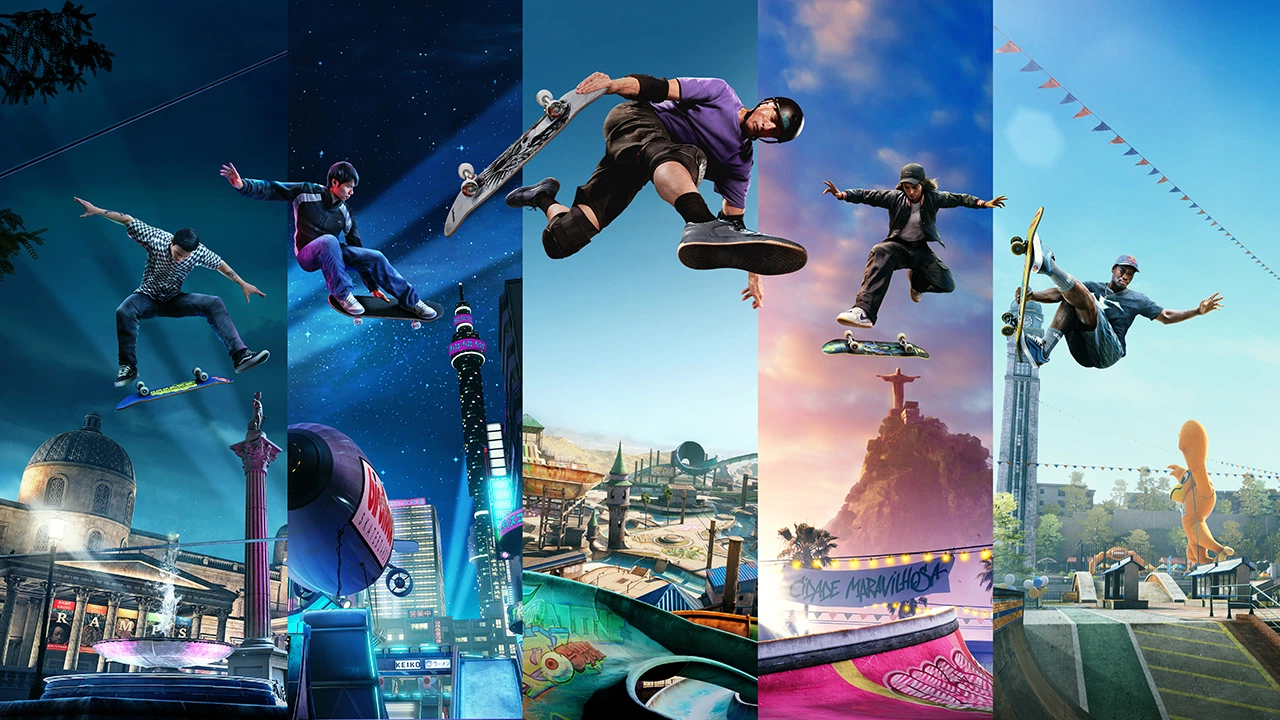
Credit: www.tonyhawkthegame.com
Dominance On The Vert Ramp: A Masterclass In Aerial Acrobatics
While skateboarding encompasses various disciplines, Tony Hawk’s name became inextricably linked with vert skateboarding. This discipline, performed on U-shaped ramps, demands immense skill, courage, and an intuitive understanding of gravity and airtime. Hawk didn’t just participate in vert skating; he elevated it to an art form, transforming it into a spectacle of aerial acrobatics.
His approach to vert was characterized by a unique blend of power and precision. He possessed an uncanny ability to read the ramp, using its contours to generate speed and height for his aerial maneuvers. This wasn’t just about brute force; it was about finesse, timing, and an almost symbiotic relationship with the ramp itself.
He would carve up the walls, gaining momentum before launching into the air, where he would perform a dazzling array of tricks with controlled, deliberate style. His aerials were not just high; they were consistent and technically demanding.
Key Vert Skating Innovations And Achievements
Tony Hawk’s reign over vert skateboarding wasn’t just about winning; it was about fundamentally changing the game. He was a relentless innovator, constantly developing and refining tricks that pushed the boundaries of what skaters thought possible. His influence can be seen in the evolution of aerial maneuvers, the complexity of rotations, and the sheer amplitude of jumps.
He was not content with mastering existing tricks; he was driven to invent new ones, often inspired by other sports or simply by a desire to see what his body and board could do.
One of Hawk’s most significant contributions was his role in popularizing and perfecting tricks like the McTwist, a 540-degree aerial rotation with a grab, and the 900, a groundbreaking maneuver involving two-and-a-half mid-air rotations. The 900, in particular, became a legendary feat. Hawk first landed it in competition at the 1999 X Games in San Francisco after years of attempts, cementing his status as a visionary and a master of his craft.
His competitive record on vert is staggering. According to Tony Hawk’s official biography, he won 73 professional contests and finished second 19 times across 103 contests, and he was crowned vertical skating’s world champion 12 years in a row.
Here’s a look at some of his major competitive milestones:
| Year | Milestone | Result |
|---|---|---|
| 1983 | BK Invitational | Top finish |
| 1984-1996 | Vertical skating world championships | Won 12 straight titles |
| 1999 | X Games Vert Best Trick | First successful 900 in competition |
His mastery of vert skating wasn’t just about winning contests; it was about defining the discipline itself. He brought a level of technicality, creativity, and sheer airtime that became the benchmark for all aspiring vert skaters.
Beyond Vert: Hawk’s Versatility And Street Skating Influence
While Tony Hawk’s legacy is deeply rooted in vert skateboarding, his skills and influence extended beyond the confines of the halfpipe. He was not a one-dimensional skater; he possessed a remarkable versatility that allowed him to excel in various skateboarding disciplines.
He was also a capable street skater, but his reputation and greatest competitive dominance came from vert. That distinction matters: Hawk was not primarily the street-skating innovator that later generations celebrated in that discipline, but he remained technically strong across formats and helped broaden the sport’s reach.
As street skateboarding began to gain prominence and evolve with new obstacles and techniques, Hawk demonstrated an ability to adapt and contribute, further solidifying his status as an all-around master of the sport.
His early exposure to street skating, even as he focused on vert, meant he understood the fundamental principles of riding a board on different terrains. As street skating developed its own unique vocabulary of tricks, grinds, slides, flips, and manuals performed on ledges, stairs, and rails, Hawk was able to integrate some of those elements into his riding.
While he may not have been the primary innovator in street skating in the same way he was in vert, his participation and consistent performance showcased his deep understanding of skateboarding as a whole.
Adapting To A Changing Sport
Skateboarding is a sport characterized by constant evolution. What was cutting-edge yesterday can become commonplace today. Tony Hawk’s longevity in the sport is a testament to his ability to adapt and remain relevant through these shifts. As the focus in skateboarding began to move more toward street-style and technical flatground tricks in the late 1990s and early 2000s, Hawk continued to skate and appear in major events.
His ability to transition from the massive air of vert to the more technical demands of newer disciplines demonstrated a profound connection to the board.
This adaptability is a hallmark of true skateboarding prowess. It’s one thing to master a specific discipline; it’s another to maintain a high level of skill across different styles as the sport itself transforms. This versatility ensured his continued respect and relevance within the broader skateboarding community, even as new generations of skaters emerged with different specializations.
The “Tony Hawk’s Pro Skater” Effect
While not a direct measure of his on-board skill, the impact of the Tony Hawk’s Pro Skater video game series cannot be overstated when discussing his influence and perceived ability. Launched in 1999, the game became a cultural phenomenon, introducing millions of people worldwide to skateboarding and, by extension, to Tony Hawk himself as the face of the franchise.
The games were praised for translating skateboarding into an accessible, highly readable format and for featuring real-world trick culture that Hawk helped popularize.
Players learned to execute complex combos, grinds, and aerials within the game, fostering an appreciation for the skill involved. The fact that Hawk’s name and likeness were central to such a successful and influential franchise speaks volumes about his standing in the sport.
It validated his technical abilities in the eyes of a global audience, showcasing a comprehensive understanding of skateboarding maneuvers that resonated deeply with players, many of whom went on to become skaters themselves. This cultural impact, driven by his perceived expertise, further cemented his image as one of the greatest skaters of all time.

Credit: www.rollingstone.com
The 900: A Monumental Achievement
The story of Tony Hawk’s skateboarding prowess would be incomplete without a deep dive into the 900. This trick, a 900-degree (two-and-a-half full rotations) aerial maneuver performed on a vert ramp, was considered by many to be the holy grail of skateboarding for years. It demanded an extraordinary combination of speed, height, airtime, rotational control, and the sheer audacity to attempt it. Many top skaters had tried and failed, some suffering significant injuries in the process.
Tony Hawk’s pursuit of the 900 became legendary. He attempted it for years before finally landing it at the 1999 X Games. The pressure was immense, not only from the competitive environment but also from the skateboarding world, which watched with bated breath.
The trick represented the pinnacle of vert skateboarding at the time, a seemingly impossible feat that few believed could be consistently landed.
The Journey To The X Games 1999
The 1999 X Games in San Francisco marked the stage for Hawk’s historic achievement. He was competing in the vert best trick competition, and the atmosphere was electric. Throughout his runs, he was landing incredible tricks, but the 900 remained elusive. On his final attempts, Hawk dropped into the ramp, generating immense speed.
He launched himself into the air, initiating the first rotation, then the second, and then the final half-rotation. For a moment, it seemed like he might fall, but with incredible balance and control, he stuck the landing.
The crowd erupted. The commentators were beside themselves. It was a moment of pure triumph, not just for Hawk, but for skateboarding as a whole. Landing the 900 at the X Games was more than just winning a competition; it was a monumental leap forward for the sport.
It demonstrated that previously unimaginable tricks were achievable with dedication, skill, and innovation. This single trick became an iconic moment in sports history and a powerful symbol of Hawk’s unparalleled ability and his relentless drive to push the boundaries of skateboarding.
It wasn’t just about the trick itself, but the years of dedication, the repeated failures, and the ultimate success that made it so significant.
Longevity And Enduring Skill
One of the most remarkable aspects of Tony Hawk’s career is his extraordinary longevity. In a sport that is notoriously demanding on the body and often sees athletes peak in their late teens or early twenties, Hawk continued to skate at an elite level for decades.
His ability to maintain such a high standard of performance well into his 30s and beyond is a testament to his exceptional physical conditioning, his deep understanding of skateboarding mechanics, and his enduring passion for the sport.
His career spanned multiple eras of skateboarding, from the early days of the skatepark boom to the modern era of highly technical street skating and massive mega-ramps. Throughout these shifts, Hawk remained a relevant and respected figure. He didn’t just rest on his laurels; he continued to skate, to practice, and to adapt his style, demonstrating a commitment to the craft that few can match.
This sustained presence at the top level is a rare feat in any sport and speaks volumes about his intrinsic talent and dedication.
Adapting To New Challenges And Generations
As skateboarding evolved, so did Tony Hawk. He wasn’t afraid to embrace new challenges or to learn from younger generations of skaters. While he was already a legend, he continued to push himself. This meant staying on top of new tricks, understanding evolving equipment, and maintaining his physical readiness.
For example, as mega-ramps became a prominent feature in competitions, Hawk was among the skaters capable of handling the massive airs and complex maneuvers required for those structures.
His willingness to participate in events alongside skaters half his age, and to still perform at a high level, showcased his adaptability. He understood that skateboarding is a continuous learning process. This mindset allowed him to remain not just a relic of the past but an active and influential participant in the present.
His ability to connect with younger skaters, to share his knowledge, and to still inspire through his own riding is a rare gift. This enduring skill set has allowed him to remain a central figure in skateboarding culture for over forty years.
Tony Hawk: More Than Just A Skater
Tony Hawk’s impact on skateboarding transcends his individual achievements as a rider. He has been a pivotal figure in shaping the sport’s culture, its mainstream acceptance, and its commercial viability. His business acumen and his understanding of how to translate his passion into tangible ventures have been as groundbreaking as his skating.
He didn’t just ride; he built.
His influence can be seen in the numerous companies he co-founded, most notably Birdhouse Skateboards, which has become a respected brand in the industry, fostering talent and producing quality skate products. He also helped expand skateboarding’s business and media footprint through other ventures and partnerships.
Global Ambassador And Cultural Icon
Perhaps Tony Hawk’s most significant contribution, beyond his technical mastery, is his role as a global ambassador for skateboarding. Through his video games, media appearances, and his own charitable foundation, The Tony Hawk Foundation (now The Skatepark Project), he has introduced skateboarding to millions and advocated for its positive impact. The Skatepark Project has helped fund public skateparks in underserved communities across the United States, providing safe and accessible spaces for young people to engage in the sport.
This dedication to giving back and fostering the growth of skateboarding infrastructure highlights his understanding of the sport’s broader societal benefits. He has consistently championed skateboarding as a positive outlet for creativity, discipline, and community building. His personal journey, from a hyperactive kid to a global icon, serves as an inspiration, demonstrating that with passion and perseverance, skateboarding can offer a path to success and personal fulfillment.
He has successfully bridged the gap between the counter-culture roots of skateboarding and its acceptance as a mainstream sport and even an Olympic discipline.
Frequently Asked Questions
Was Tony Hawk The First To Land A 900?
Yes, Tony Hawk is widely credited as the first person to successfully land a 900 in competition. He achieved this historic feat at the 1999 X Games in San Francisco, a moment that is considered one of the most significant in skateboarding history.
How Many Competitions Did Tony Hawk Win?
Tony Hawk won an astonishing number of competitions throughout his career, particularly in the 1980s and early 1990s. His official biography states that he won 73 professional contests and finished second 19 times across 103 contests.
Is Tony Hawk Still Skateboarding?
Yes, Tony Hawk is still actively skateboarding, even at an advanced age for the sport. While he may not compete at the highest professional level as frequently as in his prime, he continues to skate for enjoyment, film video parts, and participate in demonstrations and special events.
His passion for skateboarding remains as strong as ever, and he is a testament to the sport’s lifelong appeal.
What Made Tony Hawk So Good Compared To Other Skaters?
Several factors contributed to Tony Hawk’s exceptional skill: prodigious natural talent, an unparalleled work ethic and dedication to practice, a fearless approach to pushing boundaries, an innovative mindset that led him to invent and popularize new tricks, and an intuitive understanding of ramp physics and board control. His ability to maintain consistency, adapt to evolving styles, and perform under pressure also set him apart.
How Did Tony Hawk Influence Skateboarding Culture?
Tony Hawk’s influence on skateboarding culture is immense. He brought mainstream attention to the sport through his competitive success and, most notably, through the wildly popular Tony Hawk’s Pro Skater video game series. He popularized many advanced tricks, particularly on the vert ramp, and his role as a businessman and philanthropist (through The Skatepark Project) has helped fund public skateparks, making the sport more accessible. He effectively became the face of skateboarding for a global audience, bridging the gap between its underground roots and mainstream acceptance.
Tony Hawk’s legacy in skateboarding is undeniable and multifaceted. He wasn’t just a participant; he was a transformer. His technical brilliance on the vert ramp, marked by his invention and mastery of revolutionary tricks like the 900, redefined the limits of aerial skateboarding.
His versatility allowed him to adapt and remain relevant across different eras and styles of the sport, while his incredible longevity is a testament to his enduring skill and dedication. Beyond his competitive achievements, Hawk’s role as a cultural icon and global ambassador has been instrumental in elevating skateboarding’s profile, fostering its mainstream acceptance, and inspiring countless individuals worldwide.
His impact extends far beyond the board, shaping the very landscape of modern skateboarding.