Buying Your First Skateboard Guide
Stepping into the world of skateboarding is exciting, but buying your first skateboard can feel confusing. There are so many options—shapes, sizes, brands, and styles. Maybe you’ve watched skaters at the park, or seen impressive tricks online, and now you want to start your own journey.
Choosing the right board isn’t just about picking a cool design. The right skateboard will make learning easier and more enjoyable, and it helps prevent injuries.
This guide breaks down everything you need to know, using clear language and practical tips. By the end, you’ll know exactly what to look for when buying your first skateboard, what mistakes to avoid, and how to make smart choices without wasting money.
Understanding The Parts Of A Skateboard
Before you buy, it helps to know the main parts of a skateboard and what they do.
Deck: The flat board you stand on. Usually made from 7-ply maple wood.
Trucks: The metal parts attached to the deck. They hold the wheels and allow the board to turn.
Wheels: Made of polyurethane, they come in different sizes and hardness.
Bearings: Small metal rings inside the wheels that help them spin smoothly.
Grip tape: Sandpaper-like material on top of the deck for traction.
Hardware: The screws and nuts that keep everything together.
Each part affects how the skateboard feels and performs. Beginners often overlook the importance of good trucks and wheels, but these make a big difference in how easy it is to balance and steer.
Types Of Skateboards
Skateboards come in several shapes and designs. Choosing the right type depends on your goals.
| Type | Main Use | Best For |
|---|---|---|
| Standard Skateboard | Street & Skatepark | Tricks, beginners |
| Cruiser | Transport | Commuting, smooth rides |
| Longboard | Downhill, distance | Speed, carving |
| Mini Board | Kids | Smaller feet, young children |
For most beginners, a standard skateboard is the best choice. It’s versatile, easy to find, and good for learning the basics.
Choosing The Right Deck
The deck is the heart of your skateboard. Its width, length, and shape affect how you balance and turn.
Deck Width
Decks are measured in inches, usually from 7.5” to 8.5” wide. The right width depends on your shoe size and what you want to do.
- 7.5” to 8.0” – Best for street skating and tricks. Good for most beginners.
- 8.0” to 8.5” – More stable. Great for ramps, bowls, and taller riders.
If your feet are bigger than US size 10, choose an 8. 0” or wider deck. If you’re younger or have smaller feet, a 7. 5”–7. 75” deck feels more manageable.
Deck Shape
Most decks have a double kicktail—curved ends for tricks. Some have a deeper concave, which helps with flip tricks. Beginners do best with a medium concave for better foot grip and comfort.
Deck Material
Most decks are made from maple wood for strength and flexibility. Avoid cheap plastic boards—they break easily and are harder to control.
Picking Trucks
Trucks connect the wheels to your deck and let you turn. Picking the wrong size is a common mistake for beginners.
Truck Size
Trucks should match the width of your deck. If they’re too wide or too narrow, the board feels unstable.
| Deck Width | Truck Axle Width |
|---|---|
| 7.5” – 7.75” | 7.5” – 7.75” |
| 8.0” – 8.25” | 8.0” – 8.25” |
| 8.25”+ | 8.25”+ |
Truck Height
- Low: Closer to the deck. Good for small wheels and tricks.
- Mid: Balanced. Good for all-around skating.
- High: More clearance for big wheels. Better for cruising.
For most beginners, mid trucks are the safest bet.
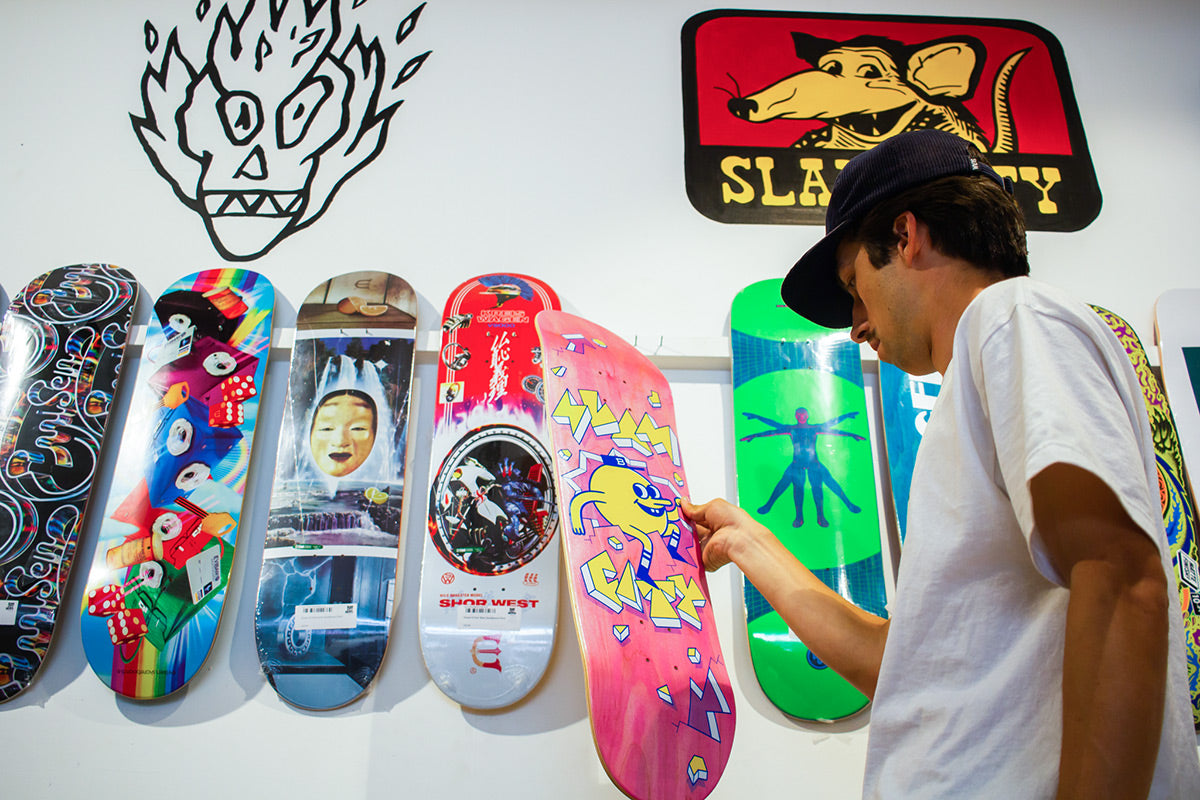
Credit: www.slamcity.com
Wheels And Bearings
Wheels and bearings decide how fast and smooth your ride feels.
Wheel Size
Measured in millimeters (mm).
- 50–54mm: Good for street skating and tricks.
- 54–60mm: More speed and comfort. Better for cruising and rough surfaces.
If you’re learning at a skatepark or on smooth ground, 52–54mm wheels are ideal. For rough roads, go for 54mm or bigger.
Wheel Hardness
Measured in durometer (A scale).
- 95A–101A: Harder. Faster, slides easily, best for tricks.
- 78A–87A: Softer. Smoother on rough surfaces, slower.
Most beginners like 99A wheels for a balance of speed and grip.
Bearings
Bearings are rated by the ABEC scale (1, 3, 5, 7, 9). Higher numbers are supposed to be faster, but for skateboarding, ABEC 5 or 7 bearings are reliable and affordable.
A non-obvious tip: Clean and lubricate your bearings regularly. Dirty bearings make your board feel slow and rough, even if they’re high quality.
Complete Skateboards Vs. Custom Setups
You can buy a complete skateboard (fully assembled) or buy each part and put them together.
Complete Skateboards
- Pros: Cheaper, ready to ride, no need for assembly.
- Cons: Parts may be lower quality.
Great for first-time buyers who want to start quickly. Brands like Element, Almost, and Enjoi offer good quality completes for beginners.
Custom Setups
- Pros: You pick every part. Higher quality.
- Cons: More expensive, need to assemble.
If you have specific preferences, building your own is fun, but most beginners are happy with a good complete.
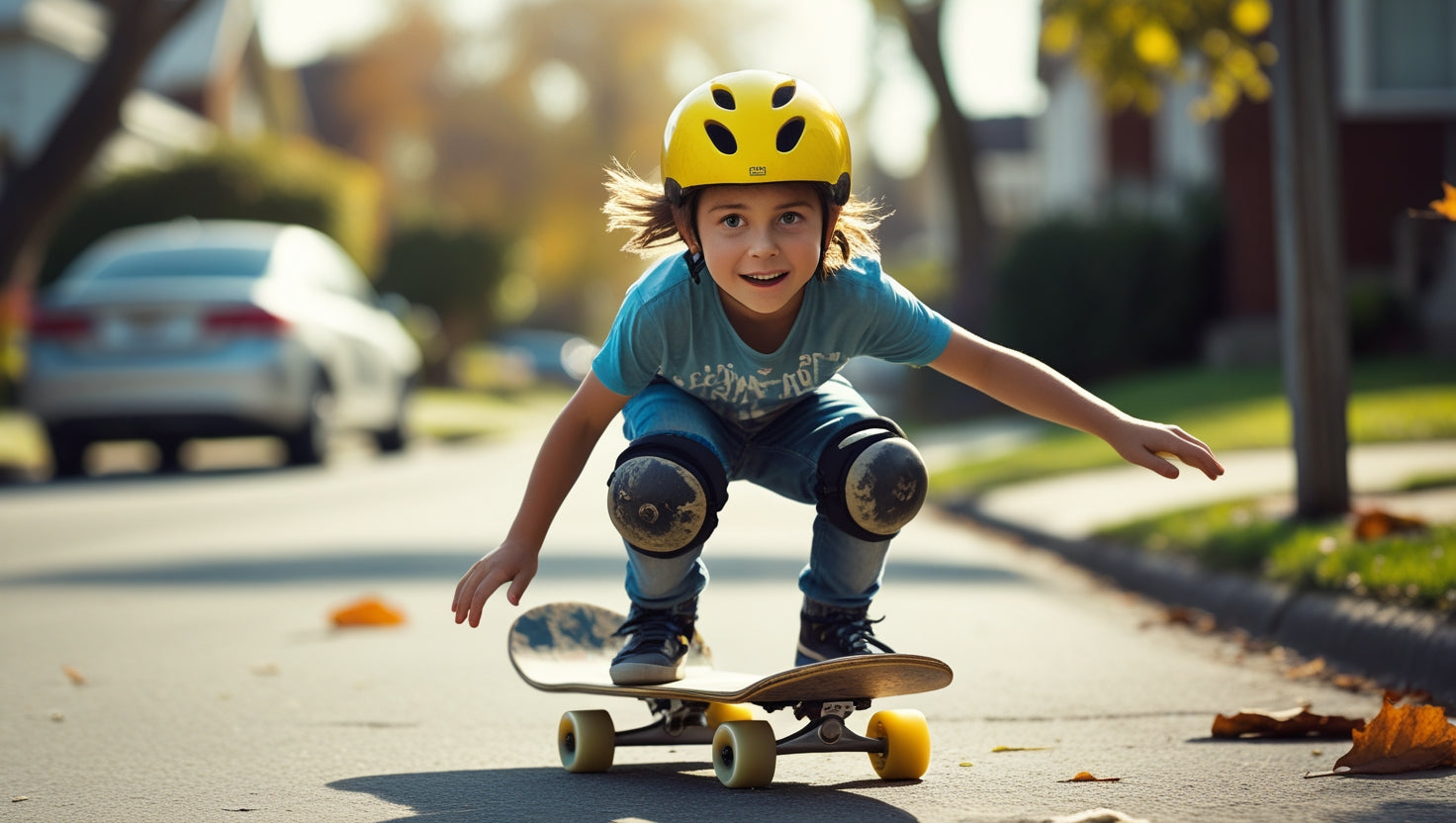
Credit: www.skatesupplyindia.com
Budget And Quality: What Should You Spend?
A quality beginner skateboard costs between $80–$150. Cheaper boards (under $50), often sold at toy stores or big box retailers, usually have poor quality decks, plastic wheels, and weak trucks. They break easily and make learning frustrating.
A more expensive board ($150+) might not help you learn faster, but it will last longer and feel better. If you’re not sure you’ll stick with skateboarding, start with a reliable complete in the $90–$120 range.
Don’t forget to budget for safety gear—helmet, knee pads, elbow pads, and wrist guards. Injuries are common for beginners, and good gear builds confidence.
Sizing For Age, Height, And Shoe Size
Picking the right size isn’t just about the deck. Your age, height, and shoe size all matter.
| Rider Height | Shoe Size | Recommended Deck Width |
|---|---|---|
| Under 4’6″ | Up to US 6 | 7.0″ – 7.5″ |
| 4’6″ – 5’6″ | 6 – 9 | 7.5″ – 8.0″ |
| Over 5’6″ | 9+ | 8.0″ – 8.5″ |
If you’re between sizes, go for the slightly wider deck—it’s more stable when learning.
Where To Buy Your First Skateboard
Buy from a local skate shop or a trusted online retailer. Local shops let you see and feel the boards, ask questions, and sometimes offer free setup help. Avoid toy stores and generic online sellers—these often sell low-quality boards.
For online shopping, check reviews and make sure the seller is reputable. Sites like Zumiez, CCS, and Skate Warehouse have good selections and clear return policies.
Common Mistakes First-time Buyers Make
- Buying a cheap toy board: These look like skateboards but break quickly and are hard to control.
- Choosing the wrong size: Too wide or too narrow makes balancing and turning harder.
- Ignoring safety gear: Helmets and pads are important, even if they don’t look “cool.”
- Not asking for advice: Local skaters and shop staff can help you avoid bad choices.
- Forgetting about shoes: Regular sneakers can slip. Skate shoes with flat, grippy soles give better control.
A unique insight: Some beginners focus too much on graphics and colors. While it’s fun to pick a design you like, deck quality matters much more than appearance.
How To Test Your First Skateboard
If possible, stand on the board before buying. Your feet should fit comfortably across the width, with toes and heels inside the edges. Try tilting the board side to side—does it feel stable, not too loose? If you can, roll a few feet.
The board should feel smooth and easy to push.
Ask if the shop can adjust the trucks for you. Beginners often benefit from slightly tighter trucks for stability.
Skateboard Maintenance For Beginners
Taking care of your skateboard makes it last longer and keeps you safe.
- Keep it dry: Water can warp the deck and rust the bearings.
- Check hardware: Loose screws or trucks can cause accidents.
- Clean bearings: If wheels feel slow or rough, clean and oil the bearings.
- Replace grip tape: If it’s worn out, your feet will slip.
A small skate tool (about $10) is useful for making quick adjustments.
Building Confidence And Skill
Learning to skateboard is about practice and patience. Find a smooth, flat area to start. Practice pushing, turning, and stopping before trying tricks or skateparks. Watch tutorials, join beginner skate clinics, and ask more experienced skaters for tips.
Remember, everyone falls at first. Wearing safety gear and starting slow will help you avoid injuries and build confidence.
Frequently Asked Questions
What Size Skateboard Should I Get As A Beginner?
Most beginners do well with a 7.75” to 8.0” wide deck. If you have larger feet (US size 10+), consider an 8.0” or wider. The right size feels stable and fits your feet well.
Is It Better To Buy A Complete Skateboard Or Build One?
For your first board, a complete skateboard from a trusted brand is best. It’s cost-effective and ready to ride. Custom setups are fun but usually better for advanced skaters.
Do I Really Need Safety Gear?
Yes. A helmet is essential, and wrist guards, knee, and elbow pads are highly recommended. Most skate injuries happen to beginners and could be prevented with good gear.
How Much Should I Spend On My First Skateboard?
Plan to spend $80–$150 on a quality beginner skateboard. Avoid boards under $50—they usually have poor parts and won’t last.
Where Can I Find More Information About Skateboarding?
You can find reliable guides and tutorials at Wikipedia and other trusted skateboarding sites. Local skate shops and community groups are also great resources.
Starting with the right board makes skateboarding safer and more fun. Take your time, ask questions, and enjoy the learning process. In a few months, you’ll be rolling with confidence!

Credit: www.youtube.com