What Longboard Should I Get for Cruising
The allure of a longboard is undeniable. It’s more than just a mode of transportation; it’s a gateway to freedom, a connection with the pavement, and a way to experience your surroundings with a unique sense of flow. For those drawn to the smooth glide, the gentle turns, and the sheer joy of cruising, selecting the right longboard is paramount.
Unlike its shorter, more aggressive skateboard cousins, a longboard built for cruising prioritizes stability, comfort, and an effortless ride. But with a vast array of shapes, sizes, and components, how do you pinpoint the perfect board for your cruising adventures?
This guide will demystify the world of cruising longboards, breaking down the essential elements that contribute to a fantastic ride. From deck shapes and sizes to truck and wheel configurations, we’ll equip you with the knowledge to make an informed decision.
Whether you’re a complete beginner looking for your first board or an experienced rider seeking to refine your cruising setup, this comprehensive deep dive will help you find the longboard that will become your trusted companion on countless journeys.
Key Takeaways
- Deck Shape is Crucial: For cruising, choose shapes that offer stability and comfort, such as pintails, drop-throughs, or symmetrical shapes with mellow concave. Avoid aggressive concaves or kicktails designed for tricks.
- Size Matters for Stability: Longer decks (38-44 inches) generally provide more stability and a smoother ride, ideal for cruising. Shorter decks can be more maneuverable but less stable at speed.
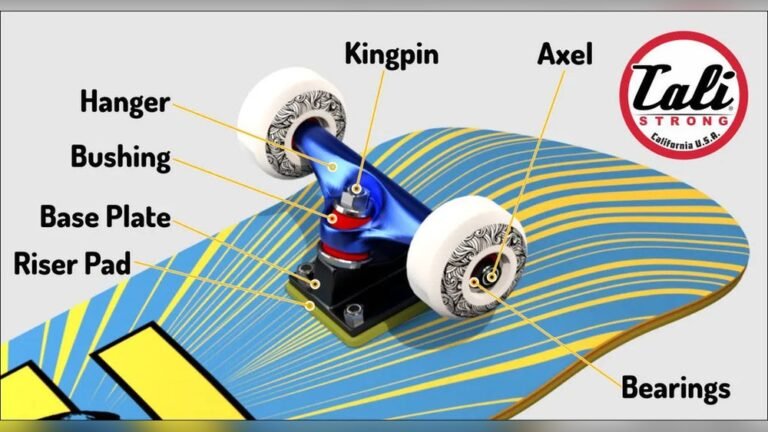
- Trucks for Cruising: Look for wider trucks (180mm or 10-inch hangers) with a medium to loose truck setup for carving and stability. Reverse Kingpin (RKP) trucks are standard for longboards.
- Wheels for Smoothness: Softer, larger wheels (70mm+ diameter, 78a-85a durometer) are essential for absorbing vibrations, rolling over cracks, and providing a comfortable, smooth ride.
- Bushings Impact Feel: The hardness and shape of truck bushings significantly affect how your board turns. Softer bushings allow for easier, more responsive carving, while harder bushings offer more stability at higher speeds.
- Bearings Affect Speed and Smoothness: Quality bearings, properly maintained, are vital for a smooth, fast roll. ABEC ratings are a general indicator, but bearing quality varies. Cleaning and lubrication are key.
- Consider Your Riding Style and Terrain: Think about where you’ll be cruising most. Smooth paths? Slightly rougher sidewalks? Hills? This will influence your component choices.

Credit: www.youtube.com
Understanding Longboard Anatomy For Cruising
Before diving into specific recommendations, it’s essential to understand the core components of a longboard and how they influence the cruising experience. Each part plays a vital role in how the board feels under your feet, how it handles, and its overall suitability for cruising.
A well-chosen combination of these elements will lead to a board that feels intuitive and enjoyable.
The Deck: Your Foundation For Flow
The deck is the heart of your longboard. Its shape, size, and construction dictate much of the ride. For cruising, the focus is on stability, comfort, and ease of use.
Deck Shapes Tailored For Cruising
Several deck shapes are particularly well-suited for cruising:
- Pintail: This classic shape features a wider nose and a narrower, pointed tail, resembling a surfboard. The wider nose offers stability and a comfortable standing platform, while the narrower tail allows for easy maneuverability and prevents wheel bite (when the wheel touches the deck during a turn). Pintails are excellent for relaxed cruising and commuting.
- Drop-Through: In this design, the truck mounting holes are drilled through the deck, lowering the board’s center of gravity. This significantly increases stability, making it ideal for higher speeds and pushing. The lower ride height also reduces the effort needed to push off.
- Drop Deck: Similar to drop-through, but the deck itself has a concave drop in the middle, further lowering the rider’s stance. This enhances stability and provides a secure feeling, especially for heavier riders or those tackling hills.
- Symmetrical (Twin-Tip): These decks are identical at both ends, offering versatility. They often feature a mild concave and sometimes a subtle kicktail, allowing for switch riding (riding in your opposite stance) and basic tricks if desired, without compromising the cruising feel.
Deck Size And Wheelbase: The Sweet Spot For Stability
Deck length and wheelbase (the distance between the truck mounting holes) are critical for cruising.
- Length: Cruising longboards typically range from 35 to 45 inches. Longer decks (38-44 inches) offer greater stability and a smoother ride, as they provide a larger platform and a longer wheelbase. Shorter decks can be more nimble but may feel less stable, especially for beginners or at higher speeds.
- Width: Deck width usually falls between 8.5 and 10 inches. A wider deck offers more foot space and stability, which is generally preferred for cruising.
- Wheelbase: A longer wheelbase (25-30 inches) contributes to stability and a smoother ride, making it ideal for cruising and commuting. Shorter wheelbases offer more agility but can make the ride feel more “twitchy.”
Deck Construction: Material Matters
Most longboard decks are made from maple wood, typically 7-ply. Some decks incorporate other materials like bamboo for added flex and a lighter weight, or fiberglass for durability and unique flex patterns. For pure cruising, a traditional 7-ply maple deck offers a good balance of stiffness, weight, and responsiveness.
A bit of flex can absorb vibrations, making the ride more comfortable on rougher surfaces.
Trucks: Steering Your Ride
Trucks are the T-shaped metal components that attach to the deck and house the wheels. For cruising, truck choice is vital for stability and turning.
Truck Type: Reverse Kingpin (rkp) Dominance
Longboards almost exclusively use Reverse Kingpin (RKP) trucks. Unlike traditional skateboard trucks, the kingpin (the bolt that holds the bushings) faces outwards. This design inherently offers more stability and a wider turning radius, making them perfect for carving and cruising.
Truck Width And Hanger Size
Truck width is measured by the hanger size (the part that holds the axle). For cruising, wider trucks are generally preferred.
- 180mm (10-inch): These are the most common and recommended truck size for most cruising longboards. They provide a stable base and allow for deep carves.
- 160mm (9-inch) or narrower: While sometimes found on smaller or more maneuverable setups, they offer less stability for pure cruising.
Bushings: The Key To Carving And Stability
Bushings are the urethane rings that cushion the pivot point of the truck. Their hardness (durometer) and shape significantly impact how the board turns.
- Durometer: Softer bushings (around 80a-85a) are ideal for cruising as they allow for easier, more responsive turns and carves with less effort. Harder bushings (90a+) offer more stability at higher speeds but require more force to turn.
- Shape: Cone bushings offer a smoother, more progressive turn, while barrel bushings provide a more stable feel. Many cruising setups use a combination, often a cone on the bottom and a barrel on top, to balance responsiveness and stability.
Wheels: Rolling Over Anything
Wheel size and hardness are paramount for a comfortable and smooth cruising experience.
Wheel Diameter: Size Matters For Smoothness
Wheel diameter is measured in millimeters (mm). Larger wheels roll over cracks, pebbles, and imperfections in the pavement more easily than smaller wheels.
- 70mm – 75mm: This range is considered ideal for cruising longboards. The larger diameter provides a smoother ride, maintains momentum better, and offers more grip.
- 65mm – 70mm: Still suitable for cruising, but you’ll feel imperfections in the pavement more.
- Under 65mm: Generally too small for comfortable cruising, better suited for trick-oriented setups.
Wheel Durometer: Softness For Comfort
Durometer measures the hardness of the urethane wheel. It’s typically rated on the ‘a’ scale.
- 78a – 85a: This is the sweet spot for cruising wheels. Softer wheels absorb vibrations from the road, providing a much smoother and quieter ride. They also offer more grip, which is beneficial for carving and stability.
- 86a – 90a: These are harder and will transmit more road vibration, leading to a less comfortable ride.
- Over 90a: These are very hard wheels, typically used for sliding or specific street skating applications, and are not recommended for cruising.
Wheel Shape And Contact Patch
The width of the wheel and its “contact patch” (the area that touches the ground) also influence grip and ride feel. Wider wheels with a larger contact patch generally offer more grip, which is beneficial for carving and stability.
Bearings: The Unsung Heroes Of The Roll
Bearings are small metal rings that fit inside the wheels, allowing them to spin freely on the truck’s axle. While not unique to cruising longboards, good bearings are essential for a smooth, fast, and enjoyable ride.
- ABEC Rating: ABEC (Annular Bearing Engineering Committee) ratings (3, 5, 7, 9) indicate the precision of the bearing. Higher ABEC ratings generally mean tighter tolerances and potentially higher speeds. However, for cruising, the quality of the materials and lubrication is often more important than a high ABEC rating.
- Maintenance: Keeping bearings clean and lubricated is crucial. Dirt and debris can significantly hinder their performance. Many longboarders opt for built-in bearings or speed rings, which help align the bearing and prevent excessive side-to-side movement.
Choosing Your Cruising Longboard: Key Considerations
With the foundational knowledge of longboard components in place, let’s discuss how to apply this to your personal needs. The “best” longboard is subjective and depends heavily on your individual preferences and intended use.
What Is Your Primary Riding Style?
While this article focuses on cruising, there are nuances within cruising itself:
- Commuting: If you plan to use your longboard to get from point A to point B, especially over longer distances, prioritize stability, ease of pushing, and a comfortable ride. Drop-through or drop decks with larger wheels are excellent choices.
- Carving and Dancing: If you enjoy making deep, flowing turns and perhaps some simple footwork on the board, a pintail or a symmetrical deck with a bit of flex and responsive trucks will be ideal.
- Downhill (Light): If you anticipate riding gentle slopes, stability is key. Drop-through or drop decks with wider trucks and slightly stiffer bushings will provide confidence at moderate speeds. (Note: This is distinct from aggressive downhill longboarding, which requires specialized setups).
Where Will You Be Riding?
The terrain you’ll encounter significantly impacts component choice:
- Smooth Pavement: You have more flexibility. You can opt for slightly harder wheels if you prefer a quicker roll, but softer wheels will always provide a more comfortable experience.
- Rougher Sidewalks/Cracked Pavement: Larger, softer wheels are non-negotiable. They will absorb vibrations and allow you to roll over imperfections without stopping.
- Hills: For any inclines, stability becomes paramount. Consider decks with a lower center of gravity (drop-through or drop decks) and trucks that are not overly loose. You might also want to invest in a longboard brake if you plan on significant downhill riding.
Your Physical Attributes: Height And Weight
While not as critical as for trick skateboards, your size can influence longboard choice:
- Height: Taller riders often benefit from longer decks (40+ inches) for a more comfortable standing platform and better balance. Shorter riders might find shorter decks (35-39 inches) more manageable.
- Weight: Heavier riders will benefit from stiffer decks and potentially slightly harder bushings to prevent “wheel bite” and maintain responsiveness. Lighter riders can get away with softer bushings and more flexible decks.
Budget Considerations
Longboards range widely in price. As a general guideline:
- Entry-Level ($100 – $200): These boards are great for beginners and casual cruising. They will likely use standard components that offer a decent ride but may lack the refinement or durability of higher-end setups. Many reputable brands offer good quality entry-level complete boards.
- Mid-Range ($200 – $350): This price point typically offers better quality components, more durable decks, higher-quality trucks and wheels, and smoother bearings. This is often the sweet spot for riders looking for a significant upgrade in performance and feel.
- High-End ($350+): These boards often feature premium materials, advanced construction techniques, and top-of-the-line components. They are for riders who are serious about their longboarding experience and want the best possible performance.
When choosing, remember that you can always upgrade components later. Starting with a solid deck and decent trucks is often a good strategy.

Credit: vandemlongboardshop.co.uk
Top Longboard Shapes And Setups For Cruising
Let’s get specific and look at popular longboard shapes and how they are typically set up for the best cruising experience. This section will provide concrete examples of what to look for.
The Classic Pintail: Timeless Cruising
The pintail remains a favorite for many cruisers due to its surf-inspired feel and ease of use.
- Deck: Typically 38-44 inches long and 8.5-9.5 inches wide. Features a pointed tail and a wider nose. Often has a mild concave for comfort. Some pintails offer a slight flex, which can absorb road vibrations.
- Example: A 40-inch pintail with a mellow concave and a 7-ply maple construction.
- Trucks: 180mm RKP trucks are standard. Bushings are usually medium-soft (around 85a-90a) to allow for smooth, deep carves without wheel bite.
- Wheels: Large, soft wheels (70mm+, 78a-83a durometer) are essential for soaking up bumps and providing a smooth roll.
- Best For: Relaxed cruising, commuting on smoother paths, surf-style carving.
The Stable Drop-through: Conquer Hills And Commutes
Drop-through decks offer superior stability, making them excellent for pushing, commuting, and riding moderate hills.
- Deck: Often symmetrical or directional, ranging from 36-42 inches. The key feature is the truck mounting holes that pass through the deck, lowering the ride height. They usually have a mild to moderate concave.
- Example: A 38-inch symmetrical drop-through deck with a medium concave.
- Trucks: 180mm RKP trucks are common. Due to the lower ride height, you might opt for slightly stiffer bushings (90a-93a) for increased stability, especially if you’re a heavier rider or tackling hills.
- Wheels: Again, larger, softer wheels (70mm+, 78a-83a) are recommended for a smooth ride and grip.
- Best For: Commuting, pushing long distances, riding gentle to moderate hills, stability at higher speeds.
The Versatile Cruiser/carver: All-rounder Appeal
These boards often blend elements of pintails and symmetrical decks, offering a balance of stability and maneuverability.
- Deck: Can vary greatly, but often around 34-38 inches. They might feature a directional shape with a subtle kicktail for occasional manuals or ollies, or be symmetrical for ambidextrous riding. Concave is usually mild.
- Example: A 36-inch directional cruiser with a slight kicktail and a comfortable standing platform.
- Trucks: 160mm or 180mm RKP trucks. Bushing hardness will depend on the desired turning feel, but medium-soft (85a-90a) is a good starting point.
- Wheels: 65mm-70mm wheels with a durometer of 78a-83a provide a good balance of smoothness and responsiveness.
- Best For: General cruising, carving, navigating urban environments, riders who want a bit of versatility.
The “old School” Pool/cruiser Board: Compact And Nimble
While not strictly “longboards” in the traditional sense, these smaller boards are incredibly popular for quick trips and urban carving. They offer a skate-like feel with enhanced cruising capabilities.
- Deck: Typically 28-33 inches long and 7.5-8.5 inches wide. They often have a kicktail and a more pronounced concave.
- Example: A 30-inch “penny board” style cruiser with a plastic deck.
- Trucks: Narrower trucks (often 8-inch or 5.0-inch hangers) are standard, designed to fit the smaller deck.
- Wheels: Softer, larger-than-average skateboard wheels (around 60mm-65mm, 78a-85a) are crucial for making these boards ride smoothly over rough surfaces.
- Best For: Quick errands, tight turns, urban agility, riders who prefer a more compact board.
Here’s a table summarizing common cruising longboard setups:
| Board Type | Typical Deck Length | Typical Deck Width | Recommended Trucks | Recommended Wheels (Diameter/Durometer) | Best For |
|---|---|---|---|---|---|
| Pintail | 38-44 inches | 8.5-9.5 inches | 180mm RKP | 70mm+ / 78a-83a | Relaxed cruising, surf-style carving |
| Drop-Through | 36-42 inches | 8.5-9.5 inches | 180mm RKP | 70mm+ / 78a-83a | Commuting, stability, hills |
| Cruiser/Carver | 34-38 inches | 8.5-9.5 inches | 160mm-180mm RKP | 65mm-70mm / 78a-83a | Versatile cruising, urban carving |
| Compact Cruiser | 28-33 inches | 7.5-8.5 inches | 8-inch Hanger RKP | 60mm-65mm / 78a-85a | Agility, quick trips, urban maneuverability |
Performance Tuning: Optimizing Your Cruising Experience
Once you have your longboard, you can fine-tune its performance to match your preferences. This is where the real magic happens, transforming a good board into a great one.
Adjusting Your Trucks: The Art Of The Carve
Truck adjustment is one of the easiest ways to alter your board’s feel.
- Tightening: Using a skate tool to tighten the kingpin nut will make your trucks stiffer, increasing stability but reducing turning ability. This is useful if your board feels too “wobbly” at speed.
- Loosening: Tightening the kingpin nut will make your trucks looser, allowing for easier and deeper carves. Be cautious not to loosen them too much, as this can lead to instability and wheel bite.
- Bushings: As mentioned, swapping out bushings is the most effective way to change your truck’s performance. Experimenting with different durometers and shapes (cone, barrel) can dramatically alter how your board carves. For example, if you find your board too stiff, try installing softer cone bushings. If it feels too unstable, try harder barrel bushings.
Wheel And Bearing Maintenance: Keeping The Roll Smooth
Well-maintained wheels and bearings are crucial for a consistently enjoyable ride.
- Cleaning Bearings: Over time, dirt and grime can get into your bearings, slowing them down and causing friction. You can clean them using isopropyl alcohol and a bearing cleaning tool, or by carefully removing them, soaking them in solvent, drying them, and reapplying lubricant.
- Lubrication: After cleaning, bearings need to be lubricated. Speed cream or a light skate lubricant is recommended. Avoid using too much, as it can attract dirt.
- Wheel Rotation: Periodically rotating your wheels can help ensure even wear, especially if you tend to lean more on one side during turns.
- Checking for Damage: Inspect your wheels for flat spots (caused by sliding or excessive braking) or chunking (pieces breaking off). Damaged wheels should be replaced.
Grip Tape: Your Connection To The Board
Grip tape is the sandpaper-like material applied to the top of the deck, providing traction for your feet.
- Standard Grip Tape: Most longboards come with standard black grip tape. It’s durable and effective for general cruising.
- Clear Grip Tape: Allows the graphics or wood grain of your deck to show