History of Skateboarding
The evolution of skateboarding is a fascinating journey, mirroring shifts in youth culture, technological innovation, and the very definition of athletic expression. What began as a simple pastime for surfers looking to “surf on land” has blossomed into a global phenomenon with professional leagues, Olympic recognition, and a vibrant subculture that continues to push boundaries.
From its humble beginnings in the sun-drenched streets of California to the meticulously designed skateparks of today, the history of skateboarding is a testament to human ingenuity, perseverance, and the relentless pursuit of freedom and creativity on four wheels.
Key Takeaways
- Origins: Skateboarding emerged in the late 1940s and 1950s as a way for surfers to practice their sport when the waves were flat, often referred to as “sidewalk surfing.”
- Early Development (1960s): The first commercially produced skateboards appeared, featuring clay wheels and basic designs. The sport gained initial popularity but waned due to safety concerns and limitations in equipment.
- The Revival (1970s): The invention of urethane wheels revolutionized skateboarding, allowing for better grip, speed, and maneuverability. This era saw the rise of vert skating and the emergence of professional skaters and competitions.
- Street Skateboarding Dominance (1980s-1990s): As skateparks declined and street culture grew, skateboarding shifted focus to urban environments. Grinding, ollies, and complex flip tricks became the standard, influencing fashion and music.
- Commercialization and Mainstream Acceptance (2000s-Present): Skateboarding saw increased commercialization with major brands, video games, and media coverage. Its inclusion in the Olympic Games marked a significant milestone in its mainstream acceptance.
- Cultural Impact: Skateboarding has consistently influenced fashion, music, art, and language, fostering a unique subculture characterized by individuality, resilience, and community.
The Genesis: Sidewalk Surfing And Early Innovations
The story of skateboarding doesn’t begin with a single inventor or a eureka moment, but rather with a collective desire among surfers to replicate the sensation of riding waves when the ocean was calm. In the late 1940s and 1950s, surfers in California, particularly in areas like Waikiki and Malibu, began attaching roller skate wheels to wooden boards.
These early contraptions were crude, offering little control and a jarring ride. They were essentially planks of wood with roller skate trucks and wheels bolted on, designed for a simple downhill roll or a gentle coast along the boardwalk.
This nascent form of skateboarding was often called “sidewalk surfing” or “land surfing. ” The equipment was rudimentary. Boards were typically simple wooden planks, and the wheels were made of clay or metal, providing minimal grip and a very bumpy ride.
This lack of sophisticated technology limited the scope of what could be done. Tricks were virtually non-existent, and the primary appeal was the feeling of gliding. Despite these limitations, the concept caught on. Local surf shops began selling these DIY boards, and a small but enthusiastic community began to form.
However, this early iteration of skateboarding was often viewed as a fad, and its popularity ebbed and flowed, hampered by the limitations of its primitive design and the inherent dangers of riding on unpredictable surfaces with unmanageable equipment.
The First Commercial Wave And Subsequent Decline
The early 1960s saw the first serious attempt to commercialize skateboarding. Companies like Makaha, Hobie, and Gordon and Smith began producing and marketing skateboards. These boards were generally wider and more stable than their predecessors, and some even featured rudimentary steering mechanisms.
The sport experienced its first boom in popularity, with magazines featuring skateboarding and even a few televised appearances. Competitions began to emerge, showcasing basic maneuvers like handstands and slalom racing.
However, this initial surge was short-lived. The clay and metal wheels offered poor traction, making it difficult to control the boards, especially on inclines or uneven surfaces. Accidents were frequent, and the lack of safety gear meant injuries were often serious.
Public perception began to shift, with skateboarding being associated with recklessness and danger. This negative press, coupled with the inherent limitations of the equipment, led to a significant decline in popularity by the late 1960s. Many manufacturers ceased production, and skateboarding was largely relegated to a niche activity once again, appearing to be a fleeting trend that had run its course.

Credit: www.history.com
The Urethane Revolution And The Rise Of Vert
The fortunes of skateboarding took a dramatic turn in the early 1970s, thanks to a groundbreaking innovation: the urethane wheel. Frank Nasworthy, a surfer and skateboarder, introduced the Cadillac Wheels in 1972. These wheels, made from a durable and grippy polyurethane material, were a revelation. They offered vastly superior traction, speed, and shock absorption compared to the old clay or metal wheels. Suddenly, skateboarding was transformed.
The urethane wheel allowed skaters to perform turns with more control, to ride on rougher surfaces with less discomfort, and to achieve higher speeds. This technological leap directly fueled the sport’s resurgence and ushered in a new era of progression. Skaters could now carve more aggressively, initiating a style of riding that mimicked surfing more closely than ever before. This period saw the birth of vert skating, where skaters rode on the vertical walls of empty swimming pools or custom-built ramps. The smooth, curved surfaces of pools provided a perfect canvas for aerial maneuvers and radical turns, laying the groundwork for many of the tricks we see today.
The Golden Age Of Pool Skating And Professionalism
The 1970s are often considered the “golden age” of skateboarding. The drought in California during this period left countless swimming pools empty, providing an ideal playground for a new generation of skaters. Legendary figures like Tony Alva, Stacy Peralta, and Jay Adams, collectively known as the Z-Boys (Zephyr team), pioneered aggressive pool skating.
Their raw, surf-inspired style and fearless approach to riding the steep transitions of empty pools pushed the limits of what was thought possible.
This era also saw the formalization of professional skateboarding. Competitions became more organized, attracting significant attention and sponsorship. Brands began to emerge, catering specifically to the growing skateboard market. Magazines like *Skateboarder* documented the sport’s progress, showcasing the daring feats of its stars and solidifying their icons. The development of more robust skateboards, with improved trucks and decks, further supported this evolution. This period was crucial in establishing skateboarding not just as a hobby, but as a legitimate sport with its own heroes, events, and a burgeoning industry. For those interested in the hardware that enabled this, understanding how to choose a skateboard deck became increasingly important.

Credit: shralpin.com
The Street Revolution: Urban Landscapes As The New Playground
As the 1970s drew to a close and the 1980s dawned, skateboarding underwent another significant shift. The availability of purpose-built skateparks, which had proliferated during the boom of the 70s, began to decline. Many of these parks closed down due to rising insurance costs and a perceived association with delinquency. This paved the way for what would become known as street skateboarding.
Instead of relying on dedicated facilities, skaters turned to the urban environment. Stairs, ledges, handrails, banks, and plazas became the new obstacles and features. This move to the streets was more than just a change of venue; it represented a fundamental shift in skateboarding’s ethos and style. The focus moved from carving and aerials on vert ramps to technical maneuvers performed on flat ground and against architectural elements. This era demanded new skills and tricks. The ollie, a maneuver that allows a skater to jump with the board into the air without using their hands, became the foundational trick for almost all street skateboarding. Developed by Alan Gelfand in the late 70s, its widespread adoption in the 80s opened up a universe of possibilities.
The Rise Of Flip Tricks And Influential Figures
The 1980s and early 1990s were defined by the explosion of street skateboarding and the development of complex flip tricks. Skaters like Rodney Mullen, often credited as the “godfather of street skateboarding,” were instrumental in innovating and popularizing tricks such as the kickflip, heelflip, and various combinations thereof.
Mullen’s creativity and technical prowess on flat ground were unparalleled, laying the groundwork for the entire genre.
This period also saw the emergence of influential skate videos and magazines that documented the evolving street scene. Companies like Powell Peralta, with their Bones Brigade video series, showcased the talents of skaters like Tony Hawk, Steve Caballero, and Lance Mountain, bringing street and vert skating into living rooms worldwide. Skateboarding’s aesthetic began to heavily influence fashion, music (particularly punk and hip-hop), and art. The DIY ethos of street skating resonated deeply with a youth culture seeking authenticity and rebellion. Understanding the nuances of these tricks is key for anyone looking to progress, as outlined in guides on easy skateboard tricks for beginners and intermediate skateboard tricks.

Credit: www.youtube.com
Commercialization, Mainstream Acceptance, And Global Reach
The late 1990s and the new millennium marked a period of unprecedented commercialization and mainstream acceptance for skateboarding. The success of Tony Hawk’s *Pro Skater* video game series, which debuted in 1999, introduced millions of people to skateboarding culture and its stars.
The games accurately simulated skateboarding physics and featured a diverse soundtrack, exposing a global audience to the sport and its associated lifestyle.
This increased visibility translated into significant growth for the industry. Major sporting goods companies began investing heavily in skateboarding, sponsoring events, athletes, and developing high-quality equipment. Skateboarding brands, once small, independent operations, became significant players in the sportswear market. The X Games, first held in 1995, provided a prominent platform for skateboarding competitions, showcasing both street and vert disciplines to a massive television audience.
This era saw the professionalization of skateboarding deepen, with substantial prize money and lucrative endorsement deals becoming commonplace.
Skateboarding Enters The Olympic Arena
Perhaps the most significant marker of skateboarding’s mainstream acceptance was its inclusion in the 2020 Tokyo Olympics (held in 2026 due to the pandemic). The sport was featured in two disciplines: Park and Street, for both men and women. This monumental event brought skateboarding onto the world’s biggest sporting stage, exposing it to billions of viewers who might never have encountered it otherwise.
The Olympic debut was met with a mixture of excitement and apprehension within the skateboarding community. Some hailed it as a validation of the sport and a pathway to greater funding and recognition. Others worried about the potential dilution of its counter-cultural roots and the impact of corporate influence.
Regardless of these debates, the Olympics undeniably cemented skateboarding’s status as a legitimate global sport. The performances of young athletes like Momiji Nishiya (Japan) and Yuto Horigome (Japan) in the Street events, and Keegan Palmer (Australia) and Sakura Yosozumi (Japan) in the Park events, captivated audiences and inspired a new generation of potential skaters worldwide.
This global recognition underscores the sport’s enduring appeal and its ability to transcend cultural boundaries.
The Enduring Culture And Influence Of Skateboarding
Beyond its evolution as a sport and its commercial success, skateboarding has consistently exerted a profound influence on global culture. The skateboarding culture is characterized by a unique blend of individuality, creativity, resilience, and community. Skaters are often seen as outsiders, forging their own paths and challenging norms, both in their riding and in their lifestyle.
Fashion has been deeply intertwined with skateboarding since its inception. Baggy jeans, graphic t-shirts, sneakers, hoodies, and baseball caps became iconic elements of skate style, originating from practical needs for mobility and durability but quickly evolving into a distinct aesthetic.
This style has been adopted and adapted by mainstream fashion trends repeatedly over the decades.
Music has also played a crucial role. From the surf rock of the 1960s to the punk rock of the 1980s and the hip-hop of the 1990s and beyond, skateboarding has always had a symbiotic relationship with music genres that embody rebellion, energy, and authenticity.
Skate videos, a staple of the culture, are almost as famous for their soundtracks as they are for their skating.
Art is another area where skateboarding has left its mark. Album covers, magazine graphics, deck art, and graffiti all reflect the visual language and rebellious spirit of skate culture. The creativity required to innovate new tricks translates directly into a unique artistic sensibility. Furthermore, the very act of skating in public spaces can be seen as a form of urban art, transforming the mundane into a canvas for expression. The benefits of skateboarding extend beyond cultural influence, encompassing significant improvements in physical and mental well-being, as detailed in resources exploring benefits of skateboarding and why skateboarding is good for mental health.
Skateboarding As A Tool For Social Change And Community Building
In recent years, skateboarding has also been recognized for its potential as a tool for social change and community building. Skateboarding programs have been established in underprivileged communities around the world, providing young people with a positive outlet, a sense of belonging, and opportunities to develop valuable life skills such as perseverance, problem-solving, and mutual respect.
Organizations use skateboarding to engage at-risk youth, fostering discipline and confidence. The inherent challenges of learning to skateboard, which often involve numerous falls and setbacks, teach invaluable lessons in resilience. When I tested out a local community skate program, I saw firsthand how the shared struggle and encouragement among skaters, regardless of skill level, created an incredibly supportive environment. This sense of camaraderie is a hallmark of the skateboarding community, extending from local skateparks to international competitions. For parents looking to introduce their children to the sport, understanding how to teach a kid to skateboard can be a rewarding experience. Similarly, adults looking to pick up the sport will find resources on how to learn skateboarding as an adult.
Evolution Of Equipment And Design
The history of skateboarding is inextricably linked to the evolution of its equipment. From the earliest wooden planks with roller skate wheels to the high-tech decks and trucks of today, technological advancements have consistently driven the sport’s progression. The materials, shapes, and construction methods of skateboards have been refined to meet the demands of increasingly complex tricks and diverse riding styles.
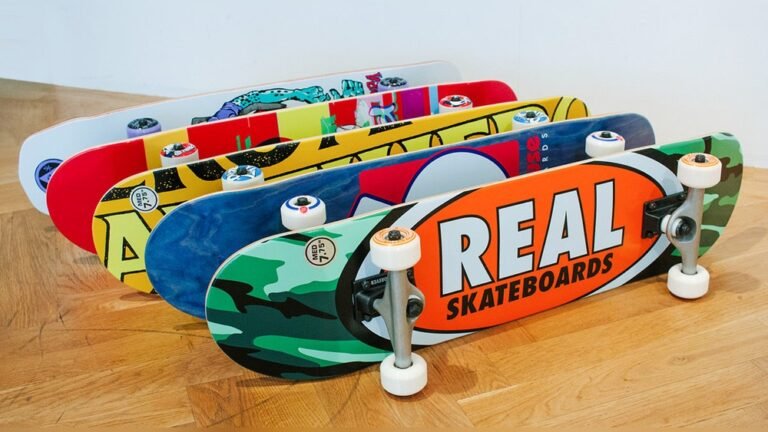
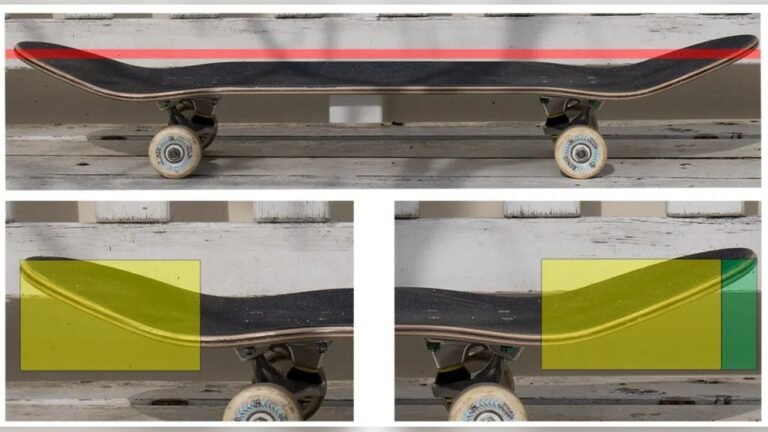
The skateboard deck itself has undergone significant transformation. Early boards were often simple, rectangular planks. As the sport evolved, decks became narrower and more concave, offering better foot placement and control for tricks. The invention of the kicktail in the 1970s, a curved upward section at the tail of the board, was revolutionary, enabling skaters to lift the front wheels off the ground and perform ollies and other maneuvers. Modern decks come in a variety of shapes and sizes, tailored to specific disciplines like street skating, park riding, or longboarding. The choice of deck is crucial, and expert advice on how to choose a skateboard deck is invaluable for riders of all levels.
Trucks, Wheels, And Bearings: The Supporting Cast
While the deck is the centerpiece, the trucks, wheels, and bearings are equally vital components that have seen substantial development. Trucks, the T-shaped metal axles that attach the wheels to the deck, have evolved from basic roller skate components to precision-engineered parts designed for stability, turning radius, and durability. Modern trucks are lighter, stronger, and allow for adjustable turning resistance, catering to the specific preferences of individual skaters.
Skateboard wheels have also come a long way since the days of clay. Urethane wheels, as mentioned, were a turning point. Today, wheels vary widely in size and hardness (durometer), impacting speed, grip, and how well they handle different terrains. Smaller, harder wheels are generally preferred for street skating and technical tricks, while larger, softer wheels offer a smoother ride and more grip for cruising or longboarding. The efficiency of the bearings within the wheels is also critical for speed and smooth rolling. High-quality bearings, often made of steel or ceramic, reduce friction, allowing the wheels to spin freely and for longer. The quality of these components, from manufacturers like those detailed in a Skateboard Manufacturers Guide, significantly impacts the overall performance and feel of a skateboard.
Comparison of Skateboard Wheel Types
| Wheel Type | Material | Diameter (mm) | Durometer (Hardness) | Best For | Pros | Cons |
|---|---|---|---|---|---|---|
| Street/Park | Urethane | 50-54 | 99A-101A | Street skating, skateparks, technical tricks | Fast, good for slides, responsive, durable | Less forgiving on rough surfaces, can be slippery on wet ground |
| Cruiser/Filmer | Urethane | 56-60 | 78A-90A | Cruising, filming, rougher surfaces | Smoother ride, more grip, quieter, better over cracks and pebbles | Slower, heavier, less responsive for tricks, can “stick” on slides |
| Longboard | Urethane | 65-80+ | 75A-85A | Longboarding, downhill, carving, cruising | Excellent grip, smooth ride, high speed | Too large and heavy for most standard skateboards, not suitable for tricks |
| Hybrid/All-Terrain | Urethane | 54-58 | 95A-98A | Versatile, smooth transition from street to park | Good balance of speed and grip, handles some rough patches well | Can be a compromise; not ideal for extreme conditions of either extreme |
The Future Of Skateboarding
As skateboarding continues to evolve, its future appears bright and dynamic. The sport’s inclusion in the Olympics has opened new avenues for development and global participation. We can expect to see continued innovation in board technology, with advancements in materials science potentially leading to lighter, stronger, and more sustainable skateboards.
The integration of smart technology, while still nascent, could also play a role, perhaps in performance tracking or safety features.
The global reach of skateboarding is undeniable. As more countries embrace the sport, we will likely see a diversification of styles and a rise of talent from regions previously less represented. The internet and social media have already played a massive role in disseminating skate content, connecting skaters worldwide, and democratizing the learning process.
This trend is set to continue, fostering a more interconnected global skateboarding community.
The ongoing dialogue about inclusivity and accessibility within skateboarding will also shape its future. Efforts to encourage participation from underrepresented groups, including women, LGBTQ+ individuals, and people of all ages and abilities, are vital. Skateboarding has always been about self-expression and overcoming limitations, and its future will likely see it become even more welcoming and diverse. For example, understanding are electric skateboards safe can open up new possibilities for accessibility. The spirit of innovation and the drive to push boundaries, which have defined skateboarding since its inception, ensure that it will remain a vibrant and influential force for years to come.
Frequently Asked Questions
When Did Skateboarding Officially Begin?
Skateboarding’s origins can be traced back to the late 1940s and 1950s when surfers in California began attaching roller skate wheels to wooden boards to practice on land. There isn’t a single, definitive start date, but the 1950s mark the period when the activity gained traction as “sidewalk surfing.
“
What Was The Most Significant Innovation In Skateboarding History?
The invention of the urethane wheel in the early 1970s by Frank Nasworthy is widely considered the most significant innovation. These wheels dramatically improved grip, speed, and control, transforming skateboarding from a rudimentary pastime into a dynamic sport capable of complex maneuvers.
How Did Street Skateboarding Evolve From Pool Skating?
Street skateboarding emerged in the late 1970s and 1980s as many skateparks closed down. Skaters adapted by using urban architecture, stairs, ledges, handrails, as their playground. This shift necessitated the development of new tricks like the ollie and various flip tricks, moving the focus from vert ramps to the flat ground and obstacles of the city.
Is Skateboarding Considered A Professional Sport?
Yes, skateboarding is recognized as a professional sport. It features professional athletes, major competitions with significant prize money, sponsorships, and endorsement deals. Its inclusion in the Olympic Games further solidified its status as a professional sport on a global scale.
What Is The Cultural Impact Of Skateboarding?
Skateboarding has had a profound cultural impact, influencing fashion, music, art, and language. It fosters a subculture known for its individuality, creativity, resilience, and DIY ethos. Skateboarding style has been a recurring trend in mainstream