Are Skate Helmets Safe for Biking
The adrenaline rush of a bike ride, whether it’s a leisurely cruise through the park or a thrilling descent down a mountain trail, is undeniable. However, this exhilaration comes with inherent risks, and protecting your head is paramount. Many recreational users, especially those transitioning from other sports, might wonder if the gear they already own for one activity can serve a dual purpose. Specifically, the question arises: are skate helmets safe for biking? While both activities involve helmets designed for head protection, their specific safety standards and designs differ significantly, making a direct substitution potentially unsafe.
Understanding the nuances between a skate helmet and a bicycle helmet is crucial for making informed decisions about your safety. Skate helmets are engineered to protect against different types of impacts than bicycle helmets. This fundamental difference stems from the typical scenarios and speeds involved in each sport.
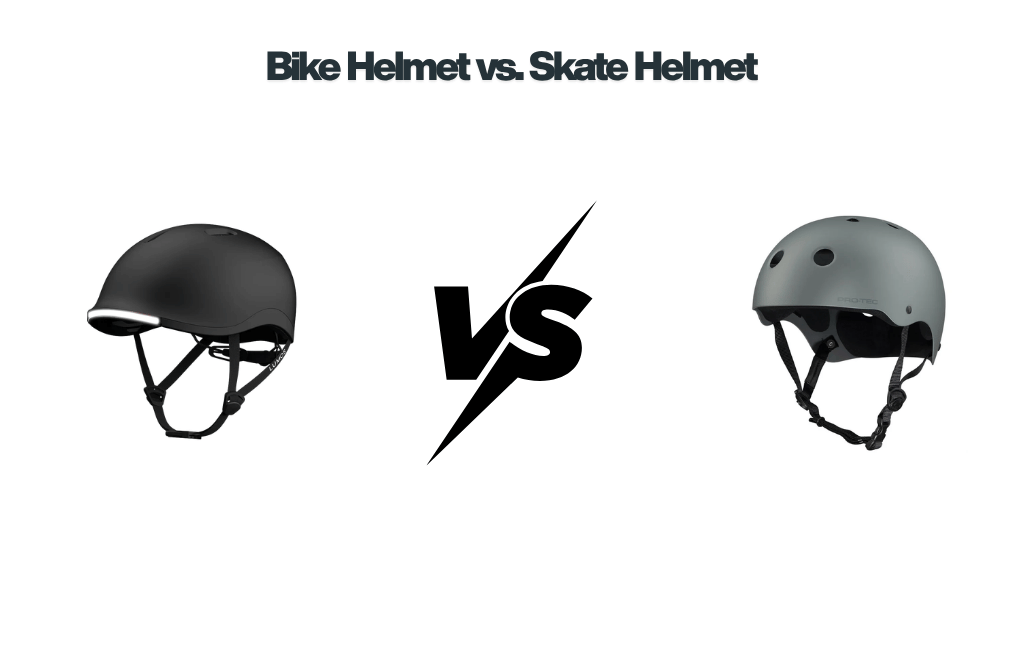
A bicycle helmet is designed to withstand a single, high-impact collision, common in falls from a bike, while a skate helmet is built to handle multiple, lower-impact bumps and scrapes characteristic of skateboarding. This article will explore the technical specifications, safety certifications, and real-world implications of using skate helmets for cycling, providing a comprehensive guide to ensure you’re adequately protected on every ride.
Key Takeaways
- Different Impact Types: Skate helmets are designed for multiple low-impact falls and scrapes, while bike helmets are engineered for single, high-impact collisions.
- Certification Matters: Bicycle helmets must meet specific CPSC (Consumer Product Safety Commission) standards in the US, which skate helmets typically do not for cycling use.
- Coverage Differences: Bike helmets often offer more coverage at the back and sides of the head, crucial for cycling falls.
- Ventilation and Weight: Bike helmets are generally more ventilated and lighter, designed for sustained activity and heat dissipation.
- Not a Safe Substitute: Using a skate helmet for biking significantly increases the risk of serious head injury because it’s not designed for the types of impacts common in cycling.
- Always Use Certified Gear: Always wear a helmet certified for the specific activity you are participating in.
Understanding Helmet Design And Purpose
The primary function of any helmet is to mitigate the forces transmitted to the head during an impact, thereby reducing the risk of traumatic brain injury. However, the way these forces are managed, and the types of impacts anticipated, vary significantly between skateboarding and cycling.
This divergence in design philosophy is rooted in the fundamental differences between the two activities.
The Physics Of Falls: Skateboarding Vs. Biking
Skateboarding often involves falls that are closer to the ground, with impacts that can be varied. A skater might fall forward, backward, or sideways, often scraping along surfaces. These impacts are typically lower in velocity but can be repeated. The design of a skate helmet, often a hard-shell construction, is intended to absorb and distribute the energy from these multiple, lower-force impacts.
They are built to withstand glancing blows and abrasions, offering a durable shell that can take repeated minor hits without significant structural compromise.
Biking, on the other hand, can involve falls at much higher speeds, especially in road cycling, mountain biking, or downhill scenarios. A cyclist’s fall can result in a sudden, high-energy impact with the ground or an obstacle. The forces involved in these collisions are often far greater than those typically encountered in skateboarding. Therefore, bicycle helmets are engineered to absorb a single, significant impact. They are designed with specific energy-absorbing liners, usually made of expanded polystyrene (EPS) foam, which crushes upon impact to dissipate the energy before it reaches the skull. Once this foam has been compressed, its protective capabilities are compromised, and the helmet must be replaced, even if it appears undamaged.
Shell Construction And Impact Absorption
The materials and construction of skate and bike helmets reflect these different impact profiles.
- Skate Helmets: Typically feature a thick, hard outer shell, often made of ABS plastic. This shell is durable and excellent at resisting punctures and abrasions. Beneath the shell, there might be a thinner layer of foam, but its primary role is often comfort rather than significant impact absorption for high-energy events. Some skate helmets might incorporate multi-impact foam, but this is generally designed for lower-energy, repeated impacts, not the singular, high-energy crashes common in cycling.
- Bicycle Helmets: Usually have a thin, polycarbonate outer shell that is fused to the EPS foam liner. This construction allows the shell to act as a “skin” that helps distribute the impact force over a wider area of the foam liner. The EPS foam is the critical component, designed to deform and crush upon impact, absorbing the vast majority of the energy. This is a one-time protective event for the foam. Advanced bicycle helmets may also include technologies like MIPS (Multi-directional Impact Protection System) to reduce rotational forces, which are particularly dangerous in cycling crashes.
Coverage Area And Fit
The areas of the head that each helmet is designed to protect also differ.
- Skate Helmets: Often provide a lower profile and may cover more of the forehead and temples, offering protection against scrapes and direct impacts from the front and sides. However, the rear coverage can sometimes be less extensive than on a dedicated cycling helmet.
- Bicycle Helmets: Modern bike helmets, especially those for mountain biking, often feature extended rear coverage to protect the occipital bone at the base of the skull, a common impact point in cycling falls. They are also designed to sit higher on the head, allowing for better ventilation and visibility. The fit of a bike helmet is also crucial, often secured with a chin strap and a retention system at the back to ensure it stays in place during a crash.
Credit: ridelumos.com
Safety Standards And Certifications: The Crucial Difference
Perhaps the most critical distinction between skate helmets and bicycle helmets lies in their adherence to specific safety standards. These certifications are not arbitrary; they are the result of rigorous testing designed to ensure the helmets provide adequate protection for the intended activity.
Bicycle Helmet Standards
In the United States, all bicycle helmets must meet the Consumer Product Safety Commission (CPSC) standard. This standard mandates specific performance requirements, including impact attenuation tests. These tests involve dropping a helmet onto various anvils from a set height to simulate a crash, measuring the force transmitted to a headform. The CPSC standard ensures that a bicycle helmet can absorb enough energy to protect the wearer from serious head injury in a typical cycling accident. Helmets that meet this standard will have a CPSC sticker inside, often accompanied by the manufacturer’s details and date of manufacture.
Other countries have their own equivalent standards, such as:
- CE EN 1078 in Europe
- AS/NZS 2063 in Australia and New Zealand
These standards are tailored to the types of impacts and speeds associated with cycling. They are designed to test a helmet’s ability to withstand a single, significant impact.
Skate Helmet Standards
Skate helmets, while offering protection, are typically certified to different standards that reflect their intended use. In the US, they might be certified to ASTM F1492 or CPSC standards. However, it’s crucial to note that the ASTM F1492 standard, while comprehensive for skateboarding, might not adequately cover the higher-energy impacts associated with cycling. Some skate helmets *are* dual-certified, meaning they meet both ASTM F1492 and CPSC standards. If a skate helmet is dual-certified, it *could* be considered for cycling. However, many skate helmets are *only* certified for skateboarding.
The key issue is that the CPSC certification for bicycle helmets is specifically designed to test for the types of impacts and forces common in cycling accidents. A helmet certified only for skateboarding, even if it passes ASTM F1492, may not have undergone the same rigorous testing for the higher-energy impacts that can occur when riding a bicycle.
The Importance Of The Cpsc Sticker
When purchasing a helmet for cycling, always look for the CPSC certification sticker inside the helmet. This sticker is your assurance that the helmet has been tested and meets the safety requirements for bicycle use. Without this sticker, a helmet, even if it looks protective, has not been proven to provide adequate safety for cycling.

Credit: www.consumerreports.org
Why Skate Helmets Are Not Ideal For Biking
Given the differences in design and certification, it becomes clear why using a skate helmet for biking is generally not recommended. The risks are significant and stem directly from the mismatch between the helmet’s protective capabilities and the demands of cycling.
Inadequate Impact Absorption For Cycling Speeds
As discussed, bicycle helmets are designed to absorb a single, high-energy impact. Skate helmets, even those with hard shells, are often not engineered to dissipate the same level of force. A fall from a bicycle, especially at moderate to high speeds, can generate impact forces that far exceed what a skate helmet is designed to handle.
The EPS foam in a bike helmet is specifically engineered to crush and absorb this energy. A skate helmet’s liner, if present, might not be dense or thick enough, or it might be designed for multiple impacts rather than a single, catastrophic one.
This means that in a cycling crash, a skate helmet might transfer more damaging force to the rider’s head and brain.
Limited Coverage For Cycling Falls
While skate helmets can offer good frontal and side protection, many lack the extended rear coverage that is critical for cyclists. Falls from a bicycle can frequently result in impacts to the back of the head. A skate helmet that doesn’t adequately cover this area leaves a significant portion of the skull vulnerable. Furthermore, the way a bike helmet sits on the head is often designed to optimize protection during a fall that involves a forward or backward rotation, which is common when a bike’s wheel hits an obstacle or skids.
Ventilation And Comfort For Extended Rides
Cycling, particularly road cycling or mountain biking, often involves sustained periods of exertion. This generates significant body heat. Bicycle helmets are designed with extensive ventilation channels to allow air to flow over the scalp, helping to regulate body temperature and prevent overheating. Skate helmets, with their typically solid shells, offer far less ventilation. Riding in a hot environment with an inadequately ventilated helmet can lead to discomfort, reduced focus, and potentially heat-related illness, indirectly impacting safety.
Additionally, skate helmets can sometimes be heavier than their cycling counterparts, which, over longer rides, can contribute to discomfort and neck strain.
Rotational Impact Protection
Modern bicycle helmets often incorporate technologies like MIPS or similar rotational impact systems. These systems are designed to allow the helmet’s outer shell to rotate slightly independently of the inner liner during an angled impact. This reduces the rotational forces transmitted to the brain, which are a major cause of concussions and more severe traumatic brain injuries. Standard skate helmets rarely include such advanced rotational impact protection, as the typical impacts in skateboarding are less likely to generate these dangerous forces.

Credit: www.twowheelingtots.com
Real-world Scenarios And Examples
To illustrate the differences, let’s consider a couple of common scenarios:
Scenario 1: A Road Cyclist Falls At 15 Mph
A road cyclist hits a patch of gravel and loses control, falling onto the asphalt. The impact is sudden and forceful. A properly certified bicycle helmet with EPS foam will absorb the primary impact energy by crushing. The polycarbonate shell helps distribute the force. If the impact is angled, a MIPS liner might further reduce rotational forces. If this same cyclist were wearing only a skate helmet (not CPSC certified for biking), the impact might be too great for the helmet’s liner to absorb effectively. The force transmitted to the skull could be significantly higher, increasing the risk of skull fracture or brain injury. The lack of extended rear coverage might also leave the back of the head unprotected if the fall resulted in an impact there.
Scenario 2: A Skateboarder Falls While Learning A Trick
A skateboarder attempts a new trick and falls backward, landing on their tailbone and then their head. The impact is with the ground, and they might slide a short distance. The skate helmet, designed for this type of fall, has a durable shell that resists abrasion and a liner that can handle the moderate impact. If the skater slides, the hard shell protects against road rash. If they were to wear a bicycle helmet for this, it might be too light and not offer the same abrasion resistance. More importantly, the bicycle helmet’s EPS foam is designed for a single, high-energy impact, and using it for multiple lower-energy impacts common in skateboarding could degrade its protective qualities over time, leaving it less effective for a future, more serious fall.
The “dual-certified” Helmet Caveat
Some helmets are marketed as “dual-certified,” meaning they meet standards for both skateboarding (ASTM F1492) and cycling (CPSC). These helmets can be a viable option if you participate in both activities. However, it’s essential to verify the certifications. A helmet that is CPSC certified *for cycling* is designed with biking in mind.
If a helmet is only ASTM F1492 certified, it’s generally not recommended for cycling. Always check for the specific certification stickers.
Choosing The Right Helmet For Your Activity
The principle of “right tool for the right job” is paramount when it comes to safety gear. While the desire to simplify gear or save money might lead some to consider using a skate helmet for biking, the potential consequences far outweigh any perceived benefits.
Prioritizing Bicycle Helmet Standards
For any form of cycling, be it road riding, mountain biking, commuting, or casual cruising, a helmet that meets the CPSC (or equivalent international standard) is non-negotiable. These helmets are specifically engineered and tested to protect against the unique risks associated with cycling.
When selecting a bicycle helmet, consider:
- Fit: The helmet should fit snugly and comfortably, with no excessive movement. Use the retention system to adjust the fit around your head. It should sit level on your head, about two finger-widths above your eyebrows.
- Coverage: Ensure adequate coverage, particularly at the back and sides of your head. Mountain bike helmets often offer more extended coverage.
- Ventilation: For warmer climates or strenuous riding, choose a helmet with ample vents.
- Visibility: Some helmets come with integrated lights or are available in bright colors to enhance visibility to other road users.
- Additional Features: Consider helmets with MIPS or similar technologies for enhanced rotational impact protection.
When Skate Helmets Are Appropriate
Skate helmets are excellent for their intended purpose: skateboarding, rollerblading, scootering, and BMX biking where impacts are typically lower speed and may involve multiple hits or scrapes. If you are primarily engaged in these activities, a certified skate helmet is the appropriate choice. The robust shell offers great durability against the rigors of street skating and park riding. Understanding the history of skateboarding and its culture reveals a strong emphasis on protective gear that can withstand the unique challenges of the sport.
A Note On Electric Skateboards
For electric skateboards, the speeds can often be higher than traditional skateboarding, introducing a new set of risks. While skate helmets can offer some protection, the increased speeds and potential for falls mean that a CPSC-certified bicycle helmet might be a safer choice for electric skateboarders, especially at higher speeds. As discussed in Are Electric Skateboards Safe? What Every Rider Should Know, safety gear is critical for this emerging sport.
Helmets: A Comparative Overview
To summarize the key differences, let’s look at a comparison table.
| Feature | Skate Helmet (Standard) | Bicycle Helmet (CPSC Certified) |
|---|---|---|
| Primary Intended Use | Skateboarding, Scootering, Rollerblading, BMX | Cycling (Road, Mountain, Commuting) |
| Typical Impact Type | Multiple, lower-energy impacts, scrapes, bumps | Single, high-energy impact |
| Shell Construction | Thick, hard shell (e.g., ABS plastic) | Thin polycarbonate shell fused to EPS foam |
| Impact Absorption | Relies on shell durability and limited foam; may offer multi-impact protection for low energy | Primarily EPS foam designed to crush and absorb single high-energy impact |
| Safety Certification (US) | ASTM F1492 (for skateboarding) | CPSC (Consumer Product Safety Commission) |
| Coverage | Often good front/side; rear coverage can vary | Generally extended rear coverage; designed for cycling fall dynamics |
| Ventilation | Typically minimal | Extensive vents for airflow |
| Weight | Can be heavier | Generally lighter |
| Rotational Impact Protection | Rarely included | Often included (e.g., MIPS) |
The Experience Of Wearing Different Helmets
In my experience testing various helmets for different sports, the difference in feel and performance is noticeable. A dedicated bike helmet feels lighter and breathes much better, which is crucial on longer rides. The fit systems on bike helmets are also generally more refined, allowing for a more secure and personalized fit. Skate helmets, while feeling robust and protective for their intended use, can feel cumbersome and hot for cycling. The comfort and ventilation of a bike helmet directly contribute to the rider’s ability to focus on the road or trail, which is a vital aspect of safety. When I first started learning to skateboard, I tried using an old bike helmet, and it was incredibly hot and uncomfortable, making practice sessions shorter and less enjoyable. Conversely, using a skate helmet for a casual bike ride might be acceptable for very low speeds on a smooth path, but it’s a compromise I wouldn’t make if there was any risk of a significant fall.
How To Ensure You’re Using The Right Helmet
Making the correct choice about head protection can seem simple, but understanding the details is key. Here’s a straightforward approach:
- Identify Your Activity: Are you primarily skateboarding, cycling, or doing another activity?
- Check the Label: Look inside the helmet for the safety certification sticker. For cycling, this must be CPSC (USA), CE EN 1078 (Europe), or AS/NZS 2063 (Australia/New Zealand). For skateboarding, ASTM F1492 is standard.
- Verify Dual Certification: If a helmet is advertised as dual-certified, confirm that it explicitly states compliance with the CPSC standard for bicycle use.
- Prioritize Fit and Comfort: Regardless of certification, a helmet that doesn’t fit well or is uncomfortable is less likely to be worn consistently. Ensure a snug, stable fit.
- Consider the Specific Type of Cycling: Mountain biking might benefit from helmets with more coverage and features like visors, while road cycling prioritizes aerodynamics and ventilation. Commuter helmets often blend features from both.
The Dangers Of Using Non-certified Gear
Using gear that isn’t certified for the specific activity you’re engaged in is a form of risk-taking that can have severe consequences. While a skate helmet might offer *some* protection in a cycling fall, it’s not the *optimal* protection designed for that scenario. The forces involved can be unpredictable, and having a helmet specifically engineered and tested for cycling provides the best possible chance of mitigating serious injury. The benefits of skateboarding are numerous, but safety should always be the top priority, and that extends to using the correct gear for each discipline.
Making Informed Choices
When you’re looking at helmets, whether you’re buying your first or replacing an old one, take a moment to read the labels and understand what you’re purchasing. Websites like the CPSC’s official site offer detailed information on helmet safety standards. For parents teaching children to skateboard or ride bikes, as outlined in guides like How to Teach a Kid to Skateboard: Easy Steps for Beginners and general cycling safety resources, emphasizing the correct helmet for each activity is fundamental.
Frequently Asked Questions
Are Skate Helmets Safe For Casual Bike Rides At Very Low Speeds?
While a skate helmet might offer some protection in a very low-speed, minor fall during a casual bike ride, it is not recommended. Bicycle helmets are specifically designed and tested to meet CPSC standards for the types of impacts common in cycling, which can occur even at low speeds. Using a non-CPSC certified helmet means you are not guaranteed the same level of protection against potential head injuries.
Can I Use My Old Skateboard Helmet For A New Bike If It Has A Cpsc Sticker?
If your skateboard helmet is dual-certified and explicitly carries a CPSC sticker for bicycle use, then it should meet the safety requirements for cycling. However, many skate helmets are only certified for skateboarding (ASTM F1492). Always double-check the specific certifications. If it only has the ASTM F1492 sticker, it’s not recommended for cycling.
What Is The Main Difference In Protection Between Skate And Bike Helmets?
The primary difference lies in the type of impact they are designed to withstand. Bike helmets are engineered for a single, high-energy impact, using EPS foam that crushes to absorb the force. Skate helmets are typically designed for multiple, lower-energy impacts and scrapes, often relying more on a durable hard