
The rhythmic clatter of urethane wheels on concrete, the scrape of a board against a ledge, the triumphant cheer after landing a trick—these are the sounds that define skateboarding. Beyond the athletic prowess and creative expression, skateboarding is deeply intertwined with its environment. For decades, skaters have transformed urban landscapes into their personal playgrounds, seeking out and shaping unique spots that become legendary within the culture. These aren’t just places to skate; they are canvases for innovation, stages for iconic moments, and touchstones of skateboarding history.
From the smooth plazas of Europe to the gritty stair sets of America, certain locations have transcended their original purpose to become synonymous with skateboarding. They represent a unique blend of accessibility, challenge, and aesthetic appeal that resonates with skaters worldwide. Understanding the history of these iconic skate spots is to understand the evolution of skateboarding itself, tracing its journey from underground subculture to global phenomenon.
Key Takeaways
-
- Iconic skate spots are born from a skater’s ability to see potential in everyday urban architecture.
- Many legendary spots emerged organically, discovered and popularized by local skaters before gaining wider recognition.
- The evolution of skateboarding has influenced the design and popularity of certain types of spots, such as plazas and skateparks.
- Filmmakers and photographers have played a crucial role in immortalizing skate spots, bringing them to a global audience.
- The preservation and accessibility of these spots are ongoing challenges for the skateboarding community.
- Modern skatepark design often draws inspiration from the natural street obstacles that defined earlier eras.
- Many famous spots are defined by measurable details such as stair count, ledge geometry, run-up space, and landing quality, which determine whether a trick is realistically possible.

Credit: www.active-traveller.com
The Genesis Of Urban Skateboarding: From Streets To Spots
Before the advent of dedicated skateparks, the streets were the only arena for skateboarders. Early skaters, often with rudimentary equipment, would seek out any smooth, flat surface or gentle slope to ride on. This era was characterized by improvisation and a raw engagement with the urban environment. As skateboarding evolved, so did the skaters’ ability to perceive and utilize architectural features for tricks. This marked the true birth of spot hunting.
Early Innovations And Functional Aesthetics
In the 1970s and early 1980s, skate culture was burgeoning. Skaters began to notice the potential in architectural elements that were never intended for recreational use. Stair sets, with their inherent challenge and visual impact, became early focal points. The smooth, often polished surfaces of public plazas offered vast expanses for cruising and trick execution. Banks, ledges, and even drainage ditches were reimagined as skateable terrain. This period saw the development of basic street skating techniques, driven by the limitations and opportunities presented by the urban landscape. The functional aesthetic of these spots, where form followed the possibility of a trick, became a defining characteristic of street skateboarding.
Not every attractive spot is practical: skaters also evaluate waxability, speed maintenance, traffic flow, security, and whether the surface will actually roll smooth enough to commit to the trick.
The Rise Of The “spot”
The concept of a “spot” began to solidify as certain locations gained notoriety within local skate communities. These were places where skaters would congregate, push their limits, and develop new tricks. The DNA of a skate spot often includes:
-
- Smooth surfaces: Crucial for rolling and grinding.
- Varied obstacles: Ledges, stairs, rails, banks, and gaps.
- Accessibility: Easy to get to and relatively safe.
- Aesthetic appeal: Visually interesting and inspiring.
- Functional layout: Enough run-up, roll-away space, and landing area to make the obstacle skateable in real-world conditions.
These elements combined to create environments that fostered creativity and camaraderie. Many of these early spots were not purpose-built but were discovered through exploration, becoming legendary through word-of-mouth and the shared experiences of skaters.

Credit: fillow.net
Iconic Plazas: The Concrete Cathedrals Of Skateboarding
Public plazas, designed for pedestrian flow and urban aesthetics, inadvertently became some of the most fertile grounds for skateboarding. Their smooth concrete expanses, coupled with architectural features like ledges, stairs, and benches, provided an ideal canvas for skaters to express their creativity.
These plazas often became hubs for entire skate scenes, fostering a sense of community and pushing the boundaries of what was possible on a skateboard.
Love Park, Philadelphia: The Mecca Of Street Skating
Perhaps no plaza is as synonymous with the golden age of street skateboarding as Love Park in Philadelphia. Originally designed by Edmund Bacon and built in the 1960s, its smooth granite ledges, iconic fountain, and surrounding stairs were a dream for skaters. From the late 1980s through the early 2000s, Love Park was a pilgrimage site for skaters worldwide. Professional skateboarders flocked to its pristine surfaces, filming video parts that would define an era. The park’s unique architecture offered a multitude of challenges and possibilities, from technical ledge tricks to massive gaps.
The park’s fame was amplified by its prominent role in skateboarding videos and magazines. For many, seeing skaters like Stevie Williams, Josh Kalis, and Kerry Getz conquer its obstacles was aspirational. However, the very popularity that made Love Park a legend also led to its eventual demise as a skate spot.
Increased security and the desire to preserve the park’s original intent led to its renovation in 2002, which removed many of its now-famous skateable features. The loss of Love Park marked a significant moment, highlighting the ephemeral nature of street spots and the constant search for new terrain.
The Macba Plaza, Barcelona: A European Icon
In Europe, the MACBA Plaza in Barcelona, Spain, emerged as a formidable counterpart to Love Park. Designed by Richard Meier, the plaza surrounding the Museum of Contemporary Art of Barcelona offered vast, smooth concrete surfaces, marble ledges, and a distinctive fountain area. Its open, flowing design proved to be exceptionally suited for skateboarding, and it quickly became a magnet for skaters from across the globe.
The MACBA Plaza’s appeal lay in its combination of technical challenges and flowing lines. Skaters could perform intricate ledge combinations, grind down long handrails, and utilize the various levels and drops for dynamic tricks. Its popularity exploded in the early 2000s, becoming a central location for international skate tours, video shoots, and spontaneous sessions.
Unlike Love Park, the MACBA Plaza has largely remained a beloved skate spot, a testament to its enduring design and the community’s respect for the space. Its continued use showcases how well-designed public spaces can serve multiple purposes and foster vibrant subcultures.
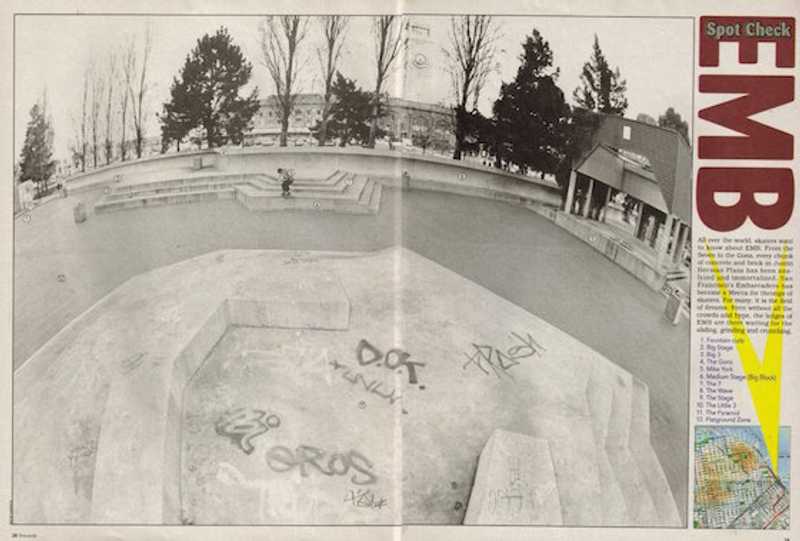
Other plazas and downtown spots, including Brooklyn Banks in New York and San Francisco’s Embarcadero, are frequently cited by competitors as equally foundational to street skating history and should be included for a more complete historical map.
Credit: www.7×7.com
Stair Sets And Rail Grinds: The Architectural Gauntlet
Stair sets and handrails represent some of the most intimidating and visually spectacular obstacles in skateboarding. Conquering them requires not only technical skill but also immense courage and commitment. These features, found in countless urban environments, have been the proving grounds for some of skateboarding’s most legendary tricks and skaters.
Because the risk is high, skaters commonly assess the gap length, stair height, rail angle, speed needed, and whether the landing is flat, downhill, or offset before attempting anything major. Helmet and pad use is a smart choice for progression on larger features, even when many pros skate without them on camera.
El Toro, California: The Pinnacle Of Big Stair Skating
Located in a suburban neighborhood in Lake Forest, California, the El Toro “Y” Stair Set became infamous in the mid-2000s as one of the most daunting stair sets ever skated. Featuring a massive 20-stair drop with a challenging run-up and landing, it was a place where only the most elite skaters dared to attempt a trick. The sheer size of El Toro pushed the limits of what was considered physically possible on a skateboard.
The first notable trick landed on El Toro was by Greyson Fletcher, who ollied down the entire set in 2003. However, it was Danny Way who truly cemented its legendary status with his monumental backside 360 ollie down the 20-stair set for his DC Shoes video part, “DC Video,” in 2003. This feat required immense preparation, including building a specialized ramp to gain the necessary speed and height. The risk involved was astronomical, and the successful landing was a monumental achievement in skateboarding history. El Toro became a symbol of pushing boundaries and the pursuit of the seemingly impossible.
The “hollywood 16” And Other Urban Challenges
Beyond El Toro, numerous other significant stair sets and rail combinations have become iconic. The “Hollywood 16” in Los Angeles, a massive 16-stair set with a long, steep handrail, has been a consistent challenge for professional skaters for years. Skaters like Chris Cole and Jamie Thomas have famously tackled its imposing structure, each landing groundbreaking tricks that are etched into skateboarding lore.
The allure of these challenges lies in their raw, unadulterated difficulty. They are not designed for skateboarding, but rather stand as formidable architectural statements that skaters choose to confront. The process of preparing for and executing a trick on a large stair set often involves extensive planning, multiple attempts, and significant physical and mental fortitude.
These feats are often captured in iconic skate videos, further cementing the reputation of both the skater and the spot.
Skateparks: From Concrete Bowls To Street-inspired Havens
While street spots defined much of skateboarding’s early history, the development of dedicated skateparks has been crucial to its growth and accessibility. Initially, skateparks often mimicked street obstacles, featuring concrete bowls and banks. Over time, skatepark design has evolved significantly, with many modern parks now incorporating elements that are directly inspired by the iconic street spots that skaters have loved for decades.
The Early Days: Concrete Bowls And Banks
The first purpose-built skateparks in the 1970s, often referred to as “dogtown” era parks, were heavily influenced by empty swimming pools. These parks featured smooth, undulating concrete bowls and banks designed to replicate the feeling of surfing on land. Parks like the Skatepark of Tampa (SPoT), established in 1993, became crucial venues for competitions and community gatherings, fostering a new generation of skaters. The emphasis was on flow, transitions, and the ability to ride vertically.
This era saw the rise of legendary skaters who mastered the art of riding transitions, such as Tony Alva and Jay Adams. These parks provided a safe and consistent environment for skaters to hone their skills, away from the dangers and restrictions of public street spots.
The smooth concrete and predictable curves allowed for a different style of skateboarding, focused on carving, pumping, and aerial maneuvers.
Modern Skatepark Design: Street-inspired Havens
In recent decades, skatepark design has undergone a significant transformation. Recognizing the enduring appeal of street skating, many contemporary parks are meticulously designed to replicate the experience of skating urban architecture. These “street plaza” style parks feature elements like:
-
- Ledges and manual pads: Mimicking curbs and flat-topped structures.
- Stair sets and rails: Recreated with varying heights and angles.
- Hubbas and down-ledges: Designed for grinding down steep drops.
- Banks and gaps: Offering opportunities for transition and air.
This evolution reflects a deep understanding of what makes street spots so appealing. Designers are now collaborating directly with professional skaters to ensure authenticity and functionality. Parks like Lander Skatepark in Lander, Wyoming, and Corpus Christi Skatepark in Texas, are often cited as prime examples of this modern approach, offering a diverse range of obstacles that cater to both street and transition skaters. This integration ensures that the spirit of street skating continues to thrive, even in purpose-built environments.
Built features should also be judged by material finish, coping quality, drainage, and maintenance, because those details affect speed, board control, and injury risk as much as obstacle shape does.
Skateboarding Magazine has often featured articles detailing groundbreaking skatepark designs that draw inspiration from iconic street spots.
The Influence Of Media: Capturing And Creating Legends
The proliferation of skate videos, photography, and magazines has been instrumental in immortalizing skate spots and elevating them to legendary status. Without the visual documentation and dissemination of these skating sessions, many spots might have remained local curiosities. Media has not only captured incredible feats but has also actively shaped how skaters perceive and interact with urban environments.
Skate Videos: The Driving Force Of Spot Popularity
The rise of professional skateboarding in the late 20th century was inextricably linked to the emergence of skate videos. Companies like Powell-Peralta, with their “Bones Brigade Video Show” series, and later, TransWorld SKATEboarding and Girl Skateboards with their iconic videos, showcased skaters pushing the boundaries at iconic locations. Love Park, MACBA, and various monumental stair sets gained global recognition through these visual mediums.
Filmmakers and photographers meticulously scouted locations, seeking out unique architectural challenges that would provide a dramatic backdrop for skaters’ performances. The resulting footage, often featuring groundbreaking tricks and raw street skating action, inspired countless aspiring skaters to seek out similar spots in their own cities.
The narrative of a skate video often revolves around the exploration and conquest of these urban landscapes, turning ordinary places into extraordinary skate destinations. The commitment required to film a single trick at a challenging spot, often involving hours of waiting, dealing with security, and repeated attempts, adds a compelling layer to the final product.
Photography: Freezing Moments In Time
Skate photography operates on a similar principle, capturing the essence of a trick and the character of a spot in a single frame. Iconic photographs of skaters performing at famous locations have graced the covers of magazines and the walls of galleries, serving as powerful cultural artifacts.
A well-timed photograph can convey the speed, power, and artistry of skateboarding in a way that is both immediate and lasting.
The relationship between photographer and skater is often collaborative, with both parties working together to achieve the perfect shot. The photographer must understand the dynamics of skateboarding to anticipate the action and capture it at its peak. This partnership has resulted in some of the most enduring images in skateboarding history, many of which are intrinsically tied to the iconic skate spots where they were captured. These images not only document the sport but also contribute to the mythology and aesthetic of skateboarding.
The Preservation And Evolution Of Skate Spots
The journey of an iconic skate spot is rarely static. From their organic discovery to their potential destruction or transformation, these locations face numerous challenges. The skateboarding community actively works to preserve beloved spots, while urban development and changing city planning often present new opportunities and threats.
The Battle For Public Spaces
Many of the most cherished street spots are located on public property, which can lead to conflicts with city officials, property owners, and the general public. “Skate-stopping” measures, such as the installation of metal or concrete barriers, or the placement of security guards, have been implemented in many cities to deter skateboarding. This has led to a constant struggle for skaters to access and utilize public spaces.
In some cases, communities have rallied to protect their local spots. The “Save the MACBA” movement in Barcelona is an example of skaters and supporters advocating for the preservation of the plaza. These efforts highlight the deep connection skaters form with their environments and their determination to keep these spaces alive. The debate over the use of public spaces for skateboarding remains a complex issue, balancing the rights of skaters with the needs of the broader community.
Other preservation stories matter too: Brooklyn Banks, EMB, Burnside, and similar landmarks show that some spots are remembered not just for tricks, but for how they shaped entire local scenes.
From Street To Skatepark: A Necessary Evolution?
As cities evolve and public spaces become more regulated, the development of public skateparks has become increasingly important. While some purists lament the loss of the raw, unpredictable nature of street skating, skateparks offer a vital alternative. They provide safe, legal, and accessible spaces for skaters of all levels to practice and progress.
Modern skatepark design, as mentioned earlier, often seeks to replicate the feel of street spots. This allows skaters to develop street-oriented skills in a controlled environment, potentially bridging the gap between the two worlds. The ongoing dialogue between street skaters, skatepark designers, and urban planners is crucial for ensuring that skateboarding continues to have vibrant and accessible spaces for generations to come.
Frequently Asked Questions
What Makes A Skate Spot “iconic”?
An iconic skate spot is typically defined by a combination of factors: its unique architectural features that offer challenging and engaging skateboarding possibilities, its historical significance within the skateboarding community (often tied to legendary tricks or video parts), its aesthetic appeal, and its role as a gathering place for skaters. It’s a location that becomes legendary through shared experiences and media representation.
How Did Skateboarding Evolve From Using Natural Terrain To Urban Spots?
Early skateboarding, particularly in the 1960s and early 70s, involved riding on natural terrain like hills and empty swimming pools. As the sport progressed and equipment improved, skaters began to explore the urban environment. They discovered that man-made structures like ledges, stairs, banks, and plazas could be adapted for skateboarding, leading to the development of street skating as a distinct discipline.
What Role Do Skate Videos And Magazines Play In The History Of Skate Spots?
Skate videos and magazines have been crucial in documenting and popularizing skate spots. They capture legendary tricks performed at these locations, turning ordinary urban features into famous destinations. This media coverage inspires other skaters, drives tourism to specific spots, and cements their place in skateboarding history.
Without this visual record, many spots might have remained unknown outside their local communities.
Are Most Iconic Skate Spots Purpose-built For Skateboarding?
No, the vast majority of iconic skate spots are not purpose-built for skateboarding. They are typically public spaces, architectural features, or urban landscapes that skaters have creatively repurposed. While dedicated skateparks are now common and often designed to mimic street elements, the original legendary spots were almost always discovered and adopted by the skateboarding community.
What Are The Biggest Challenges Facing The Preservation Of Iconic Skate Spots?
The primary challenges include urban development, which can lead to demolition or alteration of spots; anti-skateboarding measures implemented by cities or property owners (e.g., rails, barriers); and the natural wear and tear that occurs as spots are used. Skaters often face the ongoing battle of being allowed to skate in public spaces and advocating for the preservation of their favorite locations.
The history of iconic skate spots is a dynamic narrative, woven into the fabric of urban landscapes and the evolution of skateboarding culture. These locations, born from the ingenuity of skaters who saw potential in the mundane, have served as crucibles for innovation, stages for legendary performances, and gathering points for communities.
From the smooth expanses of Love Park to the daunting heights of El Toro, each spot tells a story of challenge, creativity, and the enduring spirit of skateboarding. As cities change and skatepark design advances, the legacy of these original urban playgrounds continues to inspire, reminding us that the most iconic skate spots are often those that were never intended to be skated at all.