How to Choose Skateboard Wheels
The thrill of skateboarding lies not just in mastering a new trick or cruising down the street, but also in the very foundation of your ride: the wheels. They are your direct connection to the pavement, dictating speed, grip, and how smoothly you glide over imperfections. Choosing the right skateboard wheels can feel overwhelming with the sheer variety available, but understanding the key factors will empower you to make an informed decision that enhances your skating experience. Whether you’re a beginner looking for stability or an advanced rider seeking performance, the right wheels can make all the difference.
Key Takeaways
- Diameter (Size): Smaller wheels (50-54mm) are lighter and accelerate faster, ideal for technical street skating. Larger wheels (55mm+) offer more speed and stability, better suited for cruising, vert, or rougher terrain.
- Durometer (Hardness): Measured on the A-scale, lower numbers (78A-87A) are softer and offer more grip and a smoother ride on rough surfaces. Higher numbers (95A-101A+) are harder, faster, and better for smooth surfaces like skateparks and for tricks.
- Shape & Contact Patch: Wider wheels offer more stability and grip, while narrower wheels are lighter and slide more easily. The contact patch is the area of the wheel that touches the ground.
- Urethane Formula: Different urethane compounds affect durability, grip, and slide characteristics. High-quality urethane is essential for longevity and performance.
- Intended Use: Match your wheel choice to your primary skating style (street, park, cruising, vert).
- Brand & Quality: Reputable brands often use better materials and have more consistent quality control, leading to a more reliable product.
Credit: www.skatewarehouse.com
Understanding Skateboard Wheel Anatomy And Metrics
Before diving into selection criteria, it’s crucial to understand the fundamental characteristics of skateboard wheels. These are the metrics that manufacturers use to define their products, and they directly translate to how a wheel will perform under your feet. The two most critical measurements are diameter and durometer. Beyond these, the shape and the urethane formula itself play significant roles in the overall feel and performance of your ride.
Diameter: Size Matters For Speed And Agility
The diameter of a skateboard wheel is measured in millimeters (mm) and refers to its overall size from edge to edge. This measurement is arguably the most impactful factor in determining how your skateboard will feel and perform. Smaller wheels are lighter, meaning they require less energy to get them spinning and accelerate faster.
This makes them ideal for technical street skating where quick bursts of speed and effortless ollies are paramount. Conversely, larger wheels have a greater circumference, allowing them to maintain speed longer and roll over obstacles more easily.
- Smaller Wheels (50mm – 53mm): These are the go-to for street skaters who prioritize quick acceleration, lightness for flip tricks, and a lower center of gravity for stability during grinds. However, they can feel slower on rough terrain and may not roll over cracks as smoothly.
- Medium Wheels (54mm – 56mm): A versatile range that offers a good balance between acceleration and maintaining speed. They are suitable for a variety of skating styles, including street, park, and general cruising. Many skaters find this range to be a sweet spot for all-around performance.
- Larger Wheels (57mm+): These wheels are designed for maximum speed and a smoother ride over rough surfaces. They are commonly used for vert skating, downhill, and cruising. While they offer excellent momentum, their larger size and weight can make them feel sluggish for technical tricks and can sometimes cause wheel bite if not paired with appropriate risers.
Wheel Bite is a phenomenon where the spinning wheel makes contact with the underside of the skateboard deck, usually during a hard turn or when landing a trick. This can cause you to stop abruptly and potentially fall. Larger wheels increase the risk of wheel bite, especially on boards with a wider deck or when using loose trucks.
Durometer: The Measure Of Hardness And Grip
Durometer is a measure of a material’s hardness. For skateboard wheels, it’s almost always measured on the Shore A scale, typically ranging from 75A to 101A. The higher the number, the harder the wheel. This hardness directly impacts grip, speed, and the type of terrain the wheels are best suited for.
- Soft Wheels (75A – 87A): These wheels offer superior grip and a much smoother ride, especially on rough or uneven surfaces like cracked pavements or sandy paths. They absorb vibrations effectively, making them excellent for cruising, longboarding, and filming. Their soft nature means they are slower to slide and may not be ideal for tricks that require quick slides or grinds.
- Medium-Hard Wheels (90A – 95A): This range provides a good compromise between grip and speed. They offer decent shock absorption for their hardness and are suitable for skaters who transition between different surfaces or want a bit more versatility. They are a popular choice for park skating and general riding.
- Hard Wheels (96A – 101A+): The hardest wheels are designed for maximum speed and minimal friction. They are perfect for smooth surfaces like skateparks, ramps, and smooth concrete. Their hardness allows for easy sliding and grinding, making them the preferred choice for most street and park skaters. However, they transmit more vibration and can feel very bumpy on rough ground.
Example: A wheel rated 78A would be considerably softer and grippier than a wheel rated 99A.
Shape And Contact Patch: Stability Vs. Agility
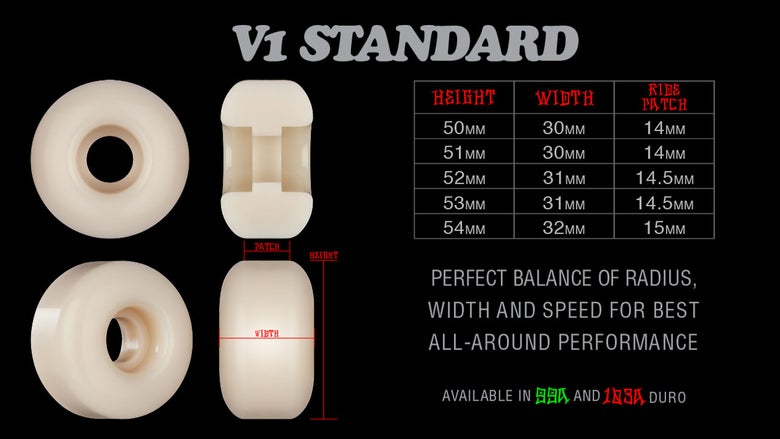
Beyond diameter and durometer, the shape of the wheel and its contact patch (the area that touches the ground) also influence performance.
- Contact Patch Width: A wider contact patch generally provides more grip and stability, which is beneficial for cruising and rough terrain. A narrower contact patch reduces friction, making it easier to slide and pop tricks, but offers less grip.
- Wheel Profile: Wheels come in various profiles, from very rounded to more conical. A more rounded profile is forgiving for slides, while a flatter profile offers more urethane and a wider contact patch for stability.
Credit: www.davetiyekazan.com
Matching Wheels To Your Skating Style
The most crucial aspect of choosing skateboard wheels is aligning them with how and where you intend to skate. A wheel perfect for cruising the boardwalk will likely hinder your ability to perform flip tricks at the skatepark, and vice-versa.
Understanding your primary skating discipline will help narrow down the options significantly.
Street Skating: Precision And Pop
Street skating involves performing tricks on urban obstacles like stairs, ledges, rails, and flat ground. For this style, smaller, harder wheels are generally preferred.
- Diameter: Typically between 50mm and 54mm. This size keeps the board lighter, lowers the center of gravity for better balance, and accelerates quickly. It also reduces the likelihood of wheel bite, a common issue when landing tricks or riding loose trucks.
- Durometer: Usually 99A or 101A. This hardness provides the speed needed to roll over rough concrete and the ability to slide smoothly on ledges and rails. Harder wheels are also lighter than their softer counterparts of the same size.
- Shape: Often narrower with a slightly rounded or conical edge. This profile minimizes friction for slides and grinds and further reduces weight.
Example: A skater focused on mastering ollies, kickflips, and grinds on ledges would likely opt for a 52mm, 99A wheel. This combination prioritizes responsiveness and slideability.
Park And Vert Skating: Speed And Control
Skating in a skatepark or on a vert ramp requires wheels that can handle high speeds, maintain momentum through transitions, and offer a good balance of grip and slide for airing out and landing tricks.
- Diameter: Generally 54mm to 60mm. Larger wheels carry speed better in transitions and roll over the often smoother, but still imperfect, surfaces of parks and ramps more efficiently.
- Durometer: Most commonly 97A to 101A. While softer wheels might seem appealing for grip, the higher speeds in parks and vert demand harder wheels for maximum speed and the ability to slide out of turns or tricks. Some skaters might opt for a slightly softer wheel (around 97A) if the park surface is particularly rough or if they prioritize a bit more grip.
- Shape: Often wider with a flatter profile. This provides a larger contact patch for increased stability when landing tricks or riding transitions, and more surface area for grinds.
Example: A skater who spends most of their time at a local concrete park, hitting quarter pipes and bowls, might choose a 56mm, 99A wheel. This offers a good blend of speed, stability for landing, and enough hardness for smooth slides.
Cruising And Commuting: Comfort And Durability
If your primary goal is to cruise around town, commute to work, or simply enjoy a smooth ride over varied urban terrain, comfort and the ability to roll over obstacles are key.
- Diameter: Typically 56mm and larger, often exceeding 60mm. Larger wheels have a greater ability to roll over cracks, pebbles, and other debris that would stop smaller wheels. They also maintain momentum better, requiring less pushing.
- Durometer: 78A to 87A. Soft wheels are essential for a comfortable ride. They absorb vibrations from rough surfaces, making the ride much smoother and quieter. This softness also provides excellent grip, reducing the chance of slipping on wet or uneven surfaces.
- Shape: Usually wider with a larger contact patch. This enhances stability and grip, making the ride feel more secure, especially at higher speeds or when navigating imperfect terrain.
Example: Someone using their skateboard as a daily commuter might select a 60mm, 80A wheel. This setup prioritizes a plush, smooth ride over varied city surfaces and minimizes the effort needed to maintain speed.
Transition Skating (bowls, Pools, Vert): A Blend Of Speed And Control
Transition skating, which encompasses bowls, pools, and vert ramps, demands a specific set of characteristics. You need the speed to generate momentum up and down the walls, the stability to land comfortably, and the ability to slide when needed.
- Diameter: Generally 56mm to 60mm. This size range is ideal for maintaining speed through the curves of a bowl or the vertical height of a vert ramp. They offer a good balance between acceleration and top-end speed.
- Durometer: Commonly 97A to 99A. While some might lean towards 101A for maximum speed, the slightly softer 97A-99A offers a bit more grip which can be beneficial for holding lines in bowls and preventing unintentional slides during landings. The hardness still allows for easy slides on coping.
- Shape: Often medium to wide with a flatter profile. A wider wheel provides a more stable landing platform, crucial when coming down from airs or landing trick combinations. A flatter profile also contributes to this stability.
Example: A skater who frequents old-school concrete pools might opt for a 58mm, 99A wheel. This choice emphasizes sustained speed and a stable landing surface, essential for this demanding style of skating.

Credit: easternlines.com
Comparing Wheel Specifications: A Data-driven Approach
To truly grasp the differences, let’s look at how these specifications translate into practical performance. This comparison table highlights how varying diameter and durometer affect key aspects of skateboarding.
| Wheel Size (Diameter) | Durometer (Hardness) | Primary Use | Acceleration | Top Speed | Grip | Slide Ability | Terrain Suitability | Weight |
|---|---|---|---|---|---|---|---|---|
| 50-53mm (Small) | 99A-101A (Hard) | Street, Technical Tricks | Fastest | Moderate | Low | Excellent | Smooth surfaces, Skateparks | Lightest |
| 54-56mm (Medium) | 97A-101A (Hard) | Street, Park, All-Around | Fast | Good | Moderate | Good | Smooth to moderately rough surfaces | Moderate |
| 57-60mm (Large) | 95A-99A (Medium-Hard) | Vert, Transition, Cruising | Moderate | Excellent | Good | Moderate | Smooth to rough surfaces | Heavier |
| 60mm+ (Extra Large) | 78A-87A (Soft) | Cruising, Longboarding, Filming | Slowest | Very Good (maintains speed) | Excellent | Poor | Rough surfaces, uneven terrain | Heaviest |
This table illustrates that there’s no single “best” wheel; the optimal choice is entirely dependent on your needs. For instance, a street skater might sacrifice some top-end speed for quicker acceleration and better slide, while a cruiser prioritizes a smooth ride and the ability to roll over anything.
Beyond The Basics: Urethane Formulas And Brands
While diameter and durometer are the primary metrics, the urethane formula used by the manufacturer significantly impacts how the wheel performs and lasts. Different brands experiment with various compounds to achieve specific characteristics like:
- Durability: How well the wheel holds up against abrasion from grinds and rough surfaces.
- Rebound: The energy returned to the rider when the wheel deforms upon impact. Higher rebound means a more responsive and faster ride.
- Grip vs. Slide: The balance between sticking to the surface and being able to break traction for slides.
- Consistency: How uniform the wheel’s performance is across its lifespan.
Reputable brands like Bones Wheels, Spitfire Wheels, and OJ Wheels are known for their high-quality urethane formulas. They invest heavily in research and development to create wheels that offer superior performance and longevity. For example, Bones Wheels offers their “STF” (Street Tech Formula) and “SPF” (Skatepark Formula) which are specifically engineered for different skating environments, demonstrating a commitment to specialized performance.
When choosing a brand, consider their reputation within the skateboarding community. Brands that have been around for a long time and are consistently used by professional skaters often indicate a reliable choice. It’s also worth looking into reviews and asking experienced skaters for their recommendations. For instance, many skaters praise Element Skateboards‘ wheels for their durability and consistent performance, though they are more known for their decks. Similarly, Santa Cruz Skateboards also produces wheels that are well-regarded within the community.
Real-world Example: The Street Vs. Park Wheel Dilemma
Consider two skaters, Alex and Ben. Alex is a street skater who spends hours practicing flip tricks on the sidewalk and grinding ledges. He needs wheels that are light, quick to accelerate, and slide easily. He opts for a 53mm, 101A wheel.
These wheels are smaller and harder, allowing him to pop his board higher and slide smoothly on rough concrete.
Ben, on the other hand, is a park skater who loves riding bowls and ramps. He needs wheels that will maintain speed through transitions and provide stability when landing airs. He chooses a 58mm, 99A wheel. These larger, slightly softer wheels offer more momentum and a more forgiving landing, while still being hard enough for quick slides on coping.
If Alex tried to skate a bowl with his small, hard street wheels, he’d struggle to maintain speed and might find landings less stable. If Ben tried to do flip tricks on the street with his larger, softer park wheels, they would feel sluggish, heavy, and difficult to slide.
This highlights the importance of matching your wheels to your primary skating environment.
Essential Considerations For Wheel Selection
Beyond the core metrics and skating style, several other factors can influence your choice and overall satisfaction with skateboard wheels. These include the bearing seat, color and graphics, and maintenance.
Bearing Seat And Wheel Core
The bearing seat is the recess within the wheel where the skateboard bearings are installed. A well-machined bearing seat ensures that the bearings sit flush and function optimally, contributing to smooth rolling. Most modern wheels have a standard bearing seat that accommodates 608 bearings, the most common type.
The wheel core refers to the central part of the wheel. Some manufacturers use different core designs to influence the wheel’s weight, durability, and how the urethane is molded. While this is a more advanced consideration, it can affect the overall feel and performance, especially for high-performance wheels. For most skaters, especially beginners and intermediates, focusing on diameter, durometer, and urethane quality is more than sufficient.
Color And Graphics: Personalizing Your Ride
While not directly impacting performance, the color and graphics of your wheels offer a way to personalize your skateboard and express your style. Many brands offer a wide array of colors, from classic white and black to vibrant neons and transparent options.
Graphics can range from simple logos to intricate artwork.
It’s important to remember that while aesthetics are fun, they shouldn’t be the primary driver of your decision. A cool-looking wheel that doesn’t perform well for your skating style will ultimately detract from your experience. Always prioritize performance characteristics first, then choose a color or graphic that appeals to you.
Maintenance And Longevity
The lifespan of your skateboard wheels depends heavily on the quality of the urethane, the type of surfaces you skate on, and how you use them.
- Grinding: Frequent grinding on rough ledges and rails will wear down wheels faster, especially if they are not designed for grinding. Wheels with a harder durometer and a more durable urethane formula will generally last longer.
- Surface: Skating on rough asphalt or gravel will wear wheels down more quickly than skating on smooth concrete or wooden skatepark surfaces.
- Cleaning: While wheels don’t require extensive cleaning, keeping your bearings clean and lubricated is crucial for overall performance. Occasionally wiping down your wheels can remove debris that might affect grip.
Pro Tip: If you’re a street skater who grinds a lot, consider investing in wheels known for their durability. Conversely, if you primarily skate smooth parks, you might be able to get away with slightly less durable but faster-sliding formulas.
Common Pitfalls To Avoid When Choosing Wheels
Navigating the world of skateboard wheels can lead to a few common mistakes, especially for those new to the sport. Being aware of these pitfalls can save you frustration and money.
Mistake 1: Overlooking Durometer For Cruising
Many beginners assume any wheel will do for cruising. However, using hard wheels (99A+) for cruising on rough terrain will result in a jarring, uncomfortable ride. The vibrations will be transmitted directly to your feet, making the experience unpleasant and potentially causing you to lose balance.
Always opt for softer wheels (78A-87A) for dedicated cruising.
Mistake 2: Choosing Too Small For Vert Or Transition
While small wheels are great for street, they lack the momentum needed for vert skating or riding large bowls. If you find yourself struggling to maintain speed on ramps or needing to push constantly, your wheels might be too small.
Consider upsizing to 54mm or larger for better speed and flow in transitions.
Mistake 3: Focusing Solely On Graphics
As mentioned, aesthetics are important, but performance should always come first. Don’t buy a set of wheels just because they have a cool graphic if their specifications are not suited for your skating style. You’ll likely be disappointed with how they perform.
Mistake 4: Neglecting Wheel Quality
While budget is always a factor, extremely cheap, unbranded wheels often use inferior urethane. This can lead to wheels that flat-spot easily (develop a flat spot from sliding), chunk (chip away pieces of urethane), or wear down very quickly. Investing in reputable brands generally ensures better quality and a longer-lasting, more enjoyable skating experience. For example, learning how to teach a kid to skateboard often involves starting with slightly larger, softer wheels for stability and comfort, a good example of prioritizing the right specs.
Mistake 5: Not Considering Wheel Bite
If you’re setting up a board with larger wheels or have very loose trucks, you risk wheel bite. Always ensure there’s adequate clearance between your wheels and the deck. If wheel bite is an issue, you can either tighten your trucks, use riser pads (plastic or rubber spacers that lift the trucks off the deck), or switch to smaller wheels.
Frequently Asked Questions
What Is The Difference Between 99a And 101a Wheels?
Both 99A and 101A wheels are considered hard and are ideal for street and park skating. The primary difference is that 101A wheels are slightly harder and therefore faster, with