How to Stand Up on a Snowboard: Master the Basics Fast
Snowboarding is exciting, but for beginners, even the first step—standing up—can feel like a huge challenge. You might see experienced riders jump to their feet on the snow like it’s nothing, but the reality is, most people struggle at first. If you learn the right way, though, standing up gets easier and helps you ride with more control and confidence. This guide breaks down everything you need to know about how to stand up on a snowboard, whether you’re on flat ground or a slope, and offers expert tips to make your first days less frustrating. You’ll learn the physical basics, common mistakes, and how to practice safely so you can enjoy your time on the mountain.
Why Standing Up Is Difficult For Beginners
Many new snowboarders don’t expect standing up to be so hard. The truth is, your boots are stiff, your feet are stuck to a big board, and the snow is slippery. This combination makes your usual way of getting up from the ground almost impossible.
Your muscles might not be used to these movements, and it’s easy to feel off-balance.
Another challenge is fear. On a slope, you may feel like you’ll start sliding before you’re ready. Tension or nervousness can make your muscles tight, making it even harder to move smoothly. Understanding these difficulties is the first step to overcoming them.
Preparing Your Body And Gear
Standing up on a snowboard is easier if you prepare well. A few simple steps can make a big difference.
Stretch And Warm Up
Cold muscles are stiff and less responsive. Warm up before you even put on your boots:
- Rotate your ankles, knees, and hips
- Do gentle squats and lunges
- Swing your arms and shoulders
This helps prevent injury and makes movement more natural.
Adjust Your Snowboard And Bindings
Make sure your bindings are the right size and set up for your stance—regular (left foot forward) or goofy (right foot forward). The angle should feel comfortable when you stand upright.
- Bindings too tight: Hard to move and hurts your feet
- Bindings too loose: Less control and risky for your ankles
Check that your boots are snug but not painful.
Dress For Movement
Wear snowboard pants and a jacket that allow you to bend and twist. Avoid bulky clothing that restricts movement. Gloves with good grip help you push off the snow.
Mental Preparation
Visualize yourself standing up smoothly. Studies show that mentally rehearsing a movement improves actual performance. Stay patient and positive—frustration makes it harder to progress.
Understanding Snowboard Stance And Balance
Your stance on the snowboard affects everything, including how easy it is to stand up. Beginners often overlook this, but it’s key.
Basic Stance
- Feet shoulder-width apart
- Knees slightly bent
- Back straight, not hunched
- Arms relaxed at your sides
This position lowers your center of gravity and makes it easier to shift weight.
Edge Awareness
Your snowboard has two edges: toe edge (front) and heel edge (back). When standing up, you use these edges for support and to control sliding.
Balance Points
Think of your body as a stack of blocks. Your head, shoulders, hips, and knees should line up over your feet. If you lean too far forward or back, you’ll fall.
How To Stand Up On A Snowboard: Flat Ground
It’s best to practice standing up on flat ground before trying on a slope. Here’s a step-by-step approach:
Step 1: Sit Down Correctly
Sit with your board flat on the snow. Keep your knees bent and feet strapped in (if you’re new, leave your back foot out at first).
Step 2: Position Your Hands
Place your hands behind you for support. Use your fists or palms—whatever feels stable.
Step 3: Bring The Board In
Pull your knees toward your chest so the snowboard is close to your body and flat on the ground.
Step 4: Rock Forward
Lean your weight forward so your head and shoulders move over your knees. This will start to bring your center of gravity above the board.
Step 5: Push Up
Push through your hands and shift your weight onto your feet. Try to stand in one smooth motion, keeping your back straight and eyes forward.
Step 6: Find Your Balance
Once upright, bend your knees and center your weight. Don’t lock your legs—keep them soft so you can adjust easily.
Tips For Success
- Look up, not at your feet
- Exhale as you stand—it helps you relax
- Practice without gloves first for better grip, then add gloves later
Common Mistakes
- Placing hands too far behind makes pushing up harder
- Trying to stand too quickly can throw you off balance
- Letting the board slide out from under you—keep it flat
How To Stand Up On A Snowboard: On A Slope
Standing up on a slope is trickier because gravity wants to pull you down. But with a few extra steps, you can do it safely.
Getting Up On Your Heel Edge (facing Uphill)
This is the most common method for beginners.
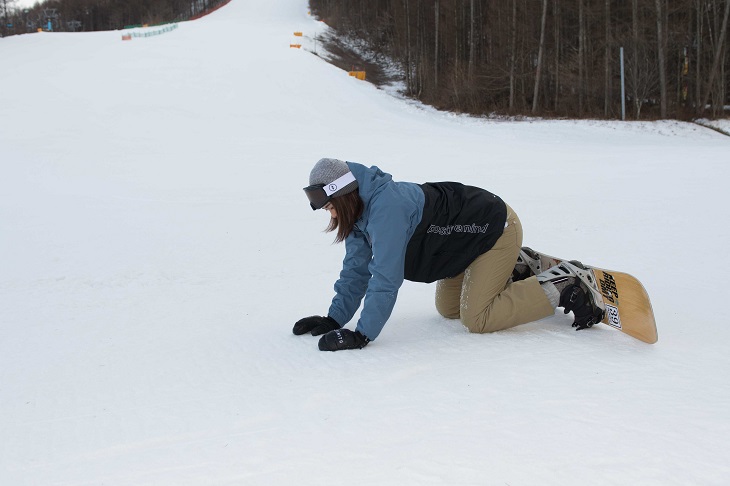
- Sit down with your board across the hill, facing uphill. Both feet should be strapped in.
- Place your hands behind you, fingers pointing toward the board for stability.
- Pull your heels close to your butt, so your knees are bent and feet are under your body.
- Push through your hands while digging your heels into the snow, so the heel edge holds the slope.
- As you rise, shift your weight forward over your feet. Don’t let your butt lead—keep your chest up.
- Stand up, keeping the board across the hill so you don’t slide down.
Getting Up On Your Toe Edge (facing Downhill)
This is harder but useful if you fall facing downhill.
- Roll onto your stomach so your chest faces the board.
- Get your hands in front of you, palms pressing into the snow.
- Bring your knees under your chest, toes pointing into the slope.
- Push up onto your knees, then onto your feet, keeping your toe edge pressed into the snow.
- Use your hands for balance, but let your legs do the work.
Practice: Comparing Flat Vs. Slope
Here’s how the two main methods compare:
| Standing Up Method | Best For | Difficulty | Key Focus |
|---|---|---|---|
| Flat Ground | First practice, balance training | Low | Basic body movement |
| Heel Edge (Uphill) | Most beginner falls | Medium | Edge control, smooth push |
| Toe Edge (Downhill) | Falls facing downhill | High | Core strength, toe pressure |
Key Muscle Groups And Physical Tips
Standing up on a snowboard is not just about technique; your muscles play a big role.
Core Muscles
Your core (abs and lower back) is the main source of power for standing up. A strong core keeps you stable and helps with all movements on the board.
Leg Muscles
Quads, hamstrings, and calves help you push up from the ground. Snowboarding uses these muscles in ways you might not expect, so some soreness at first is normal.
Arms And Shoulders
You’ll use your arms to push, but don’t rely on them too much. Focus on using your legs and core for the real lift.
Practical Exercise
Try squat jumps and planks at home to build the muscles you’ll need. Even 5 minutes a day can help.
Credit: japan-skiguide.com
Practicing Safe Standing Techniques
Safety is just as important as technique. Here’s how to reduce the risk of injury:
- Practice on gentle slopes first; avoid steep hills until you can stand confidently.
- Wear wrist guards—falls are common and wrists are often hurt.
- Check your surroundings before standing up. Make sure no one is coming down the hill behind you.
- If you fall and feel pain, rest before trying again. Fatigue increases injury risk.
Common Mistakes And How To Fix Them
Most beginners make the same errors. Here’s how to avoid them.
Leaning Too Far Back
If your butt goes up before your chest, you’ll fall backward. Focus on bringing your chest up first.
Hands Too Wide
If your hands are too far apart, you lose power and balance. Keep them close to your body.
Not Using The Board’s Edges
If you don’t dig in your heel edge or toe edge, the board will slide out. Press the edge into the snow for control.
Rushing
Take your time. Smooth, controlled movements work better than fast, jerky ones.
Not Relaxing
Tension makes everything harder. Breathe out as you stand, and shake out your arms before you start.
Advanced Tips For Faster Progress
Once you get the basics, these tips can help you improve quickly.
Use Your Body Weight Wisely
When you stand up, think about shifting your weight from your hands to your feet in a smooth line. Don’t try to push straight up; roll your weight forward.
Visualize Each Step
Before you try, close your eyes and picture each movement. This helps your brain and body connect.
Practice With One Foot Out
On flat ground, practice with your front foot strapped in and back foot free. This helps you learn balance for getting off ski lifts.
Get Feedback
Ask a friend or instructor to watch you and point out problems. Video yourself if possible—seeing your own form makes it easier to fix mistakes.
Compare Your Progress
Set small goals, like standing up three times in a row without falling. Track your progress in a notebook or on your phone.
The Role Of Snow Conditions
Snow changes everything. Hard, icy snow is slippery and makes standing up harder. Soft, packed snow gives better grip. Fresh powder can feel like quicksand but is softer for falls.
Here’s how different snow types affect standing up:
| Snow Condition | Effect on Standing Up | Advice |
|---|---|---|
| Hard/Icy | Slippery, less grip | Use more edge pressure, move slowly |
| Soft/Packed | Balanced grip and slide | Best for practice |
| Powder | Deep, can get stuck | Lift board up as you stand |
If you’re struggling, try a new spot on the slope where the snow is different. Sometimes a small change can make things much easier.

Credit: www.youtube.com
Practicing At Home
You don’t have to wait until you’re on the mountain to practice. Here are exercises you can do at home:
- Sit on the floor with legs in front, then stand up without using your hands
- Practice squats and lunges to build leg strength
- Use a balance board to mimic the feeling of shifting weight
- Do core exercises like planks and side crunches
These movements train your muscles and balance, making it easier when you’re on the snow.
Getting Up After A Fall
Falling is normal, especially when you’re learning. What matters is how you get up.
- Check for injuries before moving. If you’re okay, take a breath.
- Get your board across the hill so you don’t slide.
- Use the heel edge method to stand up.
- If you’re tired, roll onto your knees and rest before trying again.
Remember, every fall is a chance to learn. Even pro riders fall all the time—they just get up faster.

Credit: www.youtube.com
When To Ask For Help
If you’ve practiced and still can’t stand up on your snowboard, consider asking for help. A certified instructor can spot small errors and give you custom advice. Friends who snowboard can also help, but make sure they know good technique.
Group lessons often include tips for standing up and other basics. These lessons can cut your learning time in half. For more on lesson benefits, check out this professional resource.
Building Confidence
Confidence grows as you practice. Celebrate small wins, like standing up once without falling. The more you practice, the easier it becomes. If you get frustrated, take a break—pushing too hard leads to mistakes. Remember, everyone started as a beginner.
One non-obvious tip: Watch other beginners. Notice how they move and what works. You’ll learn as much from others’ mistakes as your own.
Another insight: On your first few days, don’t focus on riding—just practice standing up and balancing. This foundation makes everything else much easier.
Frequently Asked Questions
How Long Does It Take To Learn To Stand Up On A Snowboard?
Most people can learn to stand up on flat ground in a few hours. On a slope, it often takes a full day of practice. Your fitness level, age, and past experience all matter. Don’t worry if you need more time—everyone learns at their own pace.
Why Do I Keep Sliding When I Try To Stand Up?
Sliding happens when you don’t press your board’s edge into the snow. Try to dig your heel edge (if facing uphill) or toe edge (if facing downhill) into the slope as you push up. Also, make sure the slope isn’t too steep for your skill level.
Should I Use My Hands To Help Me Stand Up?
Yes, at first, you’ll use your hands for balance and to push off the snow. As you get better, try to rely more on your legs and core. This will help you stand up more smoothly and with less effort.
What Should I Do If I’m Too Tired To Get Up?
Take a break! Tired muscles lead to poor form and more falls. Sit on the side of the slope, breathe, and stretch your legs. It’s normal to get tired, especially on your first day.
Is It Harder To Stand Up On A Snowboard Than On Skis?
For most beginners, yes. Snowboarders are strapped in with both feet, so you can’t use one foot for balance like skiers do. But with practice, standing up becomes automatic. Focus on your progress and don’t compare yourself to others.
Learning how to stand up on a snowboard is an important skill that sets you up for everything else on the mountain. Take your time, practice often, and celebrate every small success. Soon, you’ll be standing up with ease—and ready for your first real ride.