
Are Aliminum Trucks Good for Skateboarding
Aluminum trucks are a fundamental component of any skateboard, directly influencing its performance, durability, and overall feel. For skateboarders, choosing the right trucks is as crucial as selecting a deck or wheels. While many skaters opt for traditional materials like maple for their decks, the material composition of trucks often sparks debate.
Aluminum, a lightweight yet strong metal, has been a staple in skateboard truck manufacturing for decades. But are aluminum trucks truly good for skateboarding? This article will explore the properties of aluminum trucks, their advantages and disadvantages, and how they stack up against other materials, helping you make an informed decision for your skateboarding setup.
Key Takeaways
- Aluminum trucks offer a balance of strength, lightness, and affordability, making them a popular choice for many skateboarders across different disciplines.
- Durability is a key factor, with aluminum trucks generally being robust enough for street skating and general use, though they can be susceptible to bending or cracking under extreme impact.
- Weight plays a significant role in skateboarding performance; lighter aluminum trucks can facilitate easier flip tricks and aerial maneuvers.
- Different aluminum alloys and construction methods (e.g., hollow kingpins, forged baseplates) can significantly impact the truck’s strength, weight, and responsiveness.
- Comparison with other materials like magnesium or titanium reveals that while aluminum is a great all-rounder, high-end materials might offer superior lightness or strength for specific, demanding applications.
- Proper maintenance and understanding limitations are crucial for maximizing the lifespan and performance of aluminum skateboard trucks.

Credit: www.amazon.com
Understanding Skateboard Truck Anatomy And Function
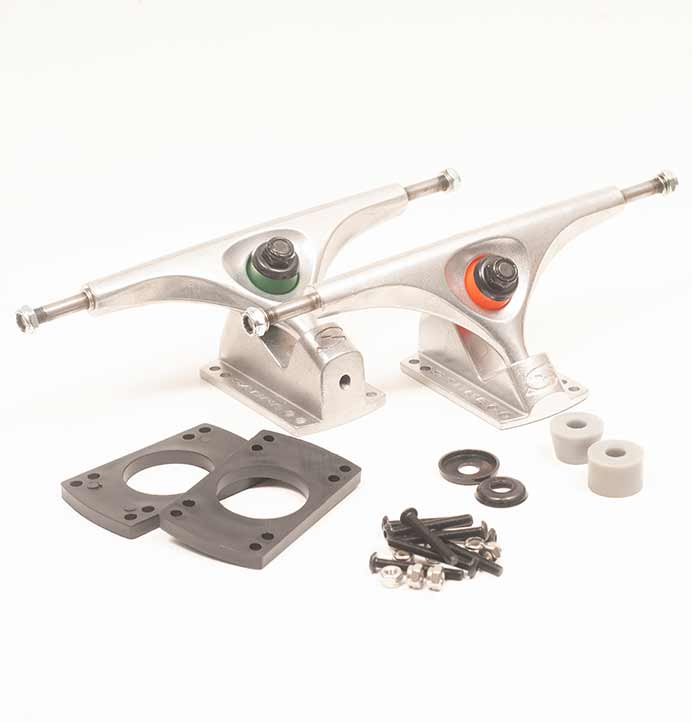
Before diving into the specifics of aluminum, it’s essential to understand what skateboard trucks are and what they do. A skateboard truck consists of two main parts: the baseplate, which attaches to the underside of the skateboard deck, and the hanger, which holds the wheels and pivots on the baseplate via the kingpin and bushings. The axle runs through the hanger, and the wheels are mounted on either end.
The primary functions of skateboard trucks are:
- Steering and Turning: The bushings, typically made of urethane, allow the hanger to pivot, enabling the skateboarder to steer by leaning. The tightness of the kingpin nut adjusts how easily the board turns.
- Mounting Wheels: The axle securely holds the wheels, allowing them to rotate freely.
- Durability and Support: Trucks bear the brunt of impacts from tricks, landings, and rough terrain, providing structural integrity to the board.
The material and construction of the trucks directly influence their weight, strength, responsiveness, and longevity. This is where aluminum comes into play as a widely used material.
Materials In Skateboard Trucks
While aluminum is the most common material, other metals and alloys are used, each with its pros and cons:
- Aluminum Alloys: Most skateboard trucks are made from aluminum alloys, specifically cast aluminum and forged aluminum. Different alloys offer varying degrees of strength and weight.
- Magnesium: Lighter and stronger than standard aluminum, magnesium trucks are often found in higher-end models but can be more expensive and potentially more brittle.
- Titanium: Extremely lightweight and incredibly strong, titanium trucks are the premium option. However, their high cost makes them inaccessible for many skaters.
- Steel: While less common for the entire truck due to weight, steel is often used for axles and kingpins to enhance durability in critical stress points, even in aluminum trucks.
Understanding these material differences helps contextualize the role and performance of aluminum trucks.
Credit: vandemlongboardshop.co.uk
The Case For Aluminum: Advantages Of Aluminum Skateboard Trucks
Aluminum’s popularity in skateboard truck manufacturing isn’t accidental. It offers a compelling blend of characteristics that make it suitable for a wide range of skateboarding styles and skill levels. Its widespread availability and relatively lower cost further contribute to its dominance in the market.
Lightweight Construction
One of the most significant advantages of aluminum trucks is their lightweight nature. Standard aluminum trucks typically weigh between 300-450 grams per truck, depending on size and specific design. This lightness is crucial for skateboarding performance.
- Easier Flip Tricks: Lighter trucks reduce the overall weight of the skateboard, making it easier to flick the board for tricks like kickflips and heelflips.
- Higher Ollies and Aerials: Less weight means less effort is required to get the board airborne, potentially allowing skaters to achieve greater ollie heights and more complex aerial maneuvers.
- Reduced Fatigue: For skaters who spend long hours riding, lighter setups can lead to less fatigue, allowing for longer, more enjoyable sessions.
This weight advantage is particularly noticeable when comparing standard aluminum trucks to heavier steel components that might have been used in older or very basic setups.
Strength And Durability
Aluminum alloys, when properly engineered, offer a commendable level of strength. They are robust enough to withstand the regular stresses and impacts of street skating, park riding, and cruising.
- Resistance to Bending: While not indestructible, quality aluminum trucks are designed to resist bending under normal riding conditions.
- Impact Absorption: The material can absorb some of the shock from landings, potentially reducing the strain on the skateboard deck and the skater’s joints.
- Longevity: For the average skater, a well-maintained pair of aluminum trucks can last for several years.
However, it’s important to note that their durability can vary significantly based on the specific alloy used and the manufacturing process. Forged aluminum trucks, for instance, are generally stronger and more durable than cast aluminum trucks because the forging process aligns the metal’s grain structure, increasing its resistance to stress.
Cost-effectiveness And Accessibility
Aluminum trucks are typically the most affordable option on the market. This makes them an excellent choice for beginners, intermediate skaters, and those on a budget.
- Beginner-Friendly: The lower cost of entry allows new skaters to build a functional setup without a significant financial commitment, encouraging them to get started. You can find decent aluminum trucks for as low as $20-$30 per pair.
- Wide Availability: Due to their popularity, aluminum trucks are available from virtually every skateboard manufacturer and in countless skate shops, both online and in brick-and-mortar stores. This accessibility means skaters can easily find replacements or upgrade options.
- Variety of Options: The mass production of aluminum trucks has led to a wide array of sizes, styles, and aesthetic designs, catering to diverse preferences and board dimensions.
This combination of affordability and availability makes aluminum the go-to material for the vast majority of skateboarders worldwide.
Responsiveness And Feel
The way aluminum trucks respond to rider input is another key factor. They generally offer a predictable and reliable turning feel.
- Balanced Responsiveness: Aluminum trucks, especially when paired with quality bushings, provide a good balance between stability at speed and agility for quick turns.
- Consistent Performance: For most skateboarding disciplines, the responsiveness of aluminum trucks is more than adequate, offering a consistent feel that riders can rely on.
When discussing responsiveness, it’s important to remember that truck geometry (like height and wheelbase) and bushing hardness play equally significant roles. However, the inherent properties of aluminum contribute to a well-rounded performance profile.
Potential Drawbacks And Considerations For Aluminum Trucks
While aluminum trucks offer numerous advantages, they are not without their limitations. Understanding these potential drawbacks is crucial for managing expectations and ensuring proper care.
Susceptibility To Damage
Despite their strength, aluminum trucks can be susceptible to damage under certain conditions, particularly compared to more exotic materials.
- Bending: Under extreme impact, such as a very heavy fall or landing on a sharp object, aluminum trucks can bend. While sometimes fixable, a severely bent truck can affect steering and stability.
- Cracking: While less common than bending, particularly with higher-quality aluminum, repeated stress or sharp impacts can lead to cracks, especially around stress points like the kingpin or hanger-baseplate junction.
- Grinding Wear: The aluminum hanger will wear down over time when grinding on rough surfaces like concrete or brick. This is a natural process for most truck materials, but it’s a factor in their lifespan.
Forged aluminum trucks are significantly more resistant to bending and cracking than cast aluminum ones. Skaters who are particularly hard on their equipment or engage in heavy street skating might consider forged options or even higher-end materials for greater resilience.
Weight Compared To Premium Materials
While aluminum is considered lightweight in general, it is heavier than materials like magnesium or titanium.
- Marginal Difference for Some: For recreational skaters or those not focused on advanced flip tricks, the weight difference might be negligible.
- Impact on Elite Performance: However, for professional skaters or those pushing the boundaries of aerials and complex flip tricks, even a few dozen grams can make a noticeable difference in board feel and maneuverability. A set of high-end titanium trucks can be up to 100 grams lighter than a comparable aluminum set.
This is a nuanced point, as modern aluminum truck manufacturing often incorporates weight-saving features like hollow kingpins and hollow axles, narrowing the gap with premium materials.
Bushings And Kingpin Issues
While not strictly a material issue of aluminum itself, the components that interact with it can present challenges.
- Kingpin Loosening: The kingpin nut, which secures the bushings and controls turning responsiveness, can loosen over time due to vibrations and impacts. This requires regular checking and tightening.
- Bushing Compression: The urethane bushings will eventually compress and wear down, losing their responsiveness. They will need to be replaced periodically.
These are common maintenance issues for virtually all skateboard trucks, regardless of material, but they are part of the overall ownership experience.

Credit: southsideskateshop.com
Types Of Aluminum Trucks And Their Variations
Not all aluminum trucks are created equal. Manufacturers employ different techniques and alloys to create trucks that vary in strength, weight, and performance. Understanding these variations can help you choose the best aluminum truck for your needs.
Cast Vs. Forged Aluminum
This is perhaps the most significant distinction in aluminum truck construction.
- Cast Aluminum Trucks: These are made by pouring molten aluminum into a mold. This process is less expensive and quicker, making cast trucks the most common and affordable type. However, the internal grain structure of cast aluminum is more random, making it generally weaker and more prone to breaking or bending under stress.
- Example: Many entry-level and mid-range trucks from brands like Independent (their standard cast trucks), Venture, and Tensor utilize cast aluminum.
- Forged Aluminum Trucks: Forging involves heating aluminum and then shaping it under high pressure. This process aligns the metal’s grain structure, resulting in a significantly stronger, more durable, and often lighter truck compared to cast aluminum. Forged trucks are typically more expensive due to the more complex manufacturing process.
- Example: Brands like Thuro and some higher-end models from Independent (e.g., their Forged Titanium line, though that includes titanium) and Venture offer forged options.
Pro Tip: If you’re a heavier skater, a street skater who grinds a lot, or simply want maximum durability, investing in forged aluminum trucks is often worthwhile.
Weight-saving Features
Manufacturers continually innovate to reduce truck weight without compromising strength. Common features include:
- Hollow Kingpins: Replacing the solid steel kingpin with a hollow one can save a small but noticeable amount of weight.
- Hollow Axles: Similar to hollow kingpins, using hollow steel for the axle can also reduce overall weight.
- Hollow Baseplates: Some high-end trucks feature hollowed-out baseplates, though this is less common than hollow kingpins or axles.
- Lightweight Alloys: Experimentation with different aluminum alloys aims to achieve a better strength-to-weight ratio.
These features are often found on mid-range to high-end aluminum trucks and represent an effort to bridge the gap between standard aluminum and premium materials like magnesium or titanium.
Truck Sizing And Geometry
Beyond material, the size and geometry of aluminum trucks are critical for performance.
- Width: Truck width should generally match the width of your skateboard deck. A mismatch can lead to wheelbite (when the wheels rub against the deck during turns) or an unstable ride.
- Example: A 7.75-inch to 8.25-inch wide deck typically uses trucks with an 8-inch axle width. Wider decks require wider trucks.
- Height: Trucks come in low, mid, and high profiles.
- Low trucks: Offer a lower center of gravity for stability and are good for flip tricks as they are closer to the ground. They are best paired with smaller wheels (50-53mm).
- Mid trucks: Offer a balance of stability and turning. They are versatile and work well with a wide range of wheel sizes (52-56mm).
- High trucks: Provide more clearance for larger wheels (54-60mm+), reducing wheelbite and offering a more responsive turn. They are good for cruising and transition skating.
Choosing the correct size and height ensures optimal performance and prevents common issues like wheelbite. You can learn more about selecting the right deck in our How to Choose a Skateboard Deck guide.
Aluminum Trucks Vs. Other Materials: A Comparative Look
To truly understand if aluminum trucks are good, it’s helpful to compare them against alternatives. While aluminum dominates due to its balance, other materials serve specific needs.
Aluminum Vs. Magnesium Trucks
Magnesium trucks are often touted as a premium alternative to aluminum.
- Weight: Magnesium is significantly lighter than aluminum, offering a further advantage for aerials and flip tricks.
- Strength: Magnesium can be as strong or stronger than aluminum, depending on the alloy and manufacturing process.
- Cost: Magnesium trucks are generally more expensive than standard aluminum trucks.
- Durability: While strong, some magnesium alloys can be more brittle than aluminum, potentially leading to cracking under severe impact, though modern alloys are improving this.
| Feature | Aluminum Trucks (Standard Cast) | Magnesium Trucks (Typical) |
|---|---|---|
| **Weight** | Moderate | Very Light |
| **Strength** | Good | Very Good |
| **Durability** | Good (can bend/crack) | Good (can be brittle) |
| **Cost** | Affordable | Mid-to-High |
| **Responsiveness** | Good | Good |
Aluminum Vs. Titanium Trucks
Titanium trucks represent the pinnacle of lightweight and strong truck technology.
- Weight: Titanium is the lightest option, offering the most significant weight savings.
- Strength & Durability: Titanium is exceptionally strong and highly resistant to bending and breaking, offering superior longevity.
- Cost: Titanium trucks are the most expensive, often costing several times more than aluminum trucks.
- Performance: They provide excellent responsiveness and are favored by professional skaters who demand the absolute best performance and durability.
| Feature | Aluminum Trucks (Standard Cast) | Titanium Trucks (Typical) |
|---|---|---|
| **Weight** | Moderate | Extremely Light |
| **Strength** | Good | Exceptional |
| **Durability** | Good (can bend/crack) | Exceptional |
| **Cost** | Affordable | Very High |
| **Responsiveness** | Good | Excellent |
Aluminum Vs. Composite/plastic Trucks
Some newer, budget-friendly options utilize composite materials or high-strength plastics.
- Weight: Often very light.
- Strength: Varies widely; some can be surprisingly strong for their price, but generally less durable than aluminum under heavy use.
- Cost: Extremely affordable, often cheaper than basic aluminum trucks.
- Performance: Can be adequate for very light riding or cruising, but typically lack the responsiveness and longevity for serious skateboarding.
For most skateboarders, especially those learning or engaging in regular street or park skating, aluminum trucks strike the best balance between performance, durability, and cost. Only those with very specific needs (extreme weight saving, maximum durability on a budget, or professional performance demands) might look beyond aluminum.
Maintaining Your Aluminum Skateboard Trucks
Proper maintenance can significantly extend the life and improve the performance of your aluminum skateboard trucks. Even the best trucks will suffer if neglected.
Regular Inspections
Make it a habit to inspect your trucks regularly, ideally before each skating session.
- Check for Cracks or Bends: Look closely at the hanger and baseplate for any signs of damage.
- Tighten Hardware: Ensure the nuts holding the wheels onto the axle are secure (but not overtightened, which can damage bearings). Check that the kingpin nut is snug enough for your preferred turning feel.
- Inspect Bushings: Look for signs of wear or cracking on the urethane bushings.
Cleaning And Lubrication
Keeping your trucks clean can prevent grime from affecting performance.
- Wipe Down: Use a damp cloth to wipe down the trucks and remove dirt and debris. Avoid submerging them in water.
- Bearing Maintenance: While not directly part of the truck, keeping your wheel bearings clean and lubricated is crucial for smooth rolling. Grimy bearings can put extra stress on the truck’s axle.
Adjusting For Performance
Fine-tuning your trucks can enhance your riding experience.
- Kingpin Adjustment: Tightening the kingpin nut makes the trucks stiffer and more stable at high speeds, reducing turning. Loosening it makes them turn more easily, which is great for quick maneuvers but can feel unstable at speed. Find a balance that suits your style.
- Bushing Replacement: When bushings become compressed or worn, replacing them can restore responsiveness. Different hardness levels are available, allowing you to customize your truck’s feel. A harder bushing offers more resistance, while a softer one provides easier turning.
Understanding how to adjust your trucks is a key part of learning to skate. For beginners, it might be helpful to consult resources on how to teach a kid to skateboard or how to learn skateboarding as an adult, as truck adjustment is often covered.
When To Consider Upgrading From Aluminum Trucks
While aluminum trucks are excellent for most skaters, there are specific scenarios where upgrading might be beneficial.
Pushing Professional Limits
For skaters competing at a high level or those who are constantly progressing to more difficult tricks, the marginal gains offered by lighter or stronger materials can be significant.
- Elite Athletes: Professional skateboarders often opt for the lightest available options (like titanium) or the most durable (like forged aluminum or specialized alloys) to optimize their performance and equipment longevity.
- Specific Disciplines: Skaters focused heavily on huge gaps, massive stairs, or extremely technical flip tricks might find that even high-quality aluminum trucks eventually wear out faster than they’d like, prompting a move to more robust materials.
Experiencing Frequent Damage
If you find yourself consistently bending or breaking aluminum trucks, it’s a clear sign that your riding style or the trucks themselves are not a good match.
- Heavy Impacts: Skaters who frequently slam hard or land on uneven surfaces might benefit from the superior resilience of forged aluminum, magnesium, or titanium.
- Frequent Replacements: Constantly needing to replace trucks due to damage can become costly and disruptive. Upgrading to a more durable material can be a more cost-effective solution in the long run.
Seeking A Different Feel
Sometimes, a skater might simply prefer the feel of a different material.
- Lighter Board Feel: Some riders crave the ultra-light sensation that magnesium or titanium trucks provide, feeling it enhances their connection to the board.
- Stiffer Turning: While bushings largely control this, the inherent rigidity of certain materials might contribute to a preferred turning sensation for some riders.
Upgrading is a personal choice, and for the vast majority of the skateboarding community, well-made aluminum trucks are more than sufficient. Brands like Element and Santa Cruz offer complete skateboards that often come with reliable aluminum trucks, making them a great starting point.
Frequently Asked Questions
Are Aluminum Trucks Good For Beginners?
Yes, aluminum trucks are excellent for beginners. They offer a fantastic balance of durability, weight, and affordability, making them ideal for learning the basics without a significant financial investment. Their responsive nature is also beneficial for developing control and understanding how the board turns.
Can Aluminum Trucks Bend?
Yes, aluminum trucks can bend, especially under extreme impact or if they are made from lower-quality cast aluminum. Forged aluminum trucks are much more resistant to bending. While bending can sometimes be corrected, a severely bent truck may affect performance and stability.
How Long Do Aluminum Skateboard Trucks Typically Last?
The lifespan of aluminum skateboard trucks varies greatly depending on the quality of