
Skateboarding is more than just a recreational activity or a cool way to get around; it’s a dynamic and challenging physical pursuit that engages the entire body. For many, the image of skateboarding conjures up images of daring tricks and urban exploration.
However, beneath the surface of ollies and grinds lies a robust form of exercise that offers a wealth of physical and mental health benefits. If you’re considering picking up a skateboard or are simply curious about its fitness potential, you’ll be pleased to know that skateboarding can indeed be a highly effective and enjoyable form of exercise.
The rhythmic pushing, balancing, and maneuvering involved in skateboarding demand a significant amount of physical exertion. It’s a full-body workout that improves cardiovascular health, strengthens muscles, enhances balance and coordination, and can even contribute to weight management. Unlike more conventional gym workouts, skateboarding often feels more like play than exercise, making it a sustainable and engaging activity for people of all ages.
Key Takeaways
- Skateboarding is a comprehensive physical workout that engages multiple muscle groups, improves cardiovascular health, and enhances balance and coordination.
- It offers significant calorie-burning potential, contributing to weight management and improved metabolism.
- The activity strengthens core muscles, legs, and arms, leading to better posture and stability.
- Skateboarding significantly improves balance, proprioception, and reaction time, crucial for preventing falls and injuries.
- Beyond physical benefits, skateboarding fosters mental well-being by reducing stress, building confidence, and promoting social connection.
- The intensity of skateboarding as exercise can be modulated based on the type of skating and individual effort.
- Proper safety precautions, including protective gear and learning basic skills, are essential for an enjoyable and safe skateboarding experience.

Credit: www.youtube.com
The Cardiovascular Powerhouse: How Skateboarding Boosts Heart Health
Engaging in skateboarding is an excellent way to elevate your heart rate, making it a potent cardiovascular exercise. The act of pushing off the ground to gain momentum, maintaining balance, and maneuvering the board requires continuous effort from your heart and lungs.
This sustained activity strengthens your cardiovascular system, improving its efficiency over time. Regular skateboarding can lead to a lower resting heart rate, reduced blood pressure, and a decreased risk of heart disease.
Calorie Burn And Weight Management
The calorie expenditure during skateboarding can be surprisingly high, making it an effective tool for weight management. The exact number of calories burned varies depending on the intensity and duration of the session, as well as the individual’s weight and metabolism.
However, studies and estimations suggest that skateboarding can burn anywhere from 300 to 600 calories per hour, comparable to activities like jogging or cycling. This makes it a fun and engaging way to contribute to a calorie deficit for weight loss or to maintain a healthy weight.
According to Harvard Health Publishing, a 155-pound person can burn approximately 300 calories in 30 minutes of skateboarding at a moderate pace. As the intensity increases, so does the calorie burn. For instance, more aggressive forms of skateboarding, like downhill or freestyle, can push this number even higher, making it a significant contributor to daily energy expenditure.
Endurance And Stamina Improvement
Consistent skateboarding sessions naturally build endurance and stamina. As your cardiovascular system becomes more efficient, you’ll find yourself able to skate for longer periods without fatigue. This improved stamina translates to other areas of life, making everyday physical activities feel less demanding.
The repetitive motion of pushing and balancing trains your muscles to work efficiently, delaying the onset of fatigue.

Credit: www.jenkemmag.com
Strength Training On Four Wheels: Muscle Engagement And Development
Skateboarding is not just about cardio; it’s also a fantastic way to build and tone muscles throughout your body, particularly in your lower body and core. The constant adjustments needed to stay balanced, combined with the propulsion and steering, engage a wide range of muscle groups.
Lower Body Powerhouse: Legs And Glutes
Your legs are the primary drivers of skateboarding. The quadriceps and hamstrings are constantly engaged as you push off, absorb impacts from uneven surfaces, and control your speed. When you’re cruising, the calf muscles work to maintain balance and push.
For more advanced maneuvers, lunges and squats are naturally incorporated, further strengthening the quads, hamstrings, and glutes. Learning to control the board also involves subtle movements that engage the smaller stabilizing muscles in your ankles and feet.
Core Strength And Stability
A strong core is absolutely essential for skateboarding. To maintain balance and execute tricks, your abdominal muscles, obliques, and lower back muscles work in synergy. Every push, turn, or jump requires your core to stabilize your body and transfer power efficiently.
This constant engagement leads to a stronger, more toned core, which not only improves your skateboarding performance but also contributes to better posture and a reduced risk of back pain. A stable core is fundamental for executing complex tricks and maintaining control.
Upper Body Involvement
While the lower body and core do the heavy lifting, your upper body plays a crucial role, especially in balance and initiating turns. Your arms are often used for counterbalancing, particularly when learning or attempting more challenging maneuvers. Shoulder and back muscles engage to help you maintain an upright posture and make quick adjustments.
For certain tricks, like manuals or even some basic ollies, arm and shoulder movements are vital for momentum and control.
Credit: www.glam.com
The Balance And Coordination Advantage
Skateboarding is a masterclass in balance and coordination. The dynamic nature of the activity, where the board is constantly moving beneath your feet on an unstable surface, forces you to develop exceptional proprioception, your body’s awareness of its position in space.
Enhanced Proprioception And Kinesthetic Awareness
Proprioception is the sense of knowing where your body parts are without looking. Skateboarding significantly sharpens this sense. You learn to instinctively adjust your weight and position to stay on the board, even when encountering unexpected bumps or shifts in terrain.
This heightened awareness is invaluable for preventing falls and improving overall motor skills.
Improved Reaction Time And Agility
The need to react quickly to changes in the environment, a crack in the pavement, an approaching obstacle, or a sudden shift in the board’s angle, dramatically improves your reaction time and agility. Your brain and body learn to communicate at a rapid pace, allowing for faster decision-making and more fluid movements.
This is particularly evident when navigating busy streets or skateparks.
Coordination Between Limbs And Core
Skateboarding requires intricate coordination between your legs, core, and even your arms. You need to coordinate pushing with one leg, then bringing it onto the board, while simultaneously engaging your core for balance and potentially using your arms for counter-balance.
This complex interplay of movements refines your overall body coordination.
Beyond The Physical: Mental And Emotional Benefits
The benefits of skateboarding extend far beyond the purely physical. It’s an activity that profoundly impacts mental well-being, fostering confidence, resilience, and a sense of community. These aspects are often as rewarding as the physical fitness gains.
Stress Reduction And Mental Clarity
The focused concentration required for skateboarding can act as a form of active meditation. When you’re on the board, your attention is drawn to the present moment, the feel of the pavement, the movement of the board, and the subtle adjustments you need to make. This intense focus can help to quiet a busy mind, reducing stress and anxiety. The physical exertion also releases endorphins, the body’s natural mood boosters. The benefits of skateboarding are multifaceted, touching on both physical and psychological well-being.
Building Confidence And Resilience
Learning to skateboard is a journey filled with falls and triumphs. Each time you get back up after a fall, you build resilience. Mastering a new trick, no matter how small, provides a powerful sense of accomplishment and boosts self-confidence. This process of overcoming challenges and achieving goals translates into a more confident outlook on life, both on and off the board. The journey of learning can be particularly rewarding for adults looking to pick up a new skill, as highlighted in guides on how to learn skateboarding as an adult.
Social Connections And Community
Skateboarding often fosters a strong sense of community. Skateparks are social hubs where people of all ages and skill levels gather to skate, share tips, and encourage each other. This shared passion creates instant bonds and opportunities for friendship. The skateboarding culture explained reveals a world rich in camaraderie and mutual respect. Participating in group skate sessions or even just hanging out at a local spot can combat feelings of isolation and promote social well-being.
Types Of Skateboarding And Their Exercise Intensity
The intensity of skateboarding as an exercise can vary significantly depending on the style of skating and the effort put in. Different disciplines engage the body in unique ways and offer varying levels of cardiovascular and muscular challenge.
Cruising And Commuting
Cruising, often done on longboards or skateboards with softer wheels, involves riding from point A to point B, typically on smoother surfaces. While less intense than trick-based skateboarding, it still provides a good cardiovascular workout, especially when covering longer distances or encountering inclines.
It’s a fantastic way to get fresh air and engage your leg muscles for propulsion.
Street And Park Skating
Street and park skating involve more dynamic movements, including ollies, grinds, flips, and navigating obstacles like stairs, rails, and ramps. These activities are highly demanding, requiring bursts of explosive power, agility, and constant balance adjustments. The combination of pushing, jumping, and landing makes this style of skateboarding an excellent full-body workout with a high calorie burn. Mastering even easy skateboard tricks for beginners can elevate the exercise intensity.
Downhill And Freeride
Downhill skateboarding focuses on speed and control while descending slopes. This discipline heavily engages the legs for stability and shock absorption, and the core for maintaining balance at high velocities. Freeride skateboarding often incorporates sliding techniques, which require significant leg strength and precise body control.
These styles can be very demanding on the cardiovascular system due to the sustained effort and potential for high speeds.
Vert And Bowl Skating
Vert skating (on half-pipes) and bowl skating involve riding in concave structures, performing aerial tricks and transitions. These styles require exceptional balance, core strength, and leg power to generate speed and height. The constant pumping motion to maintain momentum and the impact of landings provide a rigorous workout for the entire body.
Comparing Skateboarding To Other Exercises
To better understand skateboarding’s effectiveness as an exercise, it’s helpful to compare its benefits to other popular physical activities. While each activity has its unique advantages, skateboarding offers a compelling blend of cardio, strength, balance, and fun.
| Exercise Type | Cardiovascular Benefit | Strength Building | Balance & Coordination | Calorie Burn (approx. per hour) | Risk of Injury |
|---|---|---|---|---|---|
| Skateboarding | High | Moderate to High | Very High | 300-600+ | Moderate |
| Running | Very High | Moderate | Moderate | 500-1000+ | Moderate to High |
| Cycling | Very High | Moderate | Moderate | 400-700+ | Low to Moderate |
| Swimming | Very High | High | Moderate | 400-700+ | Very Low |
| Weight Training | Low to Moderate | Very High | Moderate | 200-500+ | Moderate |
| Yoga | Low | Moderate | Very High | 100-300+ | Low |
Note: Calorie burn estimates are approximate and depend on intensity, duration, and individual factors.
This comparison highlights that skateboarding offers a unique package. While running or cycling might burn more calories per hour at peak intensity, skateboarding excels in developing balance and coordination, often in a more engaging manner. For those seeking a well-rounded workout that is also incredibly fun, skateboarding stands out.
Safety First: Maximizing Benefits While Minimizing Risks
Like any physical activity, skateboarding comes with inherent risks. However, by adopting a safety-conscious approach, you can significantly mitigate these risks and fully enjoy the exercise benefits. Prioritizing safety ensures that your skateboarding journey is sustainable and injury-free.
Essential Protective Gear
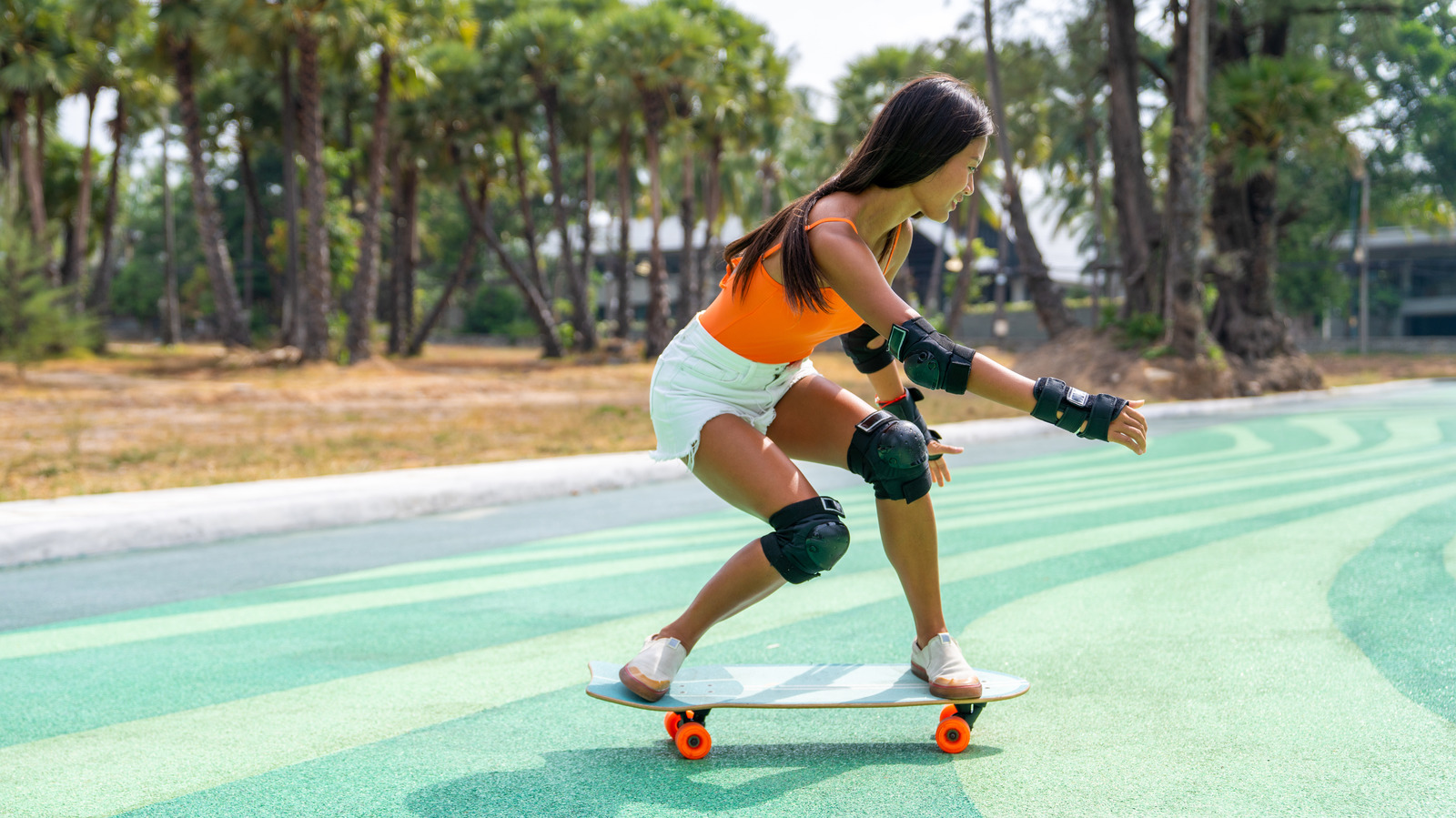
Wearing the right protective gear is non-negotiable, especially for beginners. A properly fitting skate helmet is crucial for protecting against head injuries, which are among the most serious risks in skateboarding. Wrist guards are also highly recommended, as falls often result in landing on outstretched hands. Knee pads and elbow pads provide essential protection against scrapes and impacts during falls. For those concerned about board quality, understanding skateboard manufacturers guide can help in choosing reliable equipment.
Learning The Fundamentals
Before attempting complex tricks or high speeds, it’s vital to master the basic skills. This includes learning how to stand comfortably on the board, push effectively, steer, and, most importantly, how to fall safely. Learning to roll out of a fall can significantly reduce the severity of injuries. Resources on how to teach a kid to skateboard often cover these foundational safety aspects that are equally important for adults.
Choosing The Right Equipment
The type of skateboard you use can impact both your experience and safety. For beginners, a stable, well-constructed skateboard is recommended. Understanding how to choose a skateboard deck can ensure you get a board suited to your size and intended use. Similarly, ensuring your board is in good condition, with wheels and bearings properly functioning, prevents unexpected issues that could lead to falls. When considering brands, reviews like those for Element Skateboards or Santa Cruz Skateboards can offer insights into quality.
Environmental Awareness
Skateboarding in a safe and appropriate environment is key. Avoid busy roads with fast-moving traffic. Skateparks are designed for skateboarding and offer a controlled environment. If skating in public spaces, be aware of pedestrians, uneven surfaces, and potential hazards. Always check the condition of the terrain before you start skating. Understanding the safety of electric skateboards, for instance, is also important if considering alternative forms of wheeled transport, as discussed in articles about electric skateboards safety.
Is Skateboarding A Good Exercise? The Verdict
Skateboarding is undeniably a good exercise. It provides a comprehensive physical workout that challenges the cardiovascular system, strengthens muscles, and significantly enhances balance and coordination. The calorie-burning potential makes it an effective tool for weight management, while the mental benefits, such as stress reduction and confidence-building, add another layer to its value.
The dynamic nature of skateboarding means that it can be adapted to various fitness levels, from casual cruising to intense street skating. While it requires a commitment to learning and safety, the rewards, both physical and mental, are substantial. It offers a unique, fun, and engaging alternative to traditional forms of exercise, making fitness a lifestyle rather than a chore.
For anyone looking to improve their overall health and well-being in an exciting way, hopping on a skateboard is a fantastic choice.
Frequently Asked Questions
How Many Calories Does Skateboarding Burn?
The number of calories burned while skateboarding varies greatly depending on factors like intensity, duration, weight, and the specific type of skateboarding. On average, a person can burn between 300 to 600 calories per hour. More intense activities like downhill or street skating can push this number higher, while casual cruising might result in a lower burn rate.
Is Skateboarding Good For Building Muscle?
Yes, skateboarding is excellent for building muscle, particularly in the lower body and core. The constant engagement of quadriceps, hamstrings, calves, glutes, and abdominal muscles during pushing, balancing, and maneuvering leads to increased strength and muscle tone. The core muscles are crucial for stability and control, making skateboarding a great way to develop a strong midsection.
What Are The Risks Of Skateboarding?
The primary risks associated with skateboarding include falls, which can lead to sprains, fractures, bruises, and head injuries. The severity of these injuries depends on the fall’s circumstances and whether appropriate protective gear is worn. Risks can be mitigated by wearing helmets, wrist guards, knee pads, and elbow pads, as well as by learning fundamental skills and skating in safe environments.
Can Adults Learn To Skateboard?
Absolutely. While children might pick up skateboarding quickly, adults can certainly learn and enjoy the activity. Adults often benefit from a greater understanding of risk assessment and a more disciplined approach to learning. It’s important for adult beginners to be patient, focus on safety, and practice consistently. There are many resources available to help adults learn, as highlighted in guides on how to learn skateboarding as an adult.
How Does Skateboarding Compare To Running For Exercise?
Skateboarding and running are both excellent cardiovascular exercises, but they offer different benefits. Running is generally more effective for pure calorie burning and cardiovascular endurance. However, skateboarding excels in developing balance, coordination, and core strength, while also engaging lower body muscles in a different way.
Skateboarding is also often perceived as more engaging and less repetitive than running for some individuals. The risk of impact injuries can be higher in running due to the repetitive pounding on joints, though skateboarding has its own set of fall-related risks.