Skateboard Parts Explained: A Complete Guide for Beginners
Skateboarding is more than a sport—it’s a culture, a passion, and a practical way to get around. But every skateboard is made of several parts, each with its own job. If you’re new to skateboarding, understanding these parts is crucial.
It helps you choose the right board, customize your ride, and fix problems. Many beginners overlook details that can change how the board feels and performs. This guide breaks down each skateboard part, explains their purpose, and shares key insights that experienced skaters often know.
Whether you’re building a board from scratch or just want to learn, you’ll find clear answers here.
The Skateboard Deck
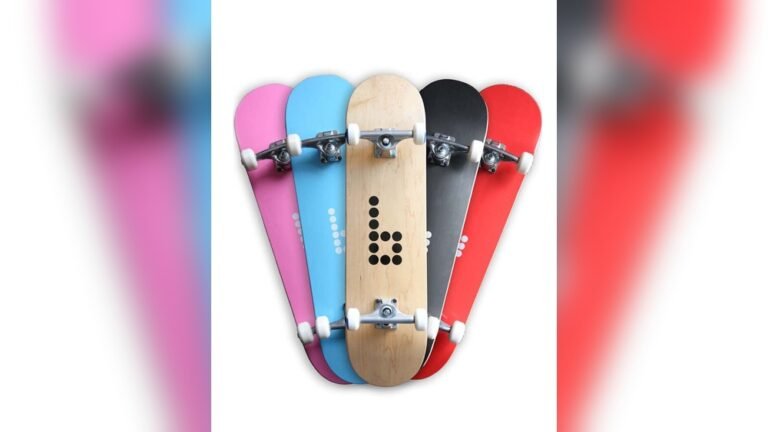
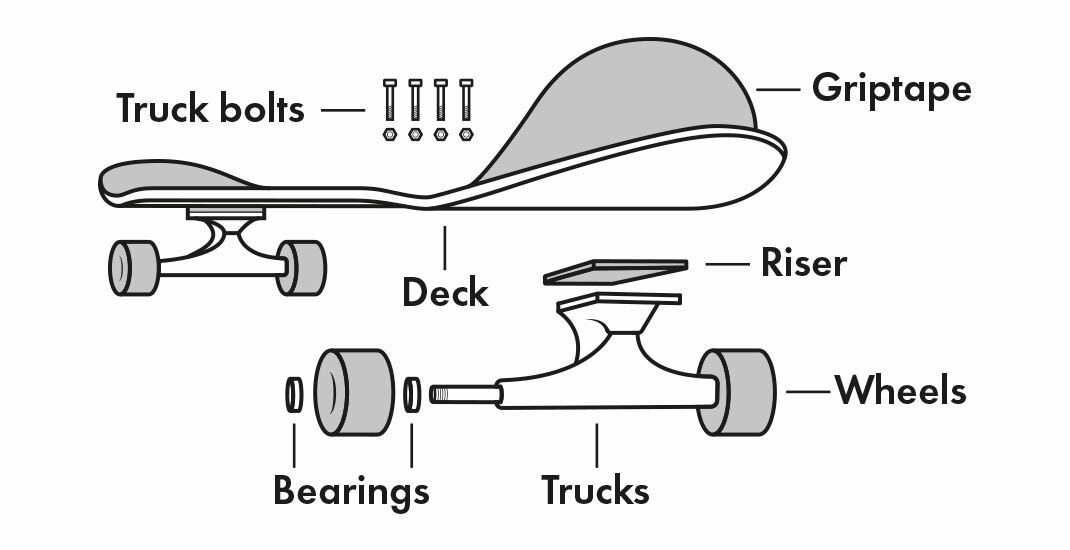
The deck is the main board you stand on. It’s usually made from 7-ply maple wood, which balances strength and flexibility. Most decks are between 7.5″ and 8.5″ wide, but the length can vary from 28″ to 33″.
- Width: Wider decks (8″+) are better for tricks and stability. Narrow decks (under 8″) turn easier and are lighter.
- Shape: Some decks are flat, while others have a concave shape. Concave decks help your feet grip better and make tricks easier.
One non-obvious detail: the deck’s nose (front) and tail (back) are slightly different. The nose is usually a bit longer and steeper. This affects tricks like ollies and nollies. Many beginners think both ends are the same, but pros use the nose for more control.
Graphics don’t affect performance, but they are part of skateboarding’s style and identity.
Deck Materials
Most decks are wood, but there are some made from carbon fiber or plastic. Wood feels natural and flexes well. Carbon fiber is lighter and stronger but costs more. Plastic decks are mostly for cruising, not tricks.
| Deck Material | Weight | Durability | Best Use |
|---|---|---|---|
| Maple Wood | Medium | High | Tricks, all-around |
| Carbon Fiber | Light | Very High | Professional, light tricks |
| Plastic | Light | Low | Cruising |
Grip Tape
Grip tape is a sandpaper-like sheet stuck to the top of the deck. It keeps your feet from slipping. Without grip tape, tricks and safe riding would be almost impossible.
- Texture: Coarse grip tape offers more grip but can wear out shoes faster. Fine grip is smoother, better for cruising.
- Application: Always press grip tape firmly and cut edges carefully. Bubbles or loose edges can cause accidents.
Many beginners miss that grip tape wears out over time. If it starts peeling or losing grip, replace it. Some skaters customize grip tape with designs, but performance comes first.
Trucks
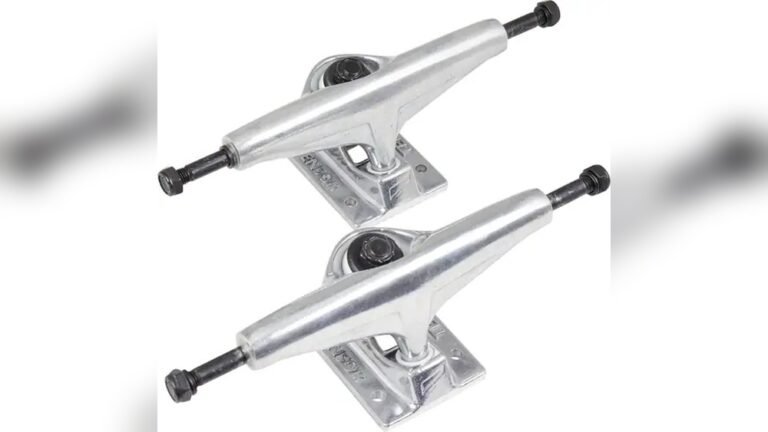
Trucks are the metal parts under the deck. They connect the board to the wheels and let you turn. Each skateboard has two trucks, made of aluminum or other metals.
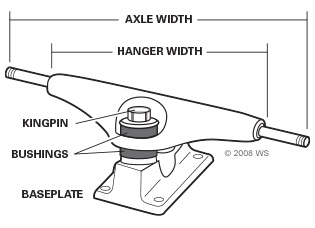
Anatomy Of A Truck
- Hanger: The largest part, holding the wheels.
- Axle: The rod going through the hanger—wheels attach here.
- Baseplate: The bottom part, screwed to the deck.
- Kingpin: The main bolt, holding everything together.
- Bushings: Soft rubber rings around the kingpin; they affect turning.
| Truck Part | Function |
|---|---|
| Hanger | Supports the wheels; absorbs impact |
| Axle | Connects wheels; ensures balance |
| Baseplate | Attaches truck to deck |
| Kingpin | Holds parts together; allows pivot |
| Bushings | Control turning and flexibility |
Truck Size And Tightness
Truck width should match the deck. For example, an 8″ deck needs 8″ trucks. Tight trucks turn less, which is good for tricks. Loose trucks turn more, which helps carving or cruising.
A common mistake: beginners overtighten trucks, making the board hard to turn. Adjust trucks to your comfort. If the board shakes too much, tighten slightly.
Wheels
Wheels affect speed, grip, and ride smoothness. Most are made from urethane, a hard, durable plastic.
- Diameter: Standard skateboard wheels are 50–54mm. Smaller wheels are good for tricks; larger wheels are smoother on rough surfaces.
- Hardness (Durometer): Measured as “A” scale. Soft wheels (78A–90A) grip well and absorb bumps. Hard wheels (95A–101A) slide easily and roll faster.
Non-obvious insight: wheel shape matters. Conical wheels have a wider contact area, which improves stability. Radial wheels are rounder and turn quicker.
Wheel Comparison
| Wheel Type | Diameter | Hardness | Best For |
|---|---|---|---|
| Street | 50–54mm | 99A–101A | Tricks, skateparks |
| Cruiser | 55–60mm | 78A–85A | Sidewalks, rough ground |
| Longboard | 60–75mm | 78A–85A | Speed, downhill |
Bearings
Bearings are small metal rings inside each wheel. They let the wheels spin smoothly. Every skateboard wheel needs two bearings.
- ABEC Rating: The ABEC scale rates bearing precision. ABEC-1 is basic; ABEC-9 is high-precision. For skateboarding, ABEC-5 or ABEC-7 are popular—they roll fast but don’t break easily.
- Material: Most bearings are steel, but some are ceramic. Ceramic bearings are lighter and last longer, but cost more.
One insight: bearings need regular cleaning. Dirt and water can ruin them quickly. Use a bearing cleaner and oil every few months.
Many beginners buy high-ABEC bearings, thinking they are always better. But skateboard bearings don’t need ultra-high precision—sometimes they crack faster under impact. Balance quality and price.
Hardware
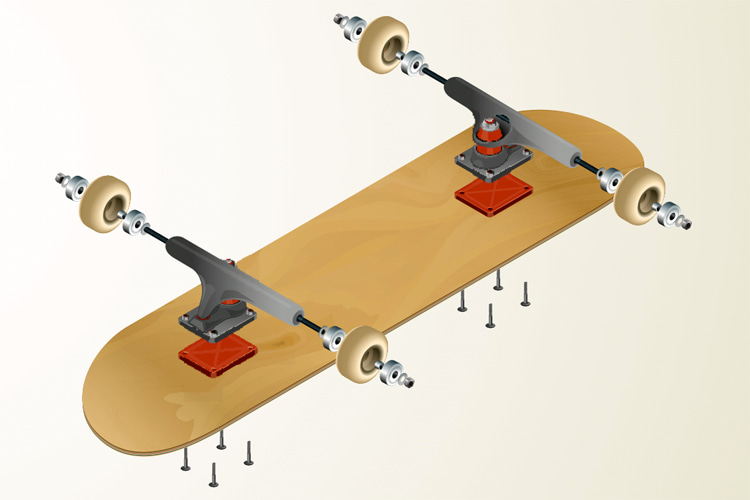
Hardware means the nuts and bolts that attach trucks to the deck. Usually, a skateboard needs eight bolts.
- Size: Most hardware is either 7/8″ or 1″ long. If you add riser pads (see below), use longer bolts.
- Types: Allen or Phillips head screws both work. Allen is less likely to strip over time.
Tip: Hardware can loosen after lots of tricks or hard landings. Check and tighten bolts regularly. If one bolt is missing, replace it quickly—missing hardware affects safety.
Credit: www.warehouseskateboards.com
Riser Pads And Shock Pads
Riser pads are plastic spacers between the trucks and deck. They add height, preventing wheel bite (when wheels hit the deck during turns).
- Thickness: Most riser pads are 1/8″ to 1/2″ thick. Thicker pads mean more clearance, but can make the board less stable.
- Shock pads: These are softer and absorb impact, reducing vibration.
Many beginners skip riser pads, but if you use large wheels, they are essential. Wheel bite can throw you off the board.
Bushings
Bushings are the rubber rings inside trucks. They control how much your board turns and flexes.
- Hardness: Soft bushings turn easier; hard bushings are stiffer.
- Shape: Most bushings are barrel or cone-shaped. Barrels are stable; cones turn more.
Bushings wear out with use. If your board squeaks or feels stiff, replace bushings. It’s a cheap upgrade that changes how your board rides.
Optional Parts And Accessories
There are many add-ons for skateboards. Some make riding safer or more fun.
- Rails: Plastic strips under the deck, used for sliding tricks.
- Tail guards: Protect the deck’s tail from damage.
- Skid plates: Stop wear on the nose and tail.
- Grip-enhancing pads: Extra grip for feet, used in freestyle or downhill.
Most accessories aren’t needed for beginners, but advanced skaters use them for specific tricks or to extend board life.
How Parts Work Together
Every skateboard part affects the others. For example, hard wheels and tight trucks make the board fast but less forgiving. Soft bushings and loose trucks help with turns but can wobble at high speed.
A balanced setup is key. Beginners often focus on one part, like wheels or deck, but real performance comes from matching all parts to your style. If you want to do tricks, pick a lighter deck, hard wheels, and tight trucks.
For cruising, use a wider deck, soft wheels, and loose trucks.
Credit: www.surfertoday.com
Common Mistakes Beginners Make
- Mismatched parts: Putting large wheels on a small deck or tight trucks with soft bushings can make the board unstable.
- Ignoring maintenance: Bearings need cleaning, grip tape wears out, and hardware loosens.
- Buying for looks: Cool graphics or colored wheels don’t improve performance.
- Over-tightening trucks: Makes the board hard to turn and can damage bushings.
- Skipping riser pads: Leads to wheel bite, especially with big wheels.
Understanding these mistakes saves money and prevents accidents.
Skateboard Types And Their Parts
Different skateboard types use different parts. Here’s a quick comparison:
| Type | Deck Width | Wheel Diameter | Truck Type |
|---|---|---|---|
| Standard | 7.5–8.5″ | 50–54mm | Low, light trucks |
| Cruiser | 8–9″ | 55–60mm | Medium, riser pads |
| Longboard | 9–10″ | 60–75mm | High, wide trucks |
Credit: www.skatepro.ca
Choosing The Right Parts
When selecting parts, think about:
- Your style: Tricks, cruising, downhill, or park skating.
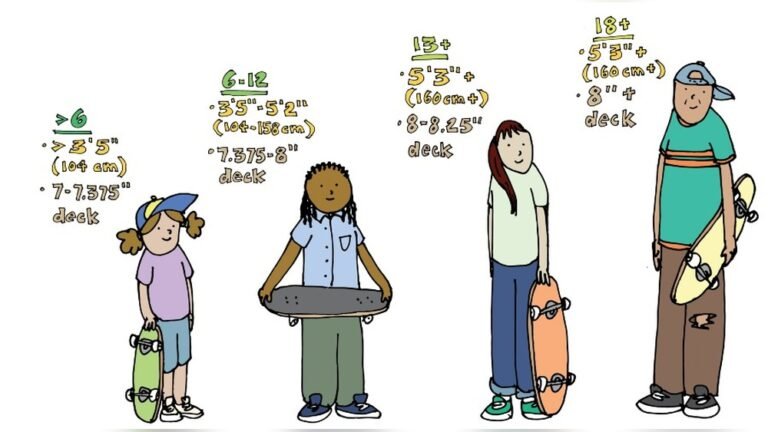
- Your size: Larger riders need wider decks and bigger wheels.
- Budget: Quality parts last longer but cost more.
If unsure, visit a local skate shop. Experts can help you match parts. For detailed technical info, check resources like Wikipedia.
Frequently Asked Questions
What Size Skateboard Deck Should I Use?
Deck width depends on your shoe size and style. For tricks, use 7. 5–8″ decks; for cruising, use 8. 5″+. If your feet hang over, go wider.
How Often Should I Replace Skateboard Bearings?
Replace bearings when wheels feel rough or noisy. With regular cleaning, good bearings last 6–12 months. Water and dirt shorten their life.
Can I Mix Soft Wheels With Hard Bushings?
Yes, but it changes the ride. Soft wheels grip and absorb shock; hard bushings make turns stiffer. Mixing is fine, but adjust based on your comfort.
What Is Wheel Bite And How Do I Prevent It?
Wheel bite happens when wheels hit the deck during turns. Use riser pads, keep trucks properly tightened, and don’t use oversized wheels.
How Do I Maintain My Skateboard?
Check and tighten hardware regularly. Clean bearings every 2–3 months. Replace grip tape if it’s worn. Inspect trucks and bushings for cracks.
Every skateboard is unique. Understanding its parts helps you ride safely, improve skills, and enjoy skateboarding more. Whether you’re a beginner or looking to upgrade, knowing the details lets you build a board that fits you perfectly.