What Does Fakie Mean
The world of skateboarding is rich with its own unique terminology, a language that can sometimes feel like a secret code to newcomers. Among the many terms that define the sport’s lexicon, “fakie” stands out as a fundamental concept. Understanding what fakie means is crucial for any aspiring skater looking to progress beyond basic maneuvers.
It’s not just about riding backward; it’s about a state of being on the board that opens up a whole new dimension of tricks and flow.
This term signifies a skater’s ability to ride in the reverse direction of their natural stance, with their back foot leading. Mastering fakie riding is a stepping stone to more complex tricks and a deeper understanding of board control. It’s the foundation upon which many advanced techniques are built, allowing skaters to seamlessly transition between different riding styles and execute intricate sequences.
Key Takeaways
- Fakie refers to riding a skateboard backward, with the skater’s regular front foot now trailing and their regular back foot leading.
- It is distinct from switch riding, where a skater rides in their non-dominant stance.
- Many skateboarding tricks begin or end in a fakie position, making it essential for progression.
- Learning fakie involves developing balance, board control, and spatial awareness.
- Fakie riding is a core skill for transitioning between tricks and maintaining momentum.
- It’s a fundamental concept in skateboarding that applies to various disciplines, from street skating to vert.
Credit: www.tactics.com
Understanding The Core Concept: What Is Fakie?
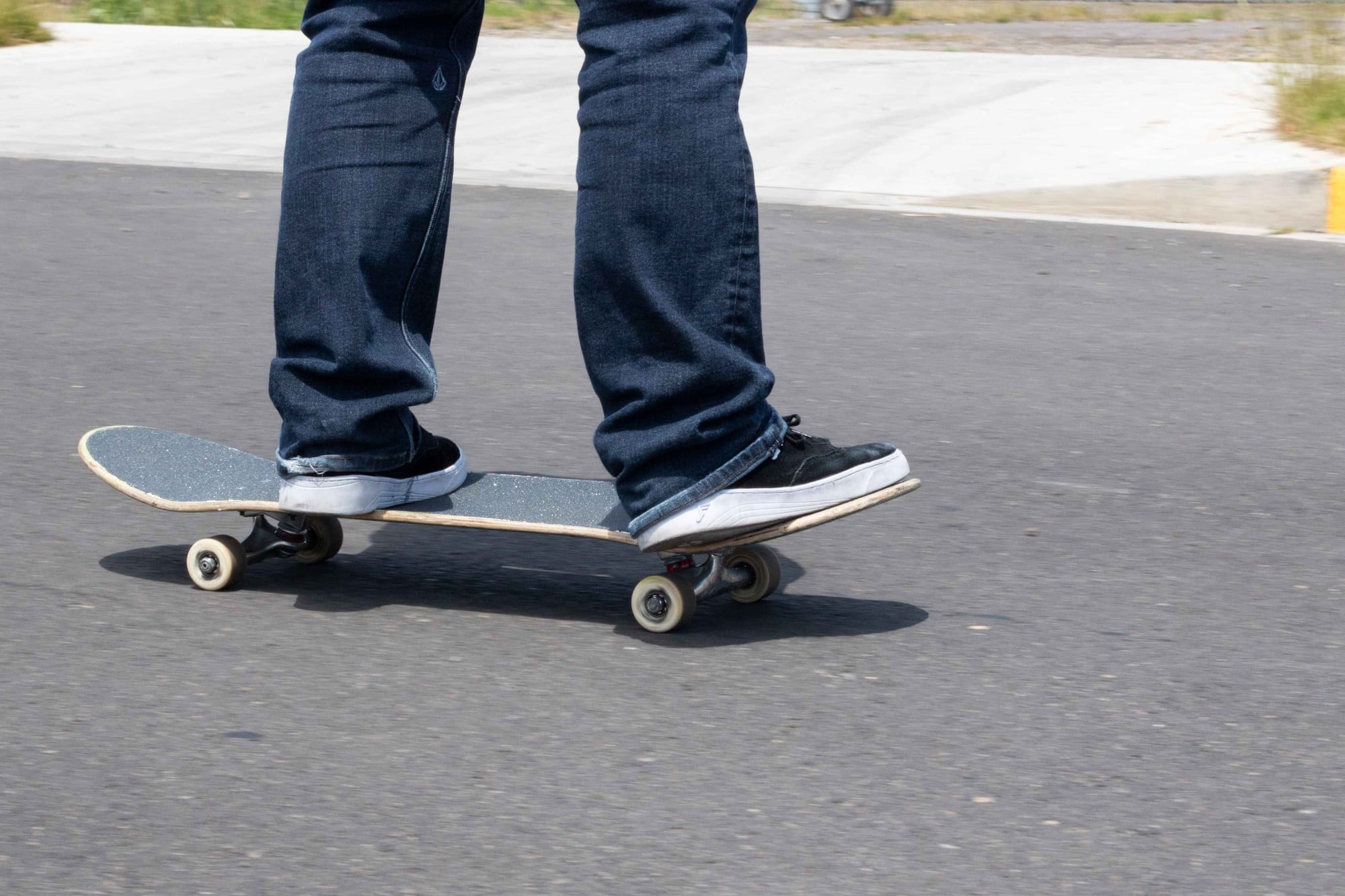
At its heart, fakie describes a way of riding a skateboard where the skater is moving in the opposite direction to how they would normally stand on the board. Imagine your natural stance: your left foot forward (goofy) or your right foot forward (regular). When you ride fakie, you are still in that same natural stance, but you are moving backward. This means the foot that is normally at the back of the board is now in the front, leading the way, and the foot that is normally at the front is now at the back, pushing or controlling.
It’s crucial to differentiate fakie from switch riding. Switch riding occurs when a skater rides in their non-dominant stance. For example, a regular-footed skater who normally rides with their left foot forward would ride switch if they intentionally placed their right foot forward. Fakie, on the other hand, means riding backward *in your natural stance*. So, a regular-footed skater riding fakie still has their left foot forward, but they are moving backward. This distinction is vital for understanding trick names and execution in skateboarding.
The ability to ride fakie is more than just a novelty; it’s a fundamental building block for skateboarding progression. Many tricks require the skater to enter or exit in a fakie position. Without a solid understanding of how to control the board and maintain balance while moving backward, a skater will quickly hit a plateau.
It’s about re-learning how to steer, balance, and control the board from a reversed perspective, which significantly enhances overall board feel and confidence.
Fakie Vs. Switch: A Crucial Distinction
The difference between fakie and switch is a common point of confusion for beginners, but it’s a critical distinction in skateboarding. Let’s break it down with an example.
Consider a skater who is regular-footed. This means their natural stance is with their left foot forward and their right foot at the back.
- Riding Regular: The skater stands with their left foot forward and moves forward.
- Riding Fakie: The skater still has their left foot forward (their natural stance), but they are moving backward. Their right foot is now the leading foot in terms of direction of travel.
- Riding Switch: The skater adopts their non-dominant stance, which for a regular-footed skater is goofy (right foot forward). They are now riding forward in this goofy stance.
The same logic applies to a goofy-footed skater (right foot forward, left foot back):
- Riding Goofy: The skater stands with their right foot forward and moves forward.
- Riding Fakie: The skater still has their right foot forward (their natural stance), but they are moving backward. Their left foot is now the leading foot in terms of direction of travel.
- Riding Switch: The skater adopts their non-dominant stance, which for a goofy-footed skater is regular (left foot forward). They are now riding forward in this regular stance.
The key takeaway is that fakie is about direction of travel relative to your stance, while switch is about the stance itself being non-dominant. This distinction is fundamental because trick names often specify whether they are performed fakie or switch, indicating a different set of challenges and execution. For instance, a “fakie ollie” is an ollie performed while rolling backward in your natural stance, whereas a “switch ollie” is an ollie performed rolling forward in your non-dominant stance.
The Mechanics Of Fakie Riding
Riding fakie requires a subtle but significant adjustment in how a skater interacts with their board. The primary challenge is maintaining balance and control while moving in reverse. Your body naturally wants to orient itself for forward motion, so riding backward necessitates a conscious effort to adapt.
- Weight Distribution: In fakie, the weight distribution shifts. The foot that is now leading (your natural back foot) will bear more of your weight, and you’ll need to use it to steer and control. The natural front foot, now at the back, will be used more for subtle adjustments and potentially for pushing off if you’re not rolling.
- Steering: Turning in fakie feels different. Because your body is facing the opposite direction of travel, your steering inputs need to be adjusted. Leaning on your toes will turn the board in one direction, while leaning on your heels will turn it the other, but the sensation and the required lean angle will feel different than when riding forward.
- Vision and Awareness: A significant part of fakie riding is spatial awareness. You can’t see directly behind you without turning your head, so you rely on peripheral vision and a sense of where the board is in relation to your surroundings. This can be disorienting initially but improves with practice.
- Pushing Off: If you need to gain speed while in a fakie position, you’ll use your natural front foot (now at the back) to push off the ground. This motion feels awkward at first, as you’re pushing with the foot that’s typically used for balance and control.
Developing Fakie Skills: A Step-by-step Approach
Learning to ride fakie is a gradual process that builds upon fundamental skateboarding skills. It requires patience and a willingness to embrace a feeling of awkwardness as you retrain your body’s instincts.
Step 1: Getting Comfortable Rolling Backward
The first hurdle is simply being comfortable rolling backward without losing balance.
- Start Slow: Begin on a smooth, flat surface. Gently push off with your natural front foot and then bring it onto the board, adopting your natural stance but moving backward.
- Focus on Balance: Keep your knees bent and your weight centered over the board. Try to make small adjustments with your feet and ankles to maintain balance. Don’t worry about steering much at this stage; just focus on rolling in a straight line backward.
- Practice Pushing: If you need to gain speed, practice pushing off with your natural back foot (which will now be at the tail of the board). This will feel unnatural, but it’s essential for building momentum. Push off gently and quickly bring the foot back onto the board.
Step 2: Steering In Fakie
Once you can roll backward comfortably, the next step is learning to steer.
- Gentle Carving: While rolling fakie, try making small turns by leaning gently on your toes and heels. Pay close attention to how your weight shifts affect the board’s direction.
- Head and Shoulder Movement: Your head and shoulder movements play a crucial role in steering, just as they do when riding forward. Try turning your head slightly in the direction you want to go, and allow your shoulders to follow. This will help initiate the turn more smoothly.
- Practice Kickturns: A fundamental part of fakie steering is the kickturn. While rolling fakie, lift the nose of the board slightly by applying pressure to the tail with your natural front foot. Pivot the board around the back truck to change direction, then lower the nose back down. Practicing kickturns in both directions will greatly improve your fakie maneuverability.
Step 3: Integrating Fakie Into Tricks
The real value of learning fakie comes when you start incorporating it into tricks.
- Fakie Ollies: This is often the first trick skaters learn in fakie. It’s performed the same way as a regular ollie, but while rolling backward. The timing of the pop and the flick of your ankle might feel slightly different due to your reversed orientation.
- Transitions: Many tricks involve transitioning *into* or *out of* a fakie position. For example, you might do a trick that lands you rolling fakie, or you might perform a fakie trick and then transition back to riding forward.
- Combination Tricks: As you progress, you’ll start linking tricks together, often involving fakie maneuvers. This is where a solid fakie foundation truly shines, allowing for more complex and fluid lines.
Pro Tip: Don’t be discouraged by the initial awkwardness. Riding fakie feels unnatural for everyone at first. Consistent practice, even for short periods, will build muscle memory and confidence. Focus on one aspect at a time, balance, then steering, then specific tricks.

Credit: www.schoolofskate.co.uk
The Role Of Fakie In Skateboarding Tricks
Fakie isn’t just a way to ride; it’s an integral component of countless skateboarding tricks. Many maneuvers are named specifically to indicate that they are performed while rolling backward in the skater’s natural stance. Understanding these trick variations is key to appreciating the depth and complexity of skateboarding.
Fakie Variations Of Common Tricks
Many basic and intermediate tricks have fakie counterparts. These variations often require a slightly different approach to execution due to the reversed momentum and altered body positioning.
- Fakie Ollie: As mentioned, this is the foundational fakie trick. It’s the basis for most other fakie maneuvers.
- Fakie Shuvit (or Pop Shuvit): This trick involves spinning the board 180 degrees horizontally under your feet while you remain in your natural stance, moving backward. The execution differs from a regular shuvit because your body is facing the opposite direction.
- Fakie Kickflip/Heelflip: These are fakie versions of the iconic kickflip and heelflip. The mechanics of flicking the board with your foot are similar, but the timing and body rotation are adjusted for fakie motion.
- Fakie 180 Ollie: This trick involves performing an ollie while simultaneously rotating your body and the board 180 degrees, landing in a forward-rolling stance. This is a significant step in mastering fakie transitions.
Tricks That Start Or End Fakie
Beyond tricks specifically named “fakie,” many other maneuvers naturally lead into or out of a fakie position.
- Transitions from Grinds/Slides: When coming off a grind or slide on a ledge or rail, a skater might land rolling fakie, especially if they approached the obstacle traveling backward.
- Manuals and Noseslides: Landing a manual (balancing on the back wheels) or a noseslide (sliding on the front truck) can sometimes result in a fakie roll-out, depending on the approach and exit angle.
- Vert and Transition Skating: In disciplines like vert skating or ramp riding, skaters frequently perform tricks that naturally end with them rolling fakie out of a transition or after an aerial maneuver. This allows them to maintain momentum and set up for the next move.
The ability to seamlessly transition between forward and fakie riding is a hallmark of a skilled skater. It allows for more creative lines, complex trick combinations, and a smoother overall flow on the board. It demonstrates a deep understanding of board control and spatial awareness.

Credit: www.reddit.com
Equipment Considerations For Fakie Riding
While fakie riding doesn’t require specialized equipment, certain aspects of a skateboard can make the learning process smoother and more enjoyable. The fundamental goal is to have a reliable setup that offers good control and stability.
Skateboard Deck Choice
The deck is the primary surface you interact with. When learning fakie, especially if you’re planning to do tricks, the deck’s characteristics matter.
- Symmetrical or Near-Symmetrical Shape: Many modern skateboard decks have a “popsicle stick” shape, which is relatively symmetrical. This is beneficial for fakie riding because the nose and tail have similar concaves and shapes, making it less disorienting to switch between riding forward and backward. Older or more specialized decks might have distinctly shaped noses and tails, which can make fakie riding feel more awkward.
- Concave: The concave (the curvature across the width of the deck) affects board feel and control. A medium concave typically offers a good balance of foot lock-in and responsiveness, which is helpful for both forward and fakie riding.
- Size: Deck width is a personal preference, but a slightly wider deck can offer more stability, which is beneficial when you’re still getting used to riding fakie. You can explore different sizes based on your shoe size and riding style. For guidance, check out resources like a Skateboard Manufacturers Guide: Top Tips for Quality Boards.
Trucks And Wheels
Trucks and wheels play a crucial role in how your board handles.
- Truck Tightness: For beginners learning fakie, slightly tighter trucks can provide more stability and make it easier to balance. As your skills improve, you can loosen them for easier turning and maneuverability.
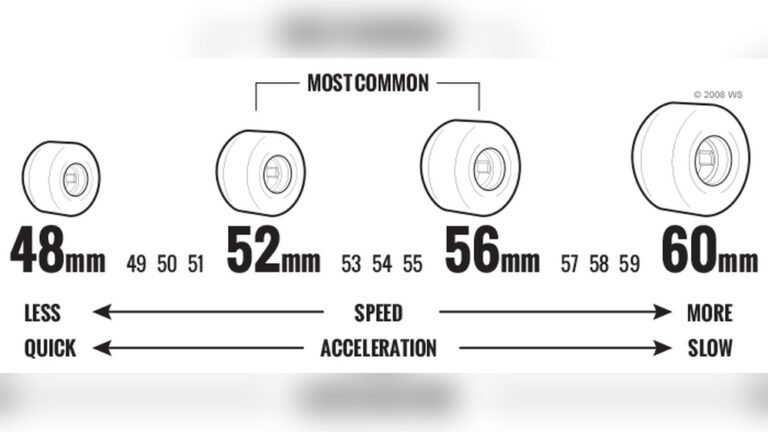
- Wheel Size and Hardness: Standard skateboard wheels (around 52-54mm diameter, 99a-101a hardness) are suitable for most street and park skating, including fakie riding. Smaller, harder wheels are generally preferred for tricks, while larger, softer wheels offer a smoother ride on rougher surfaces.
Example: A skater learning fakie ollies might find that a deck with a pronounced kicktail makes the pop easier, even when riding backward. Similarly, trucks that are not too loose prevent the board from wobbling excessively while they focus on balance.
Maintenance For Consistent Performance
Keeping your skateboard in good condition is essential for predictable performance, which is vital when learning new skills like riding fakie.
- Bearings: Clean and lubricated bearings allow your wheels to spin freely, providing a smoother and faster roll. This makes it easier to maintain momentum while practicing fakie.
- Grip Tape: Fresh grip tape provides optimal traction, ensuring your feet stay firmly planted on the board, which is crucial for balance and control in any riding position.
Ultimately, the best equipment is what feels comfortable and reliable to you. As you progress in your skateboarding journey, you’ll develop a better understanding of how different components affect your riding, including when you’re moving fakie.
The Benefits Of Mastering Fakie Riding
Learning to ride fakie might seem like a mere technicality, but its benefits extend far beyond simply being able to roll backward. Mastering this skill significantly enhances a skater’s overall ability, confidence, and creativity on the board.
Improved Board Control And Balance
The most immediate benefit of practicing fakie is a dramatic improvement in overall board control and balance. When you ride fakie, you’re forced to adapt your weight distribution and steering techniques. This challenges your body in new ways, forcing you to develop a more nuanced understanding of how your movements affect the board.
- Enhanced Core Strength: Maintaining balance in an unnatural position engages your core muscles more intensely. This leads to better stability and a stronger physical foundation for all skateboarding maneuvers.
- Greater Spatial Awareness: Riding backward naturally enhances your awareness of your surroundings and your position on the board. You learn to rely more on peripheral vision and proprioception (your sense of your body’s position in space), which are invaluable skills for any skater.
- Refined Footwork: You develop a more sensitive touch on the board, learning to make micro-adjustments with your feet and ankles to stay balanced. This heightened sensitivity translates to better control when riding forward as well.
Increased Trick Versatility And Creativity
Fakie riding opens up a vast new repertoire of tricks and trick combinations. Many advanced maneuvers are built upon the foundation of fakie riding.
- Access to New Tricks: As previously discussed, numerous tricks are specifically performed fakie (e.g., fakie kickflip, fakie 180). Without fakie proficiency, these tricks are inaccessible.
- Smoother Transitions and Lines: The ability to flow between forward and fakie riding allows for more creative and complex lines in street skating or on ramps. You can link tricks more seamlessly, using fakie as a bridge between different maneuvers. This leads to a more dynamic and engaging skating style.
- Problem-Solving on the Board: When faced with unexpected situations or obstacles, a skater proficient in fakie can often find creative solutions by changing direction or adapting their approach. This adaptability is a key characteristic of advanced skaters.
Boosted Confidence And Overcoming Challenges
Learning a skill that initially feels awkward and difficult, like riding fakie, provides a significant confidence boost.
- Conquering Discomfort: Pushing past the initial discomfort and awkwardness of fakie riding builds mental resilience. Successfully landing a fakie trick or simply cruising backward smoothly is a rewarding experience that reinforces a skater’s capabilities.
- Foundation for Advanced Skills: Knowing you’ve mastered a fundamental skill like fakie provides a solid psychological base for tackling even more challenging tricks. It demonstrates that you can learn and adapt to new techniques.
- Enjoyment of Skateboarding: The more skills you possess, the more enjoyable skateboarding becomes. Being able to perform a wider variety of tricks and skate with more flow enhances the overall experience. This can lead to greater engagement with the sport, contributing to its positive impact on mental health.
Mastering fakie riding is an investment in your skateboarding journey. It enhances your physical capabilities, expands your creative potential, and builds the confidence needed to push your limits.
Real-world Examples And Applications
The concept of fakie riding isn’t confined to theory; it’s actively applied in various skateboarding disciplines and by skaters of all levels. Observing how professionals and even intermediate skaters utilize fakie provides practical context for its importance.
Example 1: Street Skating Lines
In street skating, skaters often chain together multiple tricks and maneuvers to create a “line. ” Fakie riding is indispensable for connecting these elements smoothly.
Imagine a skater approaching a set of stairs. They might perform a regular ollie down the stairs, land rolling, and immediately transition into a fakie 180 ollie to turn around and skate away backward. Alternatively, after landing the ollie, they might do a fakie shuvit to change direction and then push off with their back foot to gain speed in the fakie direction. This seamless integration of fakie maneuvers allows for complex lines that would be impossible otherwise. Brands like Santa Cruz Skateboards are known for producing decks that hold up to the demands of this type of street skating.
Example 2: Vert And Transition Skating
On ramps and in skateparks, fakie riding is equally crucial. Skaters often ride fakie out of transitions or after performing aerial tricks.
A skater dropping into a half-pipe might ride fakie for a portion of their run, using their fakie steering to control their speed and position on the ramp. After launching out of a ramp and performing an aerial trick, they might land rolling fakie, allowing them to pump back down the transition or set up for another maneuver on the opposite side.
Skaters like Tony Hawk have showcased incredible mastery of fakie maneuvers in vert skating, demonstrating the potential for high-level execution. The ability to control the board in both directions is vital for maintaining momentum and flow in these dynamic environments.
Example 3: Learning Progression For Beginners
For beginners, understanding and practicing fakie is a key step in their development.
A child learning to skateboard might first master rolling forward, then learn to push and balance. The next logical step is learning to roll backward. This might start with simple backward rolling and progress to fakie ollies or fakie kickturns. Successfully executing these fakie basics provides a significant confidence boost and opens the door to more intermediate tricks. Resources like How to Teach a Kid to Skateboard: Easy Steps for Beginners often incorporate fakie elements as skaters progress. Similarly, How to Learn Skateboarding As an Adult: Essential Tips for Beginners will invariably touch upon the necessity of mastering fakie.
These examples highlight that fakie riding is not an isolated skill but a fundamental aspect of skateboarding that permeates various styles and skill levels, from the most basic maneuvers to the most advanced technical tricks.
Frequently Asked Questions
What Is The Difference Between Fakie And Switch In Skateboarding?
The key difference lies in the stance and direction of travel. Fakie means riding backward *in your natural stance*. For example, a regular-footed skater (left foot forward) riding fakie still has their left foot forward but is moving backward. Switch means riding *