What Size Skateboard for a 6 Year Old
Choosing the right skateboard for a young child, especially a 6-year-old, is crucial for their safety, enjoyment, and progression in the sport. A board that’s too big can be unwieldy and intimidating, while one that’s too small might limit their ability to learn and grow.
This guide will walk you through the essential factors to consider when selecting a skateboard for a 6-year-old, ensuring a positive and safe introduction to skateboarding. We’ll cover deck size, wheel type, truck setup, and other important considerations that will help your child build confidence and have fun on their new ride.
Key Takeaways
- Deck Width is King: For a 6-year-old, a deck width of 6.5 to 7.0 inches is generally recommended.
- Deck Length Follows Width: While less critical than width, a deck length of 27 to 29 inches typically pairs well with the suggested widths.
- Wheel Size Matters for Terrain: Smaller, harder wheels (around 50-53mm, 99A-101A durometer) are best for skateparks and smooth surfaces, while slightly larger, softer wheels can handle rougher terrain better.
- Trucks Need to Match: Ensure the truck width is proportional to the deck width to prevent wheel bite and maintain stability.
- Complete Skateboards are Ideal: For beginners, pre-assembled complete skateboards offer a balanced and cost-effective option.
- Prioritize Safety Gear: Always ensure a helmet, knee pads, elbow pads, and wrist guards are used.

Credit: www.skatexs.com
Understanding Skateboard Sizing For Young Riders
The world of skateboarding can seem overwhelming with its specialized terminology and seemingly endless options. For parents and guardians looking to get a child started, the primary concern is finding a board that is the right size. This isn’t just about aesthetics; it directly impacts a child’s ability to control the board, learn fundamental skills, and most importantly, stay safe.
A board that is too large or too heavy can make simple maneuvers incredibly difficult, leading to frustration and potential injury. Conversely, a board that’s too small might not provide enough stability as the child grows or attempts more advanced movements.
The most critical dimension when determining skateboard size is the deck width. This measurement dictates how stable the board feels underfoot and influences the rider’s stance. For younger children, a narrower deck provides a more manageable platform, allowing them to easily place their feet and maintain balance. Deck length is also a factor, but it’s often proportional to the width and less of a primary concern for very young beginners. Understanding these basic measurements is the first step in making an informed decision.
The Importance Of Deck Width
The deck width is arguably the most critical measurement when selecting a skateboard for a child. It refers to the widest part of the skateboard’s deck, typically measured from edge to edge. A wider deck offers more surface area, which translates to greater stability. For a 6-year-old, who is still developing their balance and coordination, a stable platform is essential. A deck that is too wide can feel unwieldy, making it difficult for them to maneuver or even stand comfortably. Conversely, a deck that is too narrow can feel tippy and unstable, leading to a lack of confidence.
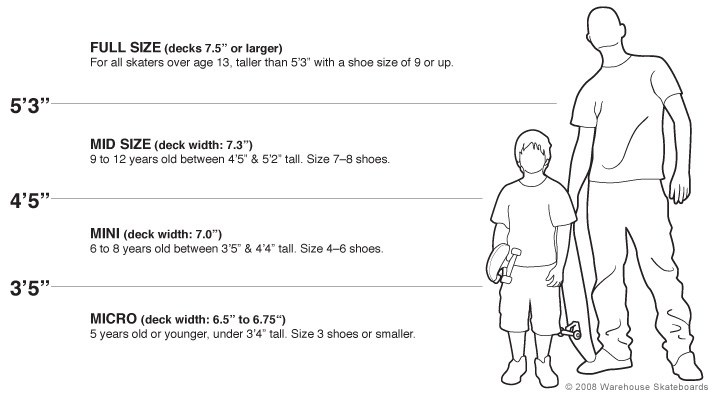
Children’s shoe sizes are a good starting point for determining appropriate deck width. Generally, skateboards designed for younger children fall into the “mini” or “mid-size” categories. For a 6-year-old, this typically means a deck width ranging from 6.5 inches to 7.0 inches. This range provides a good balance of stability and maneuverability, allowing them to learn the basics without feeling overwhelmed by the board’s size. It’s important to remember that these are general guidelines, and individual child development can vary.
Deck Length And Its Role
While deck width is the primary consideration, deck length also plays a role in overall board feel and performance. Deck length is measured from the tip of the nose to the tip of the tail. For children’s skateboards, the length is usually proportional to the width. A deck that is too long can be difficult for a child to control and turn, especially at lower speeds. A deck that is too short might not offer enough foot placement for proper balance during certain maneuvers.
For a 6-year-old riding a deck between 6.5 and 7.0 inches wide, the corresponding length will typically fall between 27 and 29 inches. This length provides adequate space for their feet while remaining manageable for their size and strength. It’s worth noting that many manufacturers offer pre-designed “mini” or “kid-sized” complete skateboards where the width and length are already appropriately matched. Focusing on the recommended width is the most important factor, and the length will usually be suitable if the width is correct.
The “mini” And “mid-size” Categories Explained
Skateboard manufacturers often categorize their boards into different sizes to cater to various age groups and skill levels. For young riders, the most relevant categories are typically “mini” and “mid-size. “
- Mini Skateboards: These are the smallest standard sizes, usually featuring deck widths between 6.5 inches and 6.75 inches. They are ideal for very young children, typically those aged 5-8, depending on their size and skill. The shorter length and narrower width make them easy to control and maneuver.
- Mid-Size Skateboards: Stepping up slightly, mid-size skateboards generally have deck widths ranging from 7.0 inches to 7.5 inches. These are often suitable for children aged 8-12, or for older, smaller children who have outgrown a mini board but are not yet ready for a full-size adult board.
For a 6-year-old, a mini skateboard is often the best starting point. However, if the child is on the larger side for their age or has shown good initial balance and coordination, a slightly wider mid-size board might also be appropriate. It’s always best to err on the side of slightly smaller for beginners to ensure they build confidence.
Essential Components Of A Skateboard For Kids
Beyond the deck itself, understanding the other components of a skateboard is vital for making an informed purchase. Each part plays a role in how the board rides, handles, and performs. For a 6-year-old, the focus should be on components that promote stability, ease of use, and durability, rather than high-performance features.
The main components to consider are the trucks, wheels, bearings, and grip tape. While most children will likely be starting with a complete skateboard, a pre-assembled board ready to ride, knowing what makes up that complete setup can help you evaluate its quality and suitability.
Trucks: The Steering Mechanism
Skateboard trucks are the T-shaped metal axles that attach to the underside of the deck. They hold the wheels and are responsible for allowing the board to turn. For a young rider, the truck’s width is crucial and needs to be proportional to the deck width.
- Matching Truck Width to Deck Width: The general rule of thumb is that the truck axles (the outer ends of the T-shape) should be roughly the same width as the skateboard deck. For a deck width of 6.5 to 7.0 inches, you’ll typically be looking for trucks that are around 7.5 to 8.0 inches in total axle width. This ensures that the wheels are positioned directly under the edges of the deck, providing optimal balance and preventing “wheel bite”, where the wheels rub against the deck during turns, which can cause the rider to fall.
- Kingpin and Bushings: The trucks also contain bushings, which are small rubber or urethane cylinders that control how easily the truck turns. For beginners, slightly tighter bushings can offer more stability. Many beginner skateboards come with medium-soft bushings that offer a good balance of turnability and stability.
Wheels: Size And Durometer
Skateboard wheels are made of polyurethane and come in various sizes and hardness levels, measured by their diameter (in millimeters) and durometer (a hardness scale, typically A-scale). These factors significantly influence how the board rides.
- Wheel Diameter: For younger children and beginners, smaller wheels are generally preferred. Wheels with a diameter of 50mm to 53mm are common on mini and mid-size skateboards. Smaller wheels are lighter, making them easier for a child to accelerate and control. They also keep the board closer to the ground, reducing the height of any potential fall.
- Wheel Durometer (Hardness): The durometer rating indicates the wheel’s hardness. A higher number means a harder wheel. For general skateboarding, especially on smoother surfaces like skateparks or smooth pavement, harder wheels are preferred. A durometer of 99A to 101A is standard for street and park skating. These wheels are faster and slide more easily, which is beneficial for tricks. For a 6-year-old primarily learning to balance and push around, this hardness is suitable. If they will be riding on rougher, uneven surfaces, slightly softer wheels (around 95A-97A) might offer a smoother ride, but they will be slower and less ideal for learning tricks later on.
Bearings: The Rolling Mechanism
Bearings are small, circular metal devices that fit inside the wheels, allowing them to spin freely around the truck’s axle. They are rated using the ABEC scale (Annular Bearing Engineering Committee), which measures precision. While high ABEC ratings (like ABEC-7 or ABEC-9) are often marketed, for a beginner child, the ABEC rating is less important than the quality and condition of the bearings.
- ABEC Ratings: For children’s skateboards, ABEC-3 or ABEC-5 bearings are perfectly adequate. The primary goal is for the wheels to spin smoothly and reliably. Overly precise bearings might not offer a significant advantage for a beginner and can be more expensive.
- Maintenance: Regardless of the ABEC rating, keeping bearings clean and free from dirt and moisture is crucial for their longevity and performance.
Grip Tape: Traction And Control
Grip tape is the sandpaper-like material applied to the top surface of the skateboard deck. It provides the traction needed for the rider’s shoes to grip the board, preventing their feet from slipping off, especially during tricks or when riding on uneven terrain.
- Standard Grip: Most beginner skateboards come with standard black grip tape that offers good traction. The grit level is usually sufficient for learning basic riding and balance.
- Considerations for Kids: For very young children, ensuring the grip tape isn’t excessively coarse is a minor consideration, though most standard grip tape is fine. The main point is that it provides the necessary grip for safety and control.

Credit: wsvn.com
Choosing Between Complete Skateboards And Custom Builds
When it comes to purchasing a skateboard for a 6-year-old, the decision often comes down to two main options: buying a complete skateboard or building a custom setup. For beginners, especially young ones, a complete skateboard is almost always the recommended choice.
The Case For Complete Skateboards
A complete skateboard is a pre-assembled unit that includes a deck, trucks, wheels, bearings, grip tape, and hardware, all ready to ride straight out of the box. These are designed to offer a balanced and functional setup for beginners at a more accessible price point.
- Cost-Effectiveness: Complete skateboards are significantly more affordable than purchasing each component separately. Manufacturers can source parts in bulk, allowing them to offer a complete package at a lower cost. This is ideal for a child who is just starting and may not stick with skateboarding long-term.
- Appropriate Sizing: As discussed, complete skateboards designed for children are already sized appropriately. Manufacturers have done the work of matching deck width, truck size, and wheel size to create a cohesive and beginner-friendly setup. This takes the guesswork out of the process for parents.
- Durability for Beginners: While not always built with the highest-grade materials found in pro-level boards, completes are generally durable enough to withstand the wear and tear of beginner use. They are built to be ridden and learned on.
- Convenience: The sheer convenience of a complete board cannot be overstated. It eliminates the need to research individual components and assemble the board, making it a quick and easy option for parents.
When A Custom Build Might Be Considered (rarely For 6-year-olds)
Building a custom skateboard involves selecting each component, deck, trucks, wheels, bearings, grip tape, and hardware, individually and then assembling them. This approach is typically for more experienced skaters who have specific preferences for how their board rides.
- Personalization: Custom builds allow for complete personalization. Riders can choose the exact deck shape and concave, truck brand and height, wheel size and hardness, and bearing type to perfectly match their riding style and preferences.
- Higher Quality Components: Experienced skaters often opt for higher-quality, more durable components that can withstand advanced tricks and heavy use.
- Cost: Custom builds are almost always more expensive than complete skateboards.
For a 6-year-old, the benefits of a custom build are minimal, and the drawbacks (cost, complexity) are significant. The focus for a young beginner should be on a safe, appropriately sized, and functional board, which a complete skateboard provides. If, after several years of consistent riding, the child develops specific preferences or needs an upgrade, then a custom build might become a consideration.
Credit: www.warehouseskateboards.com
Top Skateboard Brands For Kids
While many skateboard manufacturers produce boards suitable for children, some brands are particularly well-regarded for their quality and offerings in the beginner and youth categories. Choosing a reputable brand can provide peace of mind regarding the quality and safety of the skateboard.
When looking at brands, consider those that offer dedicated “mini” or “kid-sized” complete skateboards. These are often designed with the specific needs of young riders in mind.
Established Brands With Youth Offerings
Several well-known skateboard companies have a strong presence in the market and offer excellent options for children. These brands often have a long history in skateboarding, meaning they understand the nuances of board construction and what makes a good ride.
- Element Skateboards: Element is a highly respected brand known for its quality decks and complete setups. They offer a range of mini and mid-size completes that are perfect for beginners. Their graphics are often appealing to younger riders as well. You can read more about Element Skateboards in our buyer’s guide.
- Santa Cruz Skateboards: Another iconic name in skateboarding, Santa Cruz also produces high-quality complete skateboards for younger riders. They are known for their durable construction and classic graphics. Their youth-sized boards are reliable choices for beginners. Check out our review of Santa Cruz Skateboards.
- Girl Skateboards & Chocolate Skateboards: These sister brands, owned by Crailtap, are popular among skaters of all ages. They offer well-constructed complete skateboards in smaller sizes that are suitable for children. Their decks are known for their quality.
- Zero Skateboards: While often associated with a more aggressive style, Zero also offers complete skateboards in smaller sizes that are built to last and provide a stable riding platform for beginners.
Specialty Kids’ Skateboard Brands
Some brands focus specifically on creating skateboards and safety gear for children. These brands prioritize safety features, appropriate sizing, and engaging designs for younger audiences.
- Micro Kickboard: While primarily known for their scooters, Micro Kickboard also offers some entry-level skateboards designed with children in mind. Their focus is on ease of use and stability.
- Razor: Razor is a widely available brand that offers affordable complete skateboards. While their quality might not match the premium skate brands, they are a common and accessible option for parents introducing their child to skateboarding. It’s important to ensure the Razor board purchased is appropriately sized.
When selecting a brand, look for reviews specifically mentioning their youth or beginner complete skateboards. The core construction and component quality are more important than the brand name alone, but established brands often have a track record that instills confidence. For insights into what goes into quality board manufacturing, explore our Skateboard Manufacturers Guide.
Safety Gear: Non-negotiable For Young Skaters
When a 6-year-old is learning to skateboard, safety must be the absolute top priority. Skateboarding, by its nature, involves falling. For young children, who are still developing their reflexes and understanding of risk, proper safety gear is not optional, it’s essential.
Investing in good quality protective equipment can significantly reduce the risk of serious injury and boost a child’s confidence as they learn.
The core pieces of safety gear for any young skateboarder include a helmet, knee pads, elbow pads, and wrist guards.
The Importance Of A Certified Helmet
A properly fitting helmet is the single most important piece of safety gear. Head injuries can be severe, and a helmet is designed to absorb impact and protect the skull.
- Certification: Always ensure the helmet meets safety standards, such as those set by the ASTM (American Society for Testing and Materials) or CPSC (Consumer Product Safety Commission) in the US. Helmets designed specifically for skateboarding are generally recommended, as they offer better coverage for the back of the head compared to bicycle helmets.
- Fit: A helmet must fit snugly and sit level on the head, covering the forehead. It should not wobble or shift when the child moves their head. Straps should be adjusted to be secure but comfortable. Many skate helmets have an adjustable dial system in the back for a more precise fit.
- Comfort and Ventilation: While safety is paramount, a helmet that is comfortable and well-ventilated will be more likely to be worn consistently.
Knee Pads And Elbow Pads
Knee pads and elbow pads protect these vulnerable joints from scrapes, bruises, and impact during falls. Young children often fall onto their knees and elbows first when trying to catch themselves.
- Coverage: Look for pads that offer good coverage and are designed for skateboarding. They should have a hard plastic shell on the outside to slide on impact and soft padding underneath.
- Fit: Pads should be snug enough to stay in place during activity but not so tight that they restrict movement or circulation. Adjustable straps are key for achieving a good fit.
Wrist Guards: Protecting Against Fractures
Wrist guards are crucial for preventing wrist fractures, a common injury in skateboarding falls. When falling, people instinctively put their hands out to break the fall, and the wrists can bear the brunt of the impact.
- Design: Skateboarding wrist guards typically have a plastic splint on the palm side and sometimes on the back of the hand to limit wrist hyperextension.
- Fit: Similar to other pads, wrist guards need to fit securely without being overly restrictive. They should allow for enough dexterity to hold onto the skateboard.
Additional Safety Considerations
- Footwear: While not technically “gear,” appropriate footwear is essential. Skate shoes offer good grip, ankle support, and durability. Avoid sandals or open-toed shoes. For more on this, check out our guide on What to Wear for Skateboarding.
- Supervision: For a 6-year-old, constant supervision by an adult is vital, especially when they are first learning.
- Safe Environments: Always ensure the child is riding in a safe, open area away from traffic, obstacles, and hazards. Smooth, flat surfaces are ideal for beginners.
How To Teach A 6-year-old To Skateboard
Getting a 6-year-old started with skateboarding is an exciting process that requires patience, encouragement, and a focus on fun. The goal is to build their confidence and basic skills in a safe and supportive environment. Remember that every child learns at their own pace, and the emphasis should always be on enjoyment rather than performance.
When teaching a child, breaking down the process into small, manageable steps is key. Positive reinforcement goes a long way in keeping them motivated and engaged.
Step 1: Familiarization And Balance
Before even attempting to roll, let the child get comfortable with the skateboard itself.
- Stationary Balance: Have them stand on the skateboard while it’s on grass or carpet, which provides extra friction and stability. Encourage them to simply stand on the board with both feet, feet shoulder-width apart, knees bent slightly. This helps them get a feel for the board’s surface and how to balance their weight.
- Pushing Off (Gentle Start): Once they are comfortable standing, have them place one foot on the board and use the other foot to gently push off the ground a few times. This introduces the concept of motion without requiring them to balance on a moving board immediately.
- Finding Their Stance (Stance Discovery): Most people are either “regular” (left foot forward) or “goofy” (right foot forward). You can help them discover their natural stance by gently pushing them from behind; the foot they step forward with to catch themselves is usually their natural front foot. Don’t force it; let them experiment.
Step 2: Rolling And Pushing
Once they can balance and push off a little, it’s time to introduce controlled rolling.