Will Longboard Wheels Fit on a Skateboard
The world of skateboarding and longboarding, while sharing a common ancestor, has evolved into distinct disciplines with specialized equipment. For many riders, especially those new to the scene or looking to customize their setups, a fundamental question arises: Will longboard wheels fit on a skateboard? This inquiry often stems from a desire to experiment with different riding experiences, perhaps seeking a smoother ride or increased speed, or even from salvaging parts from a different board. The answer, however, is not a simple yes or no. It involves understanding the intricate compatibility between various skateboard components, primarily focusing on wheel size, truck width, and the overall geometry of the board.
While visually similar, the wheels designed for longboards and standard skateboards possess significant differences in diameter, durometer (hardness), and intended use. Longboard wheels are generally larger and softer, designed for stability at speed, cruising, and smooth transitions over rough terrain.
Skateboard wheels, conversely, are typically smaller and harder, optimized for tricks, grinds, and precise control on smooth surfaces like skateparks. This fundamental divergence in design dictates their compatibility, or lack thereof, with standard skateboard trucks and decks. Understanding these nuances is crucial for anyone looking to modify their setup without compromising performance or safety.
Key Takeaways
- General Compatibility: While longboard wheels *can* physically fit onto skateboard trucks, they are not always the best or most practical choice due to significant differences in size and hardness.
- Wheel Size Matters: Larger longboard wheels may cause wheel bite (when the wheel touches the deck during turns) if not properly managed with riser pads or smaller trucks.
- Durometer Differences: Softer longboard wheels offer a smoother ride but are less ideal for tricks and grinds. Harder skateboard wheels are better for park skating but can be rough on uneven surfaces.
- Trucks are Crucial: The width of your skateboard trucks plays a significant role in how well longboard wheels will fit and perform. Wider trucks are generally more accommodating.
- Riser Pads are Your Friend: These plastic or rubber pads can elevate the deck, preventing wheel bite with larger wheels and providing additional shock absorption.
- Intended Use is Key: The choice between longboard and skateboard wheels should align with your primary riding style, cruising and speed versus technical tricks and park skating.
- Potential Downsides: Using longboard wheels on a skateboard can make flip tricks harder, reduce maneuverability for technical skating, and increase the risk of wheel bite.
- When It Might Work: Longboard wheels can be a good option for a cruiser setup on a standard skateboard deck if you prioritize a smooth ride over trick capability.
Credit: www.warehouseskateboards.com
Understanding Skateboard And Longboard Wheel Differences
Before diving into compatibility, it’s essential to grasp the fundamental distinctions between longboard wheels and skateboard wheels. These differences are not arbitrary; they are engineered to serve the unique purposes of each riding style. The two primary characteristics that differentiate them are diameter and durometer.
Wheel Diameter: Size Matters For Speed And Clearance
The diameter of a wheel, measured in millimeters (mm), directly impacts its performance.
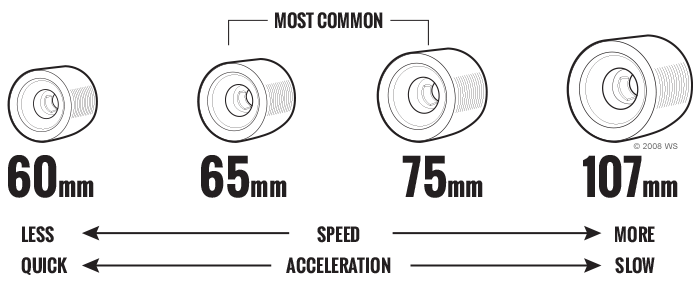
- Skateboard Wheels: Typically range from 50mm to 60mm. Smaller wheels accelerate faster and are lighter, making them ideal for flip tricks and technical street skating where quick pops and rotations are crucial. Their smaller size also means they are less likely to cause wheel bite on standard setups.
- Longboard Wheels: Generally fall between 65mm and 80mm, with some specialized wheels exceeding this range. The larger diameter allows longboard wheels to roll over cracks, pebbles, and rougher surfaces with greater ease, providing a smoother and more stable ride. They also carry momentum better, contributing to higher top speeds.
The difference in diameter is significant. Imagine trying to fit a large ball bearing into a small housing; there will be clearance issues. Similarly, fitting large longboard wheels onto a standard skateboard truck setup can lead to problems if not addressed.
Wheel Durometer: Hardness And Grip
Durometer measures the hardness of a wheel, typically on the Shore A scale. A higher number indicates a harder wheel, while a lower number signifies a softer wheel.
- Skateboard Wheels: Usually range from 95A to 101A and even higher. Harder wheels are designed for smooth surfaces like skateparks and smooth concrete. They offer less grip but are essential for performing grinds on ledges and rails, as they slide more easily and are less prone to sticking. The hardness also contributes to a snappier feel for pop and flip tricks.
- Longboard Wheels: Typically range from 75A to 85A. Softer wheels provide significantly more grip and absorb vibrations from rough surfaces, resulting in a much smoother and more comfortable ride. This increased grip is beneficial for carving and maintaining stability at higher speeds, but the softness makes them less suitable for grinds and can hinder the responsiveness needed for complex tricks.
The contrast in durometer means that while longboard wheels will roll over obstacles more easily, they won’t perform as well for tricks that require sliding or precise, hard landings.

Credit: www.youtube.com
Can Longboard Wheels Physically Fit On Skateboard Trucks?
The short answer is yes, longboard wheels can physically be mounted onto standard skateboard trucks. The core of the wheel, where it attaches to the truck’s axle, uses the same bearing size and is designed to fit standard skateboard hardware. You will use the same skateboard bearings and axle nuts that you would for regular skateboard wheels.
However, “fitting” physically does not automatically mean they will “work” effectively or without issues. The primary concerns arise from the differences in diameter and width.
The Issue Of Wheel Bite
The most common problem encountered when putting larger longboard wheels on a skateboard is wheel bite. This occurs when, during a turn, the edge of the wheel comes into contact with the underside of the skateboard deck. This contact can:
- Stop your turn abruptly: Potentially causing you to fall.
- Hinder your ability to turn: Making the board feel sluggish and unresponsive.
- Damage your deck: Over time, repeated contact can wear down the deck.
The likelihood of wheel bite depends on several factors:
- Wheel Diameter: Larger wheels are more prone to bite.
- Truck Height: Lower trucks increase the risk of wheel bite.
- Deck Concave: Deeper concaves on the deck can sometimes provide more clearance, but not always.
- Riding Style: Aggressive turning increases the chances of wheel bite.
How To Mitigate Wheel Bite
Fortunately, there are established solutions to prevent or minimize wheel bite when using larger wheels:
- Riser Pads: These are plastic or rubber pads placed between the truck and the skateboard deck. They effectively increase the distance between the deck and the wheels, providing crucial clearance. Riser pads come in various thicknesses, typically from 1/8 inch to 1/2 inch (approximately 3mm to 12mm). For larger longboard wheels, a riser pad of at least 1/4 inch (6mm) is often recommended. Choosing the right deck can also influence clearance.
- Larger Trucks: While less common as a solution specifically for wheel bite from larger wheels, wider trucks can sometimes offer slightly better geometry that naturally provides more clearance, especially when paired with appropriately sized wheels. However, the primary function of truck width is to match the deck width.
- Wheel Wells: Some skateboard decks, particularly those designed for larger wheels or a more cruiser-style setup, feature “wheel wells.” These are indentations or cut-outs on the underside of the deck where the wheels can sit, preventing bite even with larger wheels.
- Softer Bushings/Tighter Trucks: While not a direct fix for physical clearance, adjusting your truck bushings can influence how easily wheel bite occurs. Looser trucks with softer bushings allow for deeper carving, increasing the risk. Tighter trucks with harder bushings limit turning radius, reducing the chance of bite but also sacrificing maneuverability.

Credit: www.pinalloy.com
Impact On Riding Style And Performance
Switching from standard skateboard wheels to longboard wheels will fundamentally alter the feel and performance of your skateboard. It’s crucial to understand these changes to set realistic expectations.
Cruising And Smoothness
If your primary goal is to transform your skateboard into a smoother, more comfortable cruiser, longboard wheels can be an excellent choice. Their larger size and softer durometer mean they:
- Absorb vibrations: Making rides over rough pavement, cracks, and small debris much more pleasant.
- Maintain momentum: You’ll need to push less frequently to maintain speed.
- Offer stability: The larger contact patch and softer material provide a more planted feel.
This setup is ideal for commuting, leisurely rides through the neighborhood, or simply enjoying a smoother roll without the jarring impact of smaller, harder wheels. It’s a popular modification for those who enjoy the benefits of skateboarding for general fitness and enjoyment, rather than technical trickery.
Trick Performance
This is where longboard wheels on a skateboard present significant challenges.
- Flip Tricks: The increased weight and size of longboard wheels make them much harder to flick for pop and rotation. The extra mass requires more force and precise timing, which can be frustrating for beginners and even experienced skaters trying to learn or perform tricks like the kickflip or heelflip.
- Ollies and Pop: While the ollie is primarily generated by the pop of the tail, the added weight of larger wheels can subtly affect the board’s responsiveness and the ease with which you can get it into the air.
- Grinds and Slides: The softer durometer of longboard wheels means they are not designed for grinding ledges or rails. They will grip rather than slide, likely causing you to get stuck and potentially fall. If you plan on hitting skateparks or street spots with ledges, longboard wheels are a poor choice.
- Maneuverability: The increased risk of wheel bite limits how sharply you can turn. This reduced turning radius makes quick adjustments and tight carving more difficult compared to a setup with smaller, harder wheels.
Example: Imagine a street skater trying to perform a quick manual or a sharp turn to avoid an obstacle. With large, soft longboard wheels, the board will feel less agile, and the fear of immediate wheel bite will likely inhibit aggressive maneuvers. Conversely, a longboarder cruising down a hill uses those larger wheels for stability and to absorb the bumps of the road, not to perform a tre flip.
Factors Influencing Compatibility
Beyond the basic wheel and truck interaction, several other components and considerations play a role in whether longboard wheels will work well on your skateboard.
Truck Width And Height
- Width: Truck width is measured from the kingpin nut to the kingpin nut on the inside of the truck. It should generally match your deck width. For example, an 8-inch wide deck typically uses 8-inch trucks (often labeled as 5.25 inches or 5.5 inches in hanger width). While you can mismatch truck width slightly, significant deviations can affect stability and turning. Crucially, the hanger width (the part that holds the axle) is what determines how much of the wheel is exposed. Wider hangers can sometimes offer better clearance for larger wheels.
- Height: Trucks come in low, mid, and high profiles. Low trucks are closer to the ground, increasing the risk of wheel bite with larger wheels. High trucks provide more clearance but can make the board feel less stable and harder to ollie. If you’re putting longboard wheels on a skateboard, opting for mid or high trucks is generally advisable to gain the necessary clearance.
Deck Shape And Size
- Deck Width: As mentioned, truck width should ideally match deck width. However, the overall shape and concave of the deck also matter. Deeper concaves can sometimes offer more clearance, while flatter decks might be more susceptible to wheel bite.
- Wheel Wells: As previously discussed, decks designed with wheel wells are specifically engineered to accommodate larger wheels without bite. If your current skateboard deck does not have wheel wells, you are more reliant on riser pads.
Bearings And Spacers
- Bearings: As long as you are using standard skateboard bearings (most commonly 608 size), they will fit into longboard wheels. The inner diameter of the bearing is designed to fit the skateboard axle.
- Bearing Spacers: These small metal cylinders sit between the two bearings inside the wheel. They help to align the bearings and prevent them from being crushed when the axle nut is tightened. While not strictly mandatory, they are highly recommended for wheel longevity and performance. Most longboard wheels are designed to accommodate bearing spacers, just like skateboard wheels. If your skateboard setup already uses spacers, you can transfer them. If not, it’s a good idea to get some.
When Is It A Good Idea To Use Longboard Wheels On A Skateboard?
Despite the potential drawbacks for trick-oriented skating, there are specific scenarios where putting longboard wheels on a skateboard makes perfect sense.
Building A Cruiser Or Commuter Board
If you want a board that excels at getting from point A to point B smoothly and comfortably, a skateboard deck with longboard wheels is an excellent option. This setup is often referred to as a “cruiser board” or “hybrid setup.”
- Smooth Ride: Ideal for navigating urban environments with imperfect sidewalks and streets.
- Stability at Speed: Better for longer commutes or faster downhill sections (though not for true downhill longboarding).
- Versatility: Allows you to use a standard skateboard deck, which might be more readily available or preferred for its size and shape, while gaining the ride comfort of longboard wheels.
Pro Tip: For this type of setup, consider a deck that is slightly wider than average (e.g., 8.25 inches or wider) and pair it with mid or high trucks and appropriate riser pads. You might also opt for slightly smaller longboard wheels (e.g., 65mm) to minimize the risk of wheel bite.
Experimentation And Fun
Sometimes, skaters simply want to experiment with different feels. Putting on longboard wheels can offer a fresh perspective on riding familiar terrain. It can highlight the differences in design and purpose between skateboards and longboards, deepening an appreciation for each.
Salvaging Parts
If you have old longboard wheels lying around and a skateboard that needs new wheels, it can be a practical, albeit temporary, solution. Just be aware of the performance trade-offs.
When To Avoid Using Longboard Wheels On A Skateboard
The decision to use longboard wheels on a skateboard should be based on your intended use. If any of the following apply to you, it’s best to stick with standard skateboard wheels:
Primarily Skating At The Skatepark
If your main domain is the skatepark, performing ollies, grinds, flips, and other technical tricks, longboard wheels will severely hinder your progress. The hardness and size are optimized for smooth surfaces and specific trick mechanics that longboard wheels simply cannot provide.
Street Skating Focused On Technical Tricks
Similar to park skating, street skating often involves complex flip tricks, manuals, and quick adjustments. The weight, size, and softness of longboard wheels are counterproductive for these activities. You’ll struggle with pop, rotation, and grinds.
Learning Basic Skateboarding Tricks
For beginners learning fundamental tricks like the ollie, kickflip, or even just mastering balance and board control, standard skateboard wheels offer the most responsive and forgiving platform. The added weight and potential for wheel bite with longboard wheels can be discouraging.
Wanting Maximum Maneuverability
If you value the ability to make sharp, quick turns and carve tightly, especially in confined spaces or during technical street skating, smaller, harder skateboard wheels are far superior.
Example: A skater practicing easy skateboard tricks for beginners needs a board that responds quickly to foot movements. Adding heavy, large longboard wheels would make the board feel sluggish and difficult to control, potentially leading to frustration and slower progress.
Comparison: Skateboard Wheels Vs. Longboard Wheels
To summarize the key differences and their implications for compatibility, consider the following comparison:
| Feature | Standard Skateboard Wheels | Longboard Wheels | Implication for Skateboard Setup |
|---|---|---|---|
| Diameter | 50mm – 60mm | 65mm – 80mm+ | Larger longboard wheels increase risk of wheel bite; require riser pads or higher trucks. |
| Durometer (Hardness) | 95A – 101A+ (Hard) | 75A – 85A (Soft) | Softer longboard wheels provide a smoother ride but are poor for grinds and tricks. |
| Weight | Lighter | Heavier | Heavier wheels can make flip tricks harder and affect ollie pop. |
| Contact Patch | Narrower | Wider | Wider contact patch offers more grip and stability, but can increase friction. |
| Intended Use | Tricks, street skating, skateparks | Cruising, commuting, downhill, carving | Using longboard wheels on a skateboard prioritizes comfort and speed over trick capability. |
| Vibration Absorption | Low | High | Longboard wheels significantly improve ride comfort on rough surfaces. |
Real-world Examples And Scenarios
Let’s look at a couple of common scenarios to illustrate the practical application of this knowledge.
Scenario 1: The Urban Commuter
Rider: Alex, a college student who needs to get across campus and around town. Alex already has a standard 8.0-inch skateboard deck and trucks. Alex dislikes the jarring feel of the current setup on cracked sidewalks and bumpy paths.
Solution: Alex decides to replace the 54mm, 99A skateboard wheels with 70mm, 80A longboard wheels.
Considerations:
- Wheel Bite: Alex anticipates wheel bite due to the significant increase in wheel size.
- Action: Alex purchases 1/4-inch (6mm) riser pads to install between the trucks and the deck. Alex also ensures the trucks are not excessively loose.
- Outcome: The new setup provides a significantly smoother ride, absorbing vibrations from the pavement and making commuting much more comfortable. Alex can no longer do flip tricks easily, and grinds are impossible, but for commuting, the trade-off is well worth it.
Scenario 2: The Beginner Trying Tricks
Rider: Ben, who is new to skateboarding and wants to learn basic tricks like the ollie and kickflip. Ben has a complete skateboard setup. A friend suggests putting on some old longboard wheels for a “smoother ride.”
Decision: Ben decides against using longboard wheels.
Reasoning: Ben understands that while longboard wheels are smoother, their weight and size would make learning to pop the tail, flick the board, and control rotations much more difficult. Ben prioritizes developing fundamental trick skills on a setup designed for that purpose. Ben opts for standard 52mm, 101A skateboard wheels, which are ideal for learning tricks. Ben might later consider learning skateboarding as an adult or teaching a child, understanding that proper equipment is key for early progress.
Frequently Asked Questions
Can I Put 70mm Longboard Wheels On A Standard Skateboard?
Yes, you can physically mount 70mm longboard wheels on a standard skateboard. However, due to their larger diameter, you will almost certainly experience wheel bite during turns unless you take precautions. It is highly recommended to use riser pads (at least 1/4 inch or 6mm) between the trucks and the deck. You may also need higher profile trucks or a deck with wheel wells to prevent the wheels from hitting the deck during turns.
Will Longboard Wheels Make My Skateboard Faster?
Longboard wheels can help maintain momentum better and roll over obstacles more easily, which can contribute to a higher top speed, especially on rougher terrain. However, they are also heavier, which requires more force to accelerate. For pure speed on smooth surfaces, a larger, harder longboard wheel is generally faster than a small, hard skateboard wheel.
But for trick-based skating where quick acceleration and agility are key, the heavier longboard wheels can feel slower and less responsive. The overall speed on a skateboard with longboard wheels will depend on the rider’s pushing power, the terrain, and the specific wheel specifications.
What Happens If I Don’t Use Riser Pads With Longboard Wheels On A Skateboard?
If you put longboard wheels on a skateboard without adequate clearance (i.e., without riser pads, higher trucks, or wheel wells), you will likely experience wheel bite. This occurs when the edge of the wheel makes contact with the underside of the deck during a turn. Wheel bite can abruptly stop your turn, causing you to fall, and