Teaching a child to skateboard is more than just a fun weekend activity. It’s a way to help them develop balance, confidence, and perseverance. But for many parents, the world of skateboarding feels intimidating and even a little dangerous. The good news?
With the right guidance, you can make your child’s first skateboarding experience both safe and enjoyable. In this article, you’ll discover practical steps, real-life tips, and common pitfalls to avoid when introducing a kid to skateboarding.
Why Skateboarding Is Great For Kids
Learning to skateboard offers many benefits beyond just physical exercise. Children who skateboard regularly see improvements in coordination, balance, and reflexes. The sport also encourages problem-solving and creative thinking as kids learn new tricks and techniques. On top of that, skateboarding teaches patience and resilience. Falls are common, but getting up and trying again builds mental strength. According to the American Academy of Pediatrics, skateboarding can burn between 150–500 calories per hour depending on intensity, making it an effective way to stay active.
Picking The Right Gear
The right equipment makes a huge difference in safety and learning speed. Here’s what you need to consider:
Skateboard Size And Type
For beginners, especially younger kids, the size of the skateboard matters. Boards that are too big are hard to control, while tiny boards can feel unstable. Most children under age 10 do best with a deck width between 7.0″ and 7.5″. Boards with softer wheels (78A–90A hardness) roll more smoothly and make balancing a bit easier on rough surfaces.
Protective Gear
No matter how careful you are, falls happen. Proper gear is essential:
- Helmet (certified for skateboarding, not just biking)
- Knee and elbow pads
- Wrist guards
- Closed-toe shoes with flat soles
A common beginner mistake is skipping wrist guards. Kids often fall forward and catch themselves with their hands, so wrist protection is crucial.
Comparing Board Types
A quick comparison of common beginner boards:
| Type | Best For | Main Features |
|---|---|---|
| Standard Skateboard | Tricks, skateparks | Double kicktail, medium size |
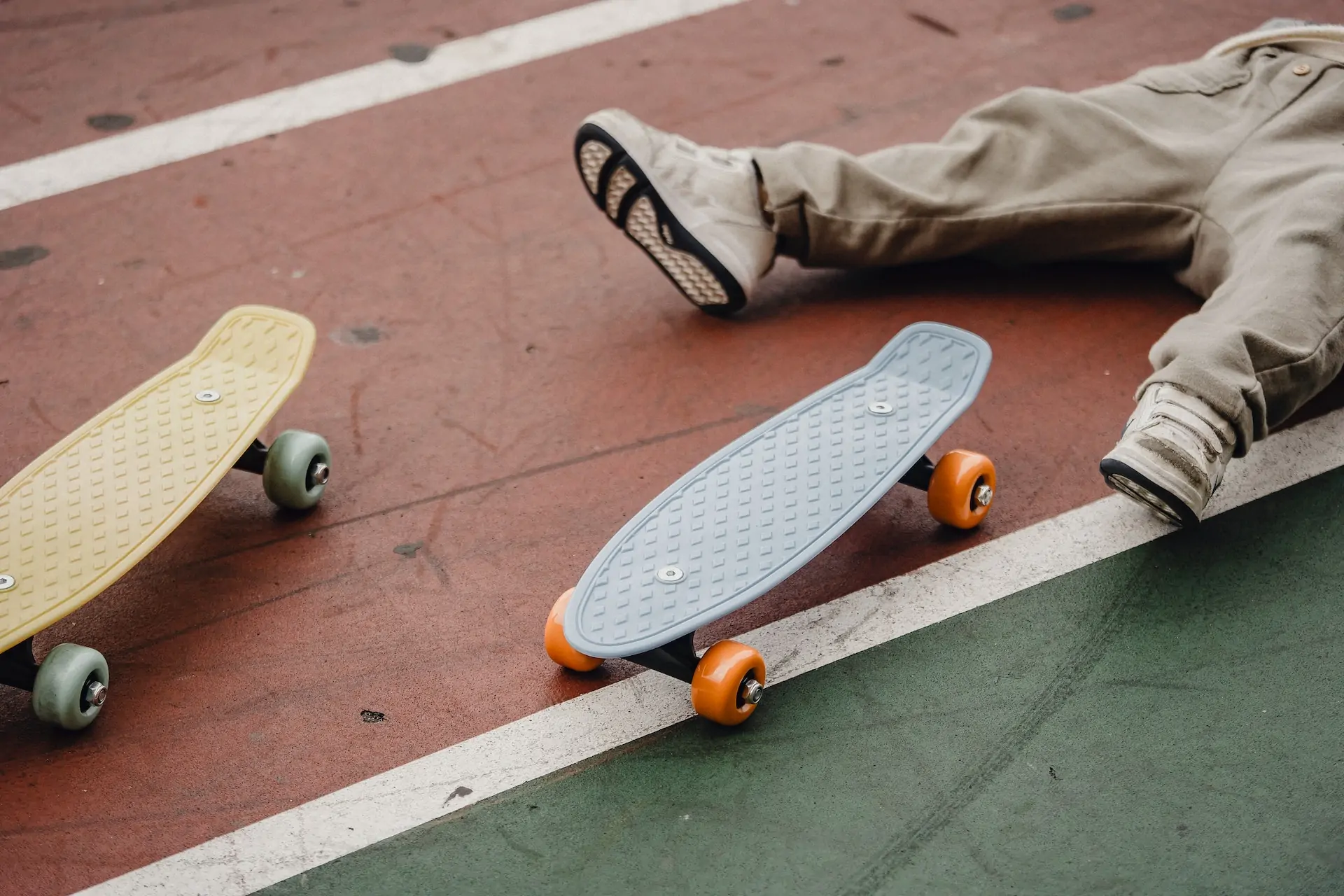
| Mini Cruiser | Smaller kids, cruising | Shorter, lighter, soft wheels |
| Longboard | Older kids, smooth roads | Long deck, stable, hard to trick |
For most young beginners, the standard skateboard or mini cruiser are the best picks.
Finding The Perfect Learning Spot
The right environment can make skateboarding less scary for kids. Start with:
- Smooth, flat surfaces: Empty tennis courts, quiet parking lots, or dedicated beginner skateparks are ideal.
- Minimal distractions: Avoid busy sidewalks or crowded skateparks at first.
- Safe surroundings: Look for places with no steep slopes, traffic, or dangerous obstacles.
A hidden tip: Early morning hours are often the safest and quietest, especially at public parks.
Step-by-step Guide: Teaching Basics
Breaking the process into clear steps helps kids learn faster and with less frustration.
1. Getting Comfortable Standing On The Board
Let your child stand on the skateboard on grass or carpet so the wheels don’t roll. Encourage them to try:
- Placing feet just behind the bolts
- Bending knees slightly
- Keeping arms out for balance
This step builds muscle memory without the fear of moving.
2. Learning To Balance
Once your child is steady standing still, try gentle rocking back and forth. You can hold their hands or let them use a wall for support. Practicing balance on a non-moving board is a critical step that many parents skip, but it makes moving much easier later.
3. Pushing Off And Rolling
Move to a smooth, flat area. Show your child how to:
- Place their front foot (usually the left) across the board
- Push off gently with the back foot
- Place the back foot on the board once moving
Many beginners struggle with this transition. To help, let your child practice “scooting” with one foot on the board and one on the ground for short distances.
4. Stopping Safely
Teach simple stopping methods:
- Foot brake: Drag the back foot on the ground gently
- Heel drag: Tilt the back heel off the board and touch the ground
Always practice stopping before teaching turning or tricks.
5. Turning And Carving
Once your child can roll and stop, introduce turning:
- Lean gently in the direction they want to go
- Encourage them to shift their weight smoothly
Avoid sharp turns at first. Slow, wide arcs are easier for kids to control.
6. Falling The Right Way
Falls are part of learning. Teach your child to:
- Bend knees when losing balance
- Land on pads, not wrists or elbows
- Roll if possible, rather than sticking out hands
Practicing safe falls on grass builds confidence and reduces injury risk.

Credit: www.youtube.com
Building Skills And Confidence
Progress happens in small steps. Here’s how to keep your child motivated:
- Celebrate small wins: Standing, rolling a few feet, stopping—these are all victories.
- Short sessions: 20–30 minutes is plenty, especially for younger kids.
- Practice regularly: A few times per week is better than one long weekend session.
A non-obvious insight: Kids often learn faster by skating with friends. If possible, arrange for group sessions or find local kids who are also beginners.
Common Mistakes And How To Avoid Them
Understanding common pitfalls can help you and your child avoid frustration.
- Skipping safety gear: Even short rides can lead to falls.
- Starting on hills: Always begin on flat ground.
- Rushing tricks: Master basics before trying ollies or jumps.
- Overcorrecting falls: Teach kids not to tense up or stick arms straight out.
- Neglecting board maintenance: Loose bolts or worn wheels make learning harder.
A less obvious mistake: Not checking shoe grip. Shoes with worn-out soles make slipping off the board more likely.
Introducing Basic Tricks
Once your child is comfortable rolling and turning, you can introduce basic tricks. Start with:
- Tic-tacs: Small turns left and right by shifting weight
- Manuals: Lifting the front wheels while rolling (like a wheelie)
- Kick turns: Turning by pressing down on the tail
Keep things simple. Most kids under 10 will need weeks (or months) before they’re ready for ollies.
Progress Tracking And Motivation
Kids love to see their progress. You can help by:
- Setting simple goals (e.g., roll 10 feet, turn around a cone)
- Using a sticker chart or notebook to mark achievements
- Taking short videos so they can see improvement over time
Here’s a simple skill progression table for reference:
| Skill | Average Learning Time | Signs of Readiness |
|---|---|---|
| Balancing | 1–2 sessions | Stands without wobbling |
| Rolling & Stopping | 2–4 sessions | Can push and stop confidently |
| Turning | 4–6 sessions | Makes wide, smooth turns |
| Basic Tricks | 6+ sessions | Comfortable controlling board |
Most kids progress at their own pace. The key is patience.
Safety Tips Every Parent Should Know
Skateboarding can be safe if you follow a few key rules:
- Always check equipment before each session.
- Supervise young children, especially under age 10.
- Teach kids to watch for cars, bikes, and other people.
- Avoid skating in wet or sandy areas—slippery surfaces increase fall risk.
A useful resource for safety standards is the CDC’s Helmet Safety Guide.
When To Seek Professional Lessons
While many parents can teach the basics, sometimes a professional coach is a smart investment:
- If your child is afraid or very cautious
- If progress stalls after several sessions
- If you don’t feel confident teaching certain skills
Look for skate schools or local skateparks offering beginner classes. Group lessons can also help kids make friends who share their interest.

Credit: www.youtube.com
How To Handle Fear And Frustration
Kids often feel nervous about falling, especially after a rough spill. Here’s how to help:
- Normalize mistakes: Share stories of athletes who fell often when learning.
- Stay positive: Avoid negative comments or comparisons.
- Let them take breaks: Forcing practice when a child is scared can backfire.
A practical tip: Celebrate effort, not just results. Trying again after a fall is a sign of courage.
Supporting Your Kid’s Skateboarding Journey
Your involvement matters. Here’s how you can support your child:
- Attend skate sessions and cheer them on
- Learn basic skateboarding terms to talk about their progress
- Connect with other parents for tips and group activities
Remember, your attitude sets the tone. Show enthusiasm, but don’t pressure your child to advance faster than they’re ready.
Credit: www.thetoyshop.com
Frequently Asked Questions
How Old Should My Child Be To Start Skateboarding?
Most children are ready to try skateboarding around age 5 or 6. At this age, they have the balance and attention span needed. However, some start as young as 3 with close supervision and proper safety gear.
What Should I Do If My Child Is Scared Of Falling?
Fear is normal. Start on grass or carpet, use full safety gear, and keep sessions short and positive. Celebrate small steps—confidence grows with each safe experience.
How Long Does It Take For A Kid To Learn To Skateboard?
Most kids can learn to balance and roll within a few sessions (1–2 weeks of regular practice). Learning to turn and stop takes a bit longer. Tricks often require several months of practice.
Is Skateboarding Safe For Kids?
With the right gear and supervision, skateboarding is safe for most kids. The biggest risk is wrist or arm injuries from falls. Helmets and pads greatly reduce the chance of serious injury.
Should My Child Learn On Their Own Or Take Lessons?
Many kids learn from parents or friends, but lessons are great if you’re not confident teaching, or if your child wants to learn advanced tricks. Group lessons also help kids make friends.
Teaching a kid to skateboard is a rewarding experience for both of you. With patience, encouragement, and the right approach, you’ll help your child gain skills that last a lifetime. Remember, the goal isn’t to master tricks overnight—it’s to enjoy the ride and grow together, one push at a time.
7 thoughts on “How to Teach a Kid to Skateboard: Easy Steps for Beginners”