How to Fall off a Skateboard
Falling off a skateboard is not just an inevitable part of learning; it’s a fundamental step in the progression of any skater. For newcomers, the thought of hitting the pavement can be daunting, often leading to hesitation and fear. However, understanding *how* to fall, and more importantly, how to minimize the impact and recover quickly, is as crucial as mastering an ollie or a kickflip.
This isn’t about embracing injury, but about developing the resilience and technique to manage the risks inherent in skateboarding.
Skateboarding, at its core, is an activity that pushes boundaries, both physical and mental. It demands balance, coordination, and a willingness to try again after setbacks. The falls are the teachers, offering immediate feedback on technique, speed, and board control.
Learning to fall effectively transforms a potentially painful experience into a learning opportunity, building confidence and allowing skaters to progress faster and safer. This guide will break down the art of falling, from understanding the physics involved to practical techniques and preventative measures, ensuring your skateboarding journey is as smooth as possible, even when you’re not on the board.
Key Takeaways
- Falling is Integral: Understand that falling is a natural and necessary part of skateboarding progression for all skill levels.
- Learn to Roll: Develop the technique of rolling out of a fall to distribute impact and avoid direct, jarring hits.
- Protect Yourself: Prioritize protective gear, especially helmets, knee pads, and elbow pads, to mitigate serious injury.
- Body Positioning is Key: Learn to keep your body relaxed, tuck your limbs, and avoid stiffening up during a fall.
- Board Management: Practice techniques to separate yourself from the board during a fall to prevent it from hitting you or causing further injury.
- Practice Falling: Consciously practice falling in a controlled environment to build muscle memory and reduce fear.
- Mindset Matters: Cultivate a positive and resilient mindset, viewing falls as learning opportunities rather than failures.
:max_bytes(150000):strip_icc()/GettyImages-970172544-5c70070dc9e77c00016bfd61.jpg)
Credit: www.liveabout.com
Understanding The Physics Of A Fall
Before we can learn how to fall, it’s essential to understand *why* falls happen and the forces involved. Skateboarding is a dynamic activity where the rider is constantly interacting with a moving object on an uneven surface. This interaction is governed by principles of physics, including momentum, gravity, and friction.
When these forces are not in equilibrium, a fall is imminent.
Momentum And Imbalance
Momentum is the product of mass and velocity. As you and your skateboard gain speed, your momentum increases, making it harder to correct imbalances. A sudden stop, a shift in weight, or an unexpected obstacle can disrupt your center of gravity.
When your center of gravity is no longer over your base of support (your feet on the board), you lose balance. The greater your momentum, the more dramatic the loss of balance and the harder it can be to recover.
For instance, at higher speeds, even a small wobble can quickly escalate into a full-blown fall because there’s less time to react and correct.
The Role Of Friction And Surface
Friction plays a dual role in skateboarding. It’s what allows your wheels to grip the ground, enabling you to steer and stop. However, it can also be a cause of falls. If your wheels suddenly lose traction (e. g. , on a patch of sand or gravel) or if you attempt a sharp turn at speed, the friction between the wheels and the ground can be insufficient to maintain your balance.
Conversely, sudden, unexpected friction, like catching an edge on a rough surface, can cause an abrupt halt, sending you flying forward. The type of surface also matters significantly; smooth concrete offers consistent grip, while asphalt, wood, or metal surfaces can have varying levels of friction and unexpected bumps.
Gravity’s Unrelenting Pull
Gravity is a constant force pulling everything towards the Earth’s center. In skateboarding, gravity is what allows you to roll downhill and what pulls you down when you lose your balance. When you are upright and balanced, your body’s muscles work to counteract gravity.
When balance is lost, gravity takes over, and the speed at which you fall is dictated by the height and your initial momentum. Understanding this helps to conceptualize the need to absorb or dissipate the energy of the fall rather than resisting it directly.
The Anatomy Of A Skateboarding Fall
Skateboarding falls are rarely simple tumbles. They often involve a complex interplay of the rider, the board, and the ground. Recognizing the common patterns and components of a fall can help you anticipate and react more effectively.
Common Fall Types
- The Speed Wobble: As mentioned, this occurs at higher speeds when the board begins to oscillate uncontrollably. The rider often attempts to correct by shifting weight, which can exacerbate the wobble, leading to a loss of footing.
- The Foot Slip: This is perhaps the most common fall for beginners. A foot slips off the board, usually due to a loss of balance, an uneven surface, or a failed attempt at a trick. The rider is then left unbalanced, often with one foot on the board and one in the air.
- The Board Catch: This happens when the skateboard, propelled by your momentum, flips or turns unexpectedly and catches your leg or foot, causing you to trip and fall. This is particularly common during attempts at tricks or when riding over obstacles.
- The Edge Catch: Occurs when the edge of the skateboard deck or wheels digs into the ground, halting the board abruptly and sending the rider flying forward over the handlebars.
- The Rollaway: This is the ideal scenario where the rider maintains control even after losing balance, essentially stepping or jumping off the board and rolling out of the motion to absorb impact.
The Impact Zones
When you fall, certain parts of your body are more likely to make contact with the ground. Understanding these impact zones can help you know where to focus your protective efforts and how to position yourself to minimize injury.
- Hands and Wrists: Often the first to reach out for balance or to break a fall. Wrists are particularly vulnerable to fractures.
- Elbows: Another common point of contact, especially when falling forward.
- Knees and Shins: Can hit the ground directly or be impacted by the board.
- Hips and Tailbone: Significant risk when falling backward.
- Head and Shoulders: The most dangerous impact zones, potentially leading to concussions or more severe injuries.
The Role Of Fear
Fear is a powerful factor in skateboarding falls. It can cause a rider to stiffen up, which is counterproductive. When you stiffen, your body becomes rigid, making it harder to absorb impact and increasing the likelihood of injury. Instead of a controlled roll, a stiff body will likely result in a jarring, direct impact. Overcoming this fear is a significant part of learning to fall safely.
Credit: www.youtube.com
Mastering The Art Of Falling: Techniques And Strategies
Learning to fall is a skill in itself. It’s about controlled surrender to the inevitable rather than fighting gravity with a rigid body. The goal is to minimize the force of impact and prevent the board from causing secondary injuries.
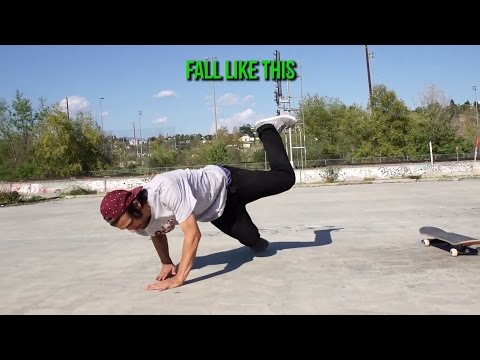
The “roll Out” Technique
The most effective way to fall is to roll out of it. This technique involves using momentum to transition from a fall into a roll, much like in martial arts or gymnastics.
- Recognize the Imbalance: As soon as you feel yourself losing balance, don’t fight it rigidly.
- Relax Your Body: Consciously try to relax your muscles. A relaxed body absorbs impact better.
- Tuck and Roll: If falling forward, try to tuck your chin to your chest and roll onto your shoulder and back. Avoid landing flat on your hands or face. Aim for a diagonal roll across your back.
- Separate from the Board: If possible, try to kick your feet away from the board as you fall. This prevents the board from sliding under you or hitting you.
- Use Your Limbs: Extend your arms and legs slightly, but keep them bent and relaxed. This helps to absorb shock and can guide your roll. Don’t stiffen them to catch yourself, as this leads to fractures.
Board Management During A Fall
The skateboard itself can be a source of injury if it stays with you during a fall. Learning to disengage from the board is crucial.
- Kick the Board Away: If you feel yourself losing balance and the board is still under your feet, consciously try to kick it out from under you. This is easier said than done, especially when you’re surprised, but it’s a vital skill to practice.
- Jump Off: For beginners, simply stepping or jumping off the board when balance is lost is often the safest immediate action. This is a precursor to the more advanced roll-out.
- Avoid Board Strikes: By separating from the board, you reduce the risk of it flipping up and hitting your shins, ankles, or face, which can be very painful and lead to cuts or bruises.
Practicing Falling Safely
You can’t learn to fall effectively without actually falling. However, you can practice falling in a controlled manner to build muscle memory and reduce fear.
- Start on Soft Surfaces: Begin by practicing rolls on grass or a soft mat. Stand on your board (or just practice the motion without the board) and intentionally lose your balance, focusing on tucking and rolling.
- Low-Speed Practice: Practice falling from a slow roll. This allows you more time to react and attempt to roll out.
- Simulate Scenarios: Try simulating common fall scenarios, like a foot slip, in a safe environment. Practice kicking the board away.
- Gradual Progression: As you become more comfortable, gradually increase the speed and complexity of your practice falls.
In my experience, practicing these techniques off the board first, on a mat or grass, helps build the fundamental motor patterns without the added stress of the board moving beneath you. Once those are ingrained, introducing the skateboard in a controlled setting can accelerate the learning process.

Credit: www.wikihow.fitness
Protective Gear: Your First Line Of Defense
While learning to fall is crucial, the best way to manage falls is to prevent serious injury when they do happen. This is where protective gear comes in. Investing in quality safety equipment is non-negotiable for any skateboarder, especially beginners.
Essential Protective Gear
- Helmet: This is the single most important piece of safety gear. A certified skate helmet protects against traumatic brain injuries, which can have long-lasting consequences. Ensure it fits snugly and is worn correctly. According to the Consumer Product Safety Commission, helmets are crucial for preventing head injuries.
- Knee Pads: Protect your knees from direct impact and scrapes. They are essential for preventing knee injuries, which are common in skateboarding.
- Elbow Pads: Guard your elbows, another common point of contact. They can prevent painful abrasions and fractures.
- Wrist Guards: These are highly recommended, especially for beginners, as they help prevent wrist fractures by limiting hyperextension. Many skate-specific wrist guards have a splint on both the palm and back of the hand.
- Padded Shorts/Hip Protection: For those particularly concerned about hip or tailbone injuries, padded shorts can offer an extra layer of cushioning.
Choosing And Using Gear Effectively
- Fit is Key: Ensure all gear fits snugly but comfortably. Too loose, and it won’t provide adequate protection; too tight, and it can be uncomfortable and restrict movement.
- Certification Matters: Look for gear that meets safety standards (e.g., ASTM, CPSC for helmets).
- Wear It Consistently: The most effective gear is the gear you actually wear. Make it a habit to put on your protective equipment every time you step on your board, regardless of how short your session will be or how confident you feel.
- Maintenance: Regularly check your gear for wear and tear. Straps can fray, padding can compress, and shells can crack. Replace damaged gear immediately.
A common misconception is that wearing pads makes you look “uncool. ” However, the skateboarding community increasingly recognizes the importance of safety. Many professional skaters advocate for protective gear, understanding that it allows them to push their limits and skate longer without career-ending injuries.
For beginners, it’s an essential tool for building confidence and learning without the constant fear of severe pain.
Strategies For Beginners: Building Confidence And Minimizing Risk
For those new to skateboarding, the initial learning curve can be steep, and falls are frequent. The key is to approach learning with a strategy that prioritizes safety and builds confidence gradually.
Choosing The Right Board And Environment
- Start with a Stable Board: A wider, longer deck can offer more stability. Consider a beginner-friendly complete skateboard from a reputable brand. You can explore options in our Skateboard Manufacturers Guide.
- Choose a Safe Learning Spot: Opt for a smooth, flat, and open area with minimal obstacles and traffic. Empty parking lots, basketball courts, or dedicated skate parks during off-peak hours are ideal. Avoid busy streets or areas with rough surfaces.
- Familiarize Yourself with the Board: Spend time just standing on the board on a soft surface like grass. Get a feel for its balance and how your weight shifts affect it.
Gradual Skill Progression
- Master the Basics First: Before attempting any tricks, focus on mastering fundamental skills:
- Pushing: Learn to push off smoothly with one foot while keeping the other on the board.
- Balancing: Practice standing and balancing on the board while stationary and rolling.
- Turning: Learn basic carving turns by leaning your weight.
- Stopping: Practice foot braking (dragging your back foot) and eventually tail scraping if comfortable.
- Progress to Easy Tricks: Once comfortable with basic riding, move on to simple tricks like the manual or ollie, which can be practiced at low speeds and in safe environments. Our guide on Easy Skateboard Tricks for Beginners can offer a good starting point.
- Learn to Fall from the Start: As you practice these basics, consciously practice falling. Step off the board, jump off, or even intentionally let yourself fall in a controlled manner on grass. This builds the habit of disengaging from the board.
Mental Approach
- Patience is Key: Learning to skateboard takes time and persistence. Don’t get discouraged by falls. Every skater has been there.
- Positive Self-Talk: Focus on what you are learning, not just on what you are falling from. Celebrate small victories.
- Skate with Others: Learning with friends or joining a skate group can provide encouragement and shared learning experiences. For younger skaters, resources like How to Teach a Kid to Skateboard can be invaluable.
Advanced Falling Techniques And Recovery
As skaters progress to more complex tricks and higher speeds, their falls can become more dynamic and potentially more dangerous. Advanced falling techniques focus on greater control and minimizing impact in high-consequence situations.
The “skate-to-roll” Transition
This is the ultimate goal for many skaters: the ability to transition smoothly from a failed trick or loss of balance directly into a controlled roll. This involves:
- Anticipation: Experienced skaters often anticipate a fall before it fully happens. They can sense the loss of balance or the outcome of a trick attempt.
- Explosive Movement: Instead of a slow tumble, an advanced skater might use an explosive jump or step to get clear of the board.
- Controlled Landing: The landing from this jump is often a controlled roll, absorbing the impact through bent knees and a smooth transfer of momentum across the back.
- Board Awareness: Even during the roll, there’s an awareness of where the board is to avoid it hitting you.
Dealing With High-speed Falls
Falls at higher speeds require a different approach due to the increased momentum.
- Commit to the Roll: At high speeds, trying to stop or regain balance is often futile and can lead to more severe injuries. Committing to a roll is essential.
- Stay Loose: The more relaxed your body is, the better it can absorb the forces involved.
- Let the Board Go: Don’t try to hold onto the board. Let it slide or tumble away.
- Aim for a Long Roll: Try to extend your roll over as much distance as possible to dissipate the energy.
Post-fall Recovery
- Assess for Injury: After a fall, take a moment to check yourself for any injuries. Don’t push through pain that feels significant.
- Get Back Up (When Ready): Once you’ve assessed yourself and are okay, the most important step is to get back on the board. This reinforces the mental resilience and combats the fear. Even a short, successful ride after a fall can be a huge confidence booster.
- Analyze the Fall: Briefly think about what caused the fall. Was it a specific technique error? An environmental factor? Understanding the cause can help prevent future similar falls.
Common Mistakes To Avoid When Falling
Even with the best intentions, skaters often make mistakes that turn a manageable fall into a painful experience. Recognizing these common errors can help you avoid them.
Stiffening Up
This is perhaps the most common and detrimental mistake. When you stiffen, your body becomes rigid, acting like a solid object that absorbs impact directly. This is why falls often result in sprains, fractures, and bruises. Relaxation is key.
Trying To Catch Yourself With Your Hands
While instinct might tell you to put your hands out, rigidly locking your wrists to catch your fall can lead to wrist fractures. If you must use your hands, try to land on the fleshy part of your forearm or roll onto your side, keeping your wrists slightly bent.
Holding Onto The Board
As discussed, the board can become a projectile or trap your feet. If you’re falling, let the board go. Trying to keep control of it when you’ve lost balance often results in the board hitting you or causing further entanglement.
Landing Flat
Instead of rolling, many beginners land flat on their back, stomach, or hands. This concentrates the impact force on a small area. Learning to distribute the impact through a roll is crucial for safety.
Ignoring Protective Gear
Relying solely on falling technique without protective gear is a risky strategy. Gear acts as a buffer, significantly reducing the severity of injuries even when your falling technique isn’t perfect. Always wear your helmet, pads, and guards.
The Psychological Aspect: Overcoming The Fear Of Falling
The fear of falling is a significant barrier for many aspiring skateboarders. It can lead to hesitation, anxiety, and ultimately, slower progress. Addressing this psychological hurdle is as important as mastering the physical techniques.
The Fear Cycle
Fear often leads to hesitation, which leads to loss of balance, which leads to a fall, which reinforces the fear. Breaking this cycle requires conscious effort and a shift in perspective.
Building Confidence Through Practice
- Repetition: The more you practice falling in a controlled way, the less frightening it becomes. Muscle memory develops, and your body learns how to react instinctively.
- Gradual Exposure: Start with low-risk situations and gradually expose yourself to more challenging scenarios. Each successful managed fall builds confidence.
- Focus on Progress, Not Perfection: Recognize that falls are part of the learning process. Every skater, from beginner to professional, falls. The difference lies in how they recover and learn from it.
Mindset Shift: Falls As Learning Tools
Instead of viewing falls as failures, reframe them as valuable feedback. Ask yourself:
- What caused this fall?
- What could I have done differently?
- What did I learn from this experience?
This analytical approach turns a negative event into a positive learning opportunity. For many, skateboarding is a journey of self-discovery and resilience, as explored in articles about Benefits of Skateboarding and Why Skateboarding is Good for Mental Health.
Visualization
Before attempting a new trick or riding in a challenging environment, take a moment to visualize yourself successfully navigating the situation, including how you would handle a potential fall. This mental rehearsal can prepare you and reduce anxiety.
Frequently Asked Questions
How Often Should I Expect To Fall When Learning To Skateboard?
It’s highly common to fall frequently when first learning. Beginners might fall multiple times in a single short session. This is normal and a sign that you are pushing your boundaries and learning. The frequency of falls will decrease as you develop better balance, board control, and the technique of falling safely.
Don’t be discouraged; each fall is a lesson.
Is It Better To Fall Forward Or Backward On A Skateboard?
Neither is inherently “better,” as both can lead to injury depending on how you fall. However, the goal is to avoid a direct, flat impact. The ideal is to roll out of the fall. Falling forward often means you might try to catch yourself with your hands, risking wrist injury. Falling backward can lead to tailbone or hip impacts. The key is to stay relaxed and aim